Hello. I’m Dr. Jo Hyun-woo from Inpyeog Plastic Surgery.
Today, I’d like to talk in detail about emergency situations that may arise after contouring surgery, which is a topic many people are curious about.
Contour surgery generally refers to procedures such as cheekbone reduction, square jaw surgery, and chin surgery, and it involves the skeletal structure of the face.
Because the surgical area is the center of the face and the bone must be cut, many people ask this during preoperative consultations.
“Doctor, isn’t contouring surgery dangerous?”
“Could there be severe bleeding or major side effects?”
These concerns are completely understandable. People who are unfamiliar with surgery or are having it for the first time tend to worry even more.
Increased Safety Due to Advances in Surgical Techniques
In fact, 20 to 30 years ago, contouring surgery was not as common as it is now, and because medical technology and surgical equipment were not as precise as they are today, there were often cases of heavy bleeding or problems during recovery. But that is different now.
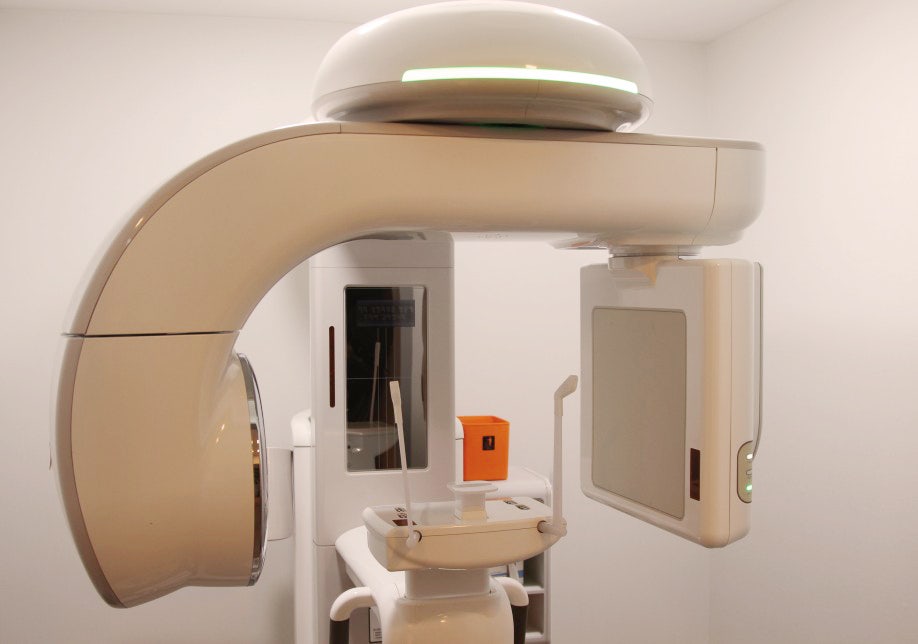
With advances such as precise preoperative 3D CT analysis, high-precision piezo cutting devices and nerve-protection equipment, fine hemostatic tools during surgery, and specialized anesthesia teams, blood loss has been minimized and safety has become significantly higher than in the past.
However, no matter how advanced the technology is, exceptional emergency situations can still occur depending on the patient’s individual condition, the scope of surgery, and behavior during recovery.
Emergency Situations That Can Occur During Surgery
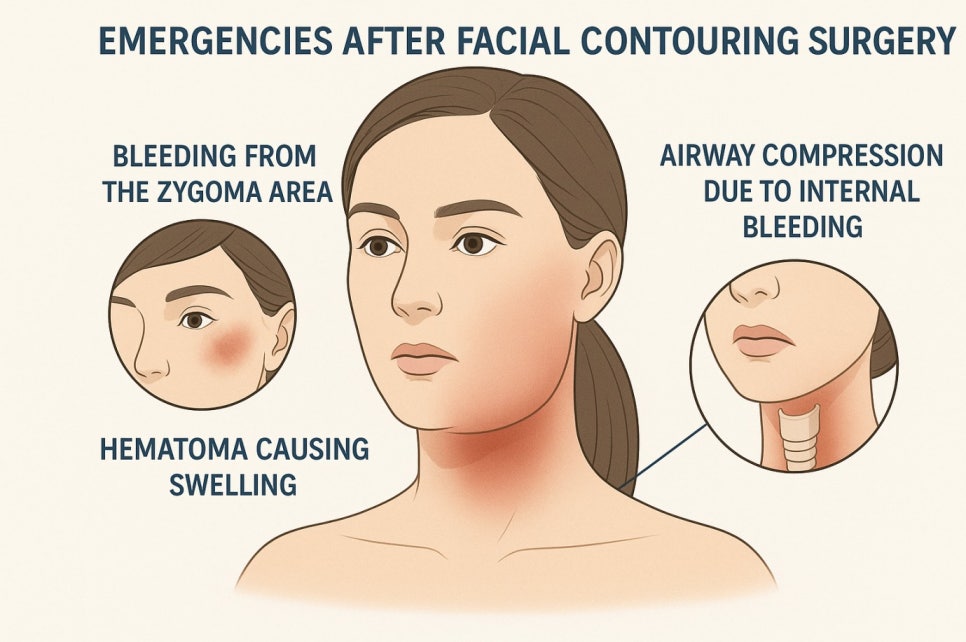
First, the greatest risk that can occur during surgery is major bleeding.
For example, branches of the facial artery pass along the inner side of the cheekbone, and the mandibular artery and nerves are adjacent to the mandibular angle area, so if a blood vessel is damaged during surgery, a situation may arise that requires rapid judgment and emergency measures.
This is a case I actually experienced during surgery.
During mandibular angle reduction surgery, unexpected vascular variation caused bleeding, but by quickly identifying and suturing it, I was able to complete the surgery without any major problems.
In this way, when an experienced medical team performs the surgery, most problems can be resolved immediately in the operating room.
Emergency Situations That Can Occur Immediately After Surgery and During Recovery
Then, what situations can arise while you are recovering at home after surgery?
The most common and important emergency situation is rebleeding.
- Rebleeding
Even if bleeding is well controlled during surgery, a blood vessel can suddenly reopen during recovery.
Extra caution is needed especially in the following situations:
-
Straining too hard in the bathroom
-
Severe sneezing or coughing
-
Exercising or lifting heavy objects
-
Bending forward too early or sleeping face down
Bleeding can occur suddenly, and as blood collects and creates pressure, the surgical site may appear firm and swollen with accompanying pain.
- Hematoma Formation
If bleeding continues in a small amount or blood collects within the tissue, a hematoma may form.
This is not a simple bruise, but a phenomenon in which blood accumulates in the space under the skin and forms a mass; in severe cases, it can lead to inflammation or infection.
That is why our hospital makes it a rule to keep patients hospitalized for one day and use a drainage tube (blood pouch).
This is to allow even small amounts of bleeding to drain externally and reduce the possibility of hematoma formation.
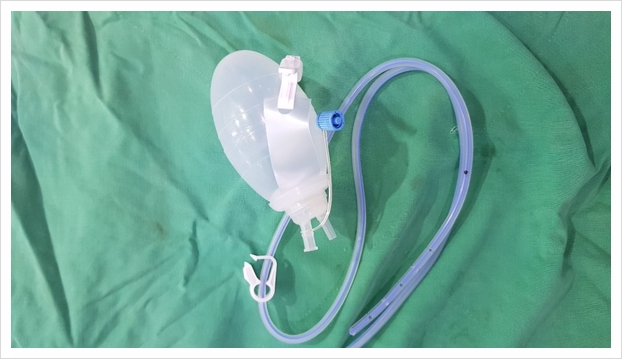
Drainage tube (blood pouch)
- Airway Compression (the Most Critical Situation)
The rarest but most dangerous situation is airway compression caused by internal bleeding.
In particular, if bleeding inside the chin area or on the inner side of the mandible becomes severe, blood may collect in the soft tissue inside the neck and interfere with breathing.
In such cases, the following symptoms must be present:
-
Sudden shortness of breath
-
A feeling of tightness in the chest
-
Difficulty speaking
-
Difficulty swallowing saliva
If you feel these symptoms, you must come to the hospital immediately, and it is very important to undergo surgery at a hospital with a 24-hour emergency response system.
Hospital Systems to Prevent Postoperative Emergencies

At our hospital, we prevent emergency situations in advance through the following systems.
Before surgery, we perform blood tests and check coagulation function, and we review blood pressure and any history of cardiovascular disease.
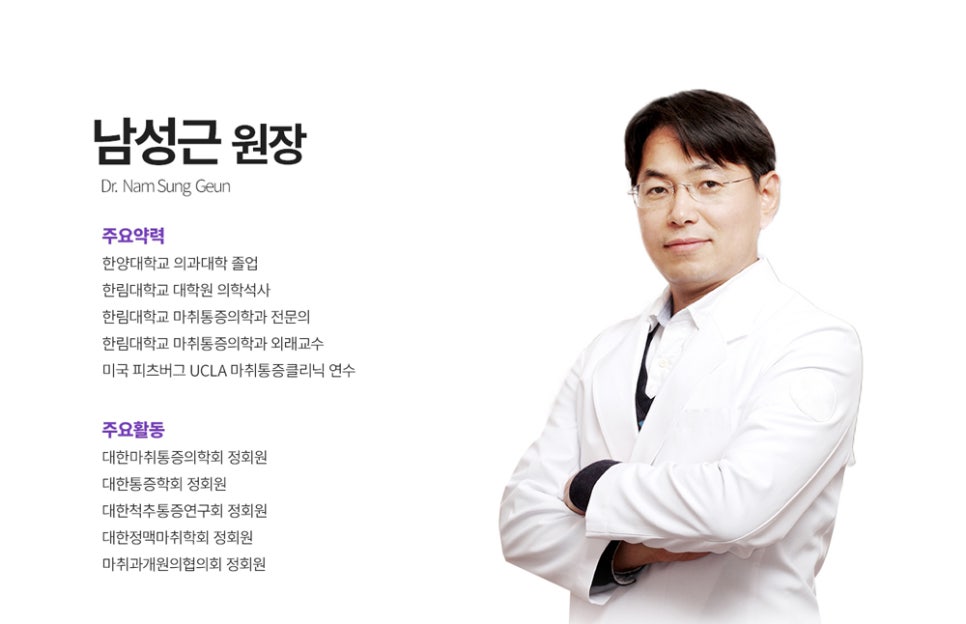
During surgery, a board-certified anesthesiologist is always present at our hospital, and fine hemostatic tools and emergency blood are prepared.
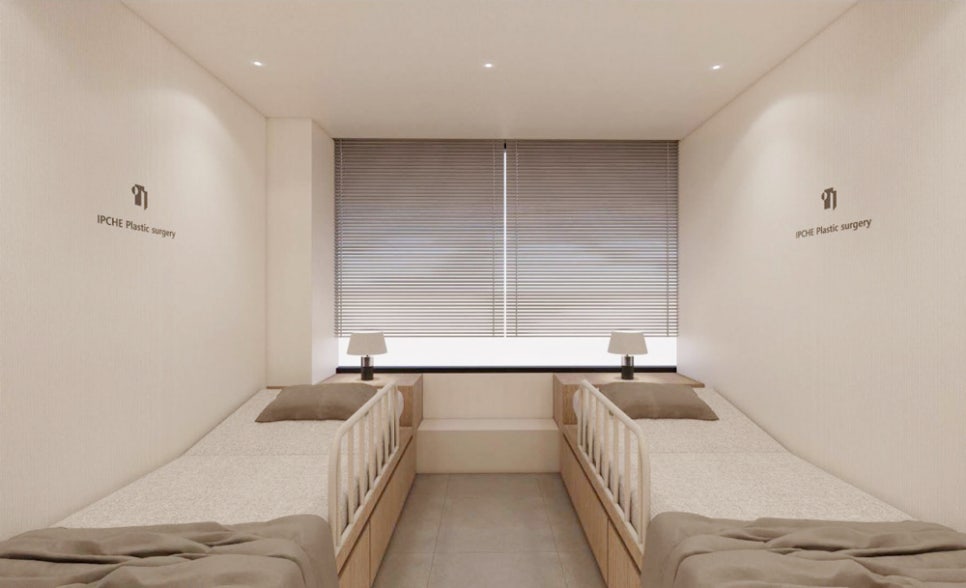
After surgery, we provide one-day hospitalization and operate a dedicated recovery room, along with a blood pouch and pressure dressing, 24-hour nursing response, and an emergency contact channel for patients.
Precautions After Surgery (Rules to Prevent Emergencies)
For one week after surgery, please be especially sure to follow the instructions below.
-
Do not lift heavy objects
-
Drink enough water to prevent constipation
-
Do not strain excessively during bowel movements
-
Do not sleep face down
-
Avoid bending your head down and prolonged smartphone use
-
Be careful of sudden coughing or sneezing
-
Do not press on the surgical area
-
If there are any abnormal symptoms such as bleeding, firm swelling, or difficulty breathing, contact the hospital immediately
Contour surgery is not a dangerous surgery.
However, because the scope of surgery is large, it is very important to have the procedure done at a hospital with a well-established system for surgery, recovery management, and emergency response.
If patients also pay attention to their condition before and after surgery and contact the hospital immediately if any abnormal symptoms appear, most problems can be resolved quickly. We will continue to do our best for your safe and satisfying surgery.
Thank you.