Hello, this is Director Jo Hyun-woo of 입체성형외과.
I previously wrote a column about sunken eyes.
There are several methods for correcting sunken eyes.
In my case, I mainly use silicone implants made with a 3D printer, and for those who feel burdened by implants, I perform fat grafting.
Artificial bone can also be used, but because it is not easy to measure the exact amount of bone cement, I use a 3D printer for accurate planning and surgery.
After that, I have had a lot of consultations, but it seems that many patients are worried about implants.
So, to show how safe they are, I operated on my younger brother three months ago.
If you look at my brother’s eyes before surgery:
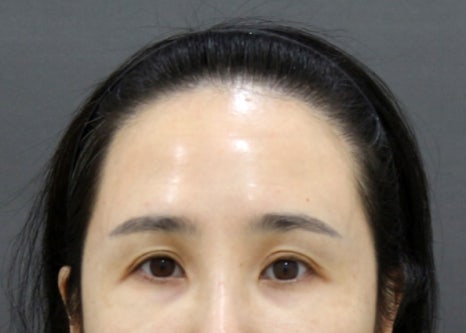
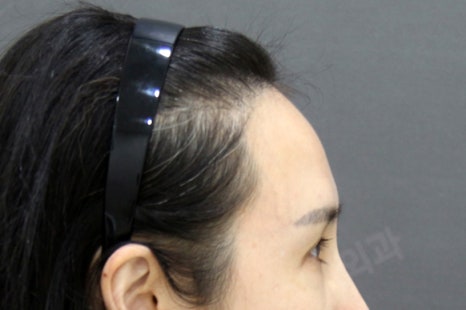
Before surgery to correct sunken eyes
The eyes look small because they are sunken like this, and the hollowing is also visible from the side.
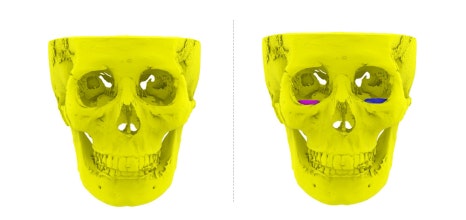
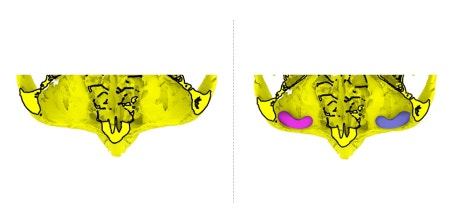
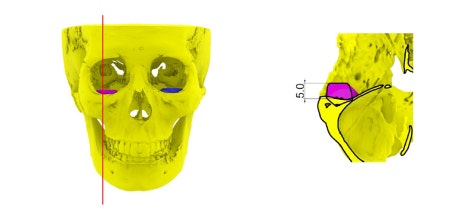
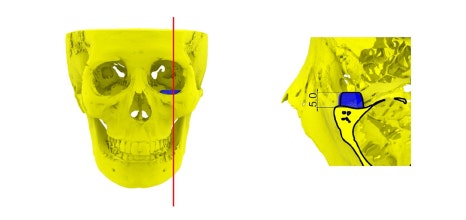
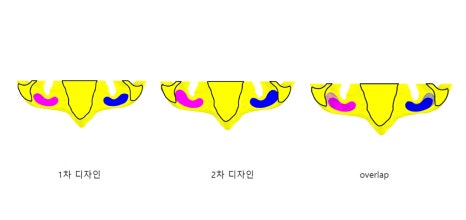
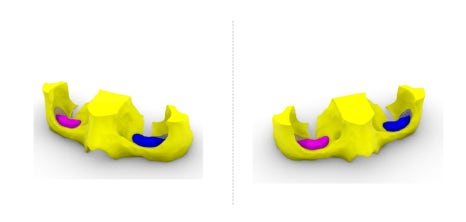
Orbital design and detailed measurements of the custom implant
Before surgery, a CT scan was taken and we planned how far forward to advance it.
The protrusion of the eyeballs measured at the ophthalmology clinic was 12 mm / 12 mm, and we set the preoperative plan with a goal of about 2 mm of advancement.
If you look at the final shape of the actual implant, it measures about 0.5 cc.
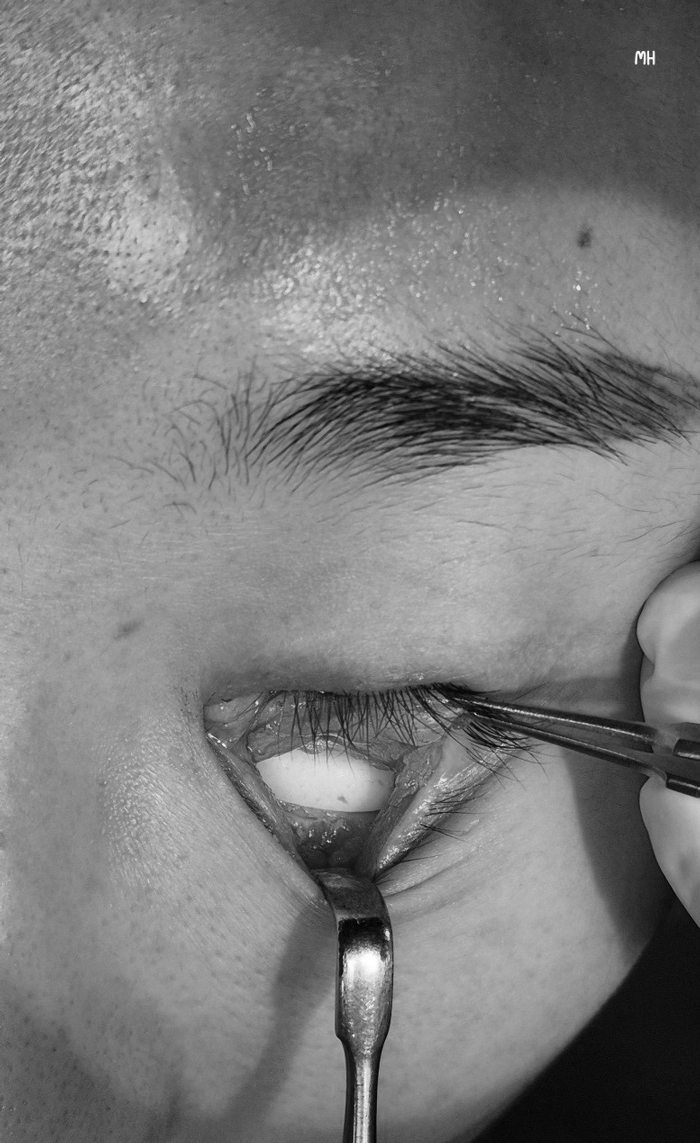
Actual surgery scene for correcting sunken eyes
The surgery is completed by making an incision through the conjunctiva under the eye and fixing the silicone to the periosteum so that it does not move.
This surgery takes about 1 hour under sedation anesthesia, and if there is not much bruising, the swelling goes down in about 1 to 2 months.

Photo from 1 month after surgery to correct sunken eyes
This is a side-view photo taken one month after surgery. You can clearly see that it has moved forward.
And if you look at the photo from 3 months after surgery:
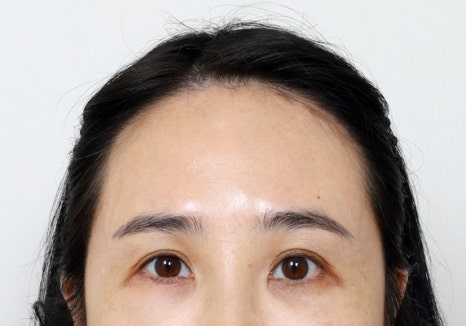
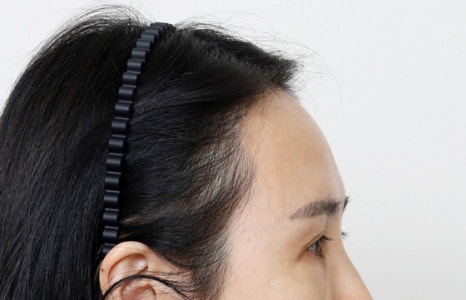
Progress photos 3 months after surgery to correct sunken eyes
You can see that the eyes look clearly larger from the front after surgery.
Also, from the side, you can confirm in the photo that the previously sunken eyes have become more protruded.
For accurate confirmation, the ophthalmology clinic measured the degree of protrusion, and it was measured at 13.5 mm / 13.5 mm for both eyes, confirming that they had moved forward by 1.5 mm each. In fact, this is a little short of the 2 mm goal, but I think it is a sufficiently satisfying result.
Of course, my brother is satisfied too.^^
After my brother’s surgery, the volume was increased to 1 cc, and there was also a patient whose protrusion reached 2.5 mm, so I think we now have a guideline for how much volume is needed.
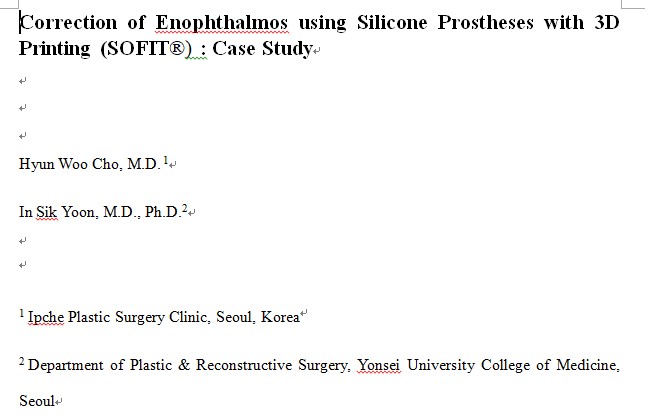
We are also submitting a paper on the correction of sunken eyes with a professor at Severance.
Many patients worry about the safety of silicone implants, but I think that artificial bone or titanium pins are still foreign substances either way.
I think fat grafting is an incomplete procedure because it is not possible to know the exact amount of fat absorption.
Silicone implants are materials that are safely used in many fields, so there is probably no need to worry too much.
As a plastic surgeon, the sense of accomplishment I get when I resolve patients’ complexes gives me great strength.
In the case of sunken eyes as well, it seems that I started not because of my own will alone, but because patients desperately wanted it.
It is not a very large surgery, so please do not worry too much. If you consult about it, I think you can get sufficiently good results.
Thank you.