Hello, this is Director Hyunwoo Jo of Ipcheuk Plastic Surgery.
Today, I’ll talk about one of the methods used in contouring surgery: shaving (grinding down the bone).
There are also osteotomy procedures that cut the bone, but even without cutting the bone, it can be ground down using a method called shaving.
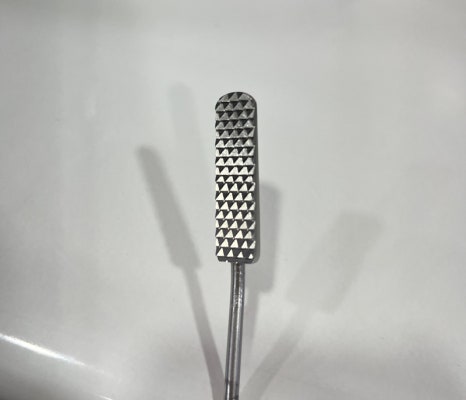
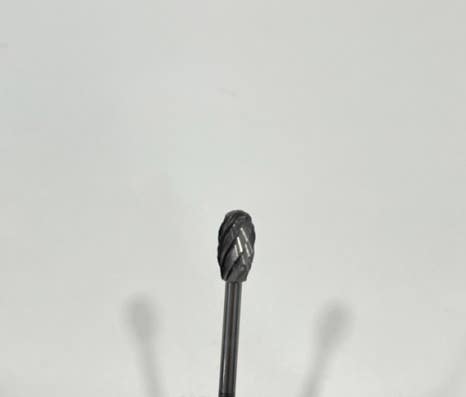
Rasp / Burr
As shown in the photos, the bone can be ground down using a surgical instrument called a Rasp, and when the amount of bone to be removed is small, a surgical instrument called a Burr is used to grind the bone.
Then in which surgeries can this kind of shaving be done?
Looking at the history of zygoma surgery,
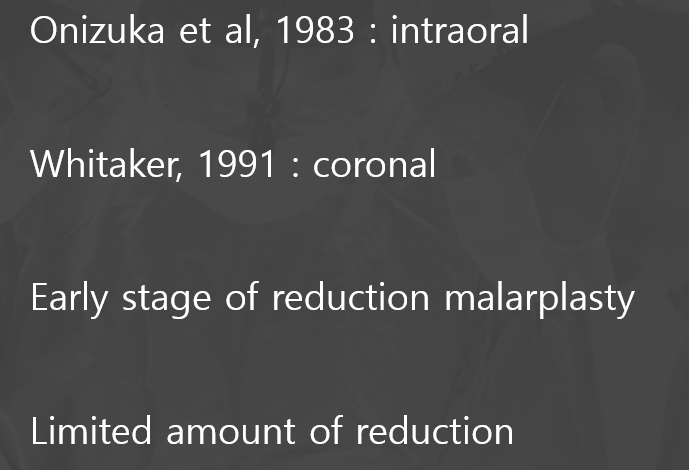
In 1983, people began reducing volume by grinding down the cheekbone. It is a surgical method with a long history.
However, because the instruments at the time were not very good, grinding the bone down took far too long, and this method gradually disappeared.
As time passed, from the late 2010s, doctors began performing surgeries that reduced the cheekbone by grinding the bone again, and with improved instruments, a much larger amount could be ground down very quickly.
But to grind down the entire cheekbone, extensive dissection is required, and the bone in areas other than the 45-degree zygoma is less than 5 mm thick. Sometimes, when I see patients who have had shaving done in those areas, the bone has become as thin as paper.
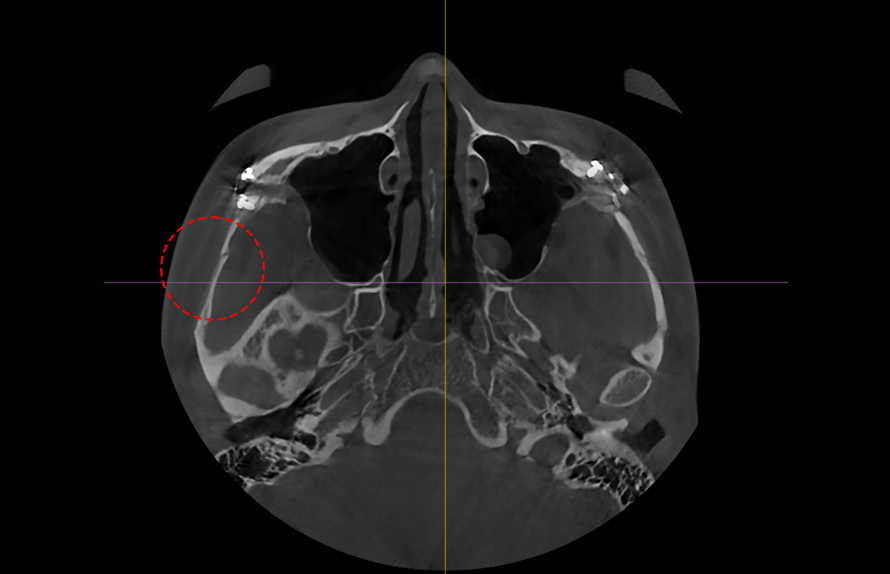
If you look at the CT above, this is a patient who came to the clinic because the zygomatic arch had become too thin after shaving at another hospital a few years ago.
It had become so thin that it could break with pressure from a hand, so you need to be very careful in such cases.
In my case, I only shave the 45-degree area of the cheekbone.
That is because the 45-degree cheekbone is thick, so it is difficult for shaving alone to thin the bone to a dangerous degree.
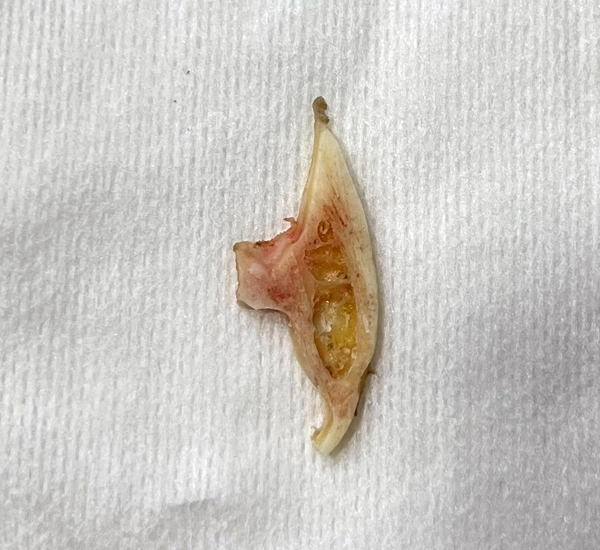
This photo shows a cross-section of the 45-degree cheekbone.
As you can see, the outer cortex is about 3 mm thick.
Of course, it does not mean that shaving beyond the cortex is impossible, but because the inner cancellous bone is an area where there is a lot of bleeding, careful shaving is also helpful for recovery after surgery.
Also, the area where shaving is done in contouring surgery is the lateral cortical shaving performed together with square jaw surgery.
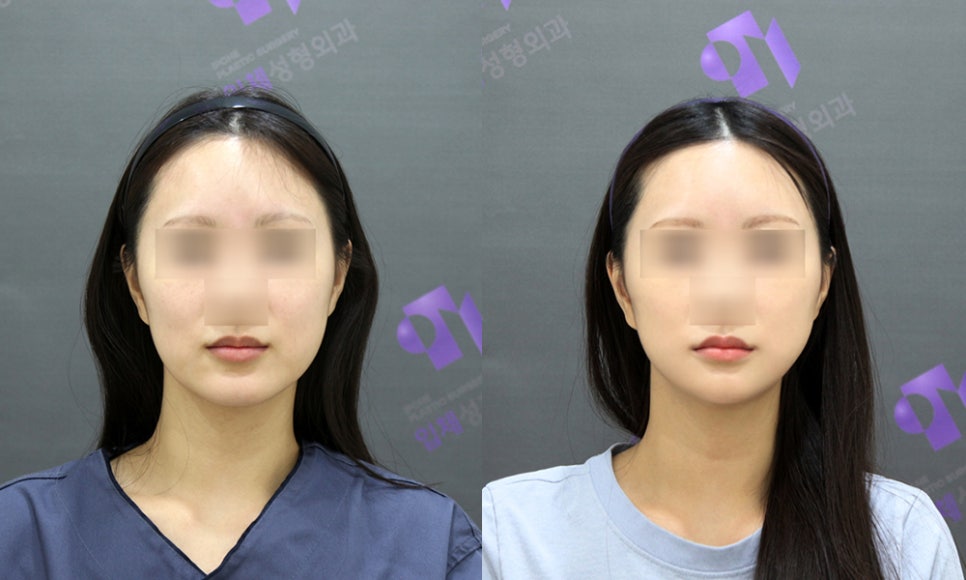
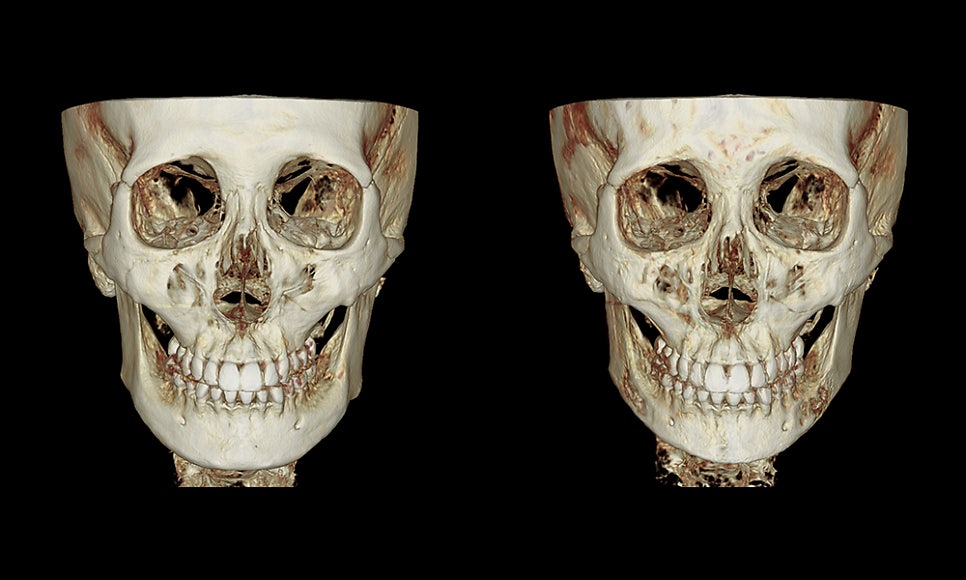
Square jaw surgery, lateral cortical shaving, chin surgery
This patient underwent square jaw surgery, lateral cortical shaving, and chin surgery.
If the nerves in the cortical area are positioned too close, or if the cortex is not very large, shaving alone can be effective.
I also resolve it with shaving when cortical osteotomy is not necessary.
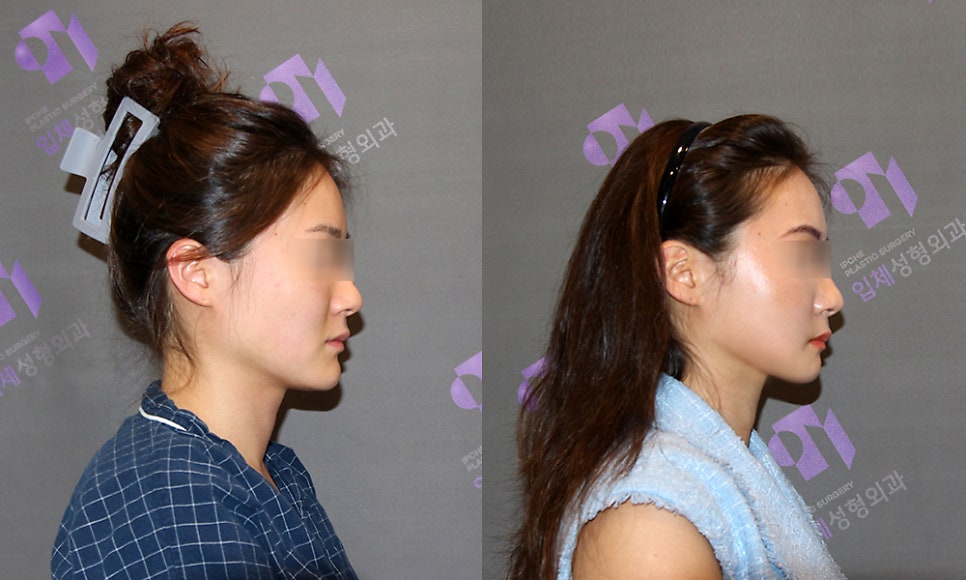
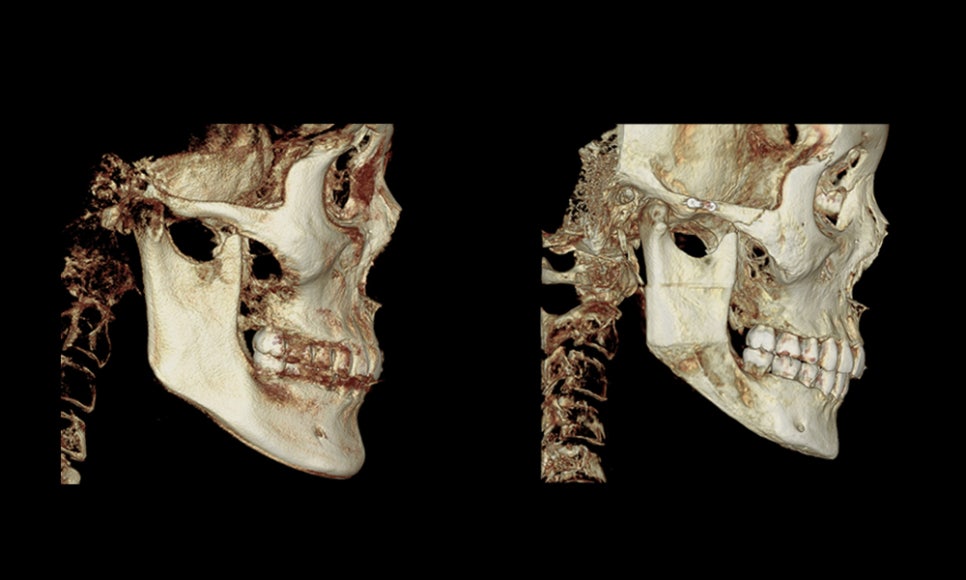
Square jaw surgery, chin surgery, chin shaving
This patient wanted to correct the impression that the chin was protruding, so contouring surgery was performed together with chin shaving.
In cases where shaving is done in chin surgery, shaving is used to trim areas where the chin appears asymmetrically enlarged on one side or where there is a protruding portion.
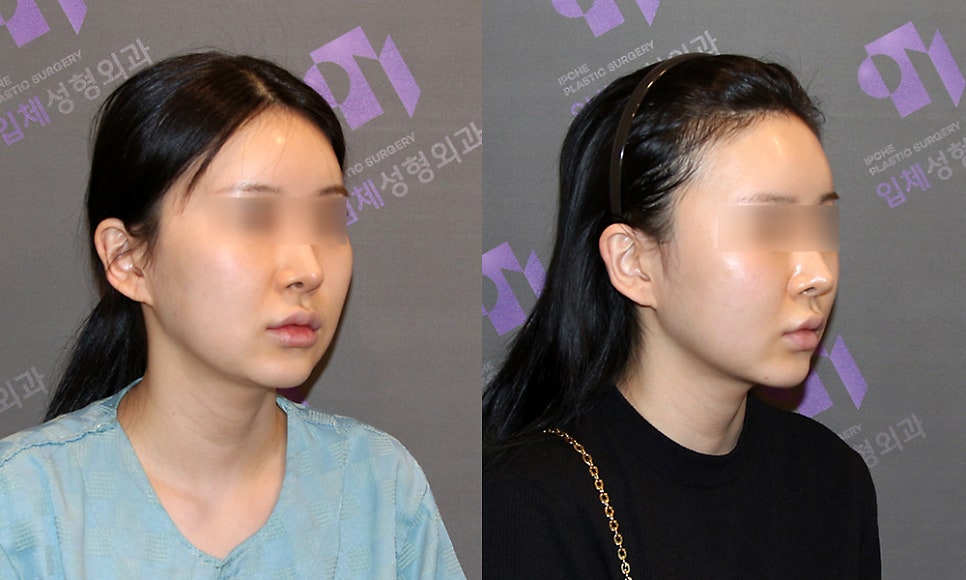
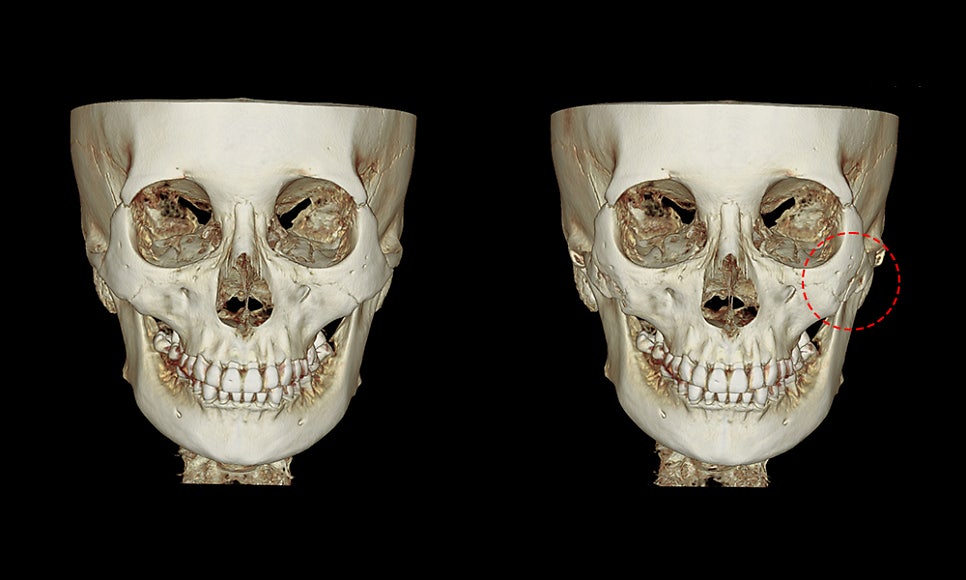
230-degree three-dimensional zygoma reduction surgery (45-degree zygoma shaving)
One of the questions many people ask about shaving is whether the bone that has been ground down grows back.
Of course, after shaving, the outer surface becomes slightly covered with new bone.
However, it does not grow back to the extent of the 3–4 mm that was ground away, so there is no need to worry too much.
In conclusion, the surgical method called shaving can produce good results as an alternative to osteotomy when used appropriately.
However, if shaving is performed on thin bone or excessively, the bone may become unstable, bleeding may increase, and other side effects may occur.
Therefore, shaving only the necessary amount in the necessary area seems to be a safer way to achieve more satisfying results.
Thank you.