Hello, I’m Director Hyun-woo Cho of Image Plastic Surgery.
About five years ago, a paper published in China caused controversy.
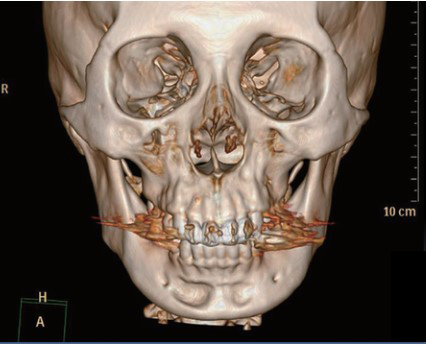
The paper included this image and warned that if you receive filler, bone resorption or erosion may occur, which led to a great deal of debate.
There were many comments such as that it was a paper written by a doctor in China with insufficient clinical experience, and many people thought it was impossible.
In fact, people who frequently get filler procedures usually do not undergo this kind of CT scan, so there does not seem to be many ways to know if something like this has occurred.
So today, I would like to share what I have thought after looking at the CT scans of real patients.
(Please note that this is my personal opinion.)
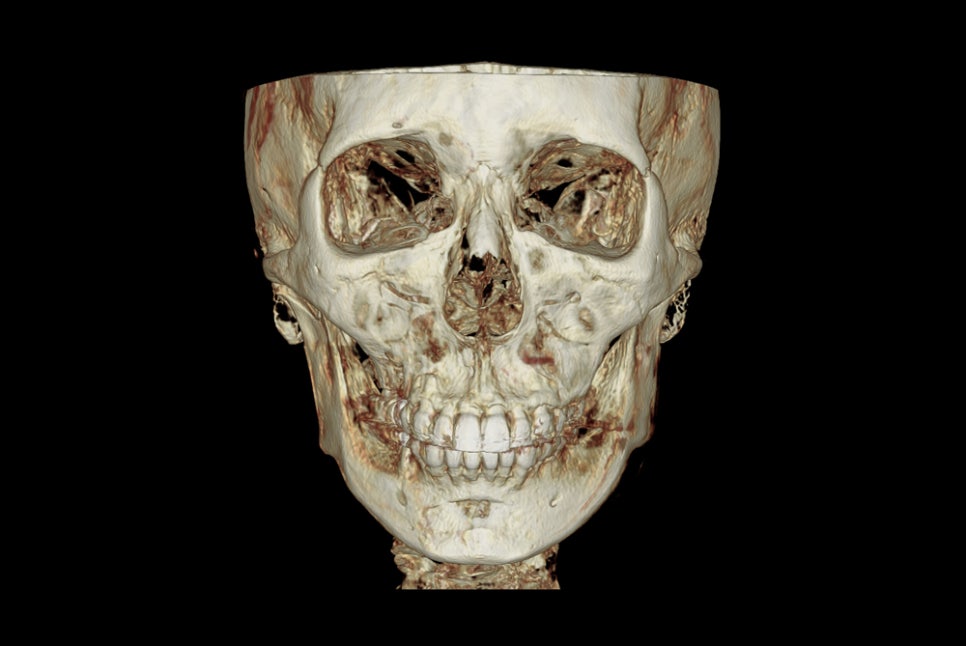
This image is a CT scan of a patient who visited our clinic because they wanted their chin implant removed.
As you can see from the front chin area in the image, the bone has been eroded in the shape of the implant.
For a clearer view, if you look at the side view:
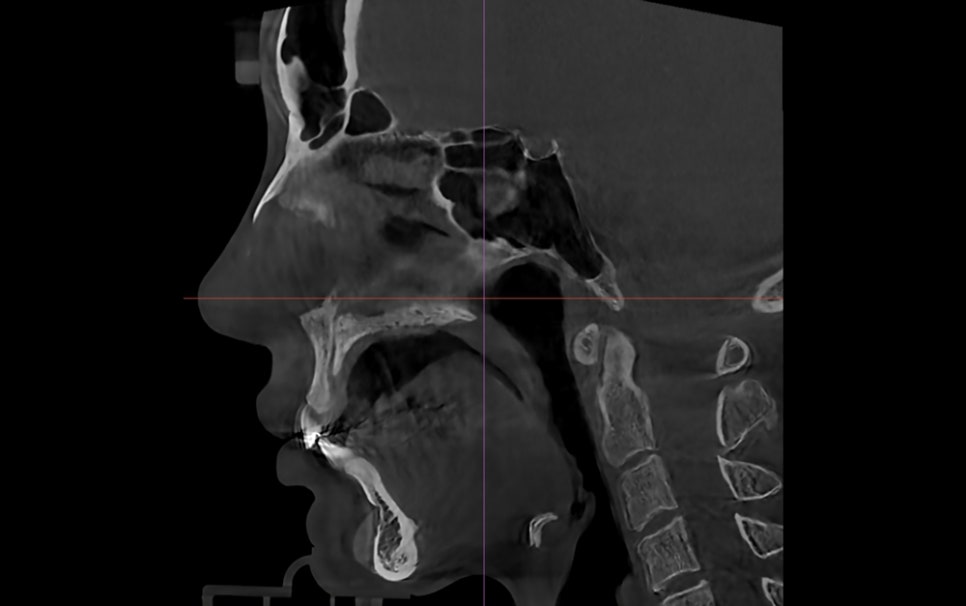
The bone has been eroded in the exact shape of the implant.
Cases like this have existed for a long time, so there has been a strong perception that implants are risky.
In fact, the muscle called the “Mentalis” in our chin is a very strong muscle.
It was widely believed that when an implant placed beneath this muscle is compressed by the muscle, pressure occurs and the bone is resorbed and eroded.
Then does erosion always happen with implants?
Not necessarily.
The center part of the front chin bone has a very thin cortex, so erosion can occur more easily, but by looking at many CT scans and patient outcomes, we could see that if the implant is fixed properly to the lower edge of the chin bone, bone erosion is reduced.
Therefore, when patients get an implant, I strongly recommend that it be fixed in place, and I believe that as long as excessively large implants are avoided, the surgery can be performed safely.
Then what about bone erosion in the case of filler?
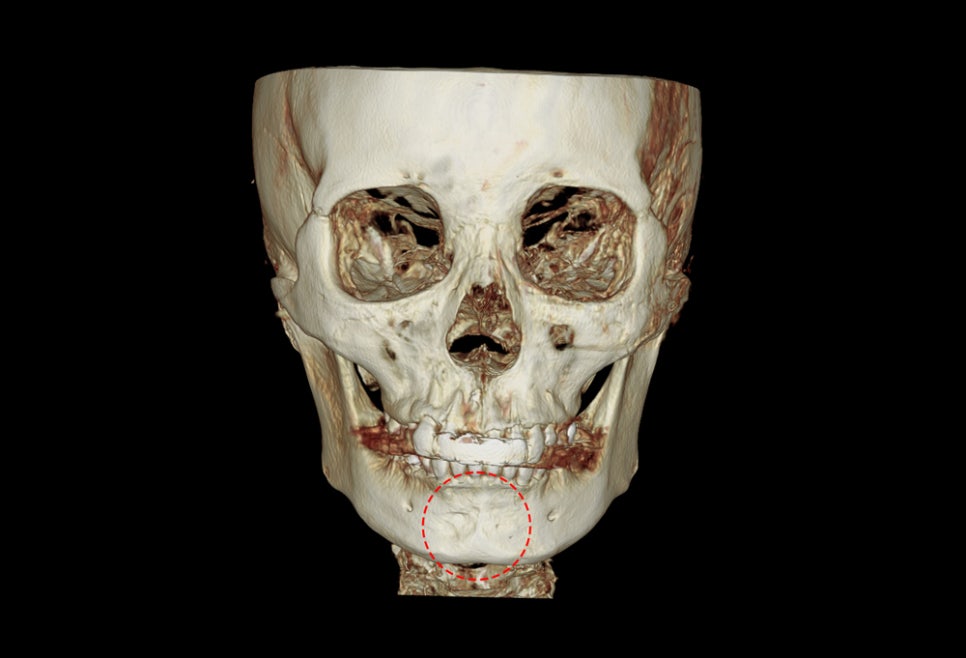
There are also various theories in this case.
People have said many things, such as that too much filler was injected or that it was left in a clump because it was not molded properly.
My personal opinion is that this can happen even when only a small amount is injected, and even when molding is done.
In fact, filler in the chin is injected into the center of the chin to make the face appear more V-shaped.
So why are both sides hollowed out like that?
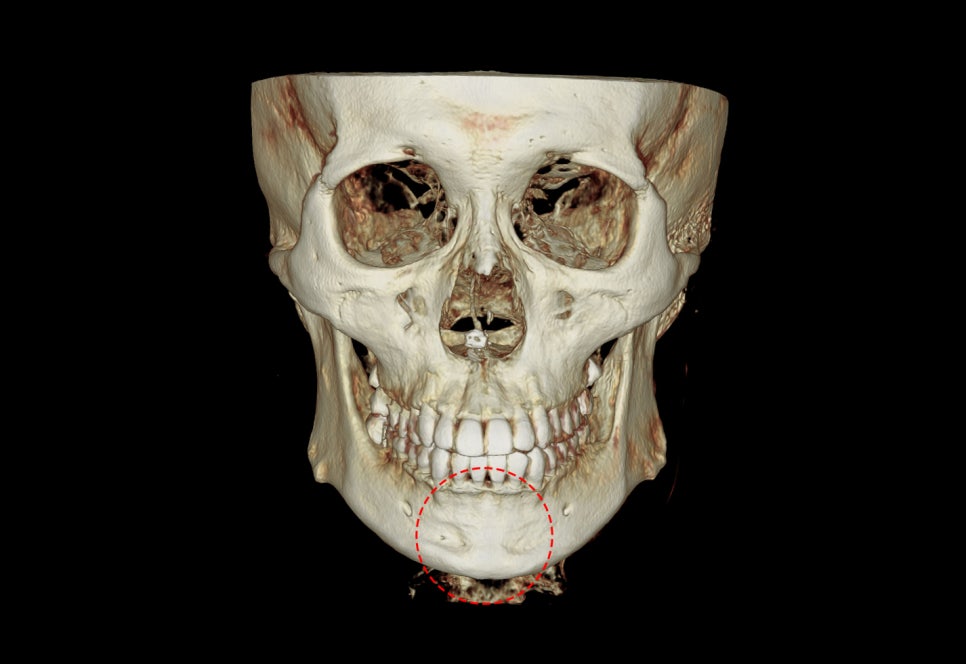
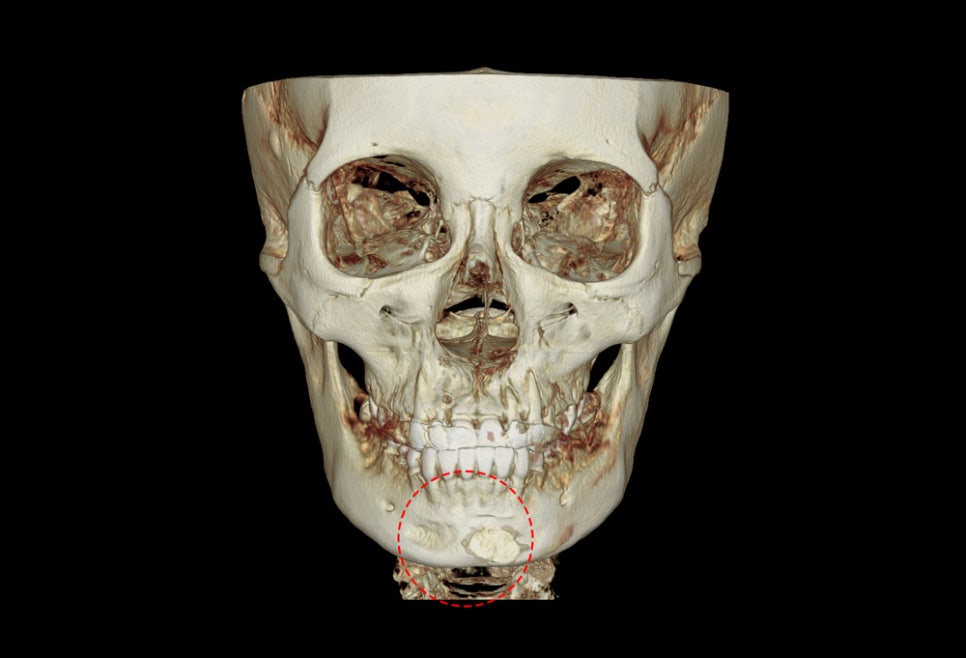
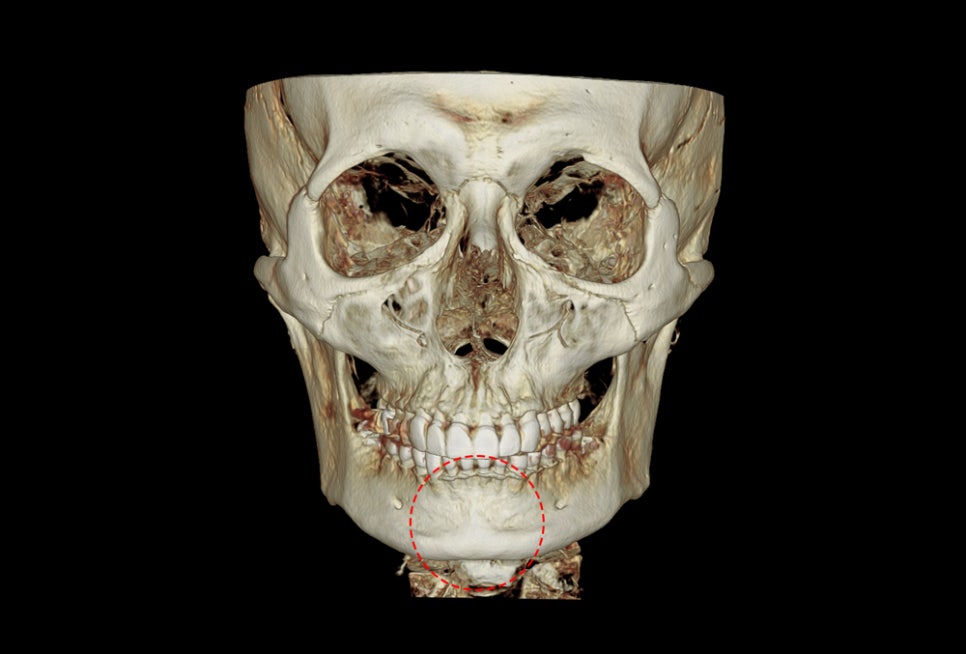
Let me show you more CT scans taken at our clinic.
If you look at the CT images above, it is interesting that both sides of the front chin bone are hollowed out like that.

This is an anatomical image of the front chin muscles.
If you look closely at the image above, the chin muscle called the Mentalis is hollowed out in the exact shape of the muscle.
As the filler placed in the front chin shifts toward the Mentalis due to muscle movement, the enlarged “Mentalis” muscle causes erosion in the thin-cortical area of the front chin bone.
When performing surgery, I find that more people than expected have bone erosion.
Fortunately, since this is not an area where fixation pins need to be used, there is no major problem when advancing the chin and fixing it in place during surgery, but there are occasionally cases where the hollows are so deep that surgery becomes difficult.
In fact, when I asked several other doctors about this, they said that the exact cause or mechanism has not been clearly identified.
So I am cautiously sharing my opinion in this column.
So far, I have explained whether bone erosion can occur with chin implants and filler.
Thank you.