Hello. I’m plastic surgeon Heo Jae-won, and I perform rejuvenation surgery at Instyle Plastic Surgery.
Today, I’ve brought another Q&A for one of the questions I receive often.

Q. If a face lift and lower blepharoplasty are planned at the same time, is it really necessary to add a midface lift during the lower blepharoplasty?
There would also be a financial burden, and the recovery period seems like it would be longer, so I’m wondering whether it is truly necessary.
I was really glad to receive this question.
It is actually one of the key points I make sure to explain during every consultation.
And this question was especially meaningful because it goes beyond simple curiosity and reflects the practical concerns of someone seriously considering surgery.
To give the accurate answer first: a midface lift and a face lift have some overlapping effects, but fundamentally they are surgeries that address completely different areas.
Once you understand this, it becomes easy to see why combining the two procedures is important, and why each surgery is independently necessary.
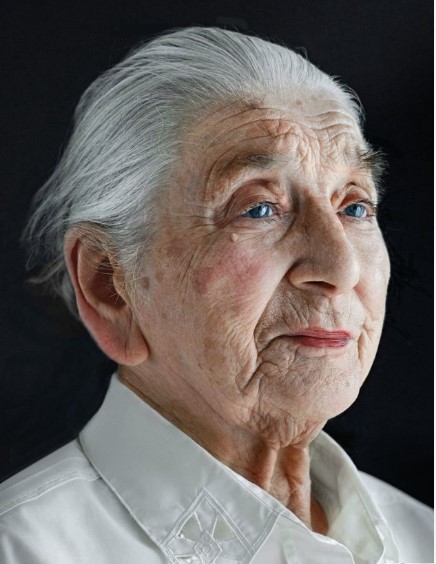
Even for the same nasolabial fold, the upper and lower parts need to be approached differently.
Many people think of the nasolabial fold as one continuous line, but in reality, the aging appearance of the upper and lower portions is caused by completely different anatomical factors.
The area addressed by a midface lift is the upper part of the nasolabial fold and the area where cheek volume has decreased.
With aging, the cheek fat descends downward, and at the same time, volume loss creates shadows and hollowness, which are the main causes in this area.
To put it more precisely, the area shown in my previous post above the nasolabial fold, between the cheekbone and the front cheek, that is, the space called the premaxilla space, is a completely separate region that a face lift does not approach at all.
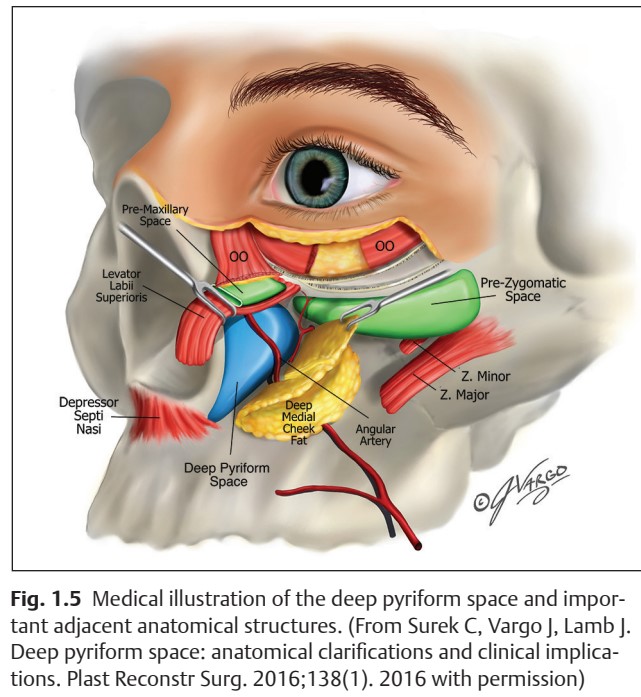
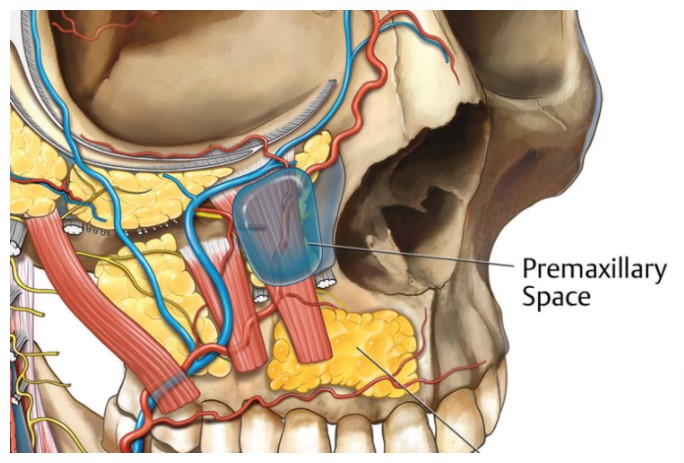
This area does not show a lifting effect just because it is pulled from the side in a face lift.
That is because the main cause of sagging in this area is vertical descent due to gravity, so meaningful improvement requires dissecting vertically and lifting it upward.
What is important here, however, is that the effect of a midface lift is not limited to simple lifting.
You can also get a volume redistribution effect at the same time, so you get the two benefits of lifting the sagging area while also filling in the hollowed area.
It is like smoothing out a blanket that has spread out by redistributing the cotton that has gathered to one side.
It is not just pulling it upward; it is returning the volume to where it should originally be.
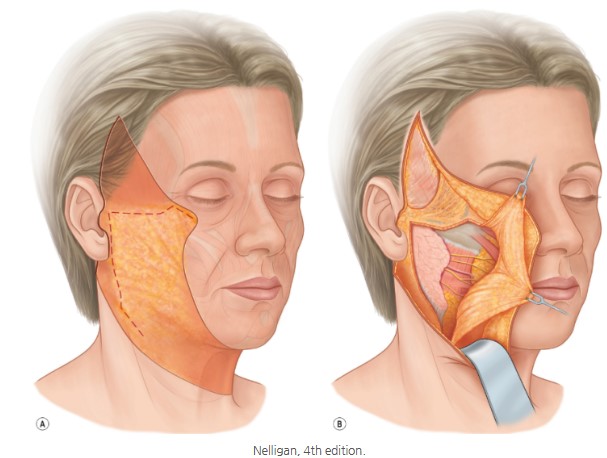
By contrast, the lower part of the nasolabial fold, the jawline, and the neck line are the areas addressed by a face lift.
In these areas, the main causes are loosening of the SMAS (superficial musculoaponeurotic system) and decreased skin elasticity, so a face lift that lifts from the side is effective.
But there is an important point that is easy to overlook here.
If only the lower part of the nasolabial fold is improved while the upper part remains unchanged, the overall harmony is disrupted and the result can look unnatural.
In consultations, I often meet people who want revision surgery because they feel, “I had a face lift, but I still look old.”
In most of these cases, the problem is that a midface lift was not performed together.
So even if the obvious wrinkles or sagging are located in the lower cheek, for people whose front cheek and upper nasolabial area still look heavy, the overall contour is completed only when that area is lifted with a midface lift.
So the conclusion is this:
A lower blepharoplasty alone does not provide a midface lifting effect. The combination of lower blepharoplasty and a midface lift is needed.
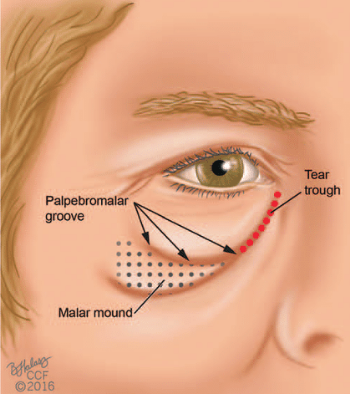
Lower blepharoplasty mainly focuses on removing or repositioning under-eye fat and improving sagging skin beneath the eyes.
It is difficult to solve the fundamental problem of front-cheek sagging or volume loss. In the same context, a face lift alone does not provide enough improvement in the front cheek.
Each procedure may have some secondary effects, but if the goal is to lift each area precisely, performing both surgeries together is the most ideal approach.
Here is a question patients often ask.
“Then does that mean the cost doubles, and the recovery period gets longer?”
In reality, that is not the case. Having both procedures done at once is much more efficient in terms of overall cost and recovery time than having them separately.
Also, anatomically, the two procedures deal with related areas, so when they are performed together, the result tends to be more natural and harmonious.
This is especially common in women in their mid-40s and older, when these combined changes appear frequently, and in such cases, it is difficult to achieve a satisfying result with only one surgery.
So when it is hard to understand, I sometimes explain a midface lift simply by saying, “For front-cheek sagging, front-cheek lifting is the answer.”
In this way, the surgical scope is determined not by the incision location or outward appearance alone, but by which anatomical area we aim to improve.
And only with that anatomical understanding can we establish the optimal surgical plan for each patient.
The surgical plan may also vary depending on a person’s lifestyle, the amount of recovery time they can take, and the degree of result they are seeking.
Some people want a natural improvement, while others want a more dramatic change.
Considering all of these factors together to create a personalized surgical plan is the surgical philosophy I pursue.
The reason such detailed explanation is needed is not simply to describe differences in technique, but to help each patient understand their condition accurately and make a wise choice. I believe sufficient communication and understanding between the medical team and the patient are the first conditions for a successful surgical result.
If you have any questions, please leave them in the comments anytime. Your interest and questions are what help create better content.
Thank you.