Hello.
I am Huh Jae-won, a board-certified plastic surgeon at IPPUM Plastic Surgery, where I perform rejuvenation procedures.
In this post, I will explain in detail how I planned the surgery to achieve the best results, based on an actual facelift case involving a woman in her 40s.
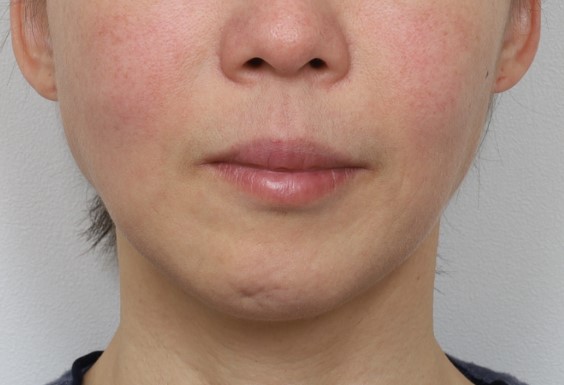
Looking first at the patient’s frontal photo, there is almost no noticeable sagging, and only the amount of fullness at the chin tip and lower face is visible.
From the front alone, this is a face that may not seem to have any major issues.
However, the patient herself wanted to improve sagging, and at that point, what must be checked is the oblique side view.
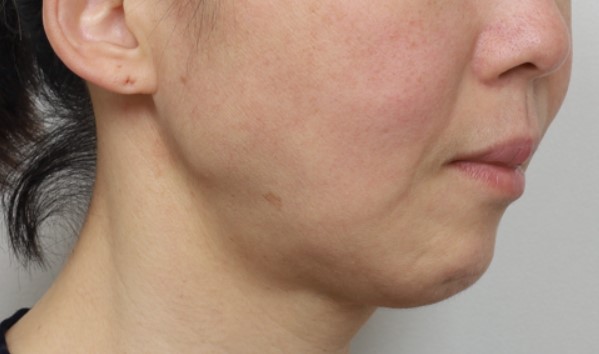
When moving to the side view, the long, deep nasolabial-to-mouth corner line that was not clearly visible from the front, along with the uneven contour of the jawline, can be observed clearly.
This is not simply sagging, but a continuous boundary caused by volume and structural issues.
In other words, the nasolabial folds and lack of definition along the jawline that the patient was concerned about become even more pronounced from the side.
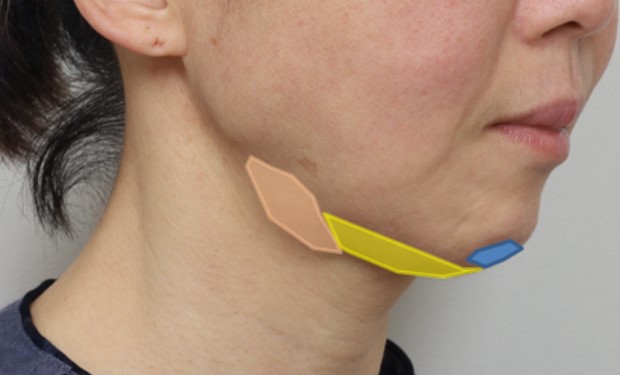
Looking at the jawbone alone, it has a relatively smooth shape. Therefore, the problem was not the bone, but the soft tissue volume above it.
The three key causes were:
-
Submandibular gland prominence
-
Double-chin fat (superficial fat + deep fat)
-
Mentalis muscle overactivity + insufficient chin volume
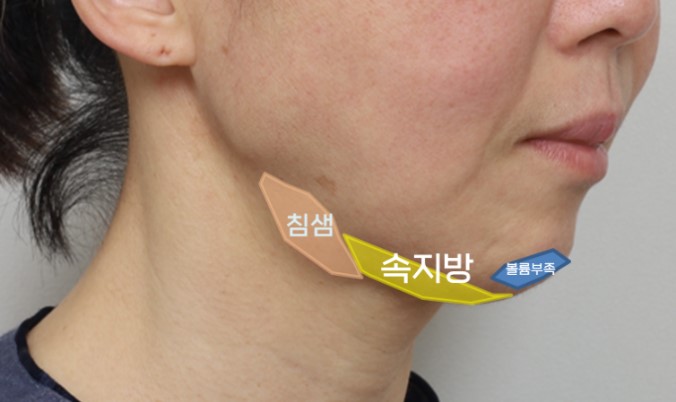
Ultimately, the uneven jawline is the result of the combined effect of fat, the salivary gland, and muscle.
A facelift is fundamentally effective for addressing sagging.
However, when it comes to volume—especially jawline and double-chin concerns—
-
the salivary gland
-
fat
-
chin volume
must all be addressed together, or the level of satisfaction after surgery may be lower.
That is why I use the concept of a contouring facelift, which includes volume adjustment rather than a simple facelift.
Some people also refer to this as soft contouring.
Surgical approach and plan
This patient wanted a natural change, so I approached the case with a single-plane deep-plane facelift with a limited dissection range.
The additional plan was as follows:
In other words, the procedure was designed to address sagging and adjust volume at the same time.
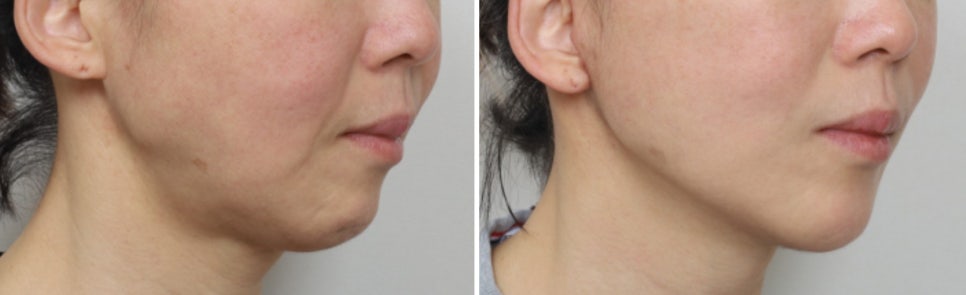
Looking at the unretouched 3-month follow-up photos, the jawline is much more defined, the added chin volume helps the overall facial impression look more refined, and the improvement in the double chin makes the side contour clearer. In cases with significant gland prominence, reduction surgery may be more effective, but in some cases, the combination of a facelift and Botox can produce sufficient change.
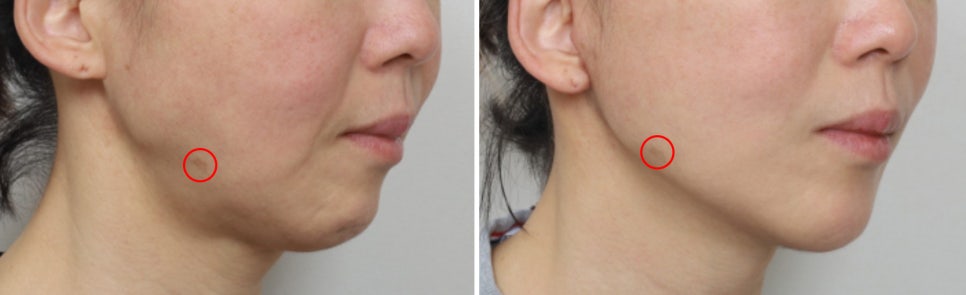
You can also see the degree of skin tightening by looking at the change in the position of the markings.
Imagine a watermelon inside a sagging plastic bag.
If you reduce the watermelon to the size of an apple and then pull the plastic bag tight, the shape will look much neater, right?
That is exactly the principle behind today’s surgery.
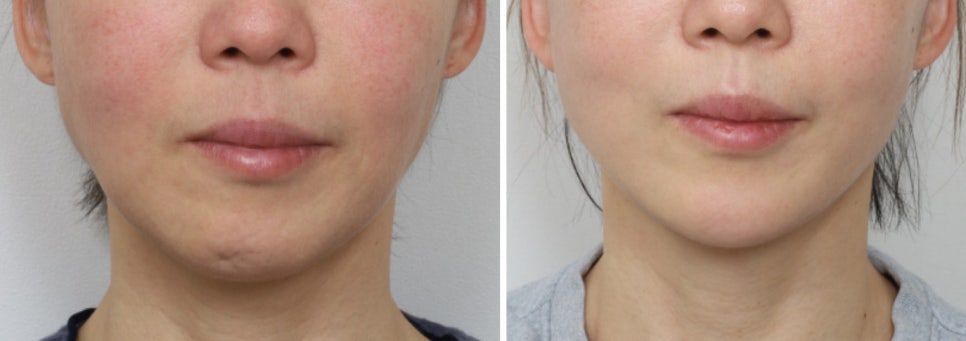
From the front, the effect of the chin volume is more noticeable, and despite adding volume, the facial contour appears slimmer.
What I want to emphasize once again through this case is that in facelift results, the preoperative plan determines half of the outcome.
Thank you for reading.