Hello, this is Director Jo Hyun-woo of Imsuk Plastic Surgery.
After contour surgery, once your appearance has settled to some extent, many people start worrying about this.
“Now I want to focus on managing facial sagging, but I heard that if there are fixation pins, I can’t get Ulthera or Thermage.”
There are mixed stories online, such as “laser procedures are dangerous if there is metal” and “the heat can melt the pin or cause problems,” but it is worth calmly整理ing how medically accurate these statements are.
What are the remaining “fixation pins” after contour surgery made of?
The pins used to fix the bone after contour surgery are mostly made of titanium.
I have written about titanium pins before.
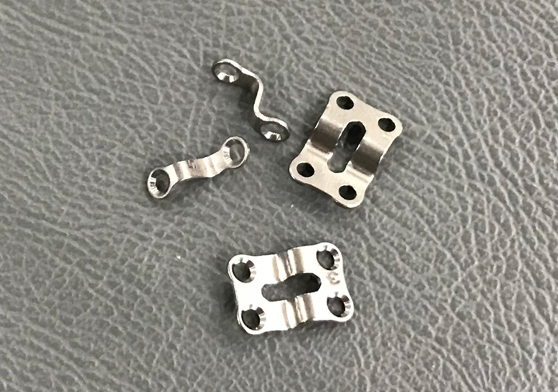
Titanium is known as a stable metal with high compatibility with the human body, little inflammation or corrosion, and the ability to remain in the body for a long time.
In fact, it has been used for decades in various fields such as dental implants, orthopedic fracture surgery, and facial fracture surgery.
In papers as well, titanium is described as a standard medical metal with excellent biocompatibility.
Therefore, the fixation pins left after contour surgery should be seen not as dangerous foreign objects, but as medically verified fixation devices.
What kind of “laser” are Ulthera and Thermage?
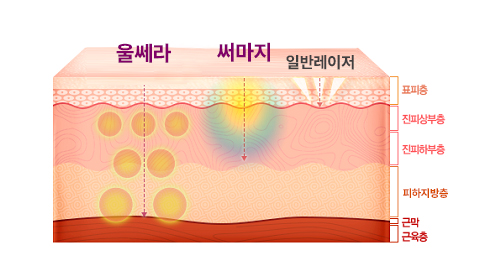
This is where many misunderstandings arise. Ulthera and Thermage are not lasers.
Ulthera is a device that uses high-intensity focused ultrasound (HIFU) to deliver energy only to a specific depth (the SMAS layer), and Thermage is a device that uses radiofrequency (RF) to deliver heat mainly to the dermis layer of the skin.
Papers also explain that ultrasound and radiofrequency energy act on tissue in a different way from lasers (light).
This means that it is not accurate to apply concerns about lasers reacting with metal directly to Ulthera and Thermage.
Still, isn’t there a risk because of the “heat”?
A common feature of medical energy devices is that they ultimately generate heat.
In fact, bone tissue can be damaged if it rises above a certain temperature, and papers generally report that the risk of bone damage increases above about 47 to 50 degrees Celsius.
So some studies have reported that when a strong laser was directly applied to a metal surface, the temperature between the metal and the bone could rise.
However, an important premise here is that these studies involved experiments in which a laser was directed at the metal itself.
The fixation pins left after contour surgery are usually located deep inside the bone.
Ulthera focuses ultrasound only at a predetermined depth, and Thermage delivers radiofrequency energy mainly to the dermis.
Therefore, the procedure is not structured so that energy is directly applied to the fixation pin, and it is performed with both the depth and intensity of energy controlled.
In actual papers as well, it is summarized that “the presence of a titanium implant does not automatically make ultrasound or radiofrequency procedures contraindicated.”
However, they emphasize that caution is needed depending on the strength of the energy, the depth of delivery, and the treatment area.
To summarize, this is how you should understand it.
In the end, the issue is not whether it can or cannot be done, but when and how it is done.
In situations such as shortly after contour surgery, when bone union has not yet fully stabilized, when the area is relatively close to the pins such as the cheekbone or chin, or when strong energy settings are needed, it may be necessary to adjust the timing of the procedure or lower the energy intensity to avoid unnecessary heat stimulation.
It is not that you absolutely cannot receive Ulthera or Thermage just because there are pins left after contour surgery.
Ulthera and Thermage can clearly help manage sagging after contour surgery, but if you have a history of contour surgery, they are also procedures that require even more careful planning.
If you are considering a lifting procedure after contour surgery, I recommend having 충분한 상담 with the medical staff and receiving treatment at a place that can provide a personalized procedure by comprehensively considering the time elapsed since surgery, the location of the pins, and the purpose and intensity of the procedure.
Thank you.