Hello, this is Director Jo Hyun-woo of 3D Plastic Surgery.
One of the symptoms patients ask about relatively often during recovery after contouring surgery is bloody sputum accompanied by coughing.
If you experience this right after surgery, anyone would naturally be concerned.
However, in most cases, this is an understandable part of the recovery process and is often far from a serious complication.
Today, I’ll explain why bloody sputum can occur after contouring surgery, how long it usually lasts, and when you should return to the hospital.
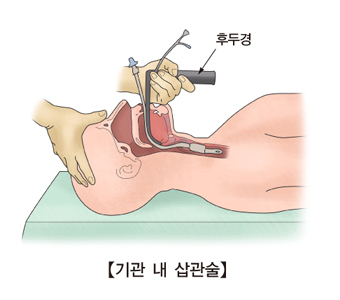
Facial contouring surgery is performed through incisions inside the mouth, such as for the cheekbones, square jaw, and chin.
Most contouring surgeries are performed under general anesthesia, and because endotracheal intubation is used for safe breathing during the procedure, the throat and airway are inevitably exposed to a certain level of irritation.
Common Causes of Bloody Sputum After Contouring Surgery
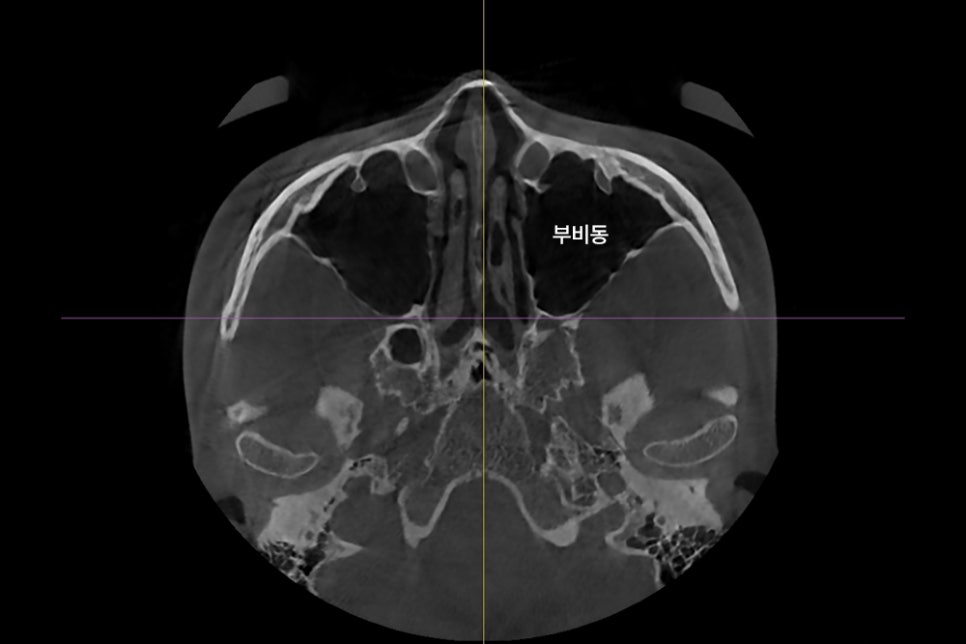
- Drainage of blood that had pooled in the sinus after cheekbone reduction surgery
On CT, you can see an air-filled empty space just inside the cheekbone, and this space is the sinus.
Because cheekbone reduction surgery is performed very close to the outer wall of this sinus, a small amount of blood may seep into the space and collect there immediately after surgery, and this can be seen on CT. In such cases, the normally dark sinus space on CT may appear gray or white due to blood or exudate.
In most cases, as time passes, the mucosal swelling subsides and the pooled blood is naturally drained toward the nose or the back of the throat, which patients often perceive as bloody sputum or nasal discharge. In this case, the actual source of bleeding is not the lungs or bronchi, but blood that had temporarily pooled inside the sinus, and it usually decreases gradually and resolves naturally within 1 to 2 weeks after surgery.
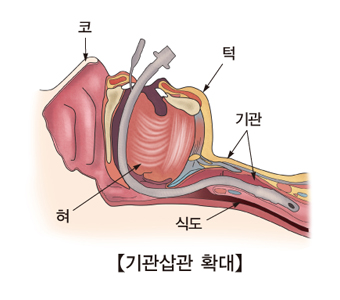
- Minor mucosal injury caused by endotracheal intubation
The most common cause is the endotracheal tube inserted during general anesthesia.
During intubation, minor scratches or pressure can occur on the tracheal or laryngeal mucosa, and as a result, for a few days after surgery, you may feel as though mucus is stuck in your throat, along with a small amount of blood-tinged sputum. In most cases, this is a superficial mucosal injury that heals naturally without any special treatment.
- Blood from the surgical site inside the mouth mixing with sputum
Contour surgery is performed through the inside of the gums and the oral mucosa.
In the early postoperative period, a small amount of bleeding from the oral wound may mix with saliva or secretions, flow down toward the back of the throat while lying down, and then be expelled with a cough as if it were sputum.
So, how long is it normal for this to happen?
During most normal recovery processes, blood-tinged sputum is most commonly seen from immediately after surgery to about 3 days afterward. Within 1 week, it usually gradually changes to clear sputum or disappears, and in most cases it is completely gone within 2 weeks. Therefore, if the amount is small and gradually decreasing, there is usually no need for major concern.
The following situations require further evaluation beyond a simple recovery response.
-
If fresh blood continues to come out
-
If the amount of blood gradually increases
-
If shortness of breath or chest pain is present
-
If blood-tinged sputum continues for more than 2 weeks
-
If fever or severe sore throat occurs together
In these cases, the possibility of laryngeal or tracheal mucosal injury, infection, or, in rare cases, a lung-related problem must be considered, so you should definitely consult the medical staff.
Daily Care to Support Recovery

During the recovery period, it is helpful to keep the following points in mind.
Maintaining adequate fluid intake and using a humidifier can help prevent mucosal dryness, and excessive throat clearing should be avoided.
Take prescribed medications regularly, and smoking must be strictly avoided.
In particular, repeatedly forcing strong coughs in an attempt to bring up sputum may actually delay mucosal recovery.
Today, I talked about cases in which bloody sputum can occur after contouring surgery.
Coughing and bloody sputum after contouring surgery are, in most cases, temporary symptoms caused by irritation of the airway mucosa during general anesthesia and oral surgery.
Also, because blood pooled in the sinus of the cheekbone may be discharged outward, there is usually no need to worry too much for up to 2 weeks.
However, during recovery, it is most important to carefully observe your own symptoms, and if you feel even slightly uneasy, contacting the hospital where you had surgery is the safest option.
Recovery is just as important as the surgery itself. I hope this article helps patients avoid unnecessary worry and receive appropriate help when needed.
Thank you.