Hello.
I am Heo Jae-won, a board-certified plastic surgeon at Integer Plastic Surgery, where I perform anti-aging surgery.
In the previous post, I discussed the topic, "When is the most appropriate time to get a facelift?"
In this post, I’d like to go a step further and cover the topic in a bit more detail.
As mentioned in the previous post, the age groups that consider a facelift tend to fall broadly into two categories: people in their 30s to 40s, and people around their 60s.
And these two groups have quite different perspectives and goals when it comes to surgery.
To get straight to the point, I personally view having a first facelift in your 30s to 40s quite positively.
More specifically, if sagging progresses quickly after previous procedures such as contouring surgery, fat grafting, or liposuction, I would recommend the 30s. On the other hand, if there is no history of such procedures or surgeries, I tend to recommend after the 40s rather than in the 30s.
Why is that?
Every surgery inevitably involves both something you gain and something you give up. We choose surgery only when the benefits gained are far greater than the losses.
Facelift surgery is no different. There is not only what you gain from this surgery; there are also clearly things you must accept.
For example, there are factors such as cost, recovery time, very rare complications, hair loss, and skin issues.
But if I had to choose just one of the most important parts, it would be the scar.
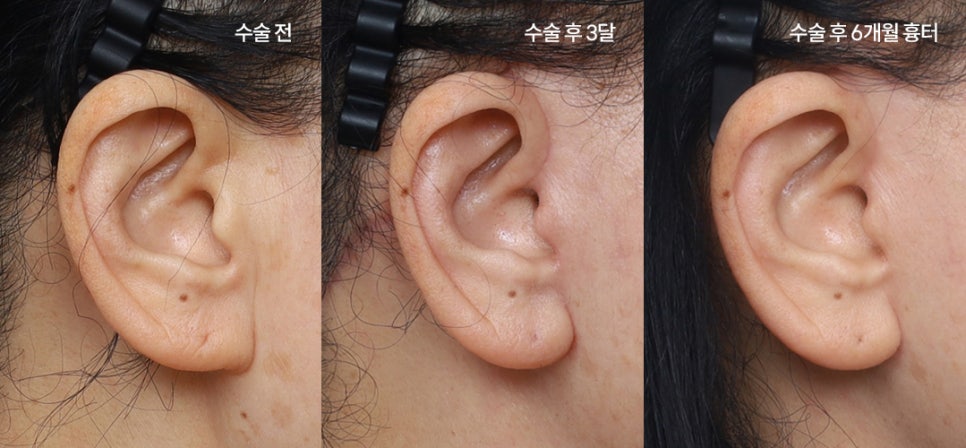
The reason I continuously study incision design and suturing methods is to minimize this scar as much as possible.
In actual consultations, I often feel that even with the same scar, the weight of how it is perceived differs by age group.
The burden of a scar felt by someone in their 20s is clearly different from that felt by someone in their 40s.
In general, the younger you are, the more sensitive you tend to be to visible marks.
That is why techniques have continued to evolve to hide scars—for example, non-open rhinoplasty, endoscopic forehead surgery, oral-incision contouring surgery, and transconjunctival lower eyelid surgery. This is because younger patients feel a much greater burden when it comes to noticeable scars.
However, with facelift surgery, no matter the method, incision scars cannot be completely eliminated.
Of course, the difference can be very large depending on the surgeon’s skill and design.
In the end, the criteria for judging surgery can be summarized as follows.
(Change achieved through surgery) – (Scars and burden accepted from surgery) The larger this value is, the more strongly surgery can be recommended.
Therefore, there must be enough improvement to justify the scar.
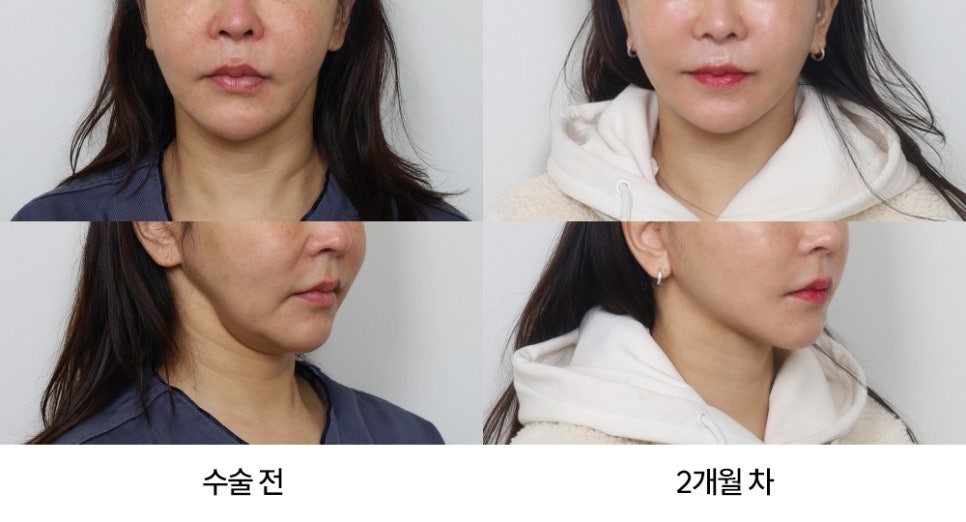
The core of that is improving sagging.
Another important factor is when excess soft tissue makes the face feel heavy and dull; the effect of organizing it to make the face look smaller and more defined is also important.
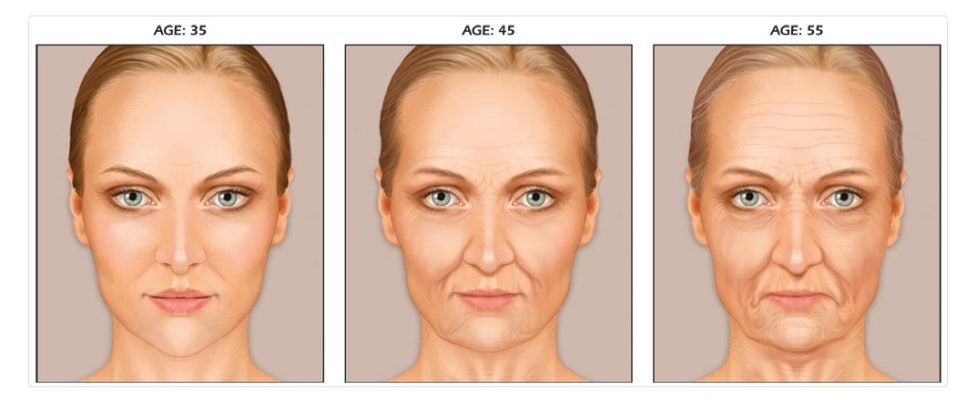
As you get older, sagging and imbalance gradually worsen, and as a result, the effect that surgery can provide also becomes greater.
In other words, (change achieved) – (scar burden) naturally becomes larger.
Conversely, the more a design minimizes scars, the less you lose.
Let me give an example.
If the patient is 18 years old, there is a high chance that there is almost no noticeable sagging.
In that case, (almost no improvement in sagging) – (surgical scar) = a loss, so it is actually wiser not to have surgery.
In my experience, the point at which this value begins to turn positive is around the mid-30s, and I believe the time when you can obtain a clearly meaningful effect is after the mid-40s.
Of course, this is only an average guideline, and there is a great deal of individual variation. Some people may be earlier, and others much later.
Another important variable is a history of contouring surgery.
The greater the amount of bone removed, the more the timing of sagging tends to move up by as much as about 10 years.
So for people who have had contouring surgery, I often recommend a facelift even in their mid-30s.
This is related not simply to age, but also to factors such as the amount of soft tissue present from birth, the amount of facial bone removed, and skin elasticity.
During the consultation process, I determine whether surgery is appropriate and when to do it after analyzing all of this information comprehensively.
In the next post, I will continue explaining this topic a bit further.
If you have any questions, feel free to leave them in the comments.
Thank you.