Hello.
I am Huh Jae-won, a board-certified plastic surgeon at 입체성형외과, where I perform facial rejuvenation surgery.
In consultations at the clinic, I often meet people who are concerned about sagging that appears beside the mouth, commonly referred to as “jowls” or “bulldog cheeks.”
Usually, this refers to the flesh that droops downward from the side of the mouth, as shown in the photo below, and medically this area is called the “jowl.”
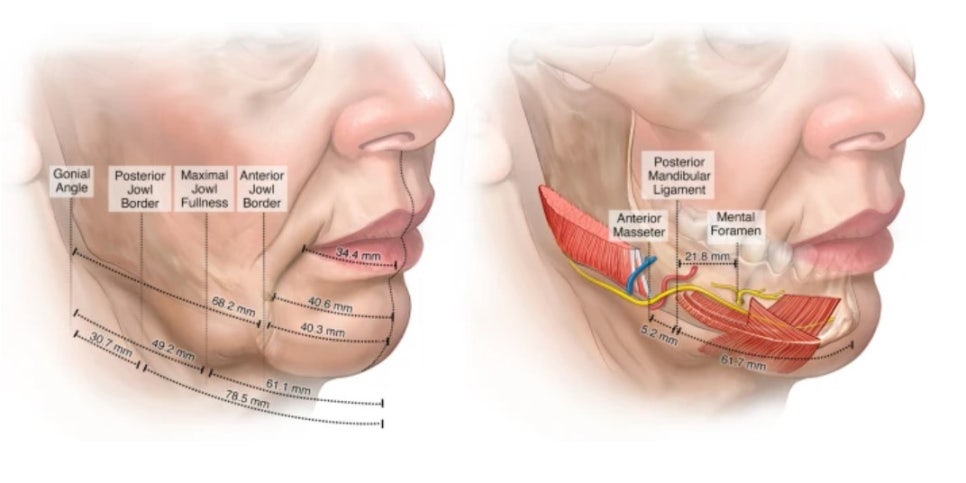
Because of the sagging in this area, some people consider lifting procedures such as a facelift. On the other hand, there are also quite a few who think, “A facelift feels like too much, but is there a way to improve only this area?” At this point, one procedure that is relatively often mentioned during consultations is buccal fat removal.
Both the terms “jowls” and “buccal fat” start with a similar sound in Korean, and because their locations also seem close to the midface, many people think that removing buccal fat will improve jowls. However, anatomically these are different areas, and the causes are also different.
If this difference is not fully understood before performing buccal fat removal, the jowls themselves may not change much, while the hollowing below the cheekbones becomes more noticeable.
In this post, I’d like to整理 this a little.
The actual location of buccal fat
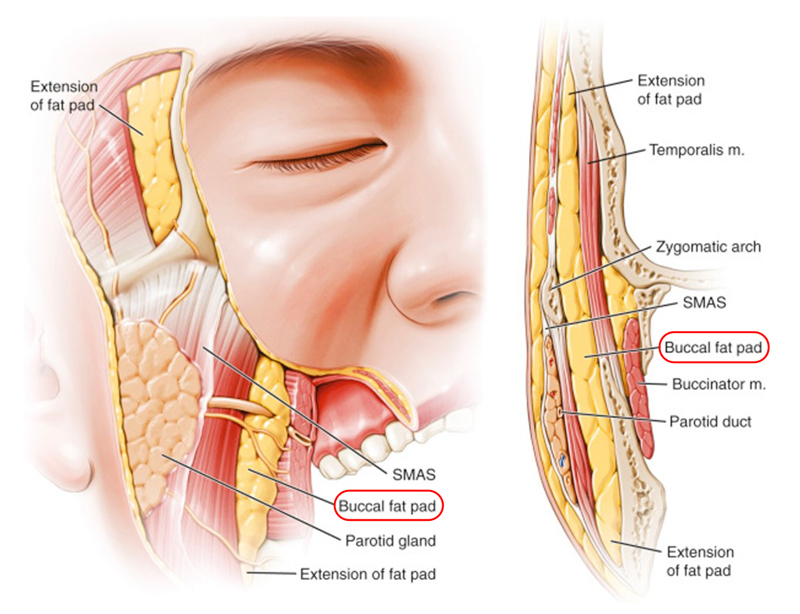
The area that many people think of as “buccal fat” is usually the fleshy fullness around the mouth.
So when the area around the mouth feels bothersome or the cheeks appear to be sagging, it is common to think, “I must have a lot of buccal fat.”
However, anatomically, buccal fat is located higher and in a deeper layer than the position many people commonly imagine.
Its approximate location is:
This fat is called the buccal fat pad.
Therefore, it is in a different location from the jowls beside the mouth that people commonly refer to.
Why do jowls form?
Jowls usually appear due to changes such as:
-
superficial fat accumulation around the mouth
-
structural changes at the mandibular ligament attachment area
-
overall sagging of the skin and soft tissues
As such, the combined effects of structural changes in the lower face and the aging process create the drooping appearance beside the mouth.
In most cases, the cause of jowls is not directly related to buccal fat.
In other words, the key issue is often not the amount of fat itself, but rather sagging and positional changes in the soft tissues.
In such cases, rather than removing fat, an approach that repositions the structure through lifting may be needed.
Changes that can occur when buccal fat is removed excessively
Buccal fat is not simply unnecessary fat; it also helps create volume between the midface and lower face.
Therefore, if it is removed excessively, changes such as:
-
hollowing below the cheekbones
-
hollow cheeks in the midface
-
an impression that the facial contours look overly sharp
may appear.
In fact, overseas, buccal fat removal was performed in a trend-like fashion for a period of time, and cases showing similar facial changes have often been discussed.
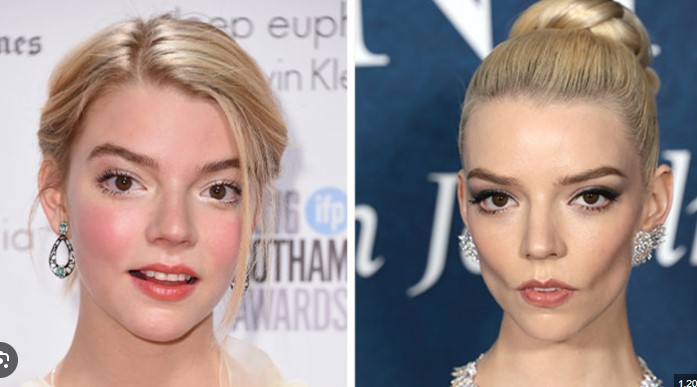
The photo of the Hollywood actor attached to this post cannot confirm whether that exact procedure was performed, but it can be seen as a good example of the typical facial change that can occur when buccal fat removal is done too aggressively.
The common features in such cases are:
-
the cheekbones appear more prominent
-
the area below the cheekbones becomes deeply sunken
-
the overall facial impression looks sharper
These changes are not necessarily negative results, but they are not changes that suit every face shape.
When buccal fat removal can be helpful
Of course, buccal fat removal is not always a problem.
In certain face shapes, reducing buccal fat appropriately can help refine the facial contour.
However, these cases are often different from the typical concern about jowls.
I have also explained this in a previous column.
As many people think, buccal fat removal does not often lead directly to improvement in jowls.
Rather, if buccal fat is removed without accurately identifying the cause, there is a possibility that the jowls will not change much while the hollowing below the cheekbones becomes more noticeable.
Therefore, the important question is not how much buccal fat to remove, but what change in the current facial structure is actually causing the problem.
For this reason, I tend to decide on whether to remove buccal fat relatively carefully during consultations.
I hope this was helpful. If you have any questions, please feel free to leave a comment anytime.
Thank you.