Hello, I’m Dr. Jo Hyun-woo of Inception Plastic Surgery.
When undergoing double jaw surgery or contouring surgery, the fixation pins that are used are essential materials.
Fixation pins are made of titanium, so they are harmless to the human body and it is not a problem to keep them in the face permanently. However, many patients want the fixation pins removed for various reasons.
Still, there are cases where complete removal is difficult. Today, I’ll explain why.
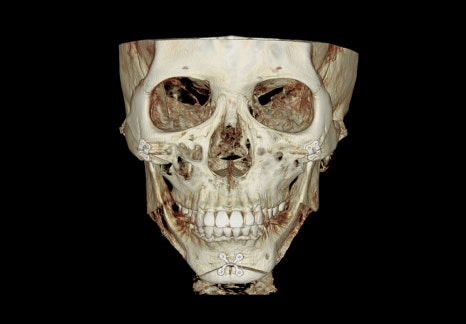
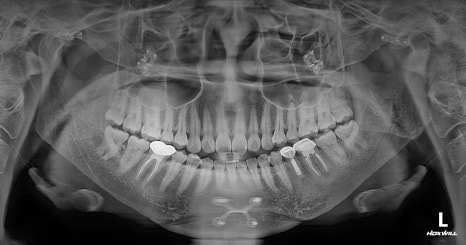
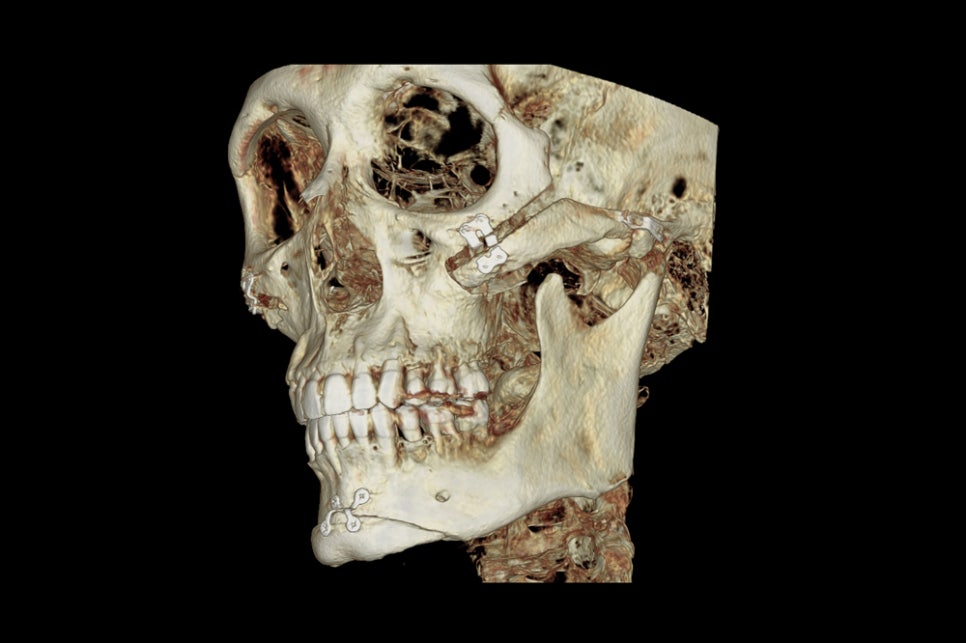
Fixation pins seen on CT after contouring surgery
As you can see in the CT images, fixation pins are inserted like this during contouring surgery.
One of the biggest reasons patients want pin removal surgery is that the pins are visible on CT.
In fact, in daily life, there are not many situations where we would get a CT scan like this.
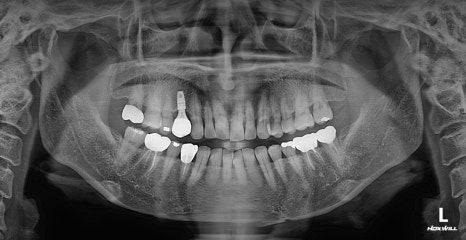
However, when taking a panoramic X-ray at the dentist, the fixation pins can be seen like this, and in such cases many patients choose removal because they do not want to disclose that they had surgery.
Another reason is discomfort from a foreign-body sensation.
In particular, some people consider removal because the area feels cold when the weather gets colder, or because they feel something when touching it with their hand.
Of course, in most cases people get used to it over time, but some patients say it continues to bother them.
So, are there cases where fixation pins cannot be removed 100%?
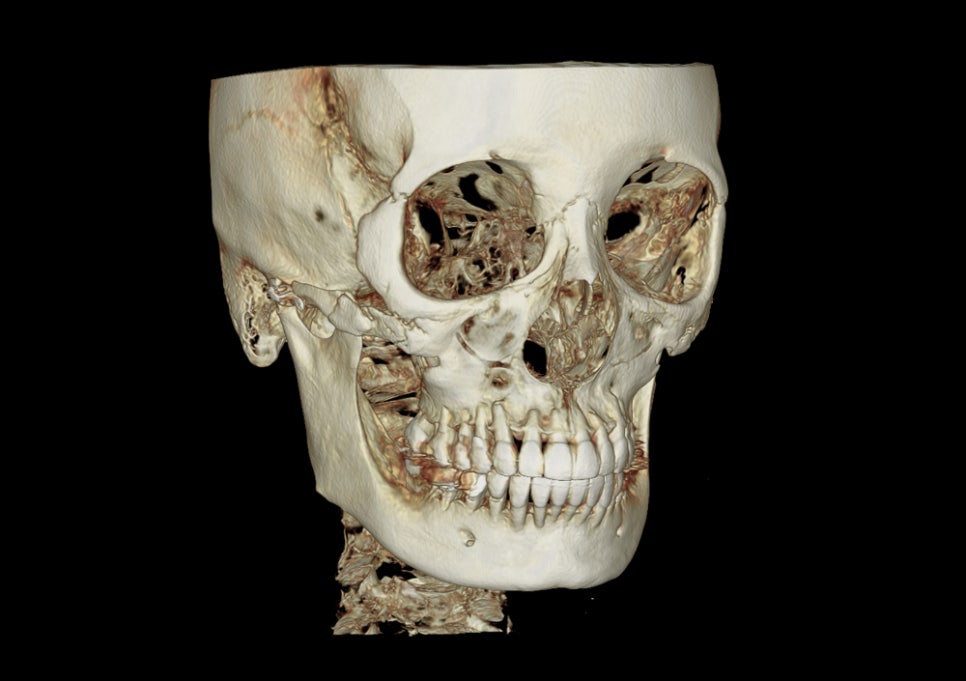
The first reason is when the bone and the pin have already become attached as if they were one.
After enough time has passed following surgery, the bone regenerates and surrounds the pin.
During this process, the pin may become partially buried in the bone, or the screw head may be covered by bone and no longer visible.
If removal is attempted forcefully in this state, there is a risk that normal bone would have to be shaved away or the structure could be damaged. For safety, the decision may be made to leave some of it behind.
In the case of the patient above, they underwent zygoma reduction at another hospital 20 years ago and later had pin removal surgery, but you can see that part of the 45-degree cheekbone is missing.
For old fixation pin removal, it is best to first determine whether removal is possible through a CT scan.
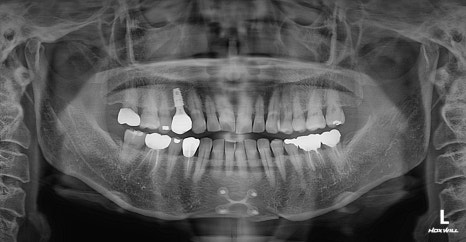
The second reason is when the fixation pin is very close to the nerve line.
In the case of the lower jaw, there is a passage through which a nerve runs, and the pin may be very close to this nerve.
In such cases, nerve damage may occur during the process of removing the pin, and in fact, it can lead to reduced sensation in the lips or chin.
On the other hand, there are also patients who experience sensory abnormalities because of the fixation pin.
The patient above had chin surgery at another hospital 11 years ago and recently wanted the fixation pin removed because the area with the pin had become very painful.
Since pain can sometimes improve after pin removal surgery, it would be a good idea to first consult a specialist.
The third reason is when the pin itself is damaged.
Sometimes the pin is broken, or the screw becomes worn and deformed so that the driver no longer engages properly.
If removal is attempted by force in this situation, the screw may break further and become impossible to remove.
The fourth reason is adhesion and scar tissue formation.
As time passes after surgery, the surgical area undergoes fibrosis and becomes firmly attached to the surrounding tissue.
In particular, if there have been multiple surgeries or an inflammatory response, adhesions may become more severe.
In such cases, the process of finding and removing the pin itself becomes difficult, the surgery takes longer, and the risk of bleeding or swelling increases.
In my case, when patients want pin removal, I tell them that if it is done within 1 to 2 years, 100% removal is possible. If more time passes, complete removal may be difficult for the reasons above.
As such, pin removal surgery is not a simple procedure where you just take it out; it is another surgery that must consider the current condition, location, and all surrounding structures.
Finally, I would like to mention one thing: if there is no special problem, there is no need to remove every pin.
Titanium fixation pins are highly biocompatible and have proven long-term safety, so in reality there are not many cases where they must be removed medically.
However, if there is psychological concern or discomfort, the best approach is to check whether removal is possible through an accurate CT diagnosis and make a safe plan.
Today, I talked about pin removal after double jaw surgery or contouring surgery.
Since pin removal is not a surgery that must be done, I hope today’s post helps answer patients’ questions.
Thank you.