Hello. I am Dr. Jo Hyun-woo, director of Ipche Plastic Surgery.
Recently, many people in their 50s and 60s have been asking whether facial contouring surgery is possible at their age.
Many people who have consistently taken care of themselves maintain a youthful appearance in their 50s and 60s, sometimes looking as though they are in their 40s. There are also many people who want to improve the facial contour lines they have been concerned about since they were young.
So, is facial contouring surgery possible in your 50s or 60s?
To give you the conclusion first, it is certainly possible. However, there are several points that require caution.
One of the representative changes that occurs with age is change in the soft tissues.
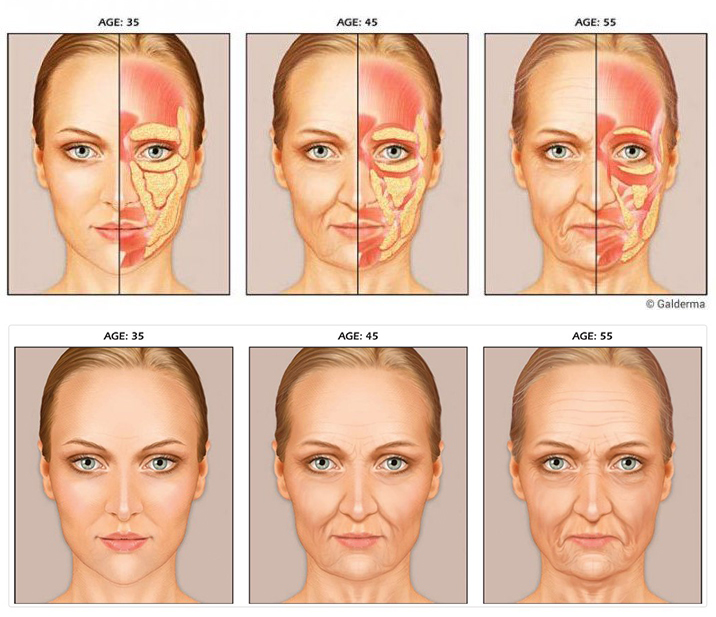
As people age, the fat in the face decreases, reducing volume, and the skin also loses elasticity.
As a result, wrinkles develop and sagging skin gradually becomes more noticeable. However, the soft tissues are not the only structures that change with aging.
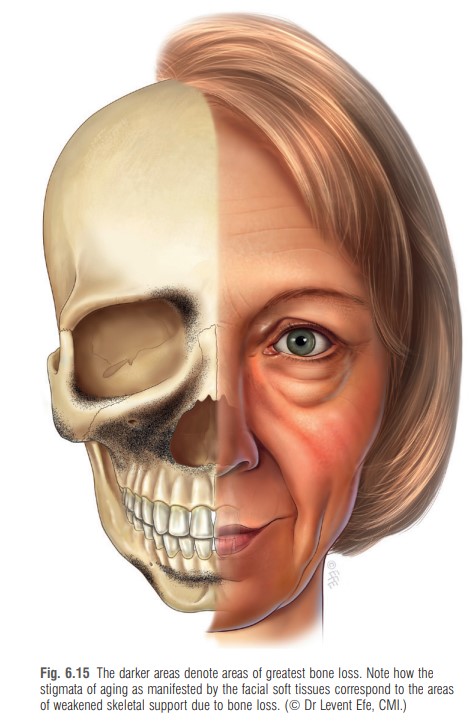
The facial bones also change with age.
Many people think that bones will not change significantly with age because they are hard and solid. Of course, bones are very hard tissue, but they are living tissue in which formation and resorption continuously take place in our bodies. Therefore, their shape and volume gradually change over time.
In the image above, you can see that the cheekbones gradually move downward with age. In the areas shown in black, bone resorption takes place, reducing the volume of the facial skeleton. These changes are particularly seen in the front of the cheekbones, the lower part of the jawbone, and the lower alveolar bone.
So, how should facial contouring surgery be approached for older patients?
For people in their 50s and 60s, I believe that excessive bone surgery should be approached with caution.
This is because the bone’s ability to regenerate and the speed of bone union decrease with age compared with younger age groups.
In the past, preoperative osteoporosis testing was sometimes considered important. In reality, however, the decrease in bone-forming ability that occurs with age is itself part of the natural aging process, so there are limitations to determining whether surgery is possible based only on test results.
For this reason, the principle I have in mind for facial contouring surgery in people in their 50s and 60s is: “Avoid osteotomy as much as possible.”
For example, in chin surgery, a T-shaped osteotomy requires the cut bones to unite firmly again. Since the bone union process may be slow, I tend to consider mandibular lower-border reduction using a rotating-shaving technique before a T-shaped osteotomy.
Because this technique reshapes protruding portions of bone rather than moving the bone, it can reduce the burden associated with bone union while still providing facial contouring improvement.
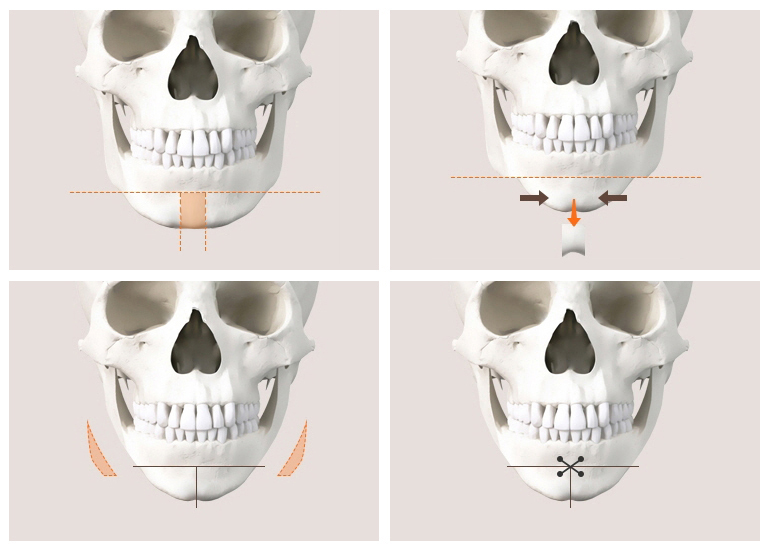
T-shaped osteotomy procedure
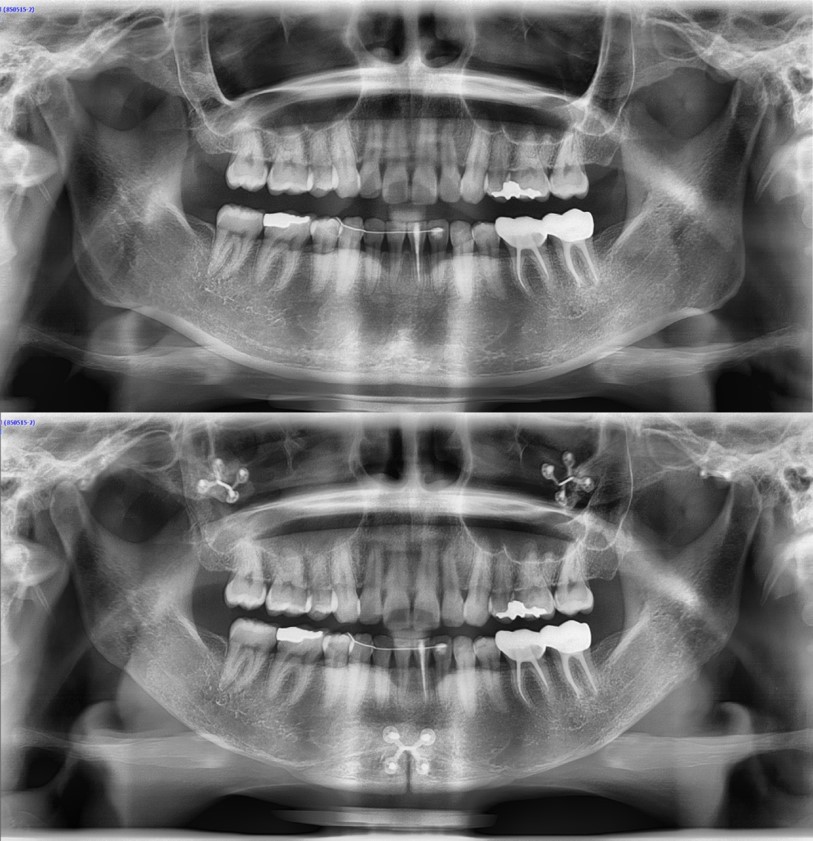
Actual CT image of a T-shaped osteotomy
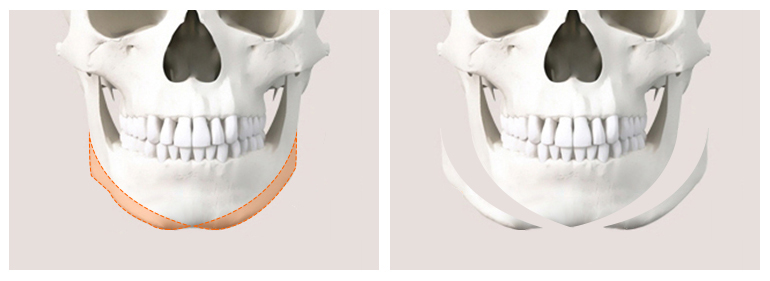
Rotating-shaving procedure
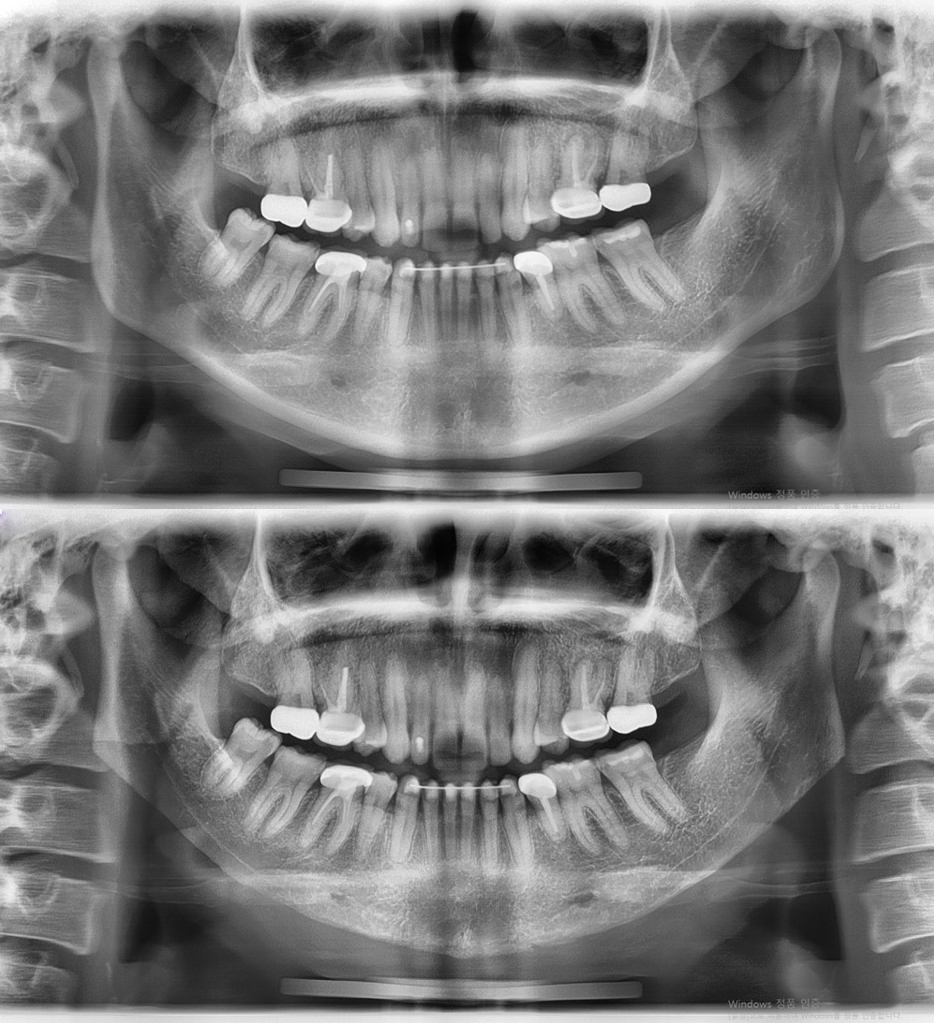
Actual CT image of the rotating-shaving procedure
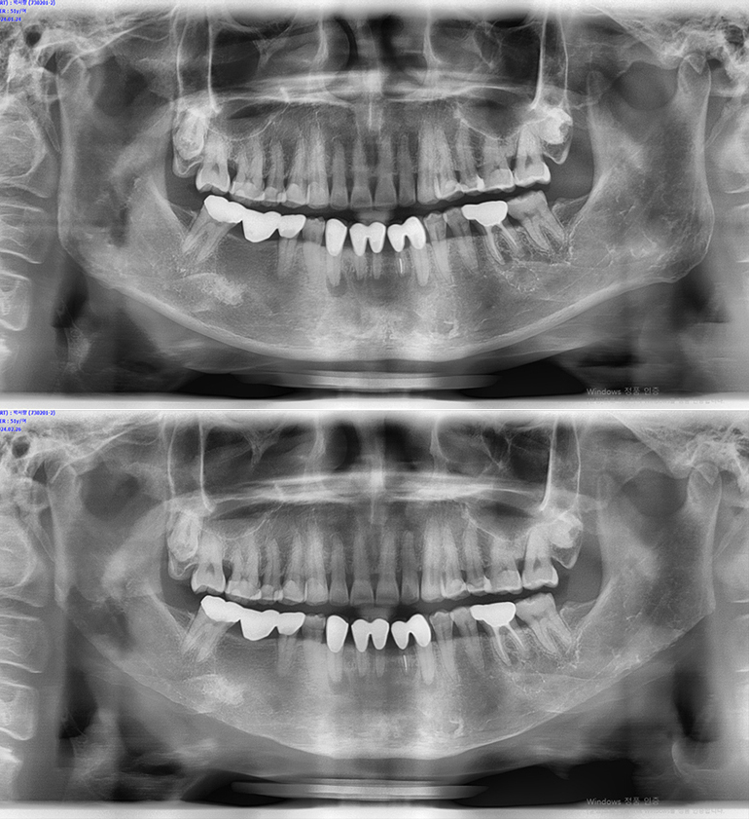
Actual CT image of square-jaw surgery
Second, excessive removal of bone is not recommended during square-jaw surgery.
As explained above, bone volume decreases with age, and resorption gradually progresses, particularly from the lower border.
Therefore, if too much of the jawbone is removed, additional bone resorption may occur over time, and the remaining amount of bone may become insufficient, potentially resulting in a structurally unstable condition. For this reason, square-jaw surgery is performed as conservatively as possible.
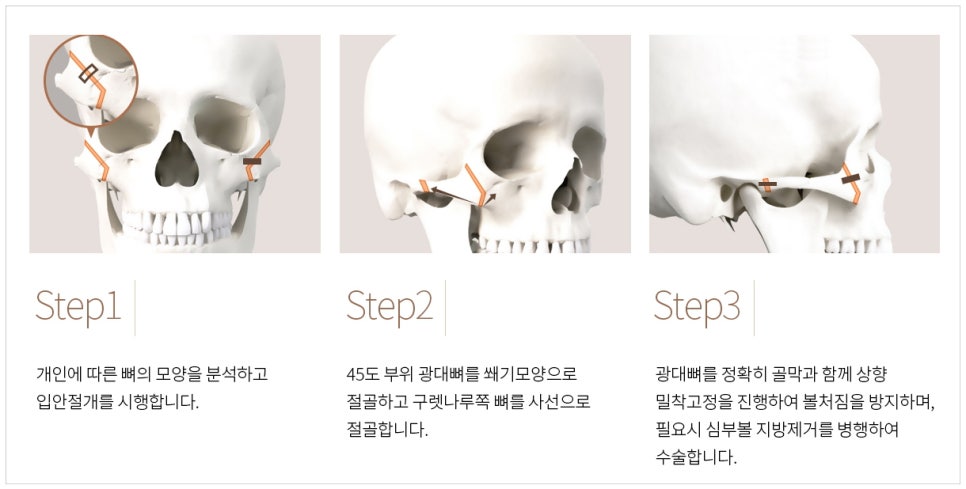
Cheekbone surgery procedure
Lastly, there is cheekbone surgery.
I have given this procedure considerable thought. If the goal is to achieve the greatest possible surgical change, conventional 3D cheekbone surgery may be more suitable.
However, 3D cheekbone surgery requires osteotomies in two areas, so each cut area must go through the bone-union process.
When the patient is older, in particular, bone union may take longer, so I find it difficult to recommend this procedure without careful consideration.
Therefore, for older patients, I recommend 230-degree three-dimensional cheekbone surgery, even though its effects may be somewhat limited.
This procedure reduces the range of osteotomy and takes bone stability and the recovery process into consideration. It is performed as follows.
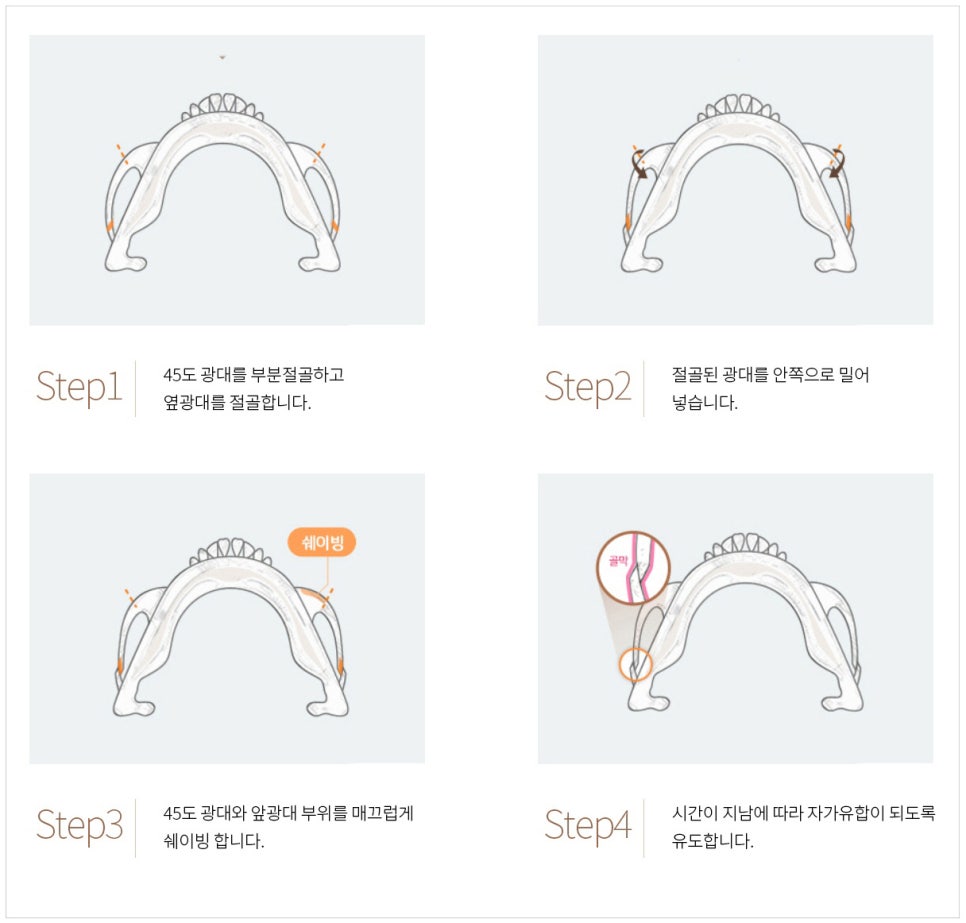
230-degree three-dimensional cheekbone surgery procedure
230-degree three-dimensional cheekbone surgery does not completely cut through the 45-degree cheekbone area, which corresponds to the body of the cheekbone. Its advantage is that bone union only needs to take place in the posterior cheekbone area. Accordingly, only a partial osteotomy is performed in the 45-degree cheekbone area, while the posterior cheekbone area is firmly secured with fixation pins so that stable bone union can occur more quickly.
Of course, 3D cheekbone surgery may also be performed for patients who want to reduce the cheekbones as much as possible.
In practice, bone union generally progresses well without any particular problems, but I believe that recovery tends to be somewhat slower compared with 230-degree three-dimensional cheekbone surgery.
Another point to keep in mind is that recovery speed can vary depending on age.
Compared with patients in their 20s and 30s, older patients sometimes recover relatively slowly.
The recovery period may also be longer, with swelling lasting longer or bruises taking more time to fade.
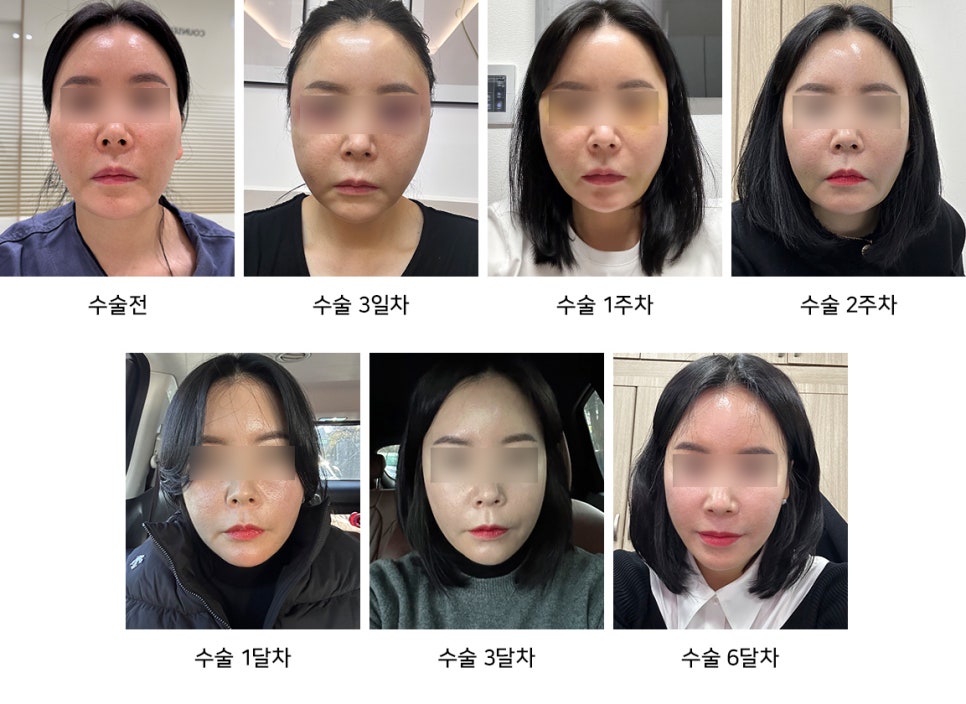
Recovery process of a patient who underwent 230-degree three-dimensional cheekbone surgery
However, swelling is a natural change that occurs during the recovery process, and it improves sufficiently over time, so you do not need to worry too much.
The final point I would like to mention is cheek and lower-jaw sagging.
Compared with younger people, older patients already have some degree of age-related sagging. Therefore, facial contouring surgery that reduces facial volume may make sagging appear more pronounced. Taking this into consideration, older patients should plan surgery while also considering methods for managing or improving skin sagging that may occur after surgery.
Additional lifting procedures or surgery are not necessarily required. However, rather than expecting that “there will be no sagging at all after surgery,” it may be more comfortable to approach the procedure with the mindset that “if necessary, lifting treatment may be considered later.” This can make it easier to observe the recovery process with greater peace of mind.
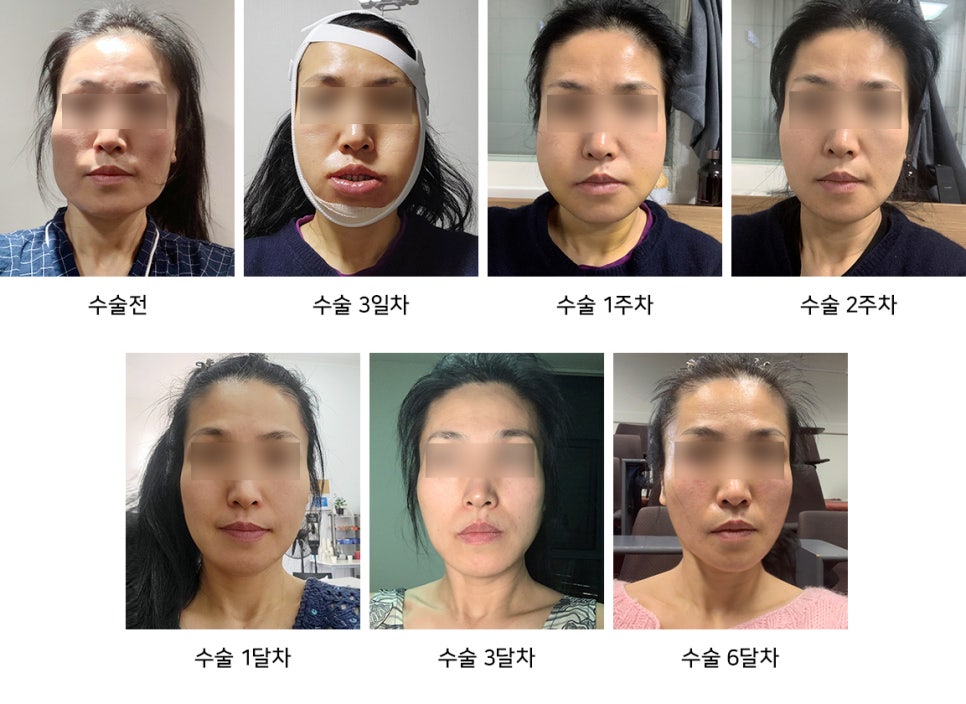
Recovery process of a patient who underwent square-jaw and chin-tip surgery
Today, we discussed facial contouring surgery for people in their 50s and 60s and the points that are helpful to know in advance before surgery.
People in their 50s and 60s today also continue to participate actively in society. Therefore, age alone does not mean that surgery is absolutely impossible. There is no need to worry too much, and if you are considering the procedure, I believe you can achieve a sufficiently good result.
Thank you.