Hello, I’m Hyunwoo Cho, M.D., from Ippche Plastic Surgery.
Recently, it seems that more and more people are exercising regularly to manage their health.
As a result, many patients preparing for facial contouring surgery ask, “When can I start exercising again?”
In fact, immediately after surgery, significant swelling often makes patients feel uncomfortable even about going outside.
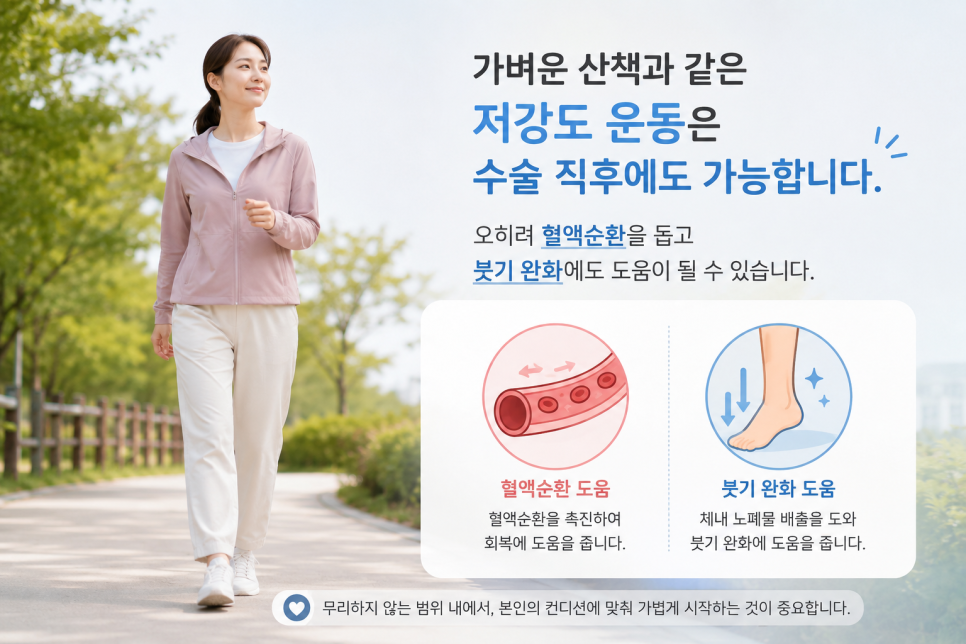
However, low-intensity exercise, such as light walking, is possible immediately after surgery and may actually help improve blood circulation and reduce swelling.
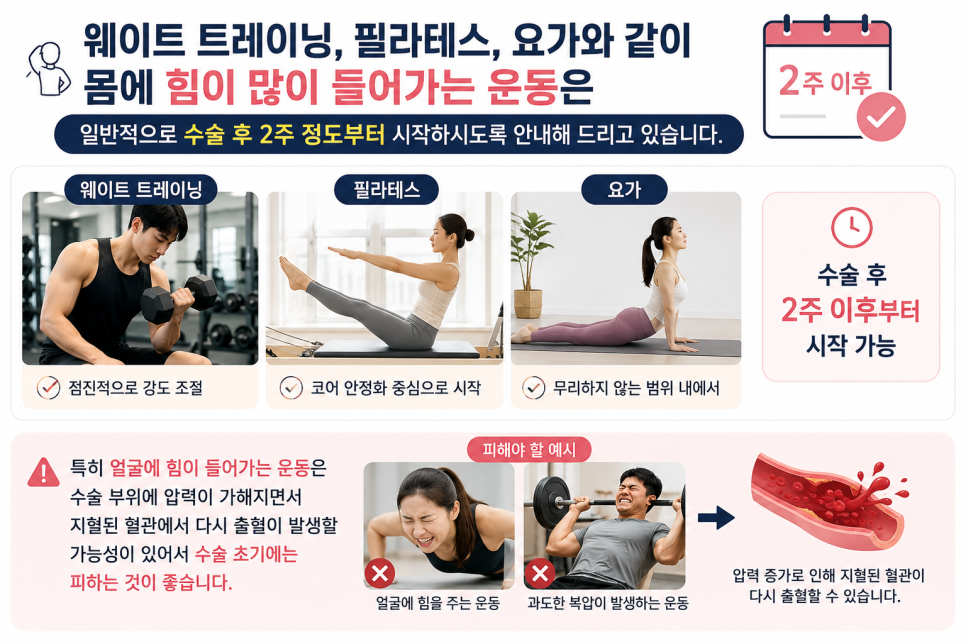
For exercises that require substantial exertion, such as weight training, Pilates, and yoga, we generally advise patients to begin about two weeks after surgery.
In particular, exercises that strain the face should be avoided during the early postoperative period because pressure on the surgical area may cause bleeding to recur from blood vessels where hemostasis has been achieved.
Exercises that involve frequently bending your head down also require caution, as blood may pool in the face, worsening swelling or causing a feeling of pressure.
Therefore, these movements should be performed carefully during the early stages of recovery. Other relatively light aerobic exercises can generally be started about one week after surgery, within a comfortable range.
After cheekbone surgery, it is best to avoid opening your mouth excessively or eating hard and chewy foods for about one month.
In particular, when doing weight training, strongly clenching your molars while lifting heavy weights may place stress on the surgical area, so caution is necessary.
Therefore, even when resuming exercise, we recommend initially focusing on relatively comfortable-intensity workouts rather than strenuous weight training with heavy loads.
Golf and tennis can generally be resumed about one week after surgery, when significant swelling has subsided to some extent, as long as the patient has no particular discomfort.
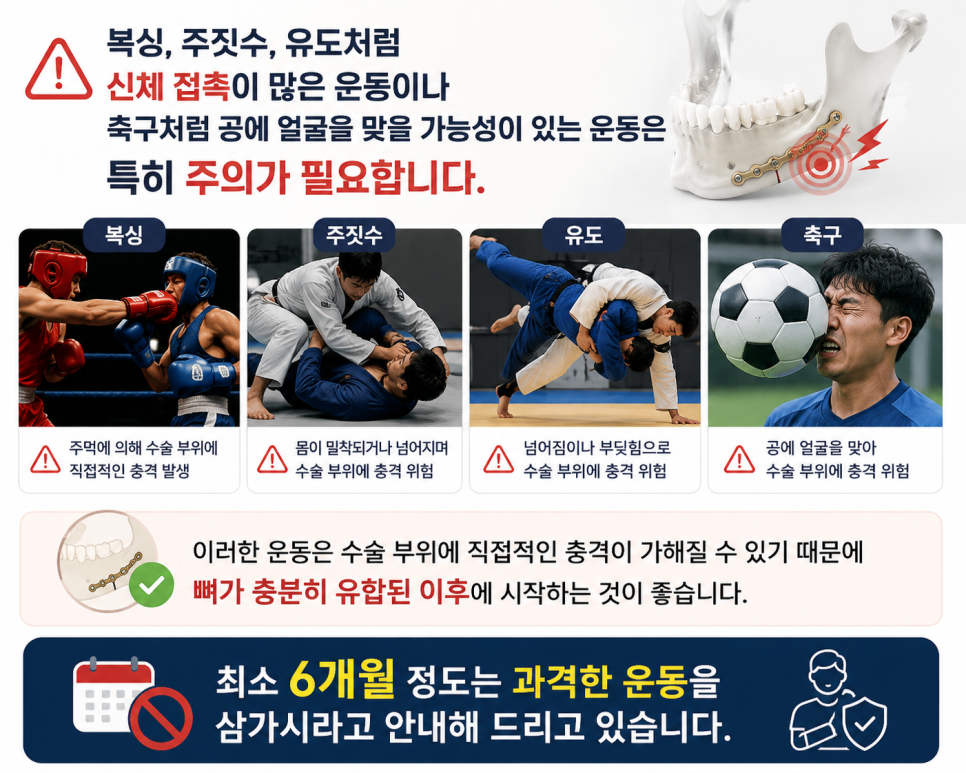
Extra caution is needed with sports involving significant physical contact, such as boxing, jiu-jitsu, and judo, as well as sports such as soccer, in which the face could be struck by a ball.
Because these activities can subject the surgical area to direct impact, it is best to begin them only after the bones have sufficiently fused. We advise patients to avoid strenuous exercise for at least approximately six months.
Another common question is whether sweating heavily during exercise affects recovery.
However, because facial contouring surgery is usually performed through incisions inside the mouth, sweat itself rarely has a direct effect on the surgical area.
In fact, sweating through exercise may help reduce swelling by removing water from the body.
Therefore, if you exercise at an appropriate intensity for your stage of recovery, there is generally no need to be overly concerned about sweating itself.
However, rather than exercising excessively, it is important to gradually increase the intensity while taking your recovery status into account.
Facial contouring surgery is not a procedure with particularly extensive exercise-related restrictions compared with other types of cosmetic surgery.
As long as you avoid strenuous exercise while the bones are healing, you can engage sufficiently in exercise for health management.
In fact, one fitness trainer who underwent cheekbone surgery with me carefully began exercising about five days after surgery, and a Pilates instructor also resumed exercise without difficulty about one week after surgery.
Today, I briefly discussed when exercise can be resumed after facial contouring surgery.
Many people considering surgery worry, “Won’t I have to take a long break from exercise after surgery?”
In most cases, you can return to exercise relatively quickly according to your recovery status, so there is no need to worry too much.
If you have any questions about a specific exercise in addition to what I discussed today, please leave a comment.
Thank you.