Hello. I am Heo Jae-won, a plastic surgery specialist.
One of the questions most frequently asked in consultations by people considering a facelift is:
"When will it stop looking like I had surgery?"
Many people think of the recovery period simply as a matter of days or weeks, but in reality, that is not the case.
This is because the processes of swelling subsiding, the skin settling into place, and sensation returning all progress at different rates.
Therefore, for several months after surgery, it is normal for the face to gradually change as part of the recovery process.
Today, I will explain what changes may occur over time after a facelift.
1–3 Days After Surgery: The Period of Greatest Swelling
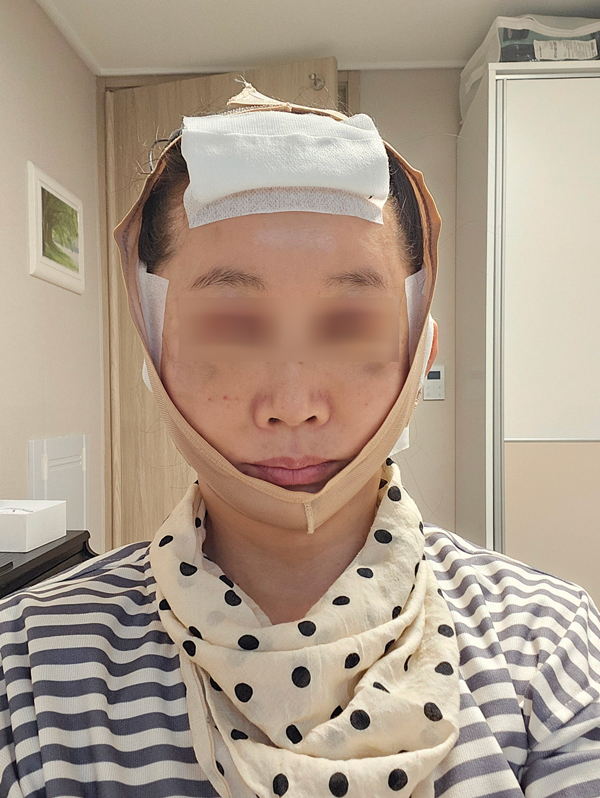
Facelift, neck lift, and forehead lift on postoperative day 3
After going home following surgery, the face often swells the most on the following day and around the evening of the third day, rather than on the day of surgery itself.
Some people are surprised when they look in the mirror, but this is, in most cases, an expected part of the recovery process. On the other hand, many people say that the pain is not as severe as they expected.
Of course, there are individual differences, but quite a few people say, "It is much better than I expected."
The areas that feel uncomfortable are often behind the ears or around the neck, where the drains were placed, rather than at the incision sites. You may also feel pulling or throbbing along the boundary between the areas that were operated on and those that were not.
Another symptom that can cause concern is a change in sensation.
The area in front of the ears and the outer cheeks may feel numb, as though the anesthesia has not fully worn off, or it may feel as if you are touching someone else's skin. In most cases, this is a temporary phenomenon.
1 Week After Surgery: The Major Swelling Has Subsided to Some Extent
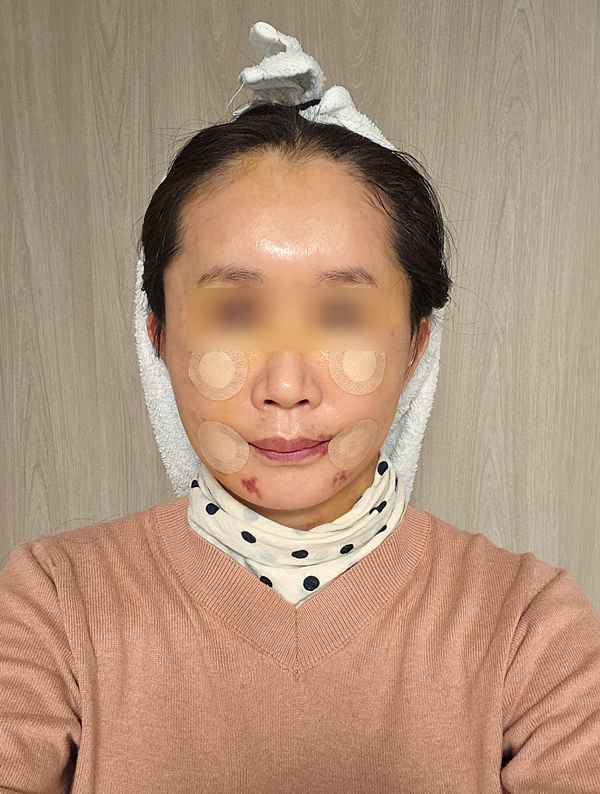
Facelift, neck lift, and forehead lift at 1 week after surgery
About one week after surgery, the noticeable swelling decreases considerably.
Many people feel that approximately 60% of the swelling has gone down.
However, the facial contours are still swollen, and someone close to you may be able to tell that you had surgery.
The comment heard most often at this stage is, "The swelling is lasting longer than I expected."
However, you should remember that this is still the early stage of recovery.
2 Weeks After Surgery: Daily Activities Are Possible, but Recovery Is Still Underway
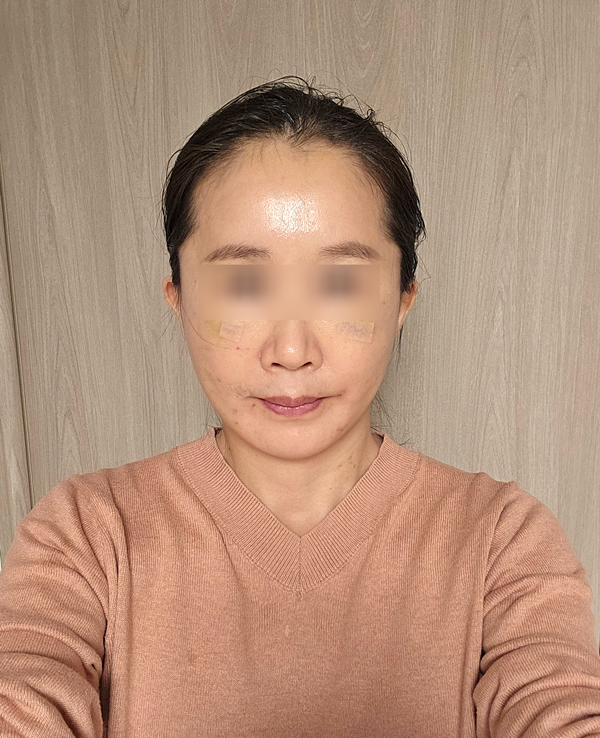
Facelift, neck lift, and forehead lift at 2 weeks after surgery
After about two weeks, the swelling decreases by approximately 70–80%.
With light makeup, most people can go out and return to work.
However, the face is not yet completely smooth when viewed closely.
Under fluorescent lights or bright lighting, the skin may appear uneven in places.
This may cause some people to worry about the surgical results, but in most cases, these are temporary changes that occur as the tissues settle into place.
3–4 Weeks After Surgery: Firmness Becomes More Noticeable Than Swelling
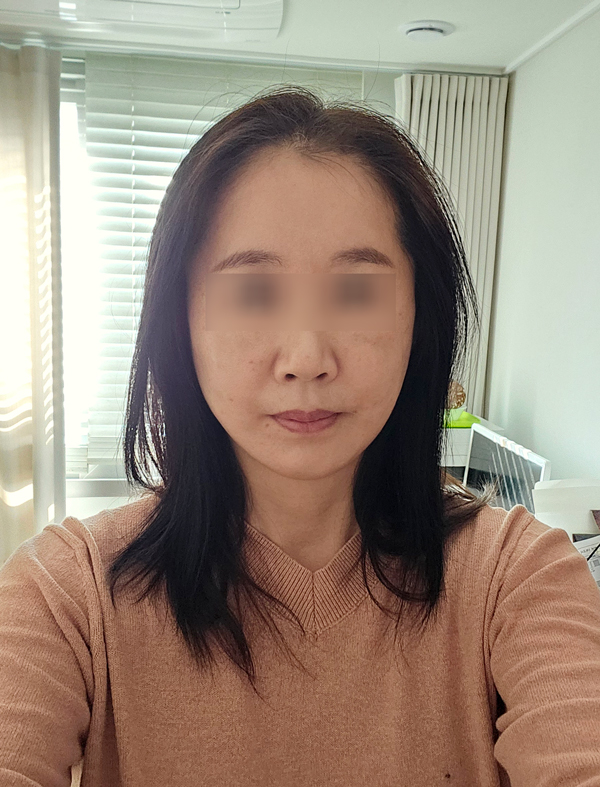
Facelift, neck lift, and forehead lift at 1 month after surgery
By around three weeks to one month, most of the major swelling has subsided. From this point, however, the face may begin to feel firm.
You may feel as though the skin is adhering to the underlying tissues, and you may notice a sensation of pulling that differs from usual when smiling or making facial expressions.
It is also common for some residual swelling to remain under the eyes. Scars may also become redder during this period.
Patients sometimes worry that their scars seem to have become worse, but this is a common change during the maturation of a scar.
However, there is one point that should be checked. If the scar becomes abnormally thick or rises up firmly, it is advisable to consult your medical provider to determine whether it may be developing into a hypertrophic scar.
6–8 Weeks After Surgery: The Face May Feel Uneven Again
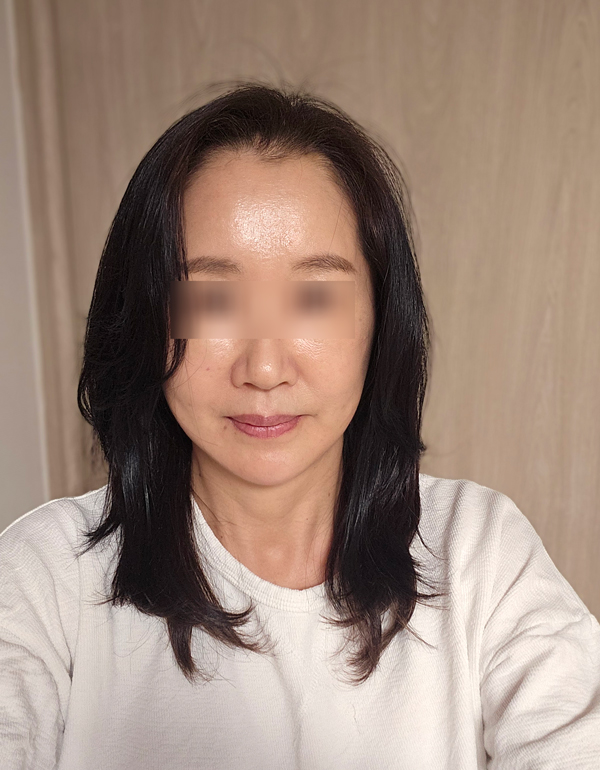
Facelift, neck lift, and forehead lift at 2 months after surgery
If you had to choose the most unsettling stage of recovery, it would be this period.
This is because, even though you thought the swelling had gone down, the face may begin to feel uneven again, firm, and tight.
However, these changes commonly occur as scar tissue forms internally and the tissues gradually adhere to each other securely.
Sensation in the outer cheeks and around the ears may still be reduced, and the feeling that the skin does not quite feel like your own when touched may continue.
In most cases, this gradually improves over time.
2–3 Months After Surgery: The Face Becomes Much More Natural
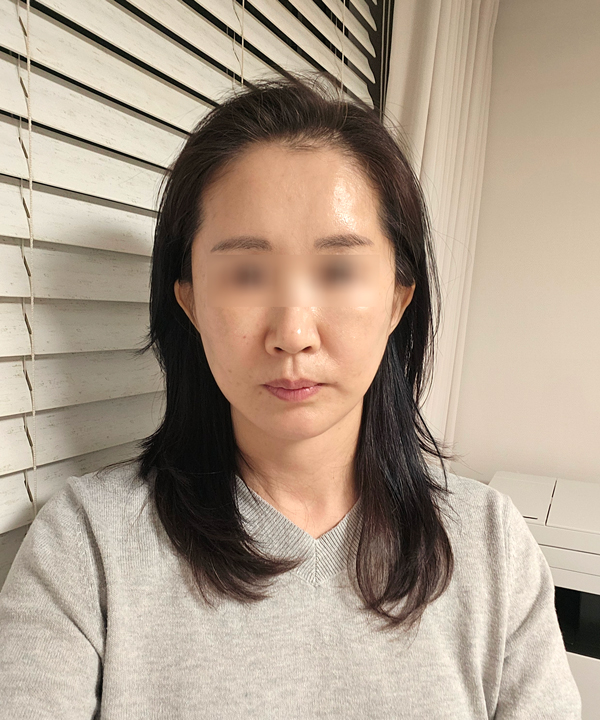
Facelift, neck lift, and forehead lift at 3 months after surgery
After two to three months, many people feel that their face has become soft again.
The skin, which had felt firm, gradually becomes more flexible, and the pulling sensation around the scars also decreases over time.
As the residual swelling subsides, the facial contours become more defined, and you may feel that your face looks smaller.
From this point, the surgical results can be considered to be beginning to settle into place more consistently.
4–6 Months After Surgery: The Final Stage of Recovery
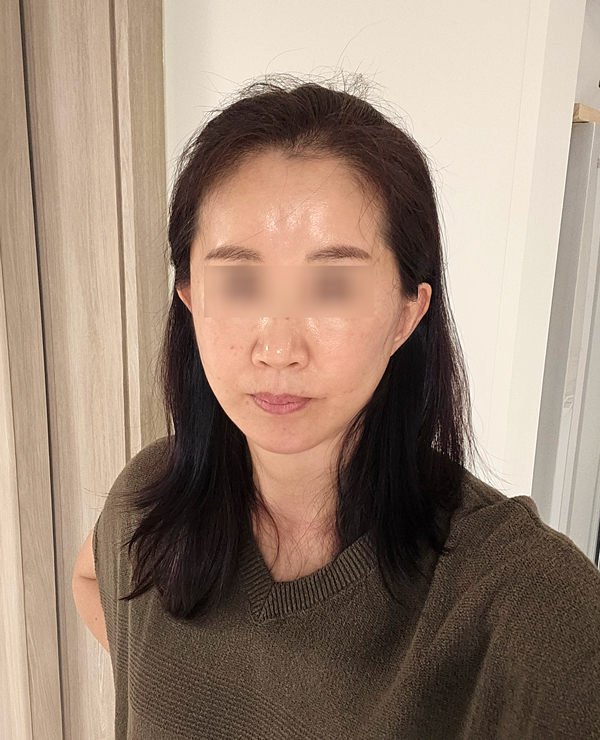
Facelift, neck lift, and forehead lift at 6 months after surgery
After about six months, sensation in the front of the cheeks has usually recovered considerably.
The areas around the ears and the outer cheeks may still feel slightly dull, but sensation gradually approaches normal over time.
The redness in the scars also gradually fades, and they become less noticeable.
Of course, the recovery rate differs from person to person, but by this stage, most people show considerable stabilization of the changes after surgery.
A facelift is not a procedure whose final result is complete the moment the surgery ends.
A natural result is created only after the swelling subsides, the skin and deeper tissues stabilize, and sensation returns.
During recovery, the face may become firm or feel uneven, and there may be periods when sensation is reduced or the scars become red.
However, most of these changes can occur as part of the recovery process.
Rather than judging the result based only on how you look about one month after surgery, I recommend allowing at least four to six months and observing your progress.
A facelift is a procedure whose results become more complete over time.
I hope this was helpful. If you have any questions, please leave them in the comments.
I will respond in detail as soon as I see them.
Thank you.