Hello, I am Dr. Hyun-woo Cho of 입체성형외과.
Today, I will explain methods for reducing the masseter muscle to improve the appearance of the face from the front.
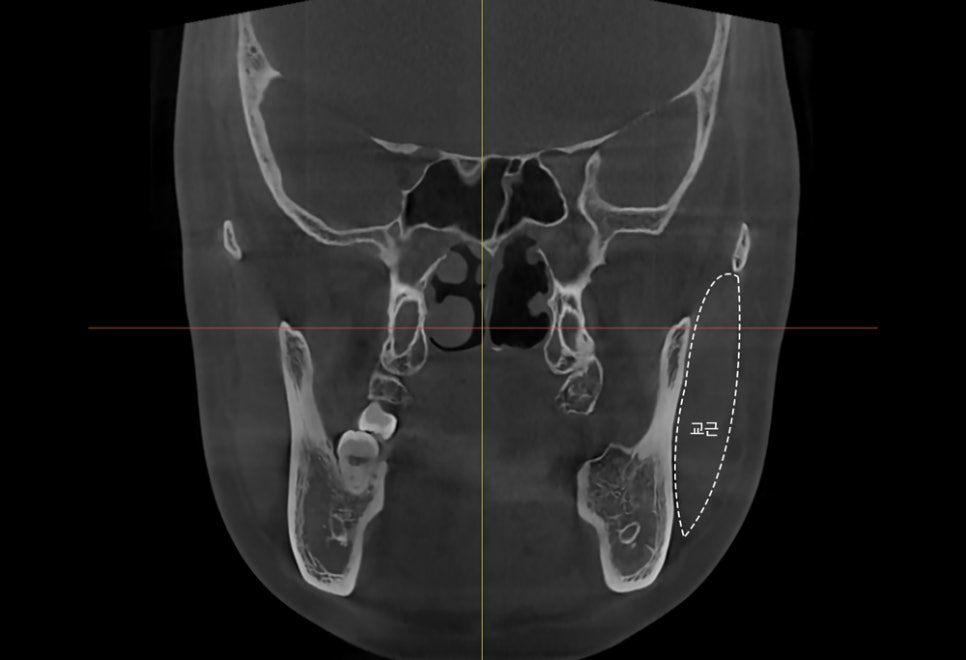
A facial CT scan can be used to assess the degree of masseter muscle development.
To create a slimmer facial line when viewed from the front, the best possible frontal effect can be achieved by reducing the cortex of the square jawbone, reducing an enlarged masseter muscle, and, when necessary, also improving excess facial fat.
So, what methods are available for reducing an enlarged masseter muscle?
Botox
The simplest way to reduce the volume of the masseter muscle is a square-jaw Botox treatment.
Many of you have probably heard of square-jaw Botox.
In simple terms, Botox is a treatment that temporarily reduces muscle movement by blocking neurotransmitters transmitted to the muscle.

The reason wrinkles do not form when Botox is injected into the forehead or between the eyebrows is based on the same principle.
This is because Botox blocks neurotransmitters and temporarily reduces muscle movement.
By temporarily reducing movement of the masseter muscle, the amount of muscle use decreases, and the muscle gradually becomes smaller over time.
Using the same principle, Botox is also used to reduce the volume of the calf muscles or trapezius muscles.
The effects of Botox generally last about three months, and many people receive treatment periodically once the muscle recovers.
According to one paper, a study of patients who received repeated Botox treatments over a long period reported a continued reduction in masseter volume. Another study also reported a slight decrease in the bone volume around the square-jaw area.
Therefore, for improving the appearance of the face from the front, square-jaw Botox can be considered one of the simple methods that may provide an effect.
Radiofrequency Masseter Reduction (Ablation)
Masseter ablation is a method of reducing muscle volume by ablating part of the masseter muscle using radiofrequency or similar equipment.
Unlike a method that directly removes part of the muscle, it has the advantage of being performed without making an incision in the skin.
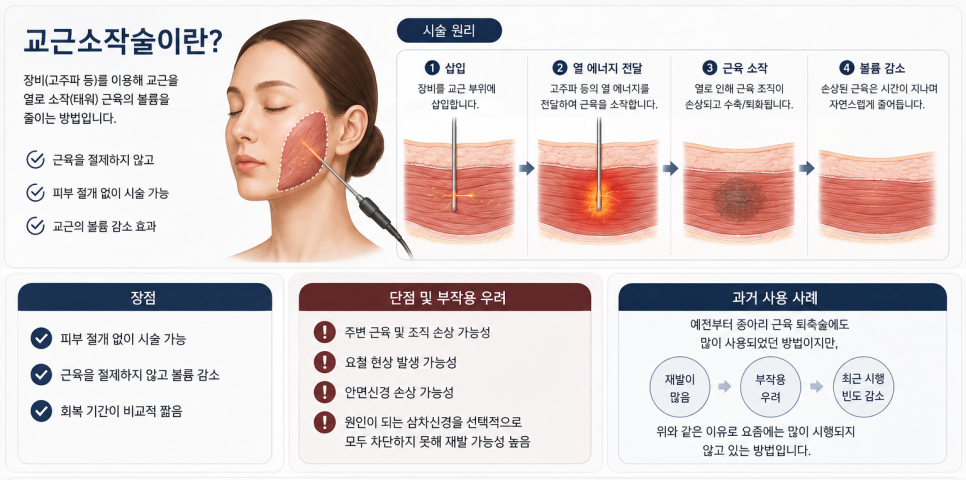
However, it should be considered that surrounding muscles or soft tissue may also be damaged during the procedure, and side effects such as facial nerve damage may occur. In addition, because not all of the nerves that control masseter movement are selectively blocked, the muscle may recur over time.
For these reasons, although this method was also used for calf muscle reduction in the past, it is known to be performed much less frequently than before due to concerns about recurrence and side effects.
Masseter Nerve Block
Recently, masseter nerve block procedures have also been performed frequently.
This procedure selectively blocks part of the trigeminal nerve that transmits signals to the masseter muscle, with the goal of maintaining an effect similar to Botox for a longer period.
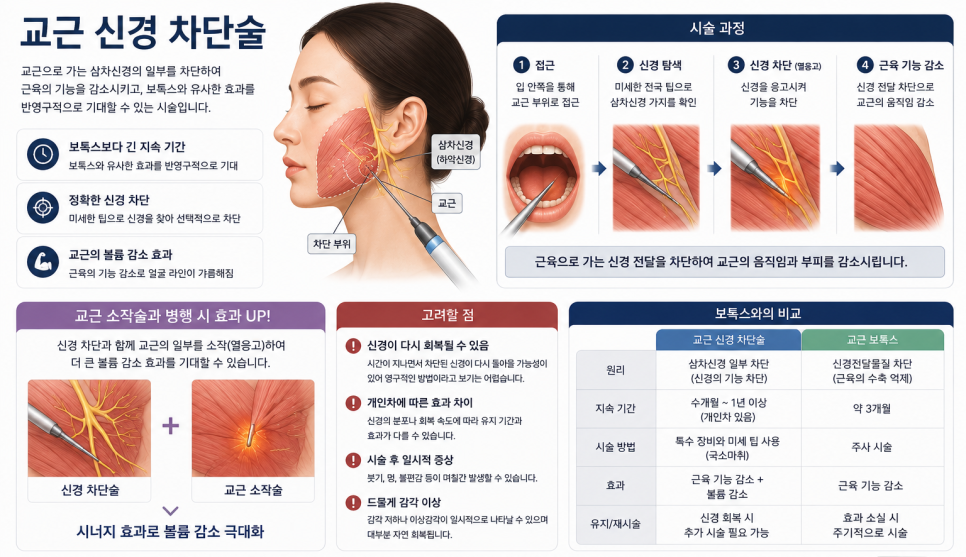
Using a fine tip, the nerve is selectively blocked while checking the movement of the masseter muscle, thereby reducing muscle function.
In some cases, part of the masseter muscle is also ablated to further reduce its volume.
However, because a blocked nerve may recover over time, this method is difficult to regard as a permanent treatment.
Masseter Resection
Masseter resection is a method of reducing muscle volume by directly removing part of the masseter muscle.
When performing square-jaw surgery, I also perform masseter resection to create a slimmer facial line when viewed from the front.
Some papers have reported that resected muscle may recover, and based on my experience with surgeries to date, I believe that although it does not recover completely in every case, some recovery may occur.
Because the masseter muscle naturally decreases in volume with age, excessive resection may affect chewing function in the long term.
Therefore, I generally selectively remove only about 10–15% of the entire masseter muscle.
In addition, removing too much muscle can make the skin surface appear uneven, so I perform the surgery mainly by removing the lower portion of the masseter muscle.
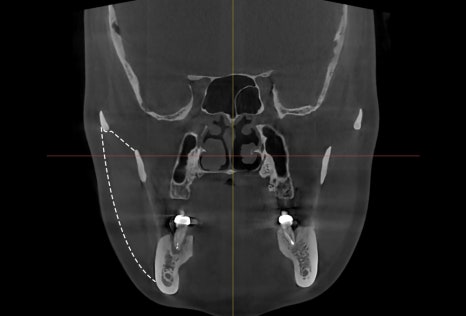
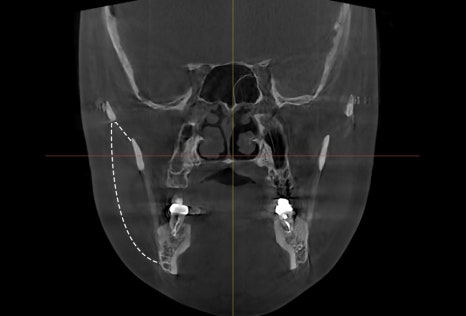
A reduction in the amount of masseter muscle can be confirmed on CT.
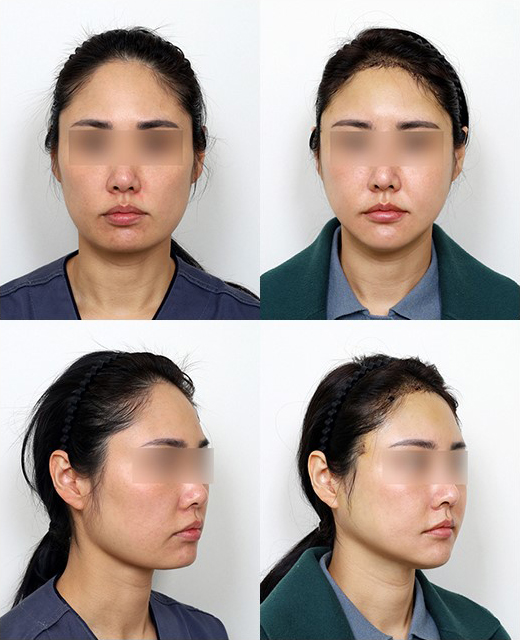
A patient who underwent malar reduction, square-jaw surgery, cortical osteotomy, and masseter resection.
Occasionally, patients visit the clinic wanting masseter resection alone, but I do not perform masseter resection as a standalone procedure.
Masseter resection requires an incision inside the mouth. I believe that using sedation carries some risk, while using general anesthesia would be excessive medical treatment for this procedure alone compared with the surgery itself. In such cases, I recommend Botox treatment or another masseter reduction procedure.
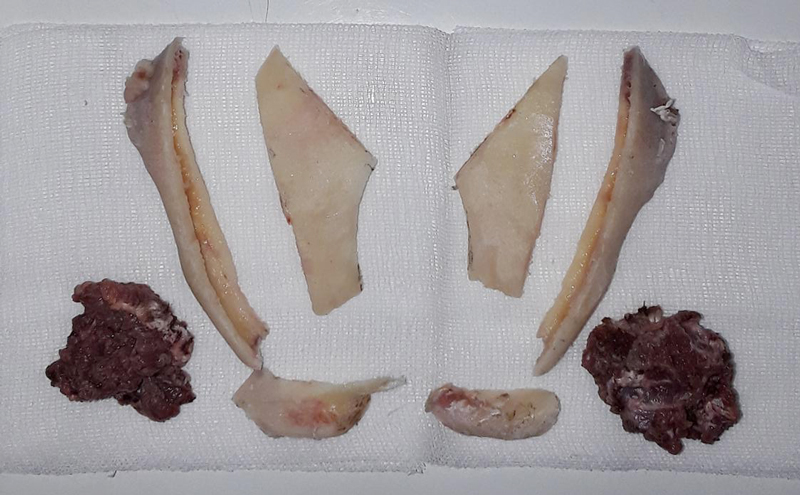
A photograph of the masseter muscle that was actually removed.
The effect of masseter resection is not a dramatic change in facial volume simply because approximately 10–15% of the masseter muscle has been removed.
Depending on the case, I believe Botox may produce a greater reduction in volume. However, if masseter resection is performed together with square-jaw surgery, it can help create a slimmer facial line when viewed from the front and may lead to a more satisfactory result.
Today, I discussed masseter reduction as one method of enhancing the appearance of the lower face from the front.
There are various methods of reducing the masseter muscle, including Botox, masseter nerve block, and masseter resection. To achieve a good result, it may be best to consider the degree of masseter development and the desired direction of improvement carefully, then select the method most suitable for you.
I hope this has been at least somewhat helpful to those who are considering surgery.
Thank you.