Hello, I am Dr. Jo Hyun-woo of Ipche Plastic Surgery.
During recovery after facial contouring surgery, some people say that the incision area inside their mouth feels hard or that they experience a tight sensation when opening their mouth or smiling.
Some people become concerned that a keloid (excess scar tissue) may have developed inside their mouth when they experience these symptoms about one or two months after surgery, once the swelling has subsided to some extent.
Today, we will look at why the inside of the mouth may feel tight after contouring surgery, the difference between keloids and hypertrophic scars, and how these symptoms should be viewed.
Why does the inside of the mouth feel tight after contouring surgery?
Most facial contouring procedures, such as cheekbone reduction, square-jaw surgery, and chin surgery, are performed through incisions inside the mouth.
Although there are no visible scars on the skin, there is an incision inside the mouth. As this area heals after surgery, scar tissue forms. During the early stages of wound healing, collagen is actively produced, and the tissue may become firm and undergo a process of contraction.
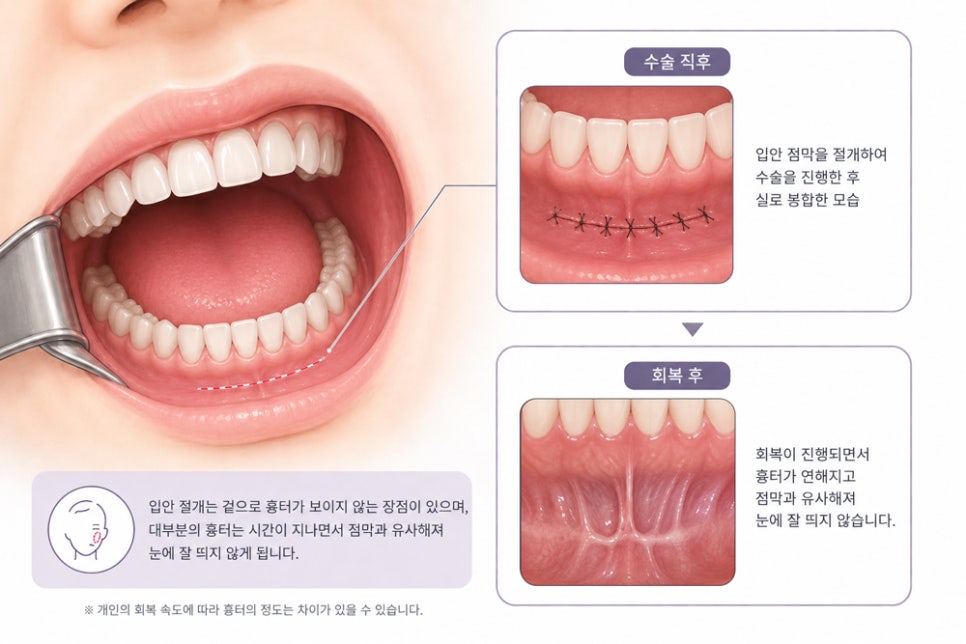
In particular, chin surgery involves making an incision inside the lower lip and dissecting the surrounding tissue. As a result, some people report a pulling or tight sensation when moving their lips after surgery. Most of these symptoms are related to the normal healing process, in which scar tissue forms and contracts as the wound heals.
Does a hard area inside the mouth mean that a keloid has formed?
Not necessarily.
It is easy to assume that any thick or hard scar is a keloid, but medically, keloids and hypertrophic scars are distinct types of scars.
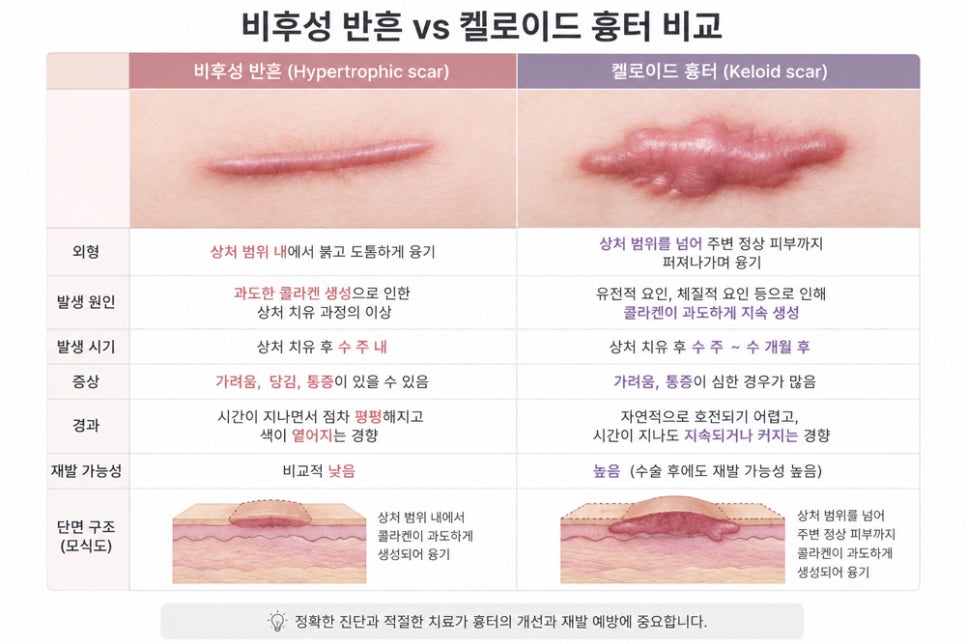
A hypertrophic scar is characterized by remaining within the area of the original wound, even if the scar becomes thick.
In many cases, it becomes flatter and softer over time.
In contrast, the most important characteristic of a keloid is that the scar grows beyond the boundaries of the original wound and into the surrounding normal tissue.
Keloids are less likely to shrink on their own and may recur even after treatment.
For example, this refers to a scar that begins with a small wound from ear piercing and grows into a mass much larger than the original wound.
Therefore, it is not appropriate to immediately conclude that a firm tissue or pulling sensation along the incision line inside the mouth after contouring surgery is a keloid.
Then, is the tissue inside the mouth a hypertrophic scar?
This also needs to be considered with some distinction.
A firm area inside the mouth after surgery cannot always be considered a hypertrophic scar.
Scar tissue naturally forms as a wound heals. At first, this tissue itself is firm and contracted, so the incision area may feel thick even when there is no particular problem.
In some cases, the scar may form more thickly than usual, and a hypertrophic scar may be considered in such situations.
Unlike skin, the inside of the mouth is made up of mucous membrane and is constantly exposed to saliva, so the scars and healing process there differ from those seen on the skin.
Why can the area feel harder one or two months after surgery than immediately afterward?
Some people say that even though time has passed since surgery, the inside of their mouth feels harder and tighter.
A wound does not heal in a fixed state from immediately after surgery; it continues to change through several stages.
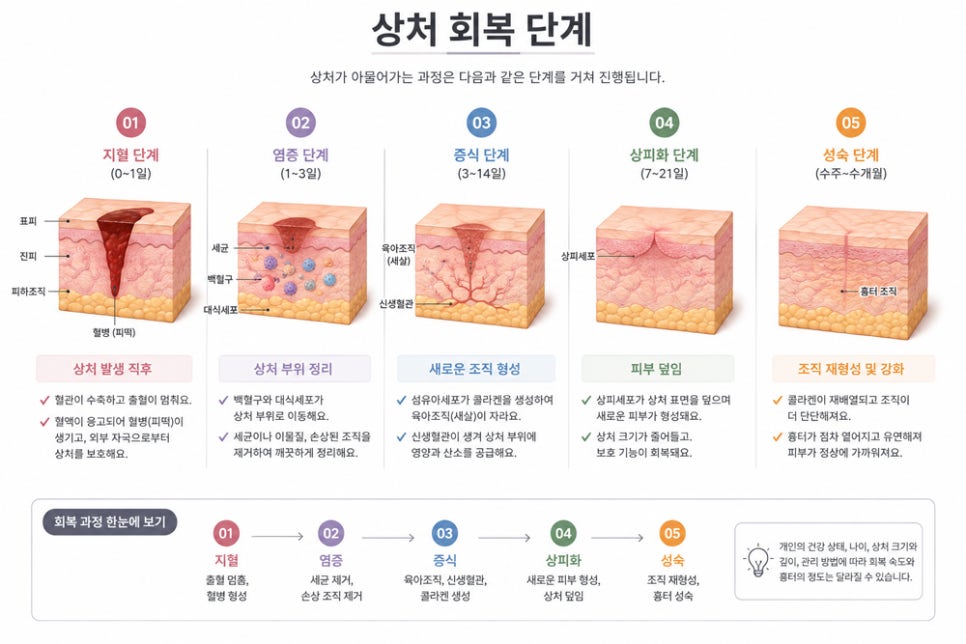
In the early stages after surgery, swelling in the face and inside the mouth is significant, so many people do not clearly notice the firmness of the incision area.
However, as time passes and the swelling subsides and scar tissue begins to form, the incision area may feel firmer than before, and the pulling sensation may actually become more noticeable.
During this period, firm tissue may be felt along the incision line inside the mouth, there may be pulling when opening the mouth wide, and the lips may appear uneven when making facial expressions.
In most cases, these are changes that can occur as the wound matures.
Will scars inside the mouth become softer over time?
In most cases, they gradually become softer over time.
Recovery from facial contouring surgery does not end simply when the swelling in the face subsides.
The visible, major swelling may improve relatively quickly, but the incision area inside the mouth and the soft tissue dissected during surgery require more time to stabilize.
Scar tissue is initially firm and contracted. Over time, it undergoes a process in which collagen is rearranged and matures, gradually becoming softer.
Therefore, the incision area inside the mouth may feel firm and tight for about one to two months after surgery. In most cases, the firmness and tightness initially experienced decrease considerably by three to six months after surgery.
In what situations is it advisable to have the condition checked at a hospital?
Most pulling or firmness inside the mouth naturally improves over time.
However, if there is no improvement at all as time passes, or if the firmness and pulling sensation gradually become worse, it is advisable to have the current condition checked.
Also, if the pulling sensation persists to the point of causing discomfort when opening the mouth or moving the lips even after an adequate recovery period of six months or more, it is advisable to check whether scar tissue has formed excessively or whether there are adhesions with the surrounding tissue.
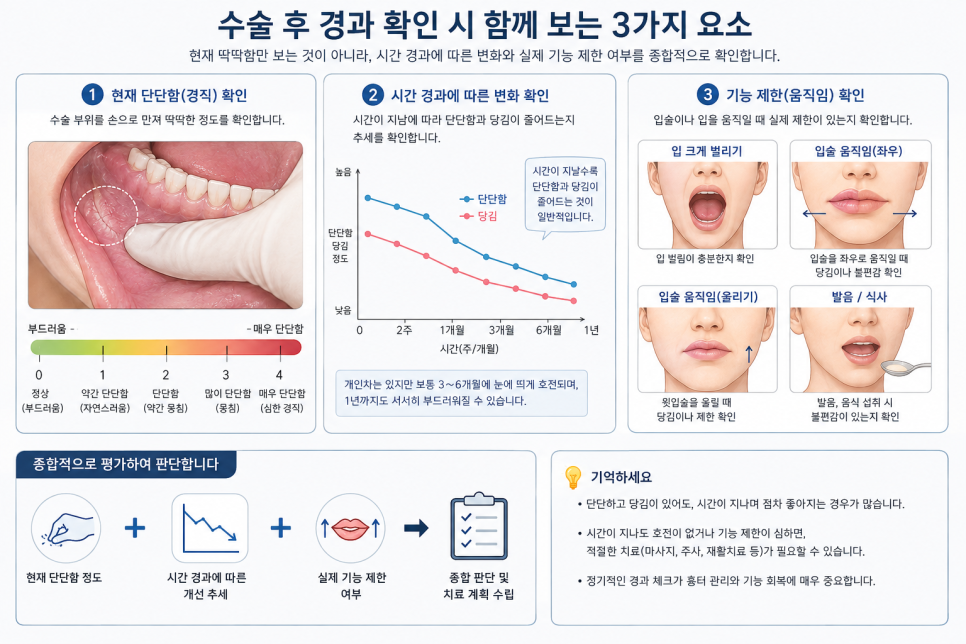
When I assess a patient's progress after surgery, I do not look only at how firm the area currently feels. I also consider how much time has passed since surgery, whether the firmness and pulling sensation are decreasing over time, and whether there is any actual limitation in moving the lips or mouth.
Facial contouring surgery involves removing or repositioning bone, but recovery does not take place only in the bone.
Overall recovery requires the incised mucous membrane, dissected muscles and soft tissue, and the scar tissue formed between them to stabilize as well.
Therefore, if the inside of your mouth feels firm and tight after contouring surgery, rather than making a judgment too early, it is important to allow sufficient time and observe the progress to determine whether this is a change that may occur during the current healing process.
Thank you.