More than skin deep | Human Dermatology Clinic Seoul National University Branch

When you look in the mirror,
a line seems to remain around your mouth
even when you are not smiling.
It used to be a wrinkle
that appeared only briefly when you smiled,
but at some point,
even without making an expression,
it feels like it has naturally settled in.
Many people become aware of their nasolabial folds
after hearing comments like
“You look tired”
or “You look older.”
Nasolabial folds are one of the wrinkles
that have a major effect on the impression of the face,
so once they start to appear,
they tend to draw even more attention.
It is not something to simply dismiss as aging,
because there are actually
various underlying causes,
and it is important to approach care
step by step.

Why do nasolabial folds form?
Nasolabial folds are the lines
that run from the sides of the mouth
toward the sides of the nose,
and they form through the combined effects
of facial movement and changes in skin structure.
The biggest cause is a decline in skin elasticity.
As we age, collagen and elastin decrease,
weakening the skin’s support,
which in turn causes sagging
downward with gravity.
Repeated use of facial muscles also plays a role.
Because this area moves a lot when speaking or smiling,
wrinkles can become fixed more easily
after being accumulated over a long period.
In addition, as the cheeks sag downward,
the folds can appear deeper.
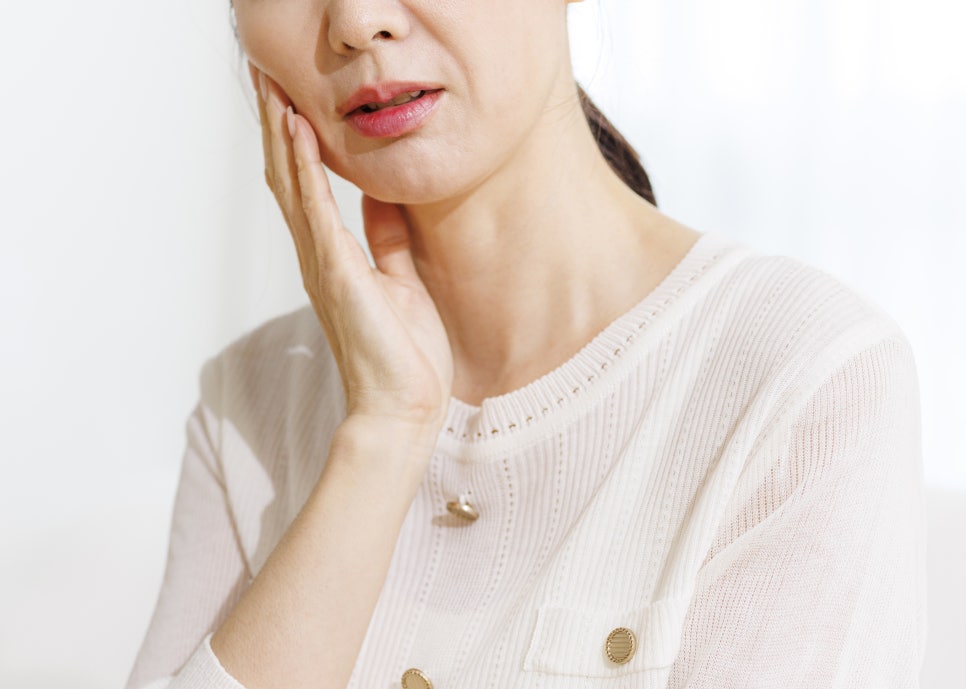
Lifestyle habits can also deepen nasolabial folds
Nasolabial folds are not simply
an age-related issue.
Daily habits also have a major influence.
For example, chewing only on one side,
resting your chin on your hand,
or keeping your head tilted down
while looking at your smartphone
can place pressure on only one side of the face
and make wrinkles stand out more.
Also, if you do not drink enough water
or neglect sun protection,
the skin may age faster,
causing nasolabial folds to settle in sooner.
So in the early stages,
correcting lifestyle habits and
basic skin care alone can help slow the progression.
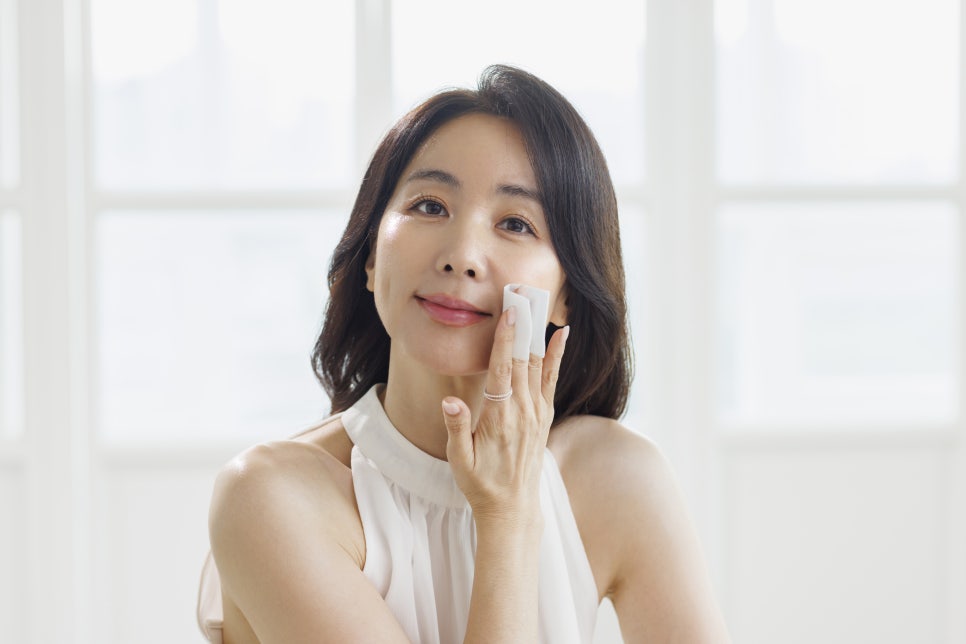
Nasolabial fold care: what can you do at home?
If the nasolabial folds are still in the early stage,
home care can also help.
Moisturizing is the most basic step.
When the skin is dry,
wrinkles look deeper,
so sufficient hydration
and moisture retention are important.
Simple facial stretching
or muscle-relaxing massage
can also be helpful.
However, excessive massage
may instead irritate the skin,
so caution is needed.
Home care is only
an auxiliary measure,
and it is also good to understand
that there are limits to how much it can improve
nasolabial folds that have already become deep.

Nasolabial folds: what dermatology treatments are available?
If the nasolabial folds have become
noticeably deep,
you may want to consider dermatology treatments.
The approach varies depending on the skin condition
and the cause of the folds.
Radiofrequency and ultrasound lifting procedures
that stimulate collagen regeneration
can help improve overall skin elasticity.
If volume loss is also present,
skin boosters or filler treatments
may be used to supplement volume.
In cases where sagging is the cause,
lifting procedures may also be combined.
The important point is that
it is not simply a matter of filling the wrinkles,
but rather that a customized diagnosis
is needed,
taking into account the balance of the entire face
and the underlying cause.

Nasolabial folds are a natural part
of the aging process,
but the way they are managed
can greatly change how your face is perceived.
Rather than choosing a treatment impulsively,
the first step is to accurately identify
the current condition of the skin
and the cause of the folds.
Managing lifestyle habits and home care
to slow progression is important,
but if you are already noticing visible changes,
it can be helpful to consult a dermatologist
to create a treatment plan
that is right for you.
Instead of trying to solve nasolabial folds all at once,
a steady, step-by-step approach to care
is the most natural and satisfying method.
Human Dermatology Clinic Seoul National University Branch
Related articles to read together