Hello, this is Lucid Dental Clinic.
Many of you may know about dental floss, but not use it every day, right?
Even if you brush diligently, debris and plaque left between the teeth are difficult to remove completely with a toothbrush alone. That is why flossing is essential.
Today, I’ll cover everything from how to use dental floss to the different types and precautions.
I’ll help you use floss more comfortably and effectively.
Tooth care that is difficult with brushing alone
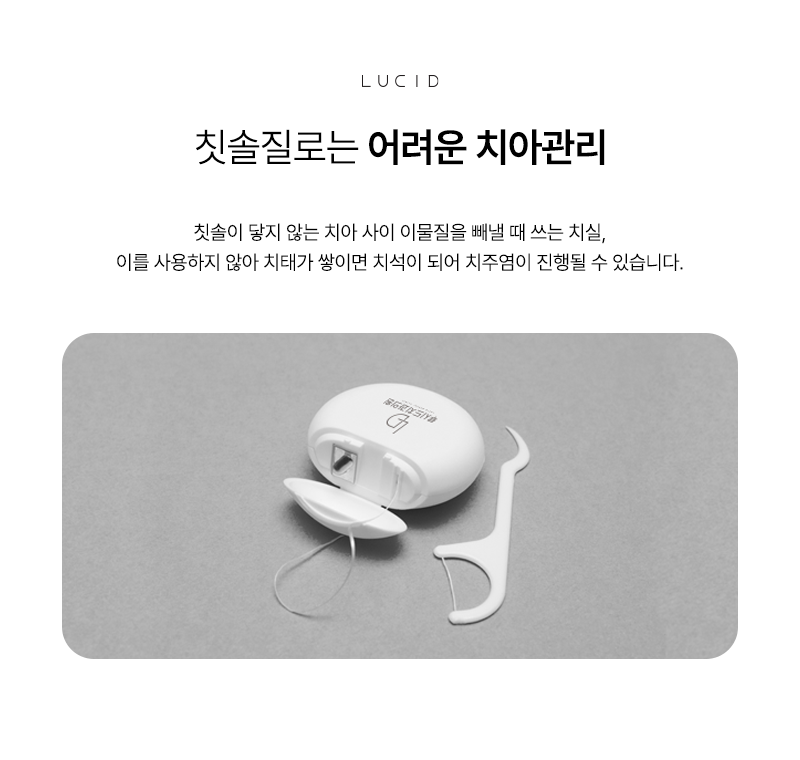
A toothbrush can clean the outer surfaces of teeth well,
but it cannot reach deep between the teeth.
In particular, the narrow spaces in the lower front teeth or molar areas are hard for bristles to reach, so foreign material and plaque can easily remain.
If this plaque is left alone, it hardens into tartar,
which can lead to periodontitis, bleeding gums, and in severe cases, even weakening of the bone that supports the teeth.
At Lucid Dental Clinic, many patients come in with problems that could have been prevented if they had simply used floss consistently.
Types of dental floss
There are many types of floss, so it’s best to choose one based on your oral condition and habits.
▪ Regular string floss (roll type)
A basic type that you wrap around your fingers to use; it offers flexible control and is economical.
▪ Flosser type (stick floss)
Recommended for those who are not used to flossing; easy to carry and use.
▪ Super floss
A special floss for people with braces or bridges.
▪ Waxed / unwaxed floss
Wax-coated floss is slippery and easier to insert, while unwaxed floss has more friction and can remove more plaque.
When should you use floss in your brushing routine?
You can use floss either before or after brushing, but there is also research suggesting that removing debris with floss first and then brushing allows for more effective cleaning.
What matters most is not the order, but using it consistently at least once a day. Using it before bed is recommended.

Benefits of flossing
- Prevention of oral disease
By removing plaque between the teeth, you can effectively help prevent cavities and gum disease. In particular, in the early stages of periodontitis, flossing alone may help relieve symptoms.
- Removal of food debris
It allows you to clean areas that a toothbrush cannot clean well. If food particles are not left behind, bacterial growth can also be prevented.
- Prevention of bad breath
If bacteria and food particles remain in the mouth for a long time, they can cause bad breath. Managing those hard-to-reach areas with floss can reduce odor.
- Prevention of tartar
The key is to remove plaque before it turns into tartar. Floss is effective for preventing tartar.
How to use dental floss correctly
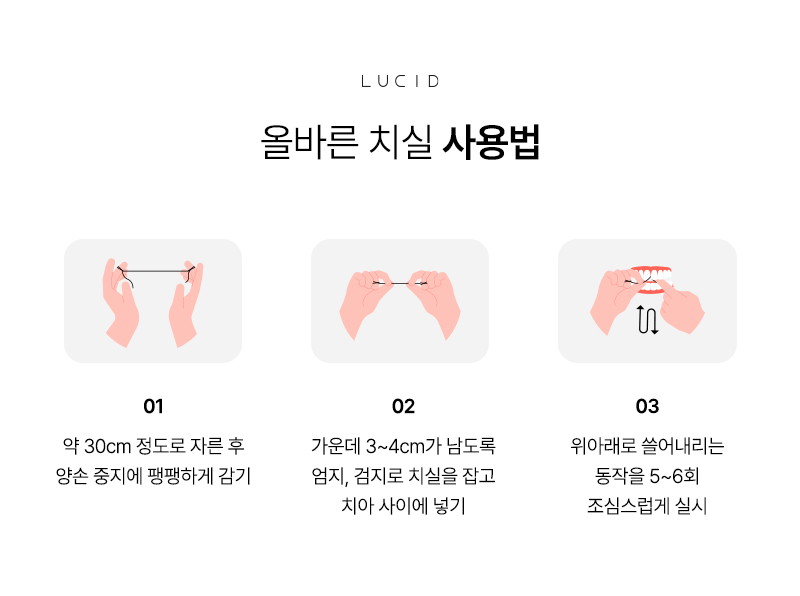
- Cut about 30–40 cm of floss, wrap it around the middle fingers of both hands, and secure it.
- Use your thumbs and index fingers to carefully insert only about 3–4 cm of floss between the teeth.
- Press it against the side of the tooth and gently move it up and down about 5–6 times to remove debris.
- Be careful not to insert it too deeply into the gums, and use a fresh section for each tooth.

Precautions when using dental floss
▪ Forcing it in or moving it too forcefully can injure the gums.
▪ Do not reuse floss after one use. There is a risk of bacterial growth.
▪ If bleeding or pain continues in the gums after use, it is best to visit the dentist promptly.
▪ If you have orthodontic appliances, use super floss or a special interdental brush along with it.
▪ If the floss keeps breaking, there may be a cavity or a problem with a restoration, so an examination is needed.
The importance of flossing and visiting the dentist
Flossing is one of the best preventive care methods you can do at home.
But no matter how well you clean, there are blind spots that can only be checked at the dentist.
Regular scaling and checkups are just as important as flossing.
In particular, if bleeding repeats during flossing or pain persists, we recommend visiting Lucid Dental Clinic for an accurate diagnosis.
The earlier a dental problem is found, the simpler the treatment and the lower the cost :)
Floss Q&A
Q. Is it okay if my gums bleed when I use floss?
A. Slight bleeding at first may be due to gum inflammation. With consistent use, the bleeding will actually decrease. However, if the bleeding continues, be sure to visit the dentist.
Q. How many times a day should I use it?
A. Once a day, before bed, is ideal. On days when a lot of food gets stuck, using it more is fine.
Q. Which is better, floss or interdental brushes?
A. Interdental brushes are suitable for people with wider spaces between teeth or those undergoing orthodontic treatment, while floss is good for people with tightly spaced teeth. They can also be used together.
Q. Can children use floss too?
A. Yes, once baby teeth fall out and permanent teeth come in, it can be used. It’s even better if parents help.
A small habit can make your teeth healthy,
and that habit is flossing.
Starting today, be sure to add flossing to your oral care routine!
Lucid Dental Clinic supports your proper tooth care habits.



Lucid Dental Clinic
3rd–4th Floors, Coway Building, 606 Nonhyeon-ro, Gangnam-gu, Seoul