
Hello. This is Lucid Dental Clinic.
Have you ever had cavities found during a regular checkup,
even though you brush carefully morning and night?
You may think, “This should be enough; I brushed well,” but
small food debris or plaque left between the teeth can create problems without being noticed.
In particular, the spaces between teeth that are hard for a toothbrush to reach are
an “invisible blind spot”
and can also become the starting point of oral problems.
That is why using dental floss is not just an optional choice,
but an essential daily care habit, just as important as brushing.
Today, for those who are using dental floss for the first time,
we will organize everything in a practical way,
from choosing the type to the correct method of use and the points to watch out for.
Dental floss is not difficult.
Once you know how, it can actually be simpler than brushing.
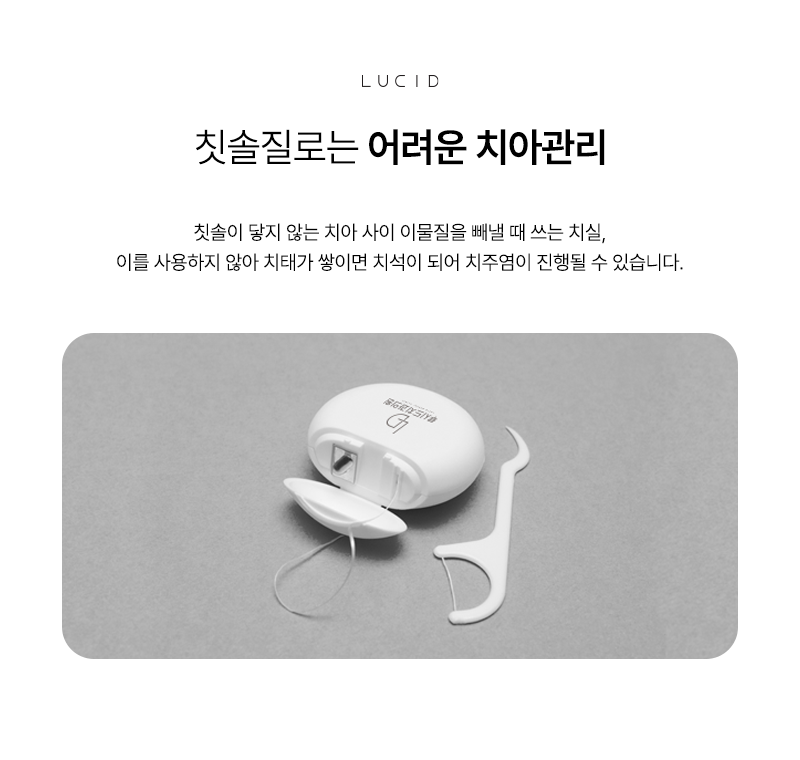
Dental floss
Dental floss is also called “floss,”
and it is a thin, soft string-type oral hygiene tool.
It is mainly used to remove food debris and bacterial film trapped between teeth.
Because it helps clean areas that are difficult to reach with brushing alone,
it is recommended to use it at least once a day, especially before bed.
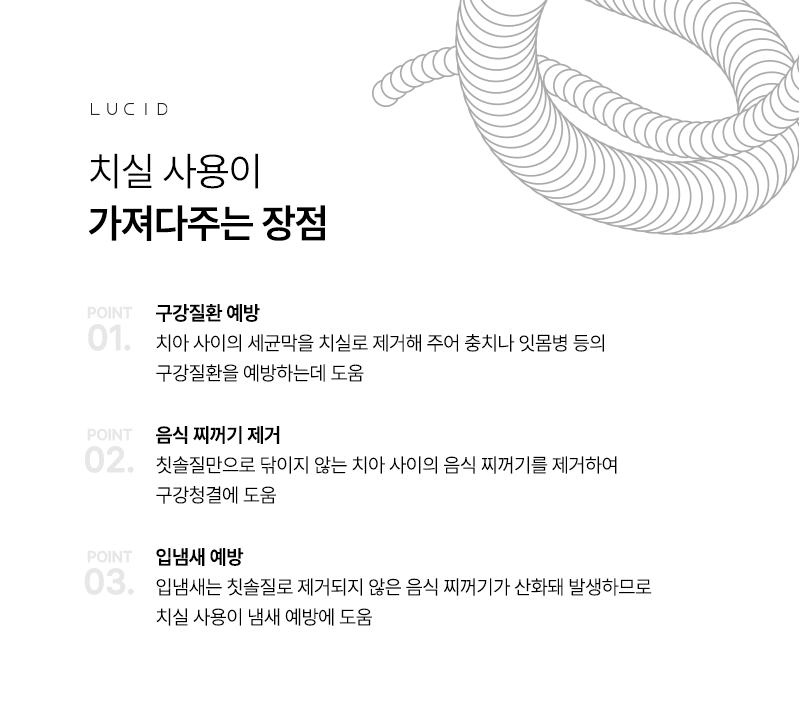
Why should you use dental floss?
Cavity prevention
If food stuck between the teeth is left alone, acid is produced,
which can dissolve enamel and lead to cavities.
Maintaining gum health
Floss removes plaque attached to the gum line,
helping prevent gum inflammation and bleeding.
Improving bad breath
Food trapped between the teeth often decays and causes bad breath.
Flossing is an effective habit for managing bad breath as well.
Supporting oral care during orthodontic treatment
For those wearing orthodontic appliances, it is especially good to actively use floss.
There are also floss products made specifically for orthodontic use, so you can choose the method that is most convenient for you.
Types of floss and how to choose
Dental floss is divided as follows depending on how it is used.
- String floss (roll type)
This is the most basic type, used by cutting the desired length and wrapping it around your fingers.
Once you get used to it, it offers a lot of freedom,
but at first it may feel difficult.
- Floss pick (flosser / dental floss stick)
This is an all-in-one product with a handle, recommended for beginners.
It is easy to hold and use, but caution is needed because forcing it in too hard can injure the gums.
- Orthodontic floss (threader floss)
This floss has a stiff end so it can pass between orthodontic wires.
It can clean areas where it is easy to get caught on brackets or appliances.
Tip
If you are using it for the first time, starting with a floss pick,
and then moving on to the roll type once you are familiar with it, is also a good method.
Points to check when using floss
▪ If the floss is too thick or rough, it may irritate the gums.
▪ Even if there is bleeding after use, it may be a temporary symptom caused by inflammation.
(If bleeding continues, a visit to a Gangnam dental clinic is recommended.)
▪ Choose what feels comfortable for you among various options such as unflavored or mint-flavored.
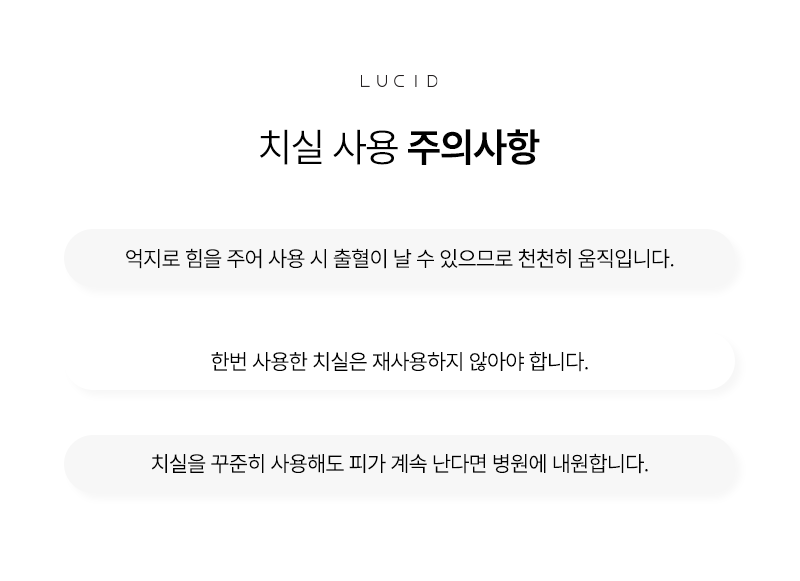
▪ Never reuse it multiple times!
Contaminated floss after use carries a risk of bacterial infection.
Correct way to use dental floss (roll type)
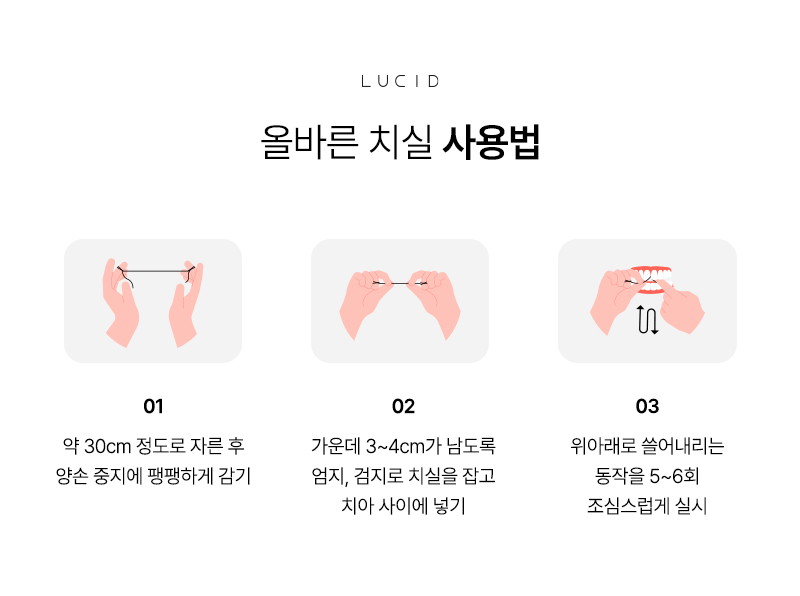
- Cut a length of about 30–40 cm, then wrap and secure it around the center of both hands. A length of about 2–3 cm between the hands is appropriate.
- Hold the floss with both index fingers or thumbs and slowly insert it between the teeth.
Instead of forcing it in, gently move it from side to side as you insert it.
- Move it gently down along the side of the tooth in a C shape to remove plaque. Each side of the tooth should be cleaned separately.
- When moving to the next tooth, replace it with a clean section of floss.
If you clean multiple areas with the same section of floss, bacteria can be transferred instead.
Things to be careful about when using floss
▪ If you force the floss in or pull it out roughly, you may injure your gums. In particular, avoid pressing too hard or snapping it into place.
▪ Using it once a day, preferably after brushing rather than before brushing, is more effective. Finishing with brushing after removing plaque improves cleaning effectiveness.
▪ Children also need floss.
If it is difficult for a child to use it by hand, have a parent help or try a child-sized floss pick.
Using dental floss is not just a simple hygiene habit,
but an essential daily routine for maintaining oral health.
This habit, which takes less than 3 minutes once a day,
plays a big role in preventing cavities and gum disease,
and in protecting a healthy smile.
At Lucid Dental Clinic, for those who have usually found flossing difficult,
we also provide personalized oral care guidance along with direct treatment.
Please remember that small actions can be the start of protecting your dental health for life!

Lucid Dental Clinic
3rd–4th Floors, Coway Building, 606 Nonhyeon-ro, Gangnam-gu, Seoul