Hello. This is Lucid Dental Clinic.
Even if you brush your teeth thoroughly, many people still feel that “their mouth does not feel clean” or that “food feels stuck between their teeth,” right?
The reason is the debris and bacteria in the gaps that toothbrushes cannot reach. The spaces between teeth are hard for bristles to reach, so food residue and plaque tend to accumulate there easily. This area is also a major starting point for cavities and gum disease.
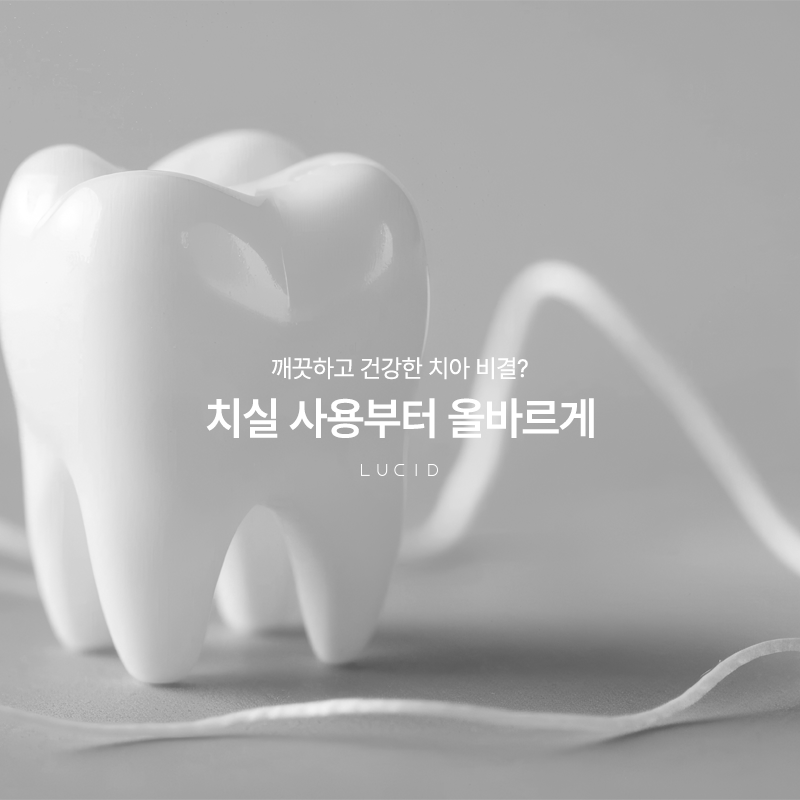
What you need in this case is floss.
Today, we’ll take a detailed look at why floss is necessary, the correct way to use it, common mistakes, and the care tips recommended by Lucid Dental Clinic.
Why Isn’t Brushing Enough?
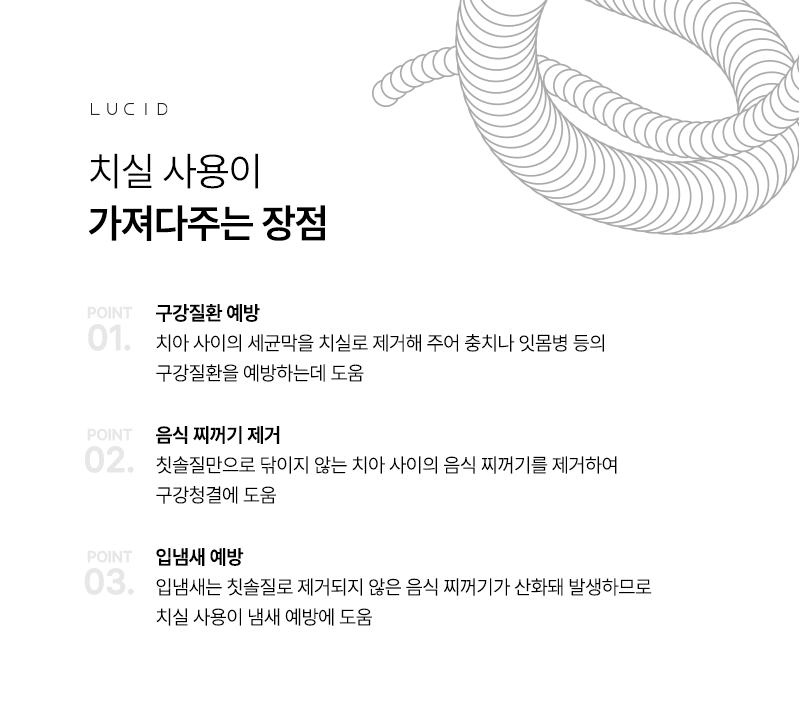
A toothbrush is mainly a tool for cleaning the outer surfaces and top surfaces of teeth. However, because it cannot reach the areas where teeth touch each other, some of the food stuck between them remains as plaque.
According to research, brushing alone removes about 60% of plaque.
In other words, the remaining 40% stays between the teeth.
Because that remaining 40% can cause cavities, gum inflammation, and bad breath, floss is considered an essential daily habit that should be used after brushing.
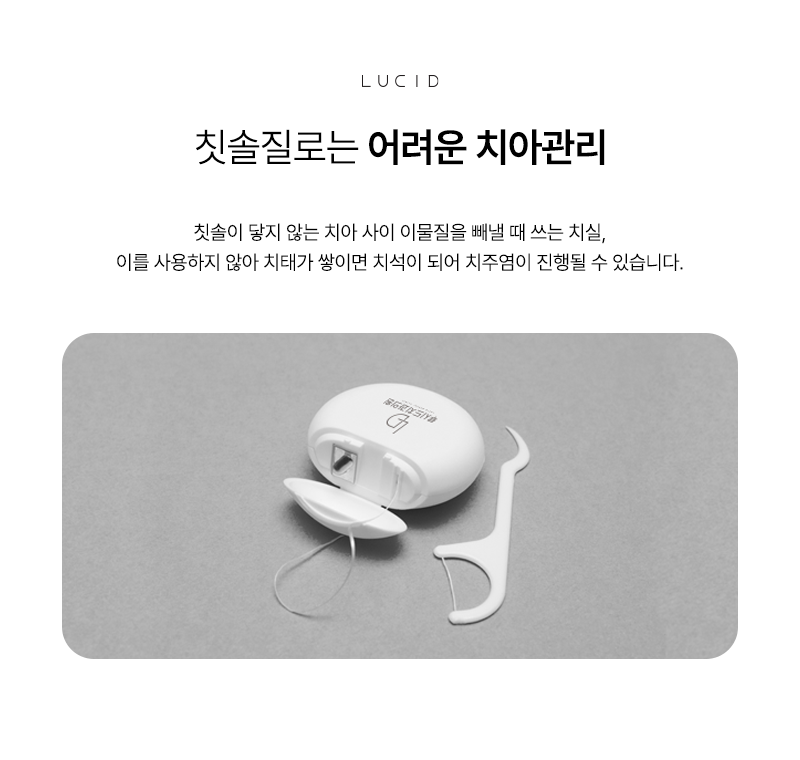
What Type of Floss Is Right for Me?
Floss can be broadly divided into two types.
- Regular string floss
▪️It is shaped so it can be held easily with one hand.
▪️It is suitable for people with narrow spaces between teeth or those who are dexterous.
▪️It allows the most precise cleaning and can even clean below the gumline.
- Floss with a handle
▪️It is shaped so it can be held easily with one hand.
▪️It is easy to carry and suitable for beginners.
▪️However, it may be less accessible than regular floss for deeper areas or the back side of molars.
At Nonhyeon Station Dental Clinic, we recommend that beginners use a floss pick first, and once they get used to it, they also use regular string floss.
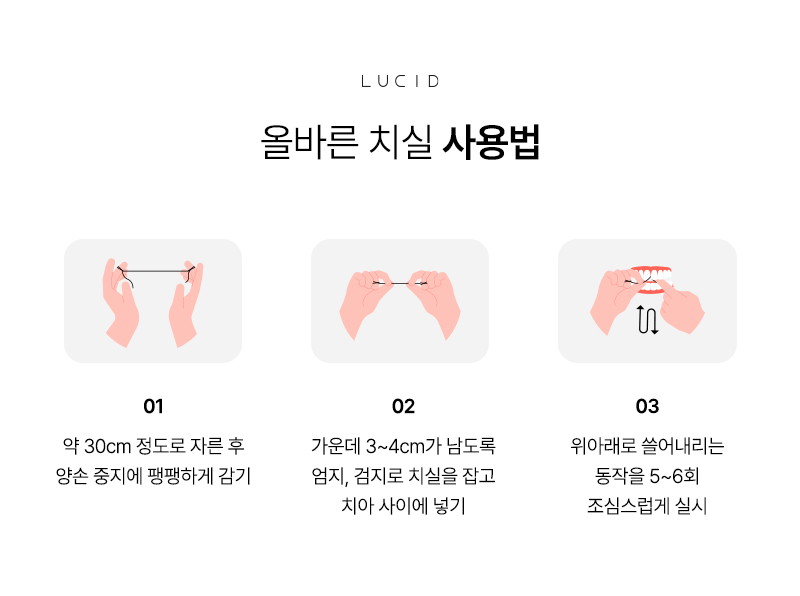
Step-by-Step Guide to Proper Floss Use
No matter how good the floss is, if it is used incorrectly, it can actually injure the gums. Learn the correct order slowly.
- Measure the floss length
Cut a piece of floss about 40 cm long.
(A length from your elbow to your fingertips is appropriate.)
- Wrap it around both hands
Wrap it around the middle finger or ring finger of both hands to secure it, and use only about 2–3 cm between the thumbs and index fingers.
- Gently insert it between the teeth
Move the floss gently up and down and slowly slide it between the teeth. If you force it in as if “jabbing” it, the gums can be damaged.
- Wrap it in a C shape
Wrap the floss in a C shape along the side of the tooth, then move it up and down.
→ This is the key step for removing plaque and debris stuck to the tooth surface.
- Use a clean section when moving to the next tooth
The used section carries bacteria, so switch to a fresh section every time you clean one tooth.
- Finish with brushing and mouthwash
After flossing, using a toothbrush or mouthwash together is more effective for removing any remaining bacteria or residue.
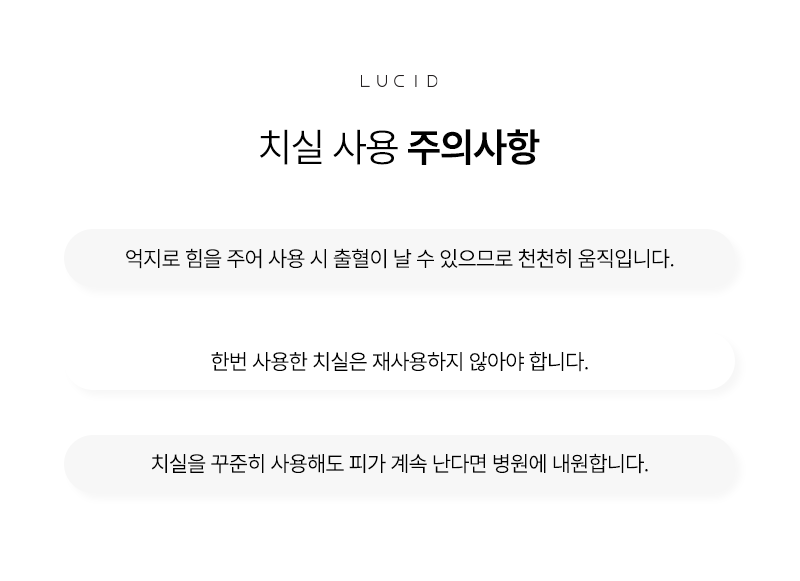
Things to Keep in Mind When Using Floss
- Do not push it in too hard
→ If the gums are injured, minor bleeding and pain can occur.
- Do not stop just because there is bleeding
→ If the gums are inflamed when you first start using floss, bleeding may occur. However, with continued use, inflammation decreases and the bleeding goes away.
- You do not have to use it immediately after eating
→ Once a day, using it before or after brushing before bed is sufficiently effective.
- If you are undergoing orthodontic treatment, use a floss threader designed for floss
→ Because brackets prevent regular floss from passing through, use a tool that helps thread the floss.
When Should You Start Using Floss?
Floss is recommended not only for adults but also from the teenage years. As permanent teeth settle in, the spaces between teeth become narrower, so building the habit at that stage can greatly help prevent cavities.
In particular, if you are undergoing orthodontic treatment or have narrow spaces between teeth, floss is essential because brushing alone is difficult.
What Is the Difference Between Floss and Interdental Brushes?
Many people ask, “What is the difference between interdental brushes and floss?”
| Category | Floss | Interdental brush |
|---|
| Structure | Thin string form | Mini brush with bristles |
| Area of use | Narrow spaces between teeth | Wider spaces between the gums and teeth |
| Recommended for | Typical tooth spacing | People with receding gums and gaps, people with implants or undergoing orthodontic treatment |
| How to use | Wrap the floss and rub it up and down | Insert the brush and move it gently back and forth |
In other words, floss is suitable for narrow gaps, while interdental brushes are suitable for wider gaps.
Using both together, depending on the situation, is ideal.
Changes You May Notice When You Use Floss Consistently
▪️The area around the gums feels much cleaner and fresher.
▪️Gum swelling and bleeding decrease.
▪️Bacteria that cause bad breath are reduced.
▪️The preventive effect against cavities and gum disease increases.
The difference in gum health between people who use floss consistently and those who do not is clearly visible even to the eye. Research also shows that using floss together with brushing removes about 30–40% more plaque than brushing alone.
Floss is not a tool used only at the dental clinic. It is an essential personal oral care item used every day.
It may feel cumbersome and difficult the first few times you use it, but once it becomes a habit, you will feel much fresher than when you only brush your teeth. At Lucid Dental Clinic, we provide each patient with direct guidance on the appropriate type of floss and how to use it based on their tooth structure and spacing.
Lucid Dental Clinic
3rd–4th Floors, Coway Building, 606 Nonhyeon-ro, Gangnam-gu, Seoul
Lucid Dental Clinic
This is Lucid Dental Clinic, which brings happiness.
pf.kakao.com
Lucid Dental Clinic - LUCID DENTAL CLINIC (@lucid_dental_clinic) • Instagram Photos and Videos
See Instagram photos and videos from Lucid Dental Clinic - LUCID DENTAL CLINIC (@lucid_dental_clinic)
www.instagram.com