Hello. This is Lucid Dental Clinic.
When looking in the mirror, you may suddenly think, “My teeth look yellower than before.”
Even though you may not have neglected your care in any particular way,
there are moments when your teeth look dull in photos,
and you end up covering your mouth when you smile.
Tooth discoloration is more often a change that appears as a result of
the dietary habits and lifestyle patterns we repeat every day,
rather than due to poor hygiene management.
Teeth may look hard and smooth on the outside,
but in reality, they have many tiny irregularities and gaps.
When food pigments repeatedly come into contact with these gaps,
staining gradually progresses, and at some point it becomes
noticeable discoloration.
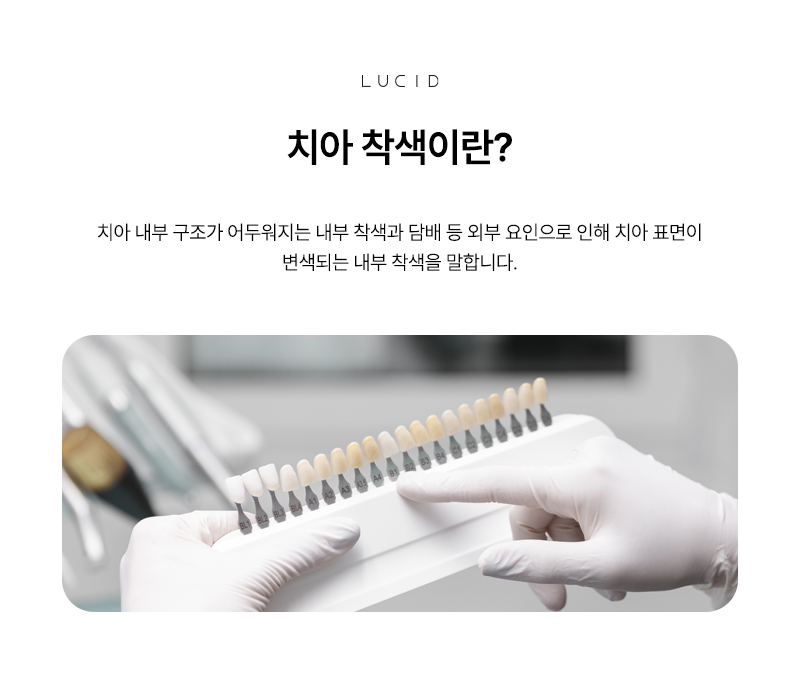
How does tooth discoloration occur?
Most tooth discoloration appears as staining caused by pigment buildup
on the tooth surface. Rather than becoming noticeable over a day or two,
it develops gradually as the same foods and drinks are consumed repeatedly
over a long period of time.
In particular, modern eating habits are close to an environment that makes
staining more likely. This is because people frequently consume dark-colored
foods such as coffee, tea, carbonated drinks, and seasoned foods,
and often do not care for their mouths immediately after meals.
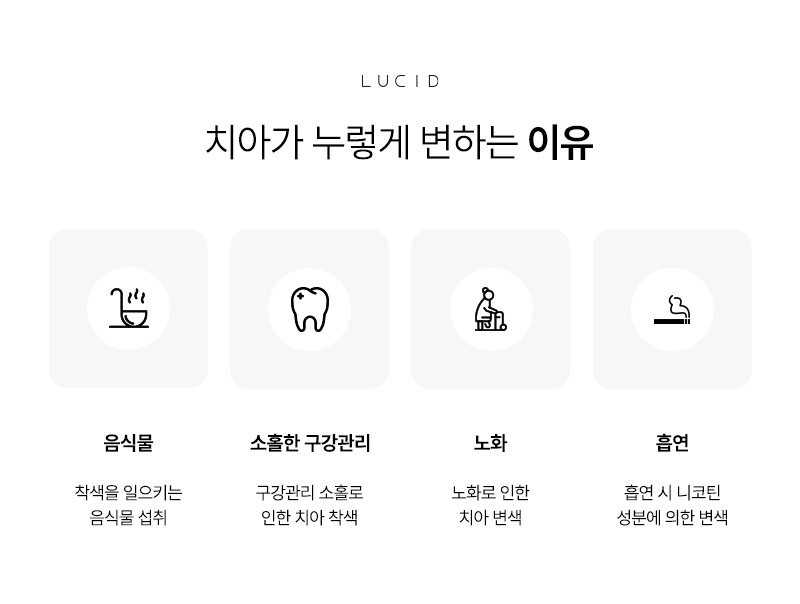
Representative foods that cause tooth staining
At Samsung Jungang Station Dental Clinic, we say that foods that cause
tooth staining are closer to everyday life than you might think.
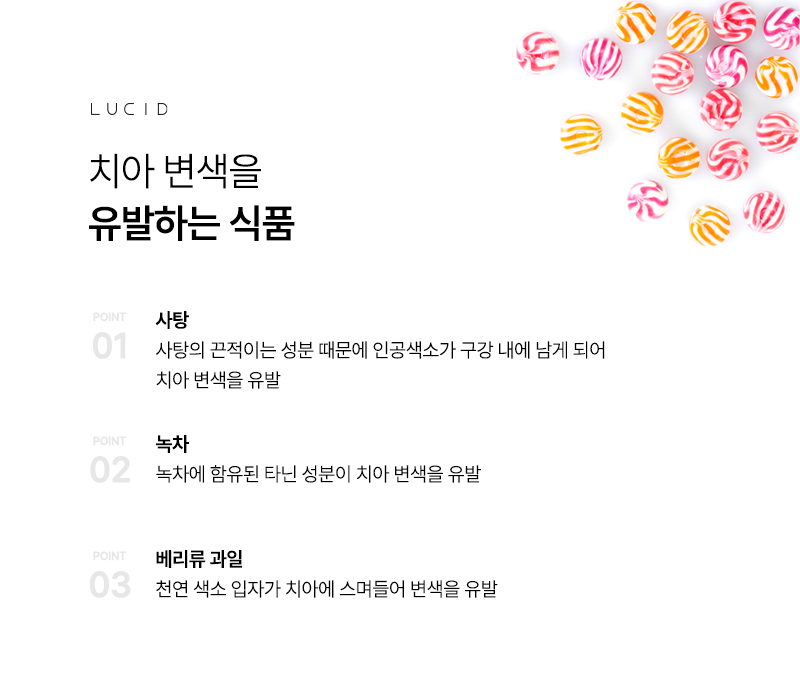
Cafe drinks such as Americano and latte contain dark brown pigments
that can easily remain on the tooth surface.
Black tea, green tea, and Hup Tea also appear relatively light in color,
but when consumed over a long period, they can make the overall tone of
teeth look dull.
Wines, including red wine, have strong pigments and acidity together,
so staining can progress more quickly, and cola and energy drinks also
promote tooth discoloration through pigments and acidic components.
Darkly colored seasoned foods such as curry, jjajang, gochujang, and soy sauce-based dishes,
as well as chocolate and berries such as blueberries and blackberries,
can also cause tooth staining when consumed repeatedly.
The problem is that these foods are not reserved for special occasions,
but are naturally consumed as part of everyday meals and snacks.
Do we have to avoid colored foods altogether?
Eating strongly pigmented foods does not necessarily mean tooth discoloration
will occur.
What matters is how often you eat them
and how you care for your teeth afterward.
A habit of sipping coffee throughout the day may have a greater impact
than one cup of coffee a day, and the longer food is left without any care
after eating, the higher the chance of staining becomes.
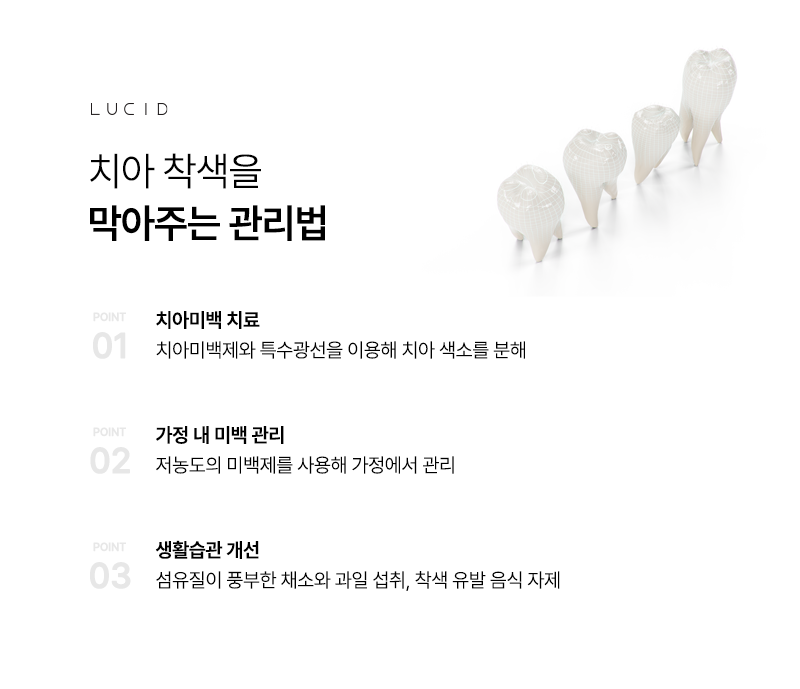
Realistic care habits that help reduce tooth staining
Tooth discoloration cannot be completely prevented,
but with daily care alone, you can sufficiently slow the rate of staining.
After consuming foods with pigments, it is good to rinse your mouth with water
to prevent the pigments from lingering for too long.
If you drink coffee or beverages frequently, using a straw can also help
reduce the area that comes into direct contact with the teeth.
Because the tooth surface may become temporarily weakened immediately after
consuming acidic foods, it is better to brush your teeth about 20 to 30 minutes later
rather than brushing right away.
In addition, brushing alone may not be enough, so it is important to use floss
or interdental brushes together to manage staining factors left between the teeth.
Rather than forcing yourself to use whitening toothpastes that are promoted
for their whitening effects for long periods of time, consistent care that does
not excessively wear down the tooth surface can actually help prevent tooth staining.
There are also cases where tooth staining is especially likely to occur
Even when eating the same foods, some people experience tooth discoloration
progressing more quickly than others.
Work environments where coffee or tea is consumed frequently, frequent dry mouth,
surfaces roughened by brushing too hard, and irregular regular scaling care
are all conditions in which staining can build up more easily.
In such cases, it is necessary to maintain care habits more consciously
than usual.
Managing tooth discoloration is not something that can be solved all at once;
it is closer to a process of reducing accumulation and maintaining the current condition.
Rather than what foods you eat, how you care for your teeth afterward determines
the changes in tooth color. With just a little attention, you can slow the rate at
which your tooth tone becomes dull, and over time that makes a bigger difference.
Just as small daily habits build the impression of your teeth,
managing tooth discoloration at Samsung Jungang Station Dental Clinic also begins
with the choices you make today.
Taking a moment to review your current eating habits and oral care routine—
that can be the most realistic first step in managing tooth discoloration.


Lucid Dental Clinic
3rd–4th Floors, Coway Building, 606 Nonhyeon-ro, Gangnam-gu, Seoul
Naver Reservation :: Lucid Dental Clinic
Hello, this is Lucid, a Gangnam dental clinic loved by former [ entertainers ] [ influencers ] [ idols ] [ beauty pageant ] winners :) Our Lucid Dental Clinic aims for dental treatment that considers both aesthetics and function. We know very well that patients have gone through many concerns before coming to our clinic. Therefore, at Lucid, we strive to provide the greatest satisfaction and results with the least amount of treatment possible. The best treatment is to touch the teeth and gums as little as possible. We prioritize methods that preserve natural teeth, and even during treatment, natural tooth damage...
m.booking.naver.com
Lucid Dental Clinic
This is Lucid Dental Clinic, where we bring happiness.
pf.kakao.com