What a Natural Tooth Preservation Dental Clinic Says
Apicoectomy
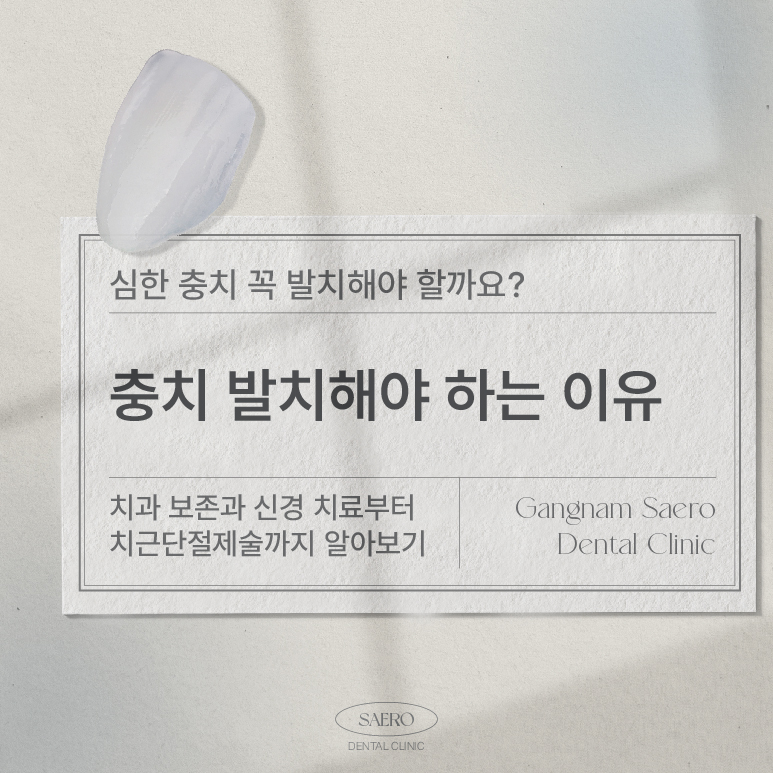
Does a severe cavity always have to be extracted?
No matter how advanced medical technology becomes,
fully replacing the body’s original structure is never easy.
Teeth are no exception.
Implants are certainly a good treatment,
but if possible, preserving the natural tooth until the end
is often more advantageous functionally and long-term.
That is why the priority in dental treatment is simple.
“Before replacing it, first check whether it can be saved.”
The apicoectomy we’ll discuss today
is a treatment that comes close to that “last option for preservation.”
Natural Tooth Preservation - Cavity Prevention
Before learning about apicoectomy,
the most practical first step in protecting natural teeth
is cavity prevention.
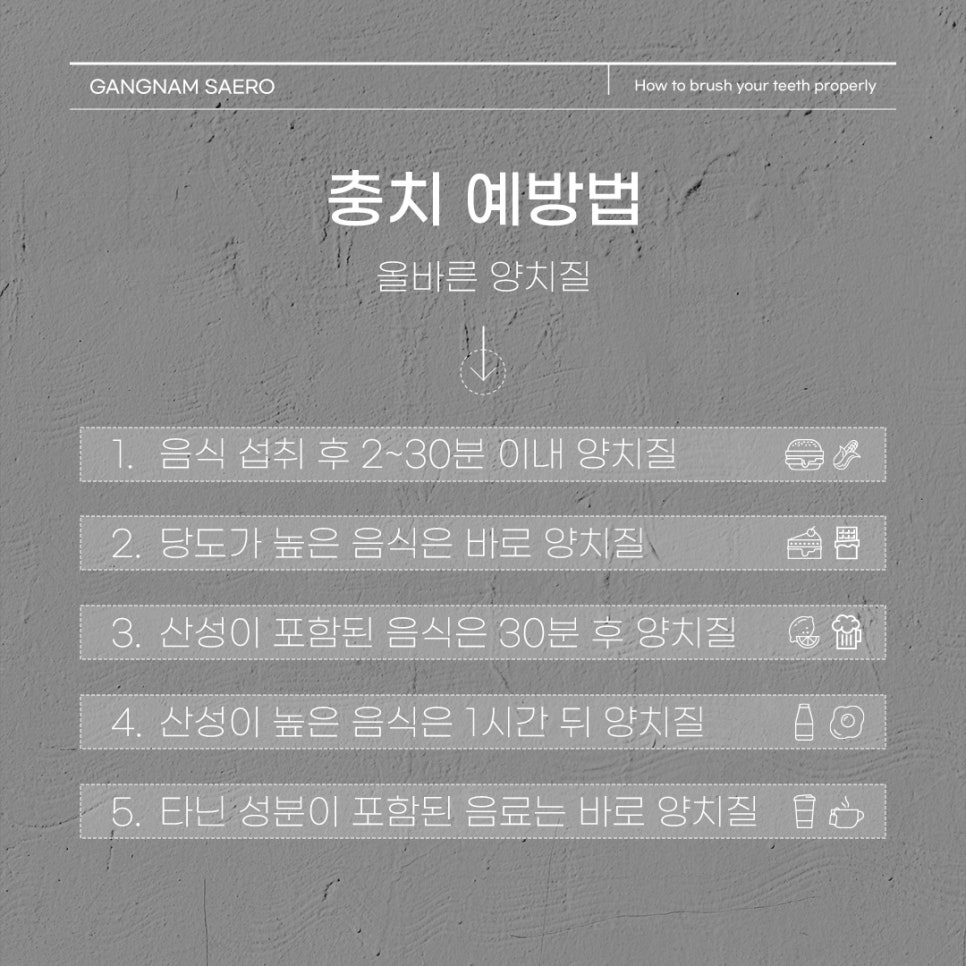
- Brush within 30 minutes after eating or drinking
(However, after acidic foods such as carbonated drinks or vinegar, wait 30 minutes)
-
Since brushing alone may not be enough,
make it a habit to use interdental brushes, dental floss, and a tongue cleaner as well
-
And most importantly, regular checkups
By the time a cavity feels “a little painful,”
it has often already progressed deep enough
that root canal treatment is needed.
From that point on, the amount of natural tooth removed increases,
and in the end, “tooth-saving treatment” becomes increasingly difficult.
Natural Tooth Preservation - Cavity Treatment
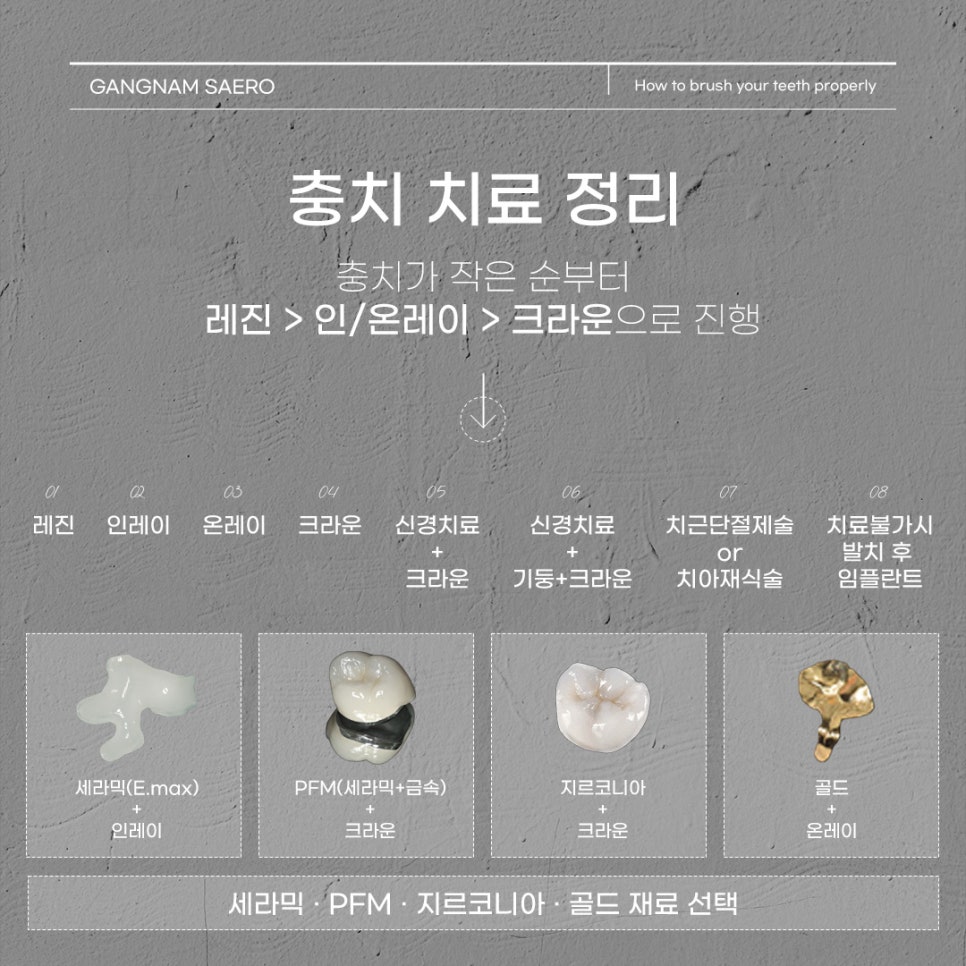
If a cavity does develop,
the way to preserve the natural tooth as much as possible
is to treat it quickly.
-
Early cavity: resin
-
Mid-stage cavity: inlay/onlay (ceramic or gold, etc.)
-
Late-stage cavity: crown (PFM, zirconia, gold, etc.)
As treatment progresses to later stages,
removal, cost, and treatment time inevitably increase as well.
That is why, for cavity treatment, “when you do it”
is directly tied to “how much can be saved.”
Natural Tooth Preservation - Root Canal Treatment
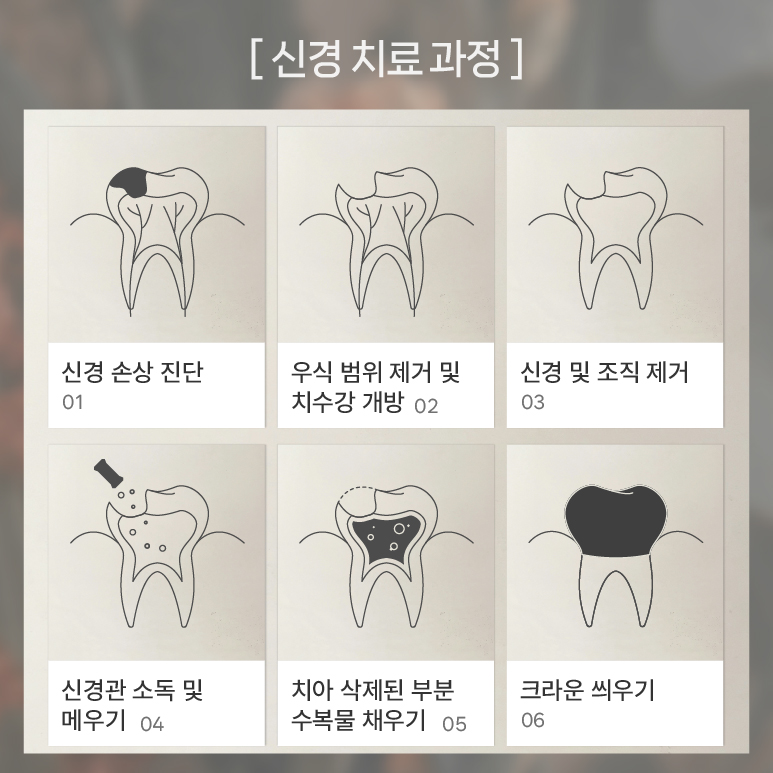
If the cavity reaches the nerve and the pain continues,
root canal treatment becomes necessary.
Root canal treatment usually follows this process:
-
Remove the cavity and open the pulp chamber
-
Remove the nerve and infected tissue
-
Disinfect and fill the root canal
-
Shape the tooth form
-
Place the restoration
-
Finally, place a crown
There is one point many people overlook here.
If a crown is not placed after root canal treatment and the tooth is left unattended,
it can break more easily.
A tooth that has undergone root canal treatment becomes structurally weaker,
and as the restoration wears down or comes off,
the tooth can become damaged even further.
Natural Tooth Preservation - Apicoectomy
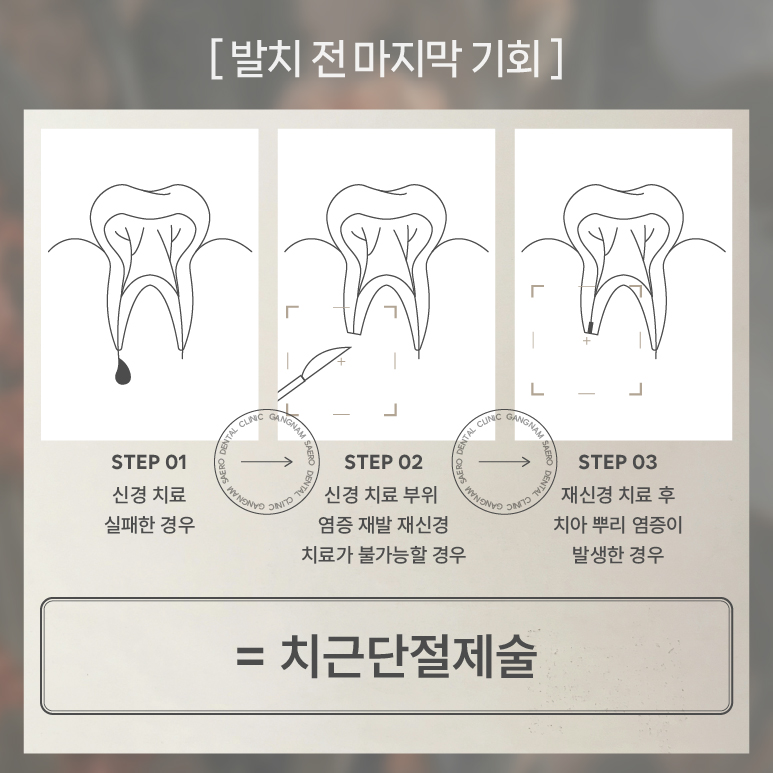
The treatment mentioned as the final step in preserving a natural tooth
is apicoectomy.
Apicoectomy is a 대표적인 tooth-preserving surgery
in which the gum around the tip of the tooth root (apex) is incised,
part of the root tip is removed,
and infected tissue (an inflammatory lesion) around the root canal is eliminated.
It is considered in cases such as:
-
When root canal treatment fails
-
When inflammation at the root canal treatment site recurs, but retreatment is not possible
-
When inflammation at the tooth root keeps recurring even after retreatment
The key point is this:
“A treatment to check one last time whether this tooth still has a chance to be saved,
before extracting it and placing an implant.”
A natural tooth is not just “one tooth.”
It is a structure connected to the jawbone, bite, chewing habits, and facial balance.
So if preservation is possible,
that choice can be more than just treatment—it can be a decision that protects quality of life.
Gangnam Saero Dental Clinic’s Principle for Preserving Natural Teeth
Tooth-preserving treatment
is not simply a matter of whether treatment is possible or impossible;
it must be accompanied by the attitude of finding a way to save the tooth until the end,
as well as diagnosis and procedural experience that match that goal.
Gangnam Saero Dental Clinic
before deciding on implant surgery,
checks whether there is any way to preserve the natural tooth until the very end,
from cavity treatment to root canal treatment and apicoectomy,
and approaches each case in a way that reduces unnecessary extractions according to the patient’s situation.
A new smile, a new beginning.
Gangnam Saero Dental Clinic.
- This post is provided by a medical institution due to a contractual relationship with a third party and contains medical information, etc.