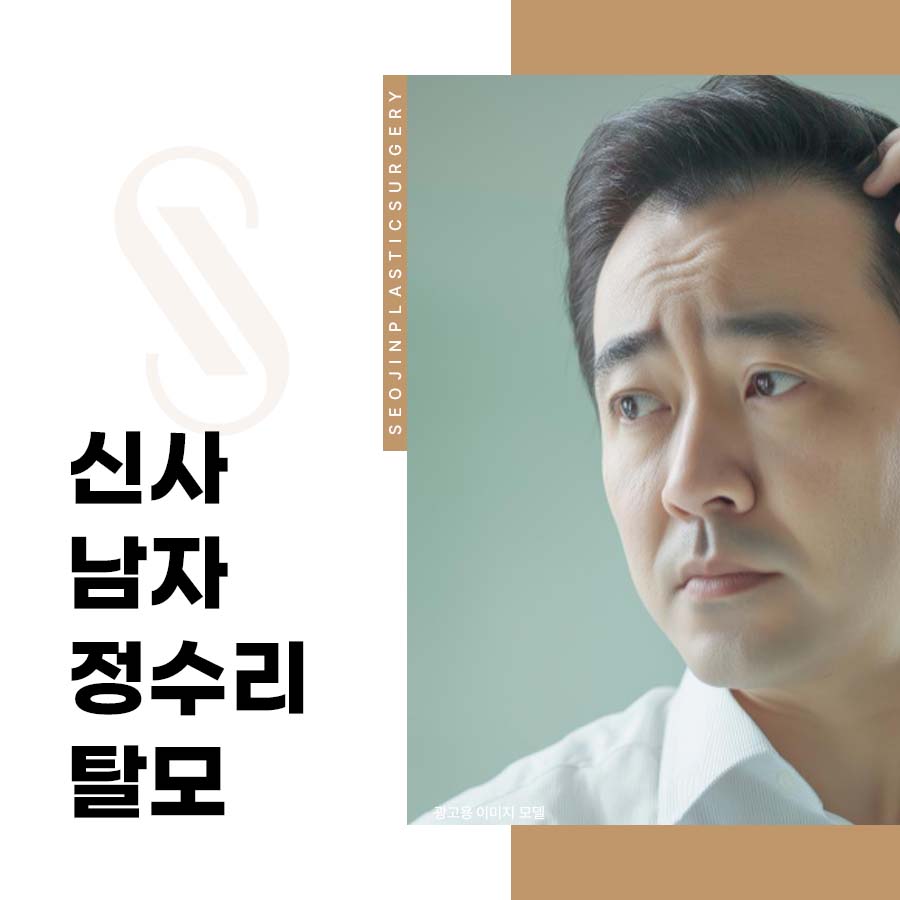
Among men, there may be some who are stressed due to crown hair loss.
Male crown hair loss can be suspected when the hair becomes thinner and the scalp at the crown starts to look sparse. If you know the self-diagnosis methods, it can help you detect crown hair loss early.
To prevent hair loss, regular scalp cleansing, proper nutrition, and stress management are needed.
Today, let’s briefly look at the self-diagnosis methods for male crown hair loss in Sinsa and how to prevent it.
What Is Crown Hair Loss?

Crown hair loss is one of the representative types of hair loss seen in men. It refers to a type in which the amount of hair on the crown area gradually decreases and the scalp becomes visible. It can occur in both men and women, but since it is common in men, it is considered a type of male pattern hair loss. The progression patterns of crown hair loss in men and women differ as follows.
| Male crown hair loss pattern | Female crown hair loss pattern |
|---|
| - It progresses in a round pattern centered on the crown. - The progression is also gradual, and even in advanced cases, most of the time some fine hairs remain, so treatment outcomes tend to be relatively good. | - It is characterized by a decrease in the number of hairs. - Thick hairs may remain in areas of severe hair loss, but because the number of hairs per follicle decreases, empty follicles can appear easily. |
The cause of crown hair loss is known to be genetic, but it is said that various other factors such as stress and lifestyle habits also have an effect. Environmental factors such as lack of sleep, nutritional deficiencies, and frequent dyeing and perming can also cause crown hair loss.
Self-Diagnosis Methods for Crown Hair Loss

Then how can you tell whether you have crown hair loss? Through self-diagnosis methods for crown hair loss, you can estimate whether there are signs of hair loss at your crown.
- Check with a mirror
Use a handheld mirror or wall mirror to reflect the crown area. If the part line leads to a crown area that looks wider, early signs of hair loss may be starting.
- Compare the crown and the back of the head
Compare the thickness of the hair at the crown with the hair at the back of the head. If the hair at the crown is noticeably thinner and weaker than the hair at the back, hair loss may be progressing in the crown area.
- Check the number of hairs per follicle
Carefully observe the number of hairs coming out of each follicle along the part. Normally, 2 to 3 hairs per follicle is normal, but if it has decreased to 1 or 2, you may suspect hair loss.
In addition to the crown area, if more than 100 hairs fall out in a day, you may suspect that hair loss is progressing. Check the thickness of your hair and the amount of shedding.
Prevention Tips for Crown Hair Loss

Prevention is important for hair loss. Early detection and consistent care are important. What do you need to prevent crown hair loss? We hope you can protect the hair at your crown by following these prevention tips.
- Keep the scalp clean
To prevent hair loss, the scalp must be clean. Once a day, wash the scalp thoroughly with lukewarm water.
- Get proper nutrition
Nutritional imbalance can also cause hair loss. It is advisable to maintain a diet rich in nutrients needed for hair, such as protein, vitamins, and minerals.
- Manage stress
Hair loss, including crown hair loss, is greatly affected by stress. Manage it so you are not excessively exposed to stress through regular exercise, hobbies, and activities.
- Use a shampoo for hair loss
Using shampoos that irritate the scalp too much can also cause hair loss. Using a hair-loss shampoo that is gentle on the scalp may be helpful.
- Improve your lifestyle habits
Hair loss is also related to poor lifestyle habits. It is recommended to go to bed before midnight and get 7 to 8 hours of quality sleep. Also, it is best to avoid eating late-night snacks or greasy foods often.
Conclusion
So far, we have looked at self-diagnosis methods and prevention tips for crown hair loss in Sinsa. When hair loss symptoms appear, many people start self-care. Self-care can be helpful at the prevention stage, but if it has been neglected for a long time and has already progressed significantly, it may take a long time to improve. Therefore, it is advisable to manage hair loss symptoms through treatment methods suited to each individual and improvements in lifestyle habits.





 Previous image
Next image
Previous image
Next image