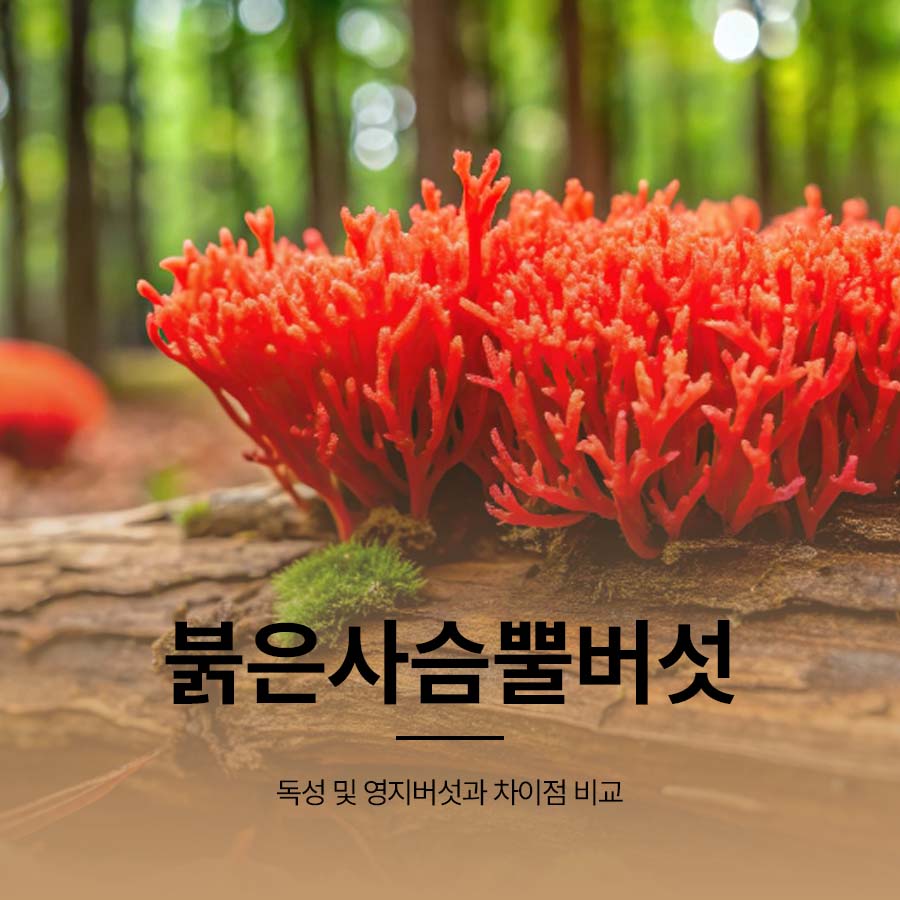
When you go into the mountains, you can see mushrooms growing on trees. There are many kinds of mushrooms that grow in the mountains. But if a mushroom especially catches your eye, you should be careful not to approach it carelessly. It may be a poisonous mushroom!
If you come across a mushroom in the mountains with a striking appearance, it may be the 'Red Stag Horn Mushroom.' Because it looks like a deer’s antlers, people may think it is good for health and eat it, but it can cause fatal poisoning. In particular, since it looks similar to Ganoderma mushroom, it is easy to mistake the two, so extra caution is needed. Today, let’s briefly look at the toxicity of the Red Stag Horn Mushroom and how it differs from Ganoderma mushroom.
- What is the Red Stag Horn Mushroom?
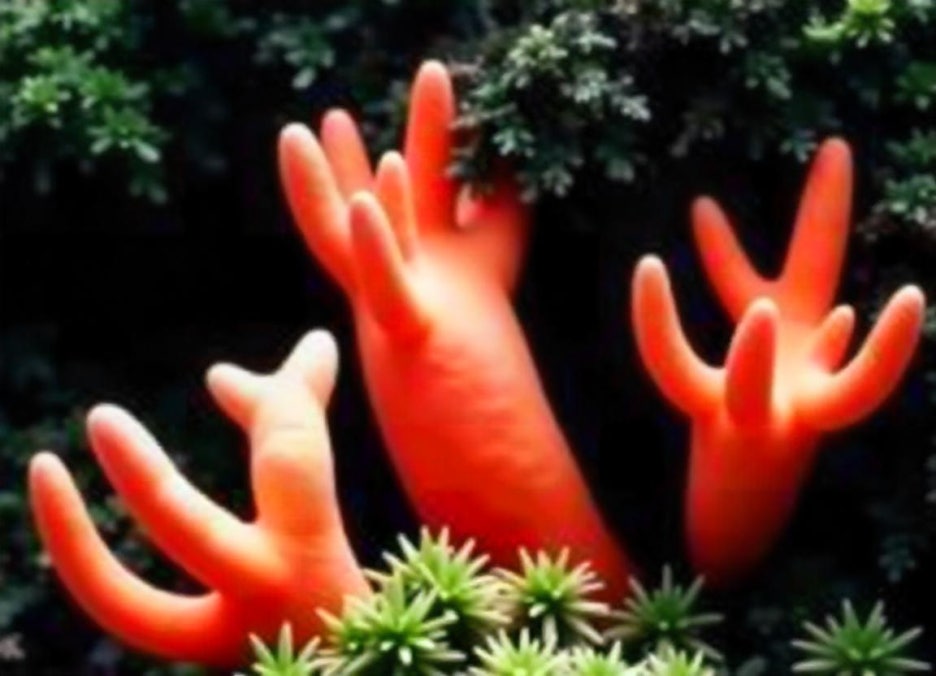
Image for reference
The Red Stag Horn Mushroom is one of the strong poisonous mushrooms found in Korea, along with the Destroying Angel and the White Dapperling.
It is named because it resembles the shape of a deer’s antlers. Its bright red color and glossy appearance make it easy to notice. It mainly grows from summer to autumn, either singly or in clusters, on decaying hardwood trees or near tree roots buried underground.
- Toxicity Information on the Red Stag Horn Mushroom
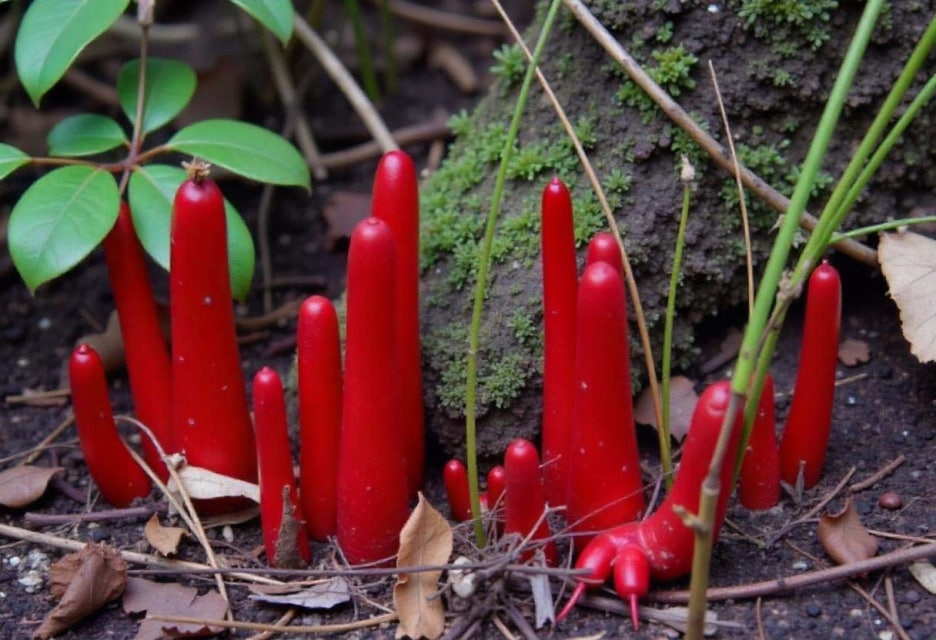
Image for reference
The Red Stag Horn Mushroom is highly toxic. It contains a deadly toxin from the trichothecene group. This toxin can cause inflammation even through skin contact, and even a small amount consumed can cause serious harm to the human body and, in severe cases, death. It is a mushroom that requires caution even if you only touch it or smell it.
Trichothecene does not lose its toxicity even when boiled over high heat, and it can produce symptoms similar to radiation exposure because the toxic substance interferes with protein synthesis. It is neither a spore nor a neurotoxin, so there is no antidote.
Image for reference
💀💫 Toxic Reaction Symptoms
-
Within 30 minutes to several hours after ingestion: severe gastrointestinal distress such as vomiting, diarrhea, and abdominal pain may occur. Symptoms similar to the flu may appear, and nerve toxicity may cause numbness or paralysis in the hands and feet.
-
As time passes: severe symptoms may develop over time. After several days, hair loss all over the body may occur, and the skin may turn red, peel, and become necrotic. In addition, it can cause serious damage to major organs such as the liver, kidneys, and brain, and suppress bone marrow function, leading to weakened immunity and a tendency to bleed.
- What is the difference between the Red Stag Horn Mushroom and Ganoderma mushroom?
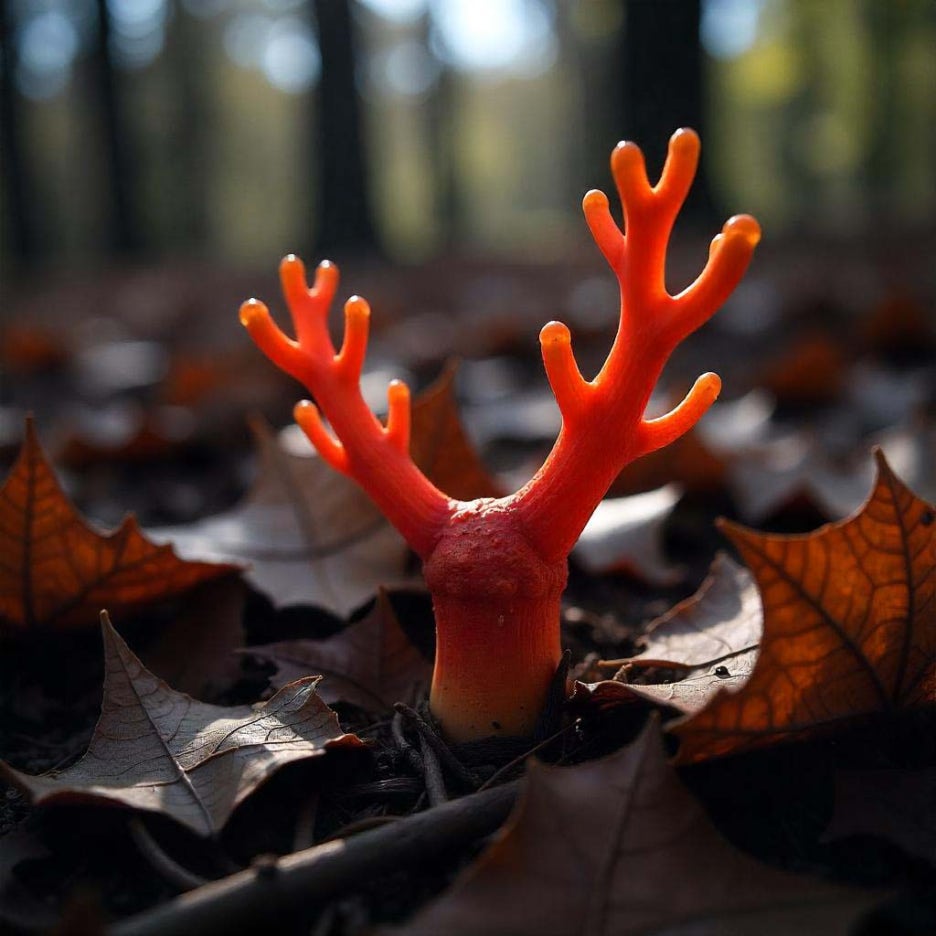
Image for reference
So far, we have looked at the toxic characteristics of the Red Stag Horn Mushroom.
The problem with this mushroom is not only its toxicity, but also that it is easy to mistake it for Ganoderma mushroom, a medicinal mushroom.
That is why some people accidentally consume the Red Stag Horn Mushroom thinking it is Ganoderma mushroom and end up in an accident.
There are clear differences between the Red Stag Horn Mushroom and Ganoderma mushroom. Let’s compare them together. ☝
| Classification | Red Stag Horn Mushroom (poisonous mushroom) | Ganoderma mushroom (medicinal mushroom) |
|---|
| Shape | Branch-like form rising upward like deer antlers | Fan- or kidney-shaped body with a stem attached |
| Color | Bright red, orange-red | Reddish brown, dark brown (white at the growing edge) |
| Surface | Smooth, glossy, and firm | Has bands around the edge and a somewhat glossy surface |
| When touched | Very hard like wood | Firm, but relatively less so |
| Spore release | Spore release is not easily visible to the naked eye | When mature, a large amount of yellowish-brown spores are released |
| Scent | No distinct scent or an earthy smell | Has a bitter and strong mushroom aroma |
| Natural habitat | Dead hardwood or nearby soil | Dead hardwood stumps or the base of living trees |
| Toxicity | Extremely potent toxin (do not ingest!) | Medicinal (boiled and taken as tea) |
- Be careful not to eat mushrooms carelessly while hiking
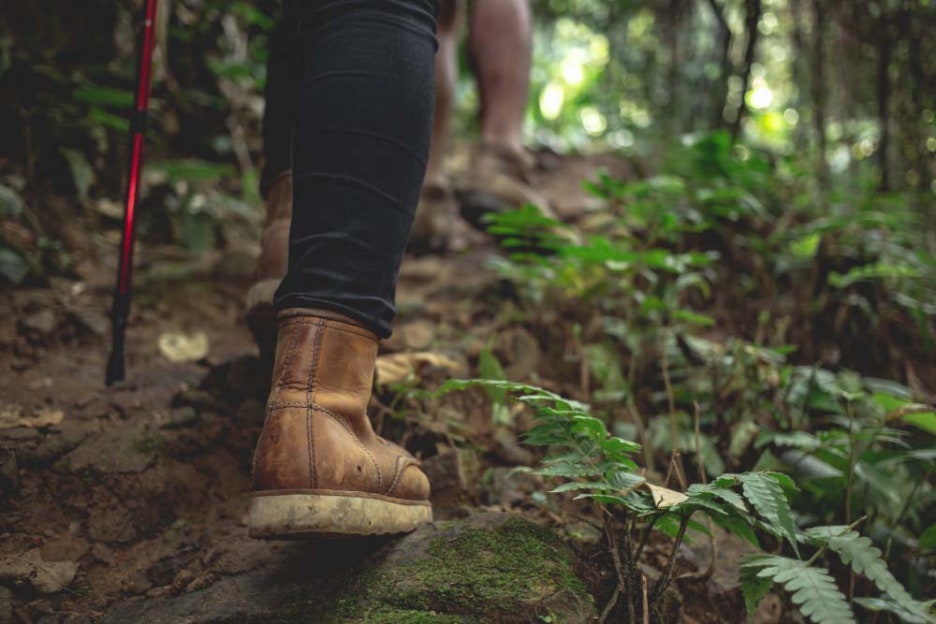
As more people become health-conscious, more people are going hiking. Because of the belief that things found in the mountains are good for the body, some people, when they find mushrooms during a hike, think, "It’s wild, so it must be good for me," and try to eat them.
Since many kinds of plants grow naturally in the mountains, it is best not to approach or eat them carelessly. Once you find a mushroom, not collecting it or touching it is important to prevent accidents caused by mushrooms. If you want to collect wild mushrooms, it is best to be accompanied by an expert and collect them under guidance.
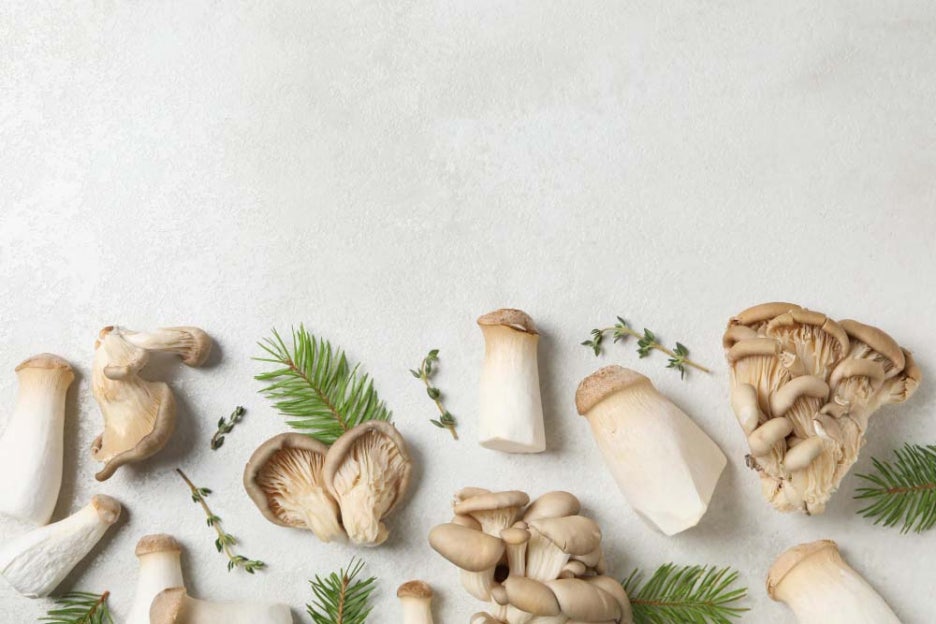
💫 Insufficient verification of field guides
It is very dangerous to identify mushrooms using only the internet or a mushroom field guide. Among poisonous mushrooms, there are many that look very similar to edible mushrooms, so even experts sometimes find it difficult to tell them apart. Therefore, blindly trusting information from the internet or field guides is dangerous.
💫 Do not blindly trust folk beliefs
It is not a good idea to approach mushrooms based on folk beliefs such as "A mushroom eaten by insects is not poisonous" or "Only brightly colored mushrooms are poisonous." There are many highly poisonous mushrooms whose toxicity does not disappear even when heated, and there are also some with plain colors, so do not blindly trust folk beliefs and approach them.
💫 Take a photo and report it
If you find a dangerous poisonous mushroom such as the Red Stag Horn Mushroom, do not touch it carelessly. It is better to take a photo and report it to the Korea Forest Service or the local government so that others do not get harmed. So far, we have looked at the toxicity of the Red Stag Horn Mushroom and how it differs from Ganoderma mushroom. Beautiful wild mushrooms should be enjoyed with your eyes only, and edible mushrooms are safest when collected with an expert or purchased as verified products from the market.

Previous image
Next image