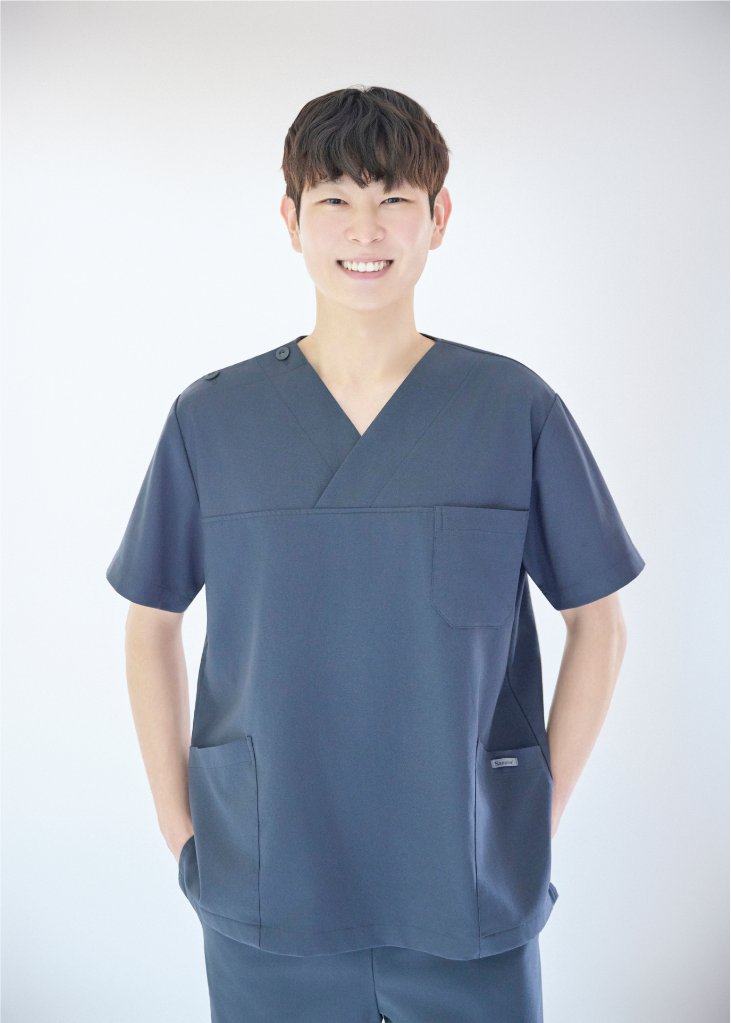
Hello.
I’m Kim Ha-won, a beauty doctor.
If your skin seems thinner
and makeup no longer goes on as smoothly as it used to,
you may find yourself wondering
whether Lituo or Rejuran would be more suitable.
Because both are administered by injecting material into the skin,
they may appear to be similar skin boosters,
but the substances used, the extent of the accumulated evidence,
and the criteria to check during a consultation are not the same.
In particular, simply dividing the difference between Lituo and Rejuran
into “for elasticity” and “for fine lines”
can oversimplify the actual condition of the skin.
Today, I’ll explain step by step,
from the ingredients in the two products
to the changes you may expect and the criteria for making a choice.

3-point summary
-
Lituo is a particulate, acellular allogeneic dermis,
while Rejuran contains PN, a polynucleotide.
-
Although the two procedures are often discussed in overlapping areas,
such as skin texture and elasticity,
the materials involved are different.
-
Rather than choosing a product simply because your skin is thin,
first determine whether dryness, fine lines, or redness
is the main concern.
1) Lituo and Rejuran differ in their ingredients
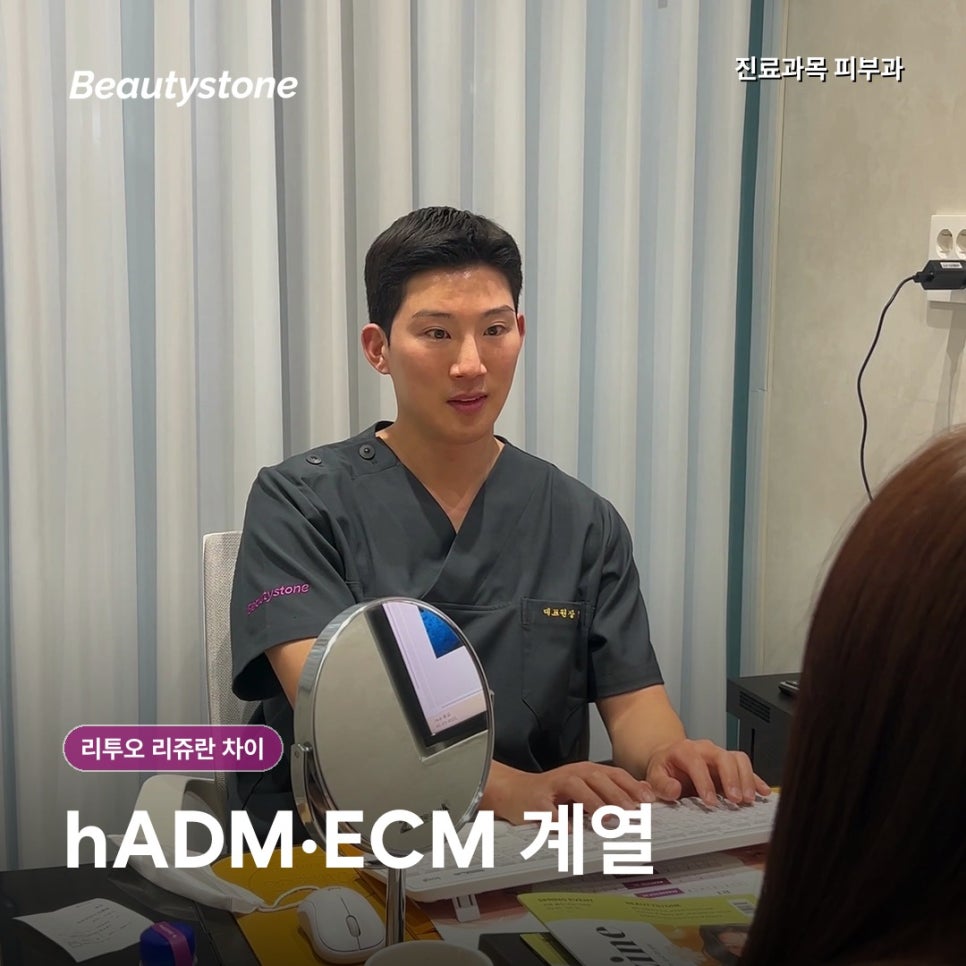
The manufacturer introduces Lituo
as a particulate, acellular allogeneic dermal product
made from skin tissue as its raw material.
Its key feature is that dermal tissue
with its cells removed is made into fine particles
while retaining the structural characteristics of the dermis.
For this reason, clinics often describe it
as belonging to the hADM or ECM category,
but its material is different from
hyaluronic acid fillers
and PDLLA or PLLA collagen boosters.
By contrast, the main ingredient in Rejuran
is polynucleotide, or PN,
extracted from salmon reproductive cells.
There is a point here that is often confused.
Rejuran belongs to the PN category,
and it is not accurate to refer to it interchangeably
as exactly the same as PDRN.
The same company also distinguishes PN from PDRN
and uses them in pharmaceuticals, medical devices,
and cosmetics, among other products.
The main ingredient in Rejuran medical devices
is officially identified as PN.
2) How do the expected changes differ?
Lituo is an approach that involves injecting materials
related to the tissue structure forming the foundation of the dermis.
Recently, studies evaluating particulate hADM
in adults with rough cheek skin texture
have also been published,
but it is difficult to interpret this broadly
and assume that the same results will occur for every skin concern.
Injections containing PN, such as Rejuran,
have relatively more accumulated research
on skin texture, fine lines, elasticity, and hydration.
However, while a review of the relevant studies
reported positive changes,
the study sizes and treatment methods varied,
and the level of evidence was low to moderate in some cases.
Therefore, it should not be assumed
that everyone will experience the same changes.
Ultimately, the difference between Lituo and Rejuran
is more accurately understood not in terms of
“which product is stronger,”
but by considering which material is being introduced into the skin,
how far the currently available evidence extends,
and what changes you want to see.
Because data directly comparing the two products
under the same conditions and demonstrating the superiority of one
are limited,
rather than ranking them based only on reviews,
you should make your decision based on your skin condition
and the purpose of the procedure.
3) What should I ask about my skin first?
First, try to break down the expression
“my skin is thin” into more specific concerns.
If you experience significant tightness and flaking after cleansing
and sensitivity has persisted after a recent laser treatment or peel,
it is better to check the condition of your skin barrier and any inflammation
before choosing a product.
If redness and visible small blood vessels are your main concerns,
it is necessary to determine during a consultation
whether they are simply due to thin skin
or whether dermatitis or a vascular response is also involved.
On the other hand, if fine lines,
rough texture, and makeup that lifts are the main concerns,
you can compare the applicability of skin-texture treatments,
including PN-based products,
with that of hADM-based products.
During a consultation, instead of asking only about the product name,
ask how much will be injected and into which layer,
what changes you can expect first
in your skin,
how much swelling and embossing can be expected,
and how the clinic will evaluate you
if an adverse reaction occurs.
It is also helpful to share details of any lasers and injections,
as well as filler or lifting procedures,
that you have received within the past six months.
Temporary redness and bruising,
as well as raised areas at the injection sites,
may appear after the procedure.
However, if pain and warmth gradually worsen,
if the area of redness expands,
or if discharge, pus, or severe swelling persists,
you should contact the medical institution where you received the procedure.
In closing

To summarize the difference between Lituo and Rejuran,
one is a particulate, acellular allogeneic dermis,
while the other uses PN,
so they differ from the outset in their ingredient categories.
However, in an actual consultation,
the process of first identifying the cause of your skin concerns
is more important than the ingredient name itself.
Whether dryness and rough texture are the main concerns,
whether fine lines and reduced elasticity are central,
or whether redness and sensitivity come first,
there may be care that should precede the procedure.
Rather than looking for an answer as to which one is better,
I recommend deciding only after receiving a sufficient explanation
of the issue that should be addressed first for your skin
and the evidence and limitations of each product.
Frequently asked questions
Q1. If my skin is thin, which is more suitable: Lituo or Rejuran?
It is difficult to choose a product based only on the feeling
that your skin is thin.
You should first distinguish between dryness, fine lines, redness,
and the presence or absence of dermatitis.
Q2. Is Rejuran a PDRN treatment?
The main ingredient in Rejuran medical devices
is PN, or polynucleotide.
Although it is described as belonging to a DNA-derived category
similar to PDRN,
it is more accurate not to regard the two as identical terms.
Q3. Can I receive both treatments on the same day?
Whether they can be combined depends on your skin condition,
the injection sites, and the purpose of the procedures.
When receiving them for the first time,
the timing or treatment areas may be separated
to monitor your response.
Q4. Which one produces noticeable changes more quickly?
Hydration and swelling immediately after the procedure
should be distinguished from the actual course of recovery.
For both procedures, it is better to make a final assessment
after allowing some time to pass rather than immediately afterward,
and the point at which changes are felt varies from person to person.
Thank you for reading this lengthy post today.
This has been Kim Ha-won, your beauty doctor.