Hello, this is E-Comfort Dental Clinic.
Many people have probably gone to a dental clinic because of wisdom teeth and heard,
“Your tooth is too close to the nerve, so you’ll need to go to a university hospital.”
Of course, there are some high-difficulty cases that are actually handled at university hospitals.
But I want to explain that not every wisdom tooth close to the nerve has to be extracted at a university hospital.
The important thing is not simply whether there is a risk,
but how accurately the situation is diagnosed and how safely it can be approached.
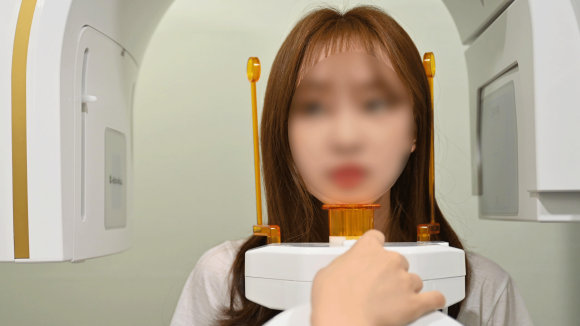
We carefully analyze everything in advance through precise examinations, including the depth of impaction, the distance from the nerve canal, and the extraction angle.
So even in cases where the nerve is close,
we can proceed safely without causing the patient unnecessary anxiety.
For easier understanding, let me explain while showing the photos of an actual patient we helped with extraction.
Why a Partially Impacted Wisdom Tooth Should Not Be Left Alone
Wisdom tooth near Hwagok Station
Date taken: 240610
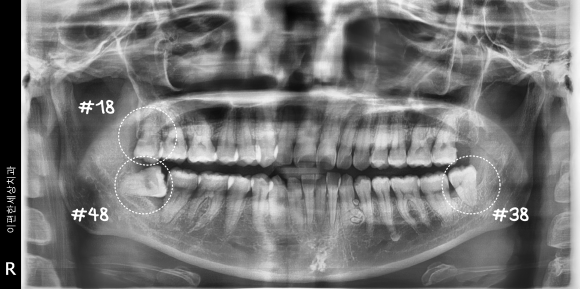
This is the X-ray taken when the patient first visited.
Looking at the image, you can see that there were three wisdom teeth in total: one upper wisdom tooth and two lower wisdom teeth.
Date taken: 240610
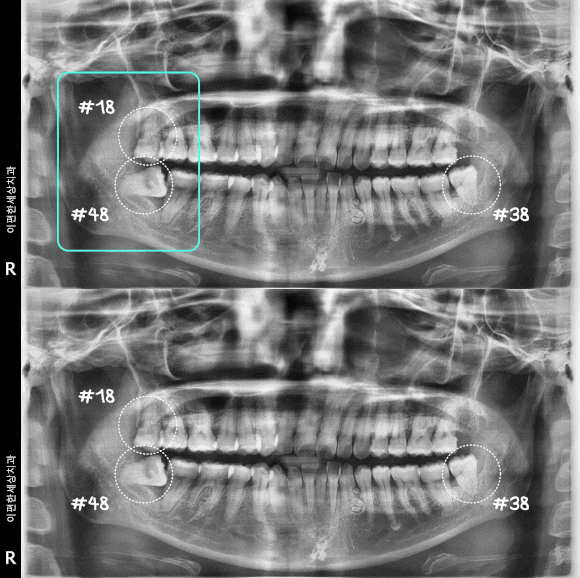
Looking at the right side, where the patient was feeling discomfort,
in the case of tooth #48, it was lying sideways and partially impacted, making it a difficult case.
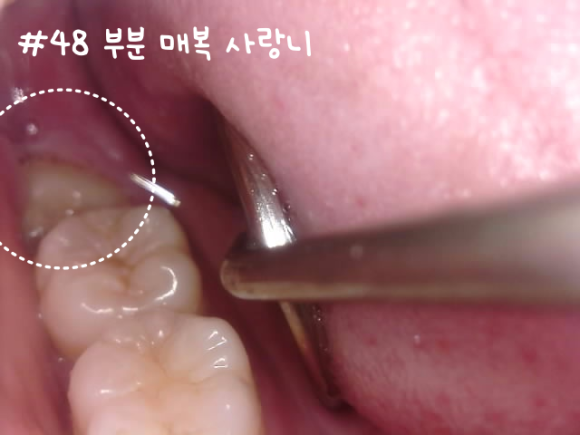
Date taken: 240610
A partially impacted tooth means that part of the wisdom tooth is exposed outside the gum.
Even if it does not look like a serious problem on the surface, food debris and bacteria can collect in that narrow gap,
making gum inflammation, bad breath, and cavities in the neighboring tooth more likely.
In particular, if the wisdom tooth is pushing against the molar in front of it, that pressure can
shift the teeth, and in severe cases can affect the bite of the front teeth,
and it may also cause decay on the back side.
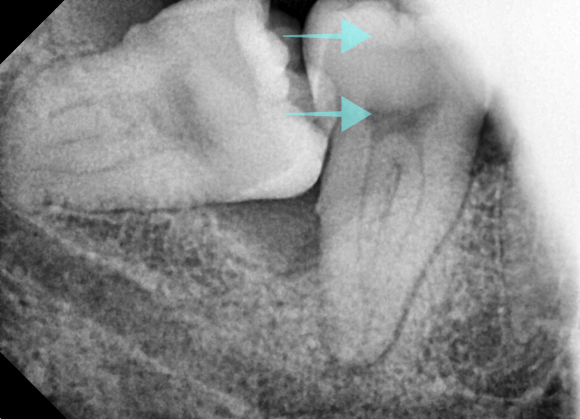
Date taken: 240610
This patient was also such a case.
The right lower wisdom tooth (#48) was half-buried in the gum,
and the root direction was almost touching the nerve canal.
If this condition is left for a long time, it can push the tooth in front of it
and cause root resorption, so immediate extraction was necessary.
When the nerve canal and roots are close, a sectioned extraction is used
Wisdom tooth near Hwagok Station
When many people see a wisdom tooth close to the nerve canal, they ask,
“Could I end up paralyzed if the nerve gets damaged during extraction?”
It is true that extra caution is needed when the nerve is very close,
but being close to the nerve itself is not the problem.
The real risk is approaching it without being able to predict the nerve’s location.
Wisdom tooth near Hwagok Station
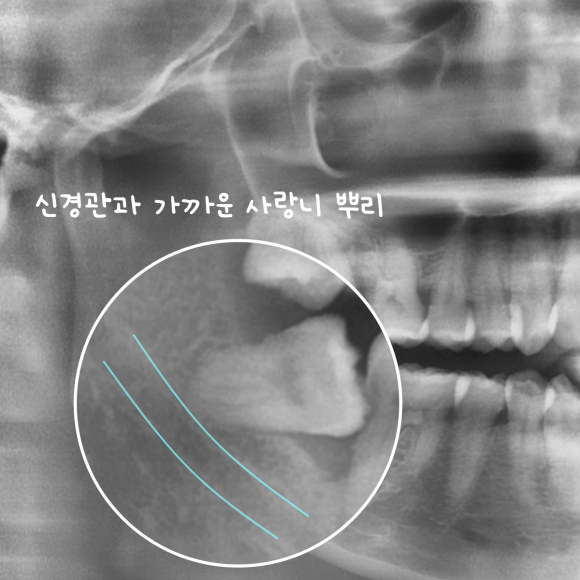
Date taken: 240610
In this case as well, the right lower wisdom tooth had roots curved along the nerve canal,
but we identified the depth and direction of the nerve in advance
and carefully planned the angle and the order of sectioning.
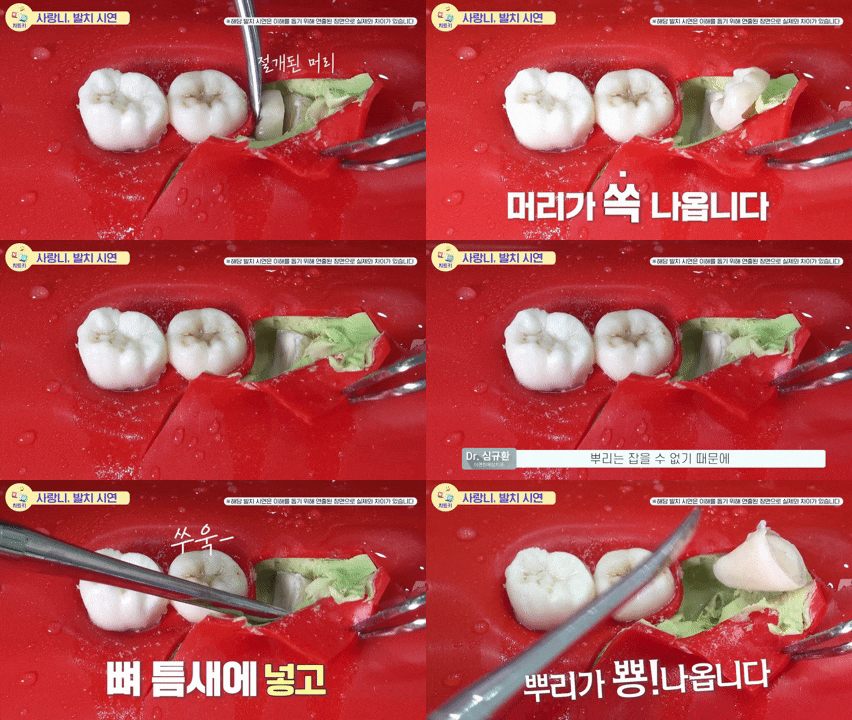
Sectioned extraction process
We decided to separate the crown (upper portion) and root (tooth root) and remove them in small sections
without applying force all at once.
This helps avoid nerve damage while also reducing pain and the burden of recovery.
In the end, what matters is not the “distance” itself, but whether it is a “predictable distance,”
and the “skill of the medical team” that can handle it safely.
The reason it can be extracted safely without going to a university hospital
Wisdom tooth near Hwagok Station
To safely extract a wisdom tooth close to the nerve,
it is not something that can be done with just one technique alone.
Accurate diagnosis, a stable environment, and skilled technique are essential.
Before extraction, we use CT imaging
to closely check the location of the nerve canal and roots, the thickness of the bone, and the incision range.
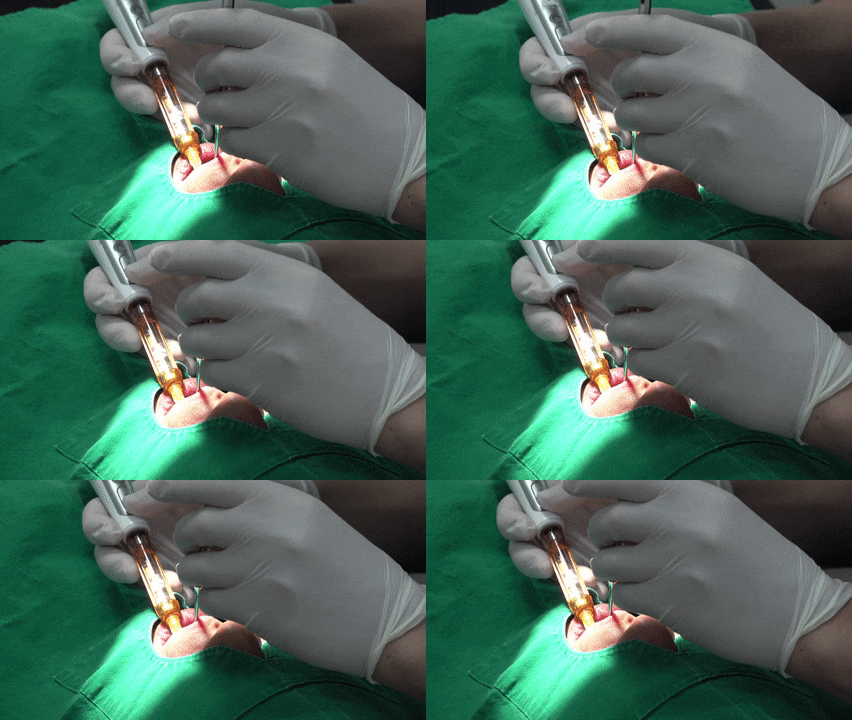
Painless anesthesia system
Based on that information, we create a sectioned extraction plan
and proceed with the pain-relief system (painless anesthesia)
at the wisdom tooth treatment center.
Because we have this kind of preparation in place,
even wisdom teeth close to the nerve canal can be extracted safely
without a referral to a university hospital.
Wisdom tooth near Hwagok Station
In the end, what makes the difference is not the equipment, but the experience.
It is not a matter of whether to extract it or not.
What matters much more is the condition it is in, how it is extracted, and who extracts it.
In cases like this, where the tooth is partially impacted and close to the nerve canal,
a slight difference in direction, the amount of force, or the incision range can change the outcome.
So rather than thinking, “Should I go to a university hospital?” we first consider,
“How can we do this safely?”
If the three elements of accurate diagnosis, planned approach, and skilled technique are all in place,
extraction can be performed safely.
Next, I will continue by explaining how we helped with the extraction.
Thank you.
*The photo is posted with the patient’s consent and was taken under the same conditions.
*This treatment may be accompanied by side effects such as bleeding and infection.
*Only pre-treatment photos were used.