Sinus lift often performed during Gangnam Station molar implant treatment (lateral window technique),
"How do you check whether it went well?"
Hello.
#GangnamStationMolarImplant #GangnamStationImplant #GangnamStationDentalClinic
This is #GangnamStationWhiteDreamDentalClinic.
The first molar (tooth #6) is a key molar that handles the greatest chewing force.
When we chew food,
the molars on both sides balance each other and distribute the load,
and among them, tooth #6, the first molar, makes contact first and serves as the center of chewing force.
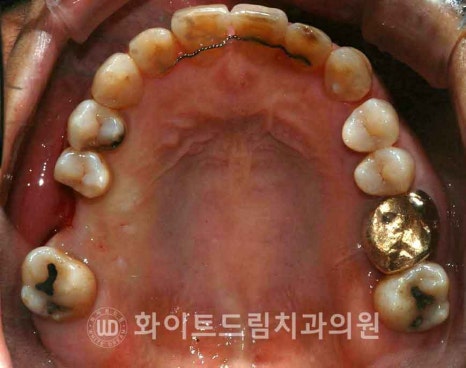
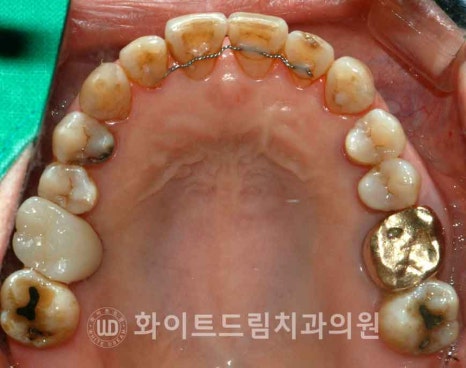
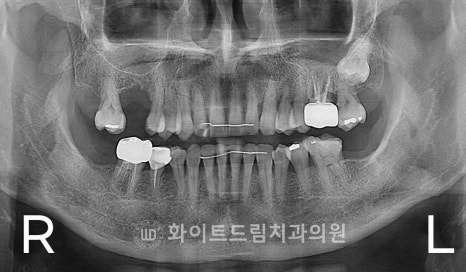
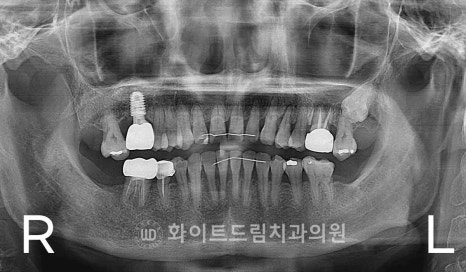
[Same person, photographed in the same environment / Gangnam Station molar implant: 23.04.04 - 23.09.27]
For this reason, this area receives much more chewing pressure than other teeth,
and over time, damage from occlusal overload or periodontitis often progresses quickly.
In addition, among these, the upper first molar
has a complex structure with roots divided into three branches,
and because it is adjacent to the maxillary sinus, it has anatomical features that make inflammation easier to spread.
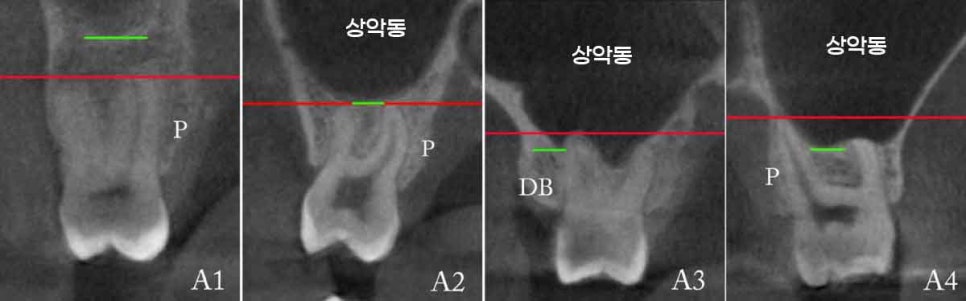 This is why, when periodontitis becomes severe,
the bone between the molar roots weakens and is resorbed,
the structure supporting the tooth collapses,
and in the end, extraction is often required.
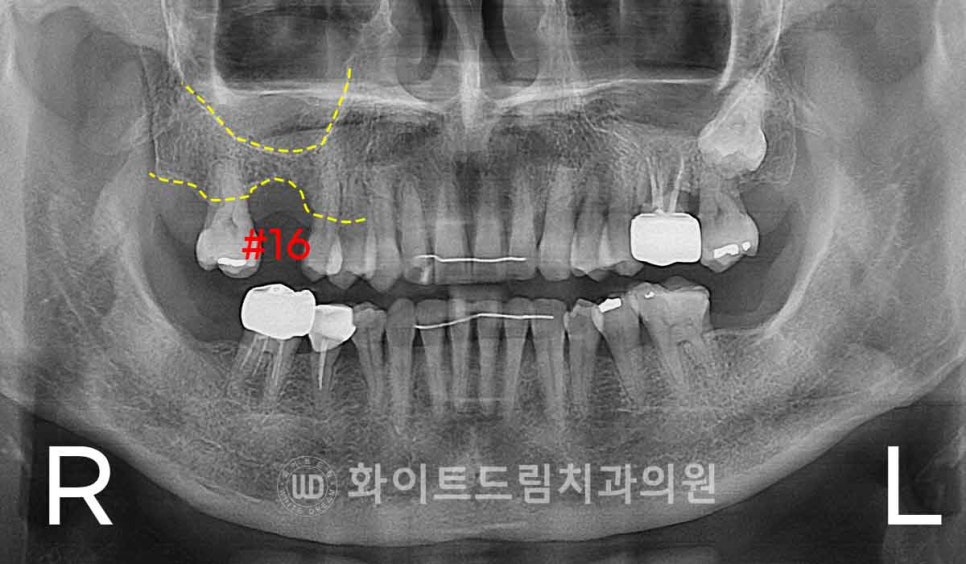
The case prepared for today is also of a patient who had the 16th tooth extracted due to this kind of problem
and then left it untreated, eventually visiting us with gum collapse.
The maxillary sinus had not descended significantly,
but after the extraction, the buccal cortical bone became thinner and was partially resorbed,
leaving insufficient gum volume.
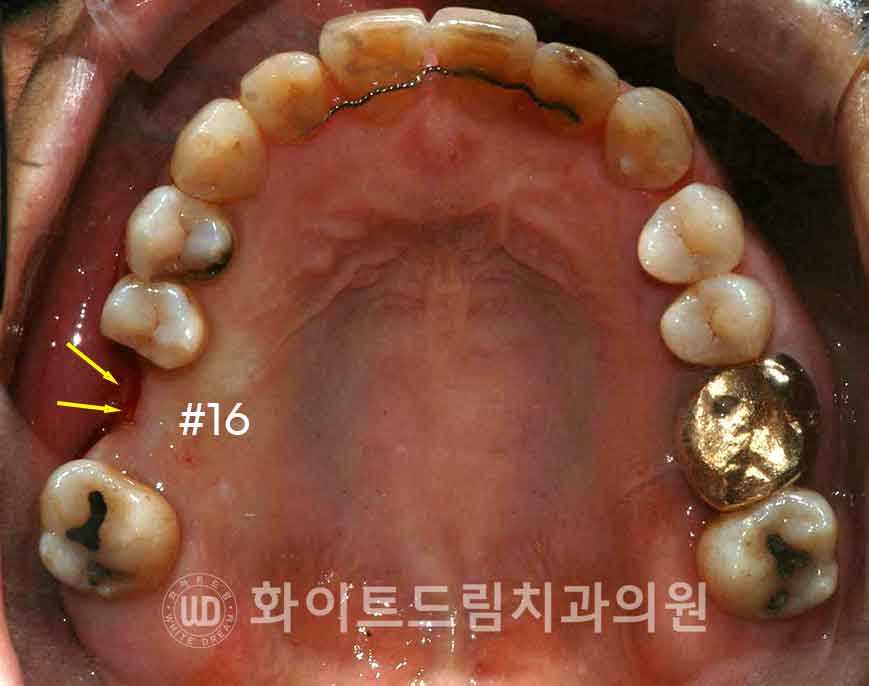 ▲ State with gum collapse / Gangnam Station molar implant, Gangnam White Dream Dental Clinic
In areas where a lot of chewing force is applied, such as the 16th molar,
the longer the tooth remains untreated after extraction,
the faster the buccal bone tends to resorb, so it is best to
consult a specialist and proceed with treatment right after extraction if possible.
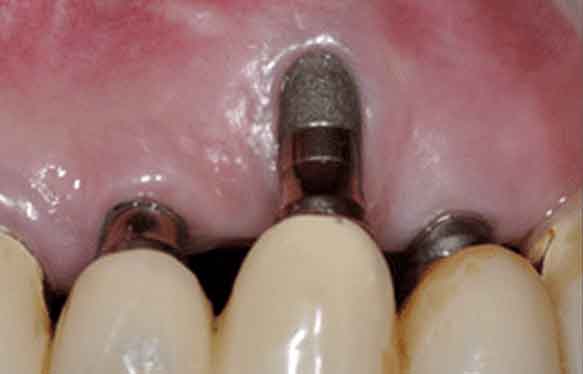 ▲ If an implant is placed immediately when the side bone is insufficient or lost, as in this patient,
the implant metal may become exposed, as shown in the image above, or the gum line may sink.
When metal is exposed like this,
it becomes difficult to maintain cleanliness because food debris and bacteria can easily adhere,
which ultimately increases the risk of peri-implantitis recurring.
Once inflammation occurs, the bone around the implant resorbs again,
the gums recede further, and the exposed metal area keeps getting larger, creating a vicious cycle,
so securing sufficient buccal bone thickness and gum volume from the start is very important.
So in cases like this, a procedure called sinus lift is performed together.
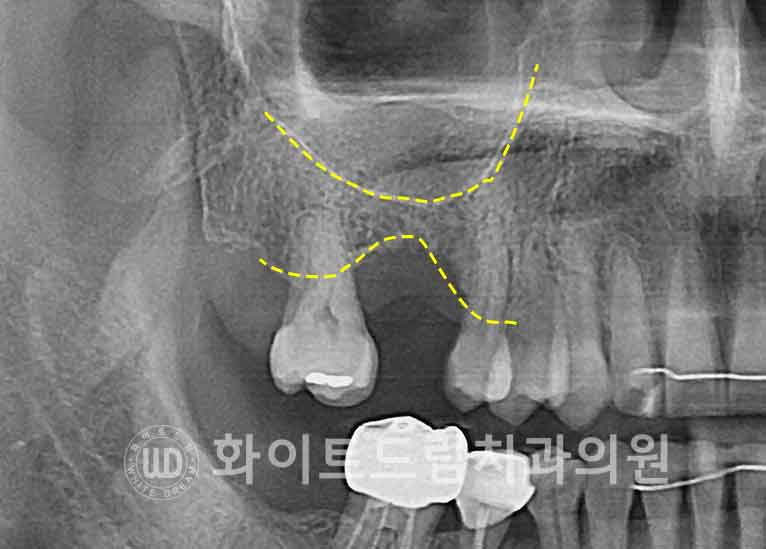
In this patient’s case, the height of the remaining residual alveolar bone was very low, at about 3–4 mm,
so there was a risk that the implant would protrude into the maxillary sinus if placed.
To stably place an implant of about 8–10 mm,
at least 5 mm of sinus elevation was needed,
so the surgery was performed using the lateral window sinus lift approach.
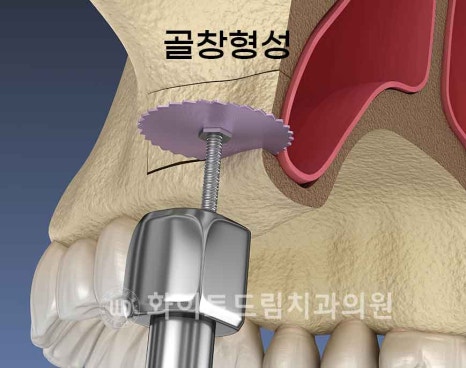
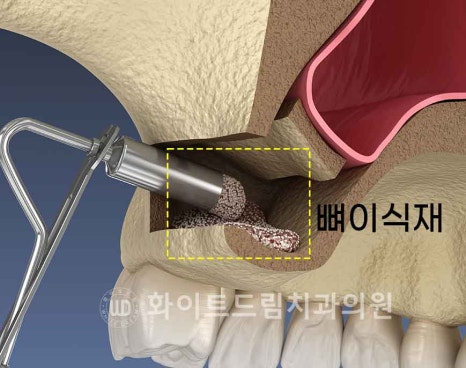
During the surgery, a small bone window was created on the lateral side,
the sinus membrane was carefully lifted,
and bone graft material was placed into that space
to reinforce the insufficient alveolar bone height.
How can you tell whether this sinus lift went well?
First, on X-ray,
you check whether the grafted bone has formed a smooth, rounded
"dome shape" along the floor of the maxillary sinus.
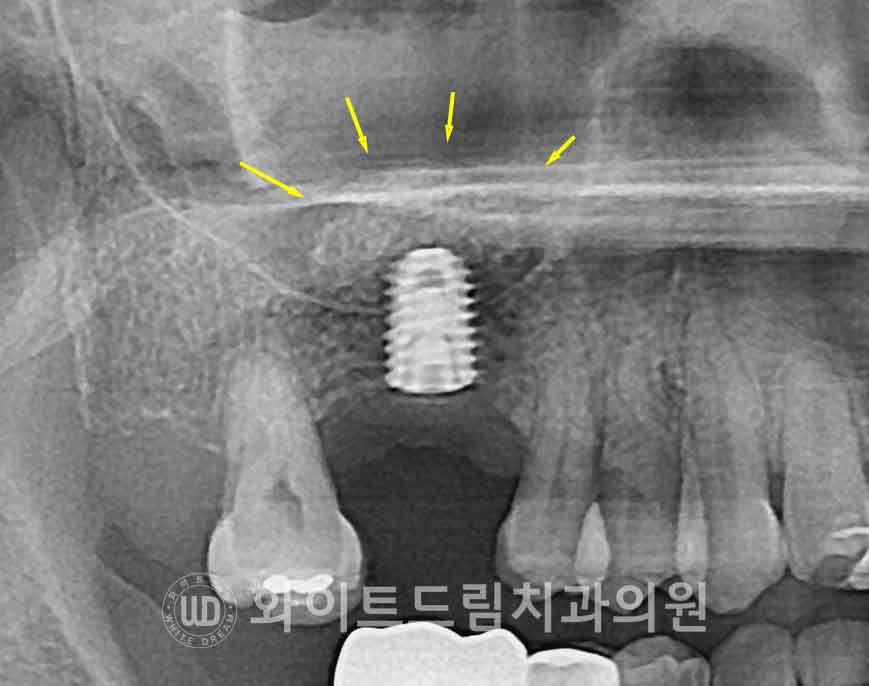
If this shape is irregular or partially sunken,
you may suspect sinus membrane damage or resorption of the graft material.
Also, in terms of changes the patient feels in daily life,
after 3–4 weeks from surgery,
symptoms such as pain, swelling, and nasal congestion at the surgical site quickly decrease,
and afterward, you can feel the recovery of the surgical area by seeing whether you adapt stably without pressure or pain when chewing.
[Same person, photographed in the same environment / Gangnam Station molar implant: 23.04.04 - 23.09.27]
Today, we talked about
the lateral window sinus lift performed when the jawbone has been resorbed after molar extraction.
A sinus lift is not simply a surgery to raise bone;
it is a process that creates an environment in which the implant can remain firmly in place for a long time.
Therefore, before surgery, it is most important to accurately diagnose and plan
the condition of the alveolar bone, the position of the maxillary sinus, and the thickness of the buccal bone,
so even if some time has passed after extraction,
please hurry to consult a specialist and set up a treatment plan with the most appropriate method.
Thank you for reading this long post today.
This was Gangnam Station Molar Implant, Gangnam Station White Dream Dental Clinic.