Mokdong Melasma Removal Laser Treatment,
How Long Does It Take to Disappear?
We Looked at the Research
Hello.
I am Kim Jin-hyeon, Chief Director of the Mokdong branch of You&I Clinic.

"If I get one melasma laser treatment,
will my skin become clear?"
"How many sessions do I need
before I see results?"
When you look into laser treatment for melasma, the first thing you probably want to know is, "How long will it take?"
Whether it ends after one or two sessions, or whether you need to keep coming for several months...
Especially if you hear from people around you, "I got better quickly," it raises your expectations,
but if you hear, "It didn't work," you may hesitate again.
In fact, melasma is different from simple spots or blemishes.
Like a stain from water soaking into a wall, pigment settles deep in the skin, so rather than removing it all at once,
it is a condition that requires a gradual approach over multiple sessions.
Today, for those considering melasma removal in Mokdong, I will honestly explain, based on actual research data rather than vague expectations or anxiety, what the laser treatment process is like,
and after how many sessions meaningful change tends to appear.
| Table of Contents |
|---|
| 1. The basics of melasma and laser treatment 2. What research says about the treatment effects of pico lasers 3. The realistic treatment period and care this study shows |
- The Basics of Melasma and Laser Treatment
Mokdong melasma removal
Melasma, medically called melasma, is a pigment disorder that appears as brown or grayish-brown discoloration on the central face,
especially on both cheekbones and the forehead.
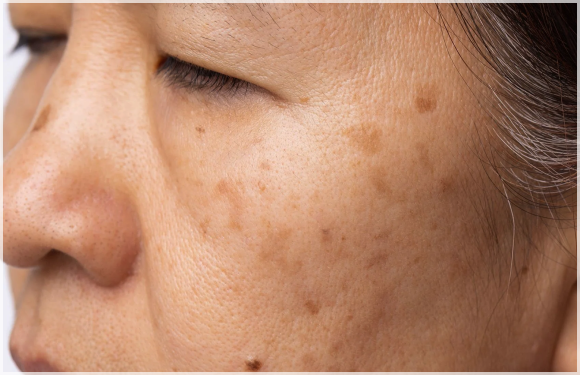
The cause is not just one thing; it is a combination of ultraviolet exposure, hormonal changes,
and genetic factors.
So it is not simply a matter of "removing the pigment and that's it"—it is a difficult condition that also requires recurrence management.
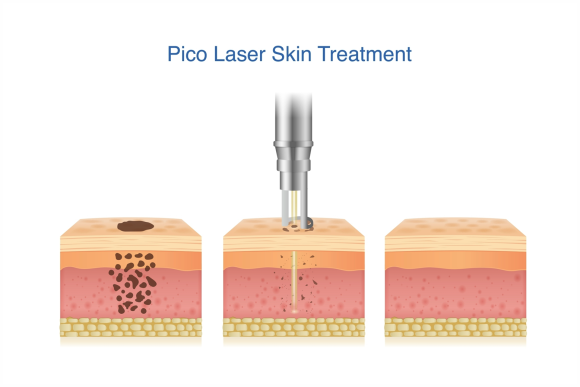
The principle of laser treatment is to target pigment, namely melanin, with light energy of a specific wavelength,
disrupting the pigment particles into smaller pieces and encouraging the body's immune cells to remove them naturally.
Lasers used for melasma treatment are divided by wavelength.
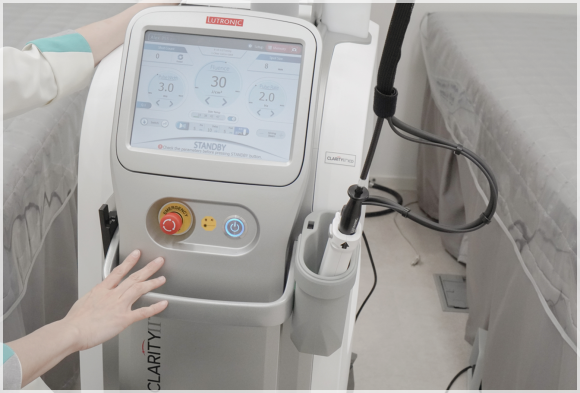 Clariti 2
Representative examples include the 1064nm Nd:YAG laser and the 755nm Alexandrite laser, and recently,
pico lasers that use ultrashort pulses in picoseconds have been drawing attention.
While conventional nanosecond lasers break up pigment using heat, pico lasers
break pigment down more finely through shock waves (photomechanical effects) rather than heat,
which has the advantage of removing pigment efficiently while reducing damage to surrounding tissue.
What Research Says About the Treatment Effects
of Pico Lasers
Mokdong melasma removal
So how effective are pico lasers in actual use?
Let's take a closer look through the study below.
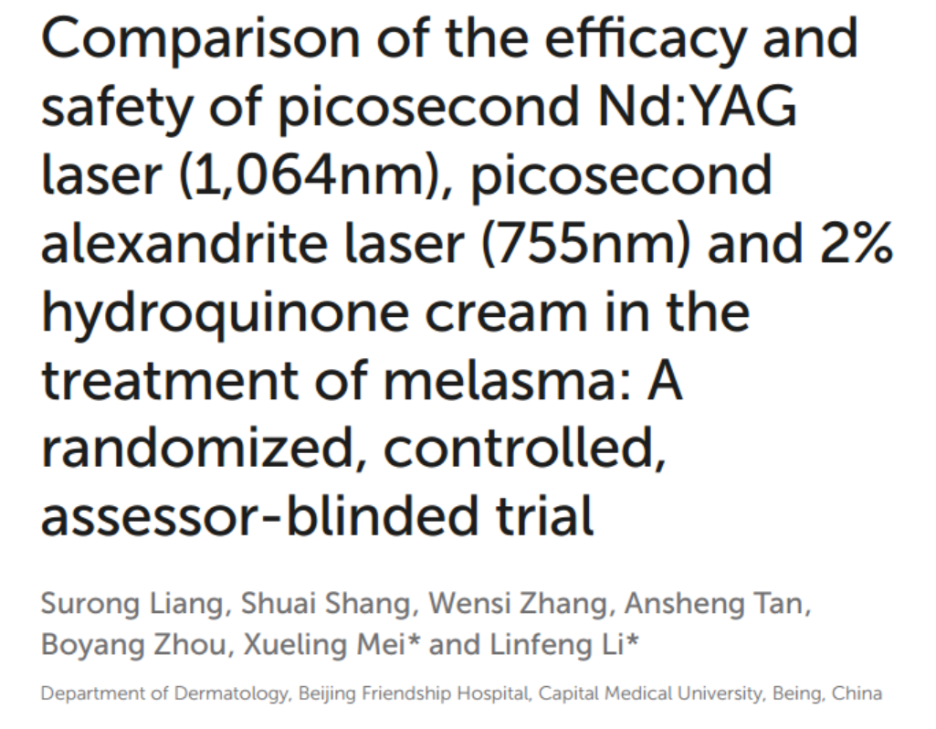
Comparison of the efficacy and safety of picosecond Nd:YAG laser (1,064 nm), picosecond alexandrite laser (755 nm) and 2% hydroquinone cream in the treatment of melasma: A randomized, controlled, assessor-blinded trial
This study was a randomized, assessor-blinded clinical trial.
Simply put, patients were randomly divided into three groups, and the doctor evaluating the results did not know which group each patient belonged to, allowing for an objective assessment.
In melasma research, a design of this level is considered quite reliable.
A total of 60 melasma patients participated, and all had Fitzpatrick skin types III to IV, which are common among Asians.
These patients were divided into 20 in the 1064nm picosecond Nd:YAG laser (PSNYL) group,
20 in the 755nm picosecond Alexandrite laser (PSAL) group,
and 19 in the 2% hydroquinone (HQ) cream group.
The laser groups received a total of 3 treatments at 4-week intervals, while the hydroquinone group applied cream twice daily for 12 weeks.
They were then followed up until week 24 (about 6 months), and the effect was measured using the pigment index called MASI.
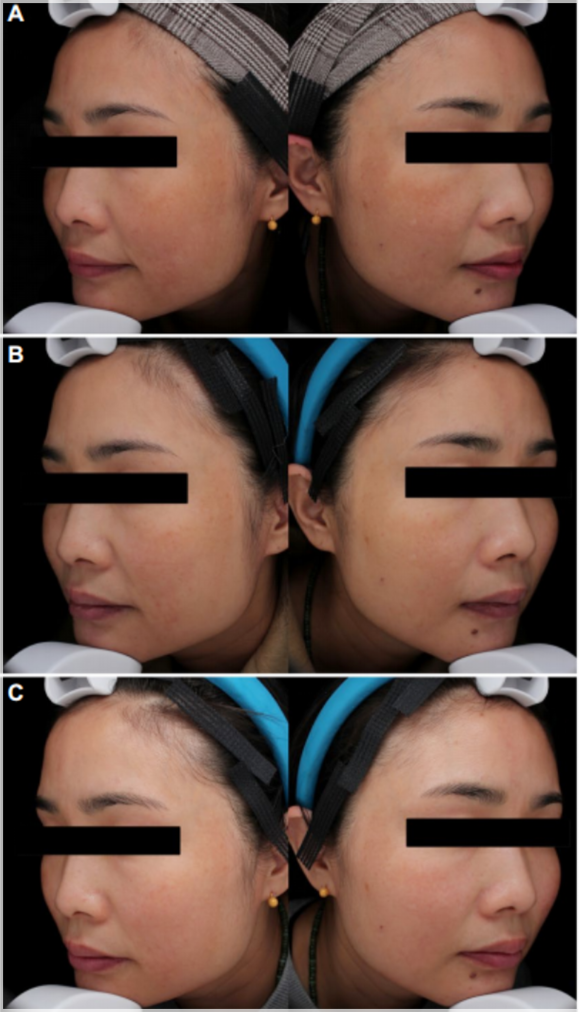 Figure 4. In a 41-year-old woman (skin type IV), after 3 treatments with a picosecond Nd:YAG laser, the severity of melasma (MASI score) steadily improved from 18.6 to 11.7 by week 24.
The results showed that in all three groups, the pigment index decreased significantly at every time point from 4 weeks after treatment initiation through week 24.
Like stepping down a staircase one step at a time, the degree of improvement became more evident as sessions accumulated.
At week 24 (4 months after the last laser treatment), the improvement rates were
35.9% for the 1064nm pico laser, which was the highest,
25.5% for the 755nm pico laser, and
24.0% for the hydroquinone cream.
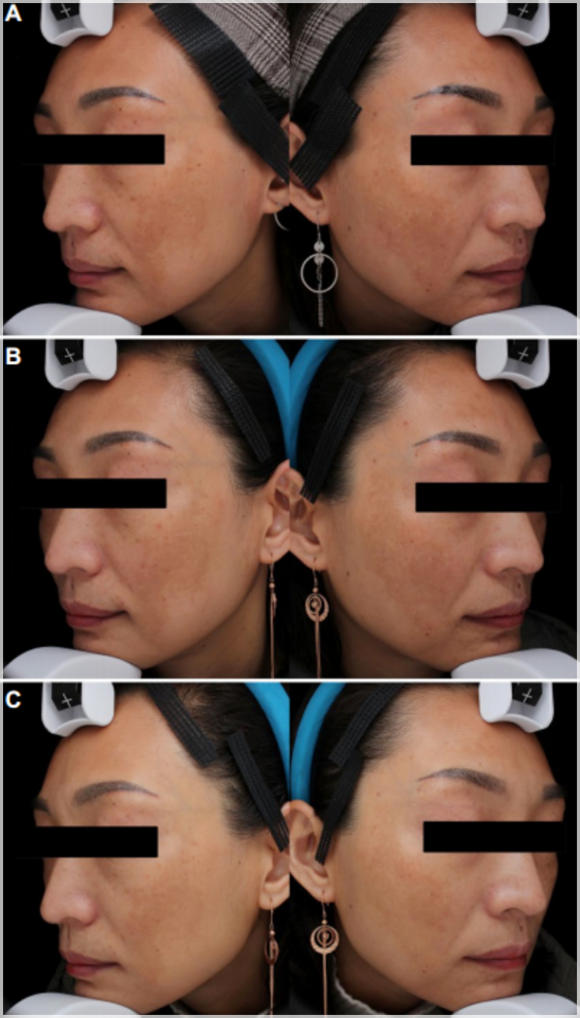 Figure 5.Gemini's response 43-year-old woman (skin type IV) improved after 3 treatments with a picosecond Alexandrite laser, with her melasma severity (MASI score) decreasing from 17.0 to 12.4 by week 24.
What was especially interesting was the direct comparison among the three treatments.
The 1064nm pico laser showed statistically significantly better results than the 755nm pico laser,
and it was also more effective than the hydroquinone cream.
On the other hand, the 755nm pico laser showed almost equivalent effects to the hydroquinone cream.
To put it simply, the 1064nm pico was the most effective, while the 755nm pico and whitening cream were at a similar level.
The researchers pointed to differences in wavelength and pulse duration as the reason the 1064nm pico laser was more effective.
The 1064nm wavelength is less absorbed by melanin in the epidermis and can penetrate more deeply into the dermis,
and because melasma is often a mixed type in which pigment is distributed not only in the epidermis but also in the dermis,
a wavelength that reaches deeper layers may have been advantageous.
In terms of side effects, all three groups were similar,
and recurrence was observed in 4 of the 59 total patients (6.8%). In each group, one person developed post-inflammatory hyperpigmentation (PIH), but
all cases resolved naturally within 1 to 6 months.
In fact, there were no cases of redness or itching in the laser groups, while 2 people in the hydroquinone group experienced redness and itching, which is noteworthy.
- The Realistic Treatment Period and Care
This Study Shows
Mokdong melasma removal
The most noteworthy point in this study is that even after just one pico laser session, the pigment index decreased significantly.
However, the real difference in effect became clear after the second session, and improvement continued for 4 months even after completing 3 treatments.
In other words, the effect does not appear only at the moment you receive the laser; even after treatment, pigment breakdown and metabolic processes continue within the skin,
leading to gradual improvement.
What is interesting is that in the hydroquinone cream group, the pigment index continued to decrease even after cream use was stopped.
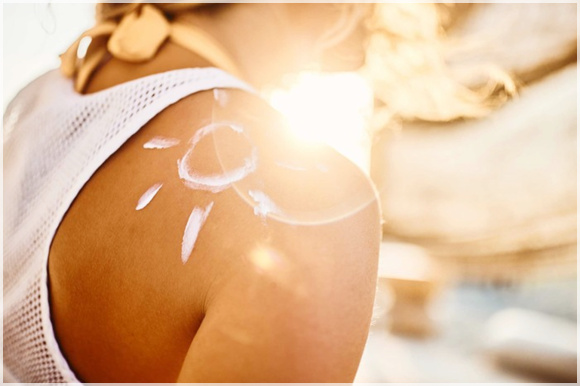
The researchers emphasized the role of sun protection here, and in fact, in this study,
all participants applied sunscreen with SPF 48 or higher every 2 hours and strictly maintained
a comprehensive set of sun-protective behaviors such as wearing hats and masks.
Considering that 84% of melasma patients report sun exposure as an aggravating factor, this study once again confirms that regardless of which laser is used,
sun protection is key to maintaining treatment effects.
So far, for those considering melasma removal in Mokdong, I have discussed the treatment process and duration based on the results of a clinical trial that directly compared the effects of pico lasers and whitening cream.
Since the laser and treatment plan that best fit your own melasma condition can only be determined precisely after a direct diagnosis,
I recommend that you feel free to seek a consultation if you have any questions,
even if it is not with us.
This has been Kim Jin-hyeon, Chief Director of You&I Clinic Mokdong.
Thank you. ^^
< Other posts you may find helpful >
<You&I Clinic Mokdong Branch Hours>
Weekdays:
am 10:00 ~ pm 08:30 [evening hours]
Weekends (Sat/Sun) · Public holidays:
am 10:00 ~ pm 04:00
*No lunch break
*Open on Saturdays, Sundays, and public holidays
< Directions >