Hello.
This is Yonsei Dagam Dental Clinic in Garak-dong.
The ultimate goal of treatment is
to preserve natural teeth as much as possible.
Although many conservative procedures
have been developed and advanced,
the problem sometimes recurs even after general treatment.
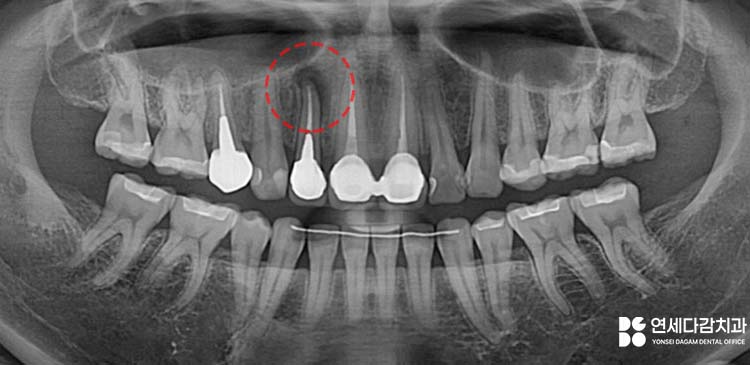
In particular, when inflammation
reappears at the root tip after
root canal treatment,
retreatment may be attempted,
but in some cases it is not possible.
When it feels too wasteful to
extract the tooth,
a Garak-dong dental clinic has
a last resort to save the tooth.
That procedure is apicoectomy.
What Is Apicoectomy?
It is a surgical procedure that
removes the tip of the tooth root
and the infected tissue around it.
For example, in what situations
is it performed?
During root canal treatment,
a post is inserted and filled,
and problems may arise even after
completion of the Post Core.
In such cases, the process of
removing the post for retreatment
places significant stress on the tooth,
and in severe cases there may even be
a risk of fracture.
Also, due to complex root anatomy,
apicoectomy may be considered when
thorough removal of infection is difficult
with conventional root canal treatment.
Let’s look at the procedure
performed at the Garak-dong dental clinic.
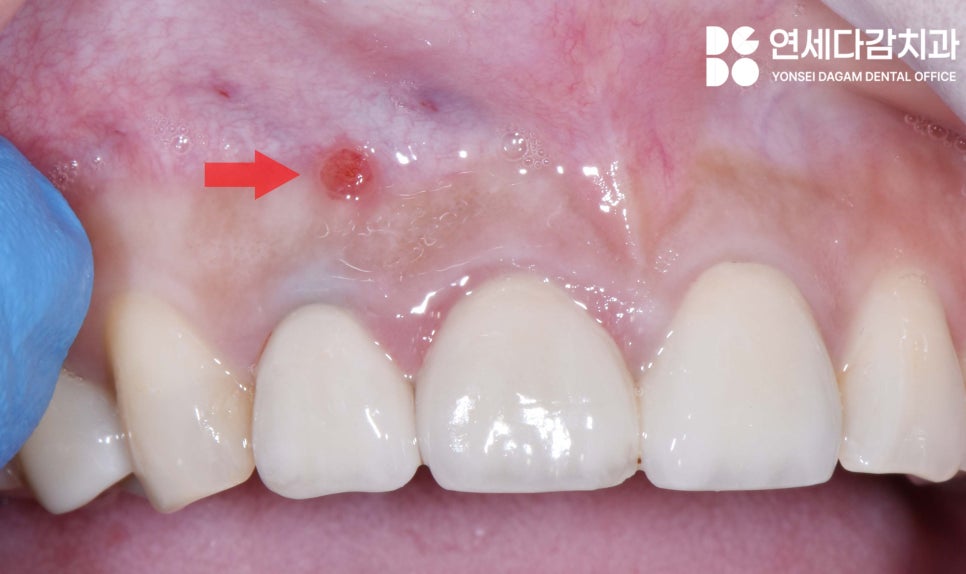
First, after identifying the exact
location of the lesion, the gum is incised.
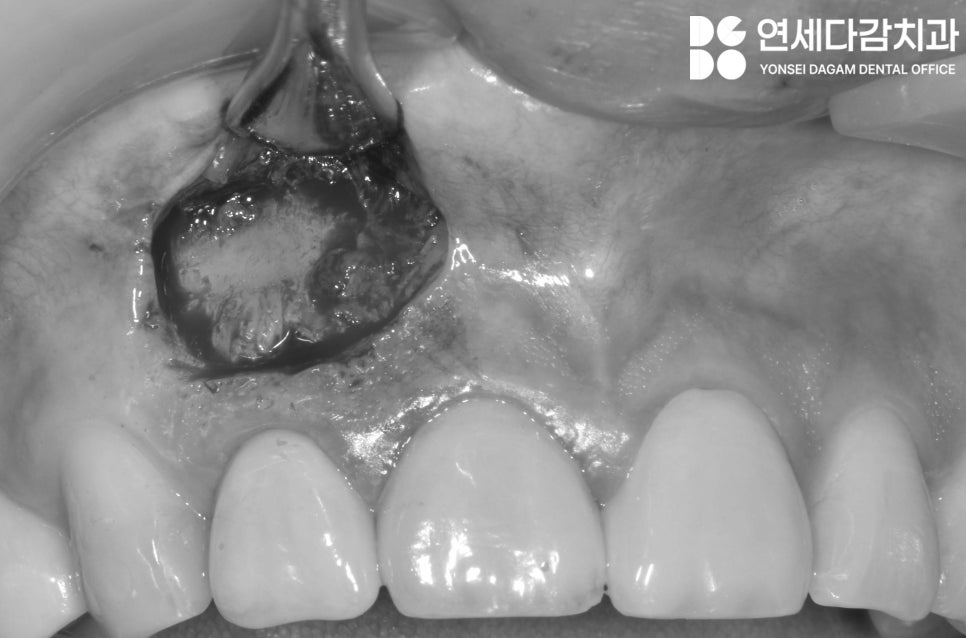
Especially in the case of front teeth,
it is important to design the incision line
so that gingival recession is minimized.
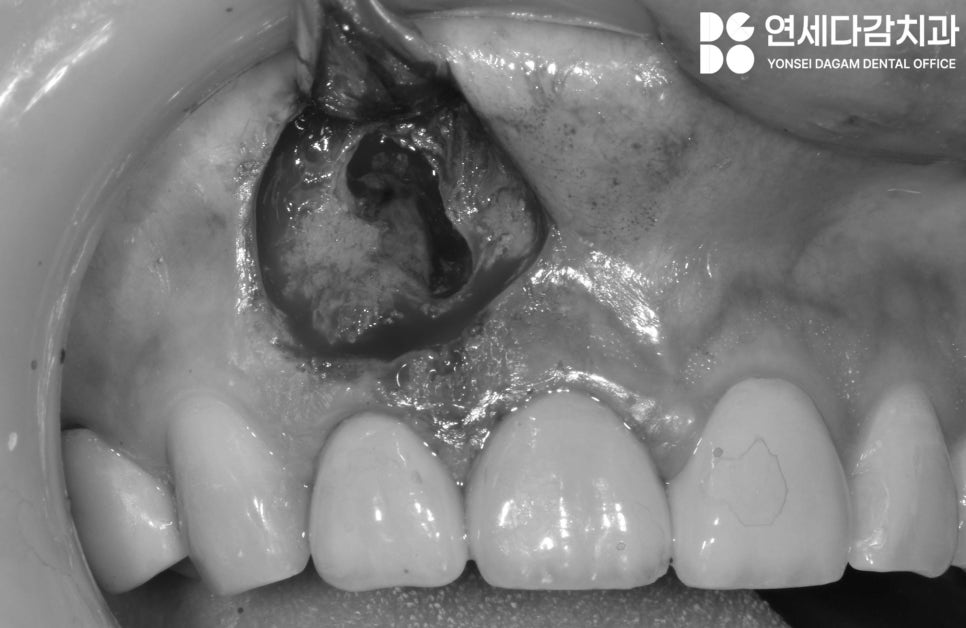
After the incision, visibility is secured
in the area where the apical lesion is located.
The granulation tissue and infected tissue
in the lesion area are thoroughly removed.
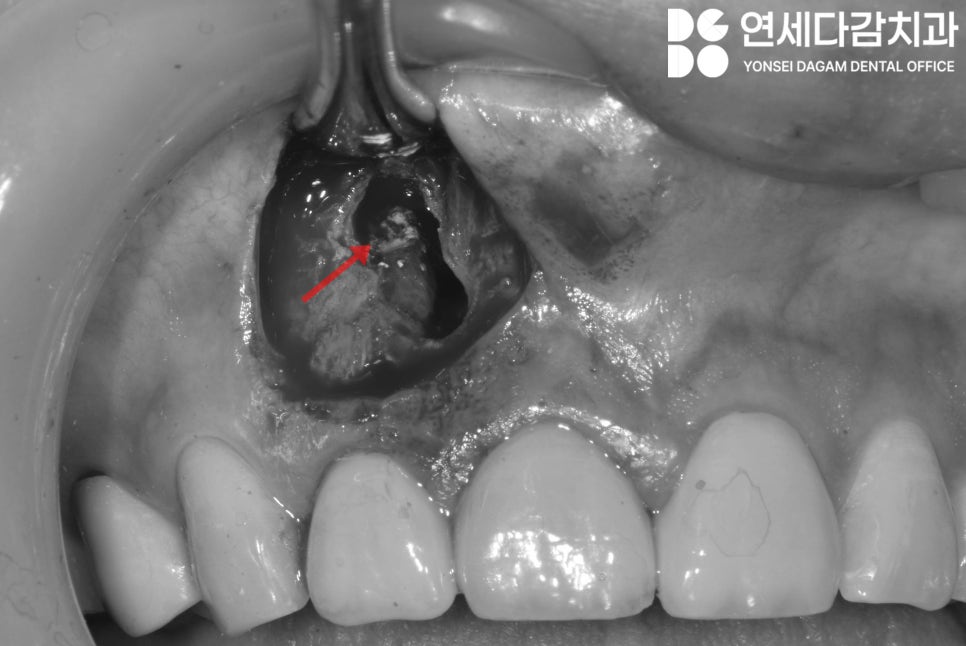
After the infected root portion is resected,
the end is retrofilled with a biocompatible material
such as MTA (Mineral Trioxide Aggregate).
MTA has excellent sealing ability
and biocompatibility,
making it ideal for root canal sealing.
It can also set in a moist environment,
has antibacterial effects,
and promotes healing of the surrounding tissue.
Because of these characteristics, MTA is used
not only in apicoectomy,
but also in a variety of treatments such as
perforation repair and direct pulp capping.
If bone loss is severe at this stage,
the Garak-dong dental clinic may also
perform bone grafting at the same time.
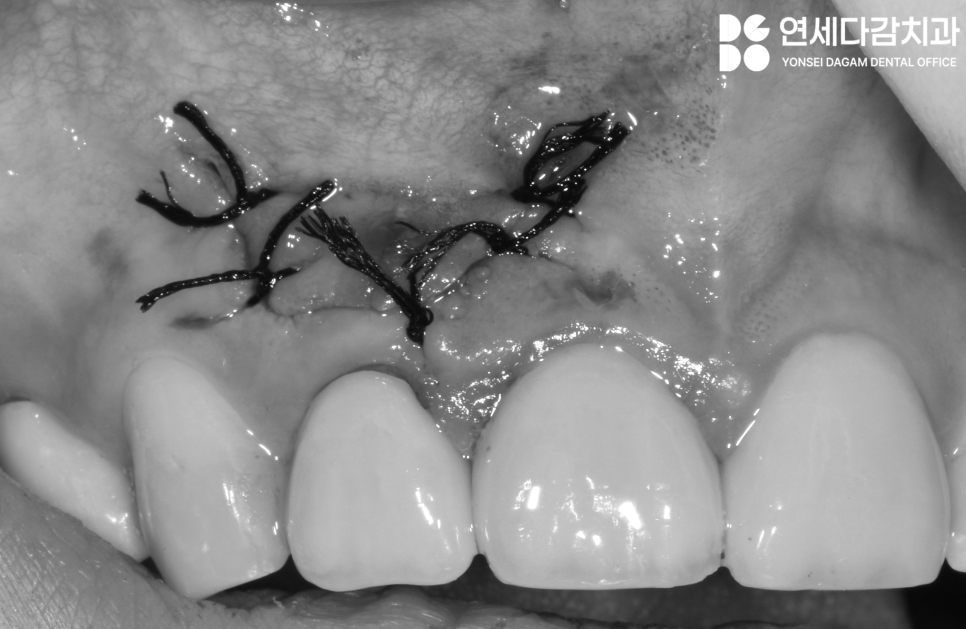
In the final step, the soft tissue flap
is placed back in position
and sutured to complete the procedure.
Postoperative swelling and pain may occur,
but they gradually decrease over a few days,
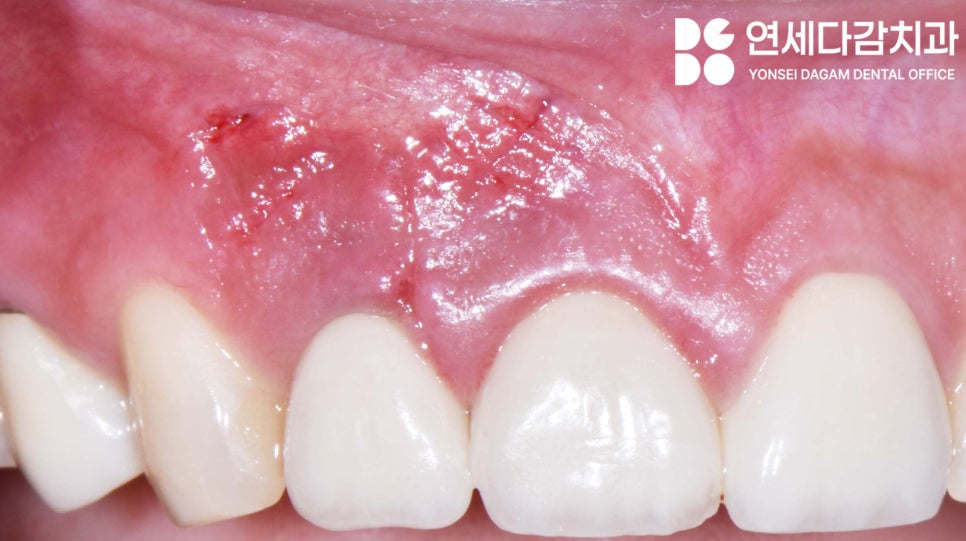
and the sutures are usually removed
after one week.
A scar may remain on the gingiva afterward,
but as healing progresses, it can heal cleanly.
Follow-up Examination After 6 Months
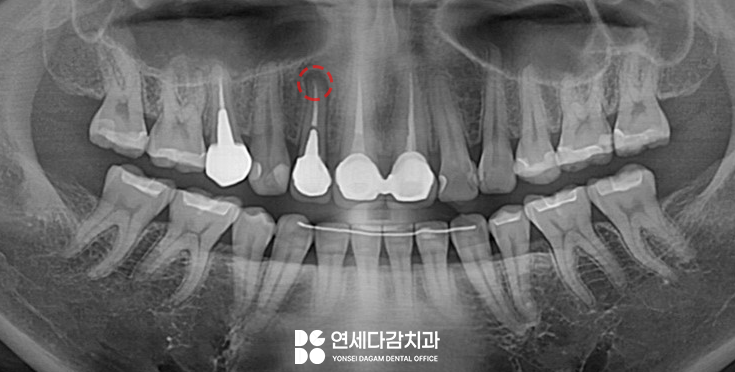
At the routine checkup six months later,
a panoramic X-ray was taken at the Garak-dong dental clinic,
and the results showed that
the apical lesion had clearly decreased.
Apicoectomy is generally performed in clinic-level settings
mainly for the upper front teeth, premolars,
and the lower front teeth.
This is related to anatomical accessibility,
and especially in the molar area, access is difficult,
so specialized microsurgical equipment
and techniques may be required.
What we wanted to share through this post today
at the Garak-dong dental clinic is that,
just as reinfection can occur after
root canal treatment,
there is no guarantee that apicoectomy
will result in 100% healing either.
In particular, if a tooth is severely cracked
or fractured,
after all, extraction may become unavoidable.
Even so,
apicoectomy is a valuable treatment option
for preserving natural teeth.
To avoid reaching the point of having to
extract a tooth,
we hope you will regularly check your oral condition
through routine examinations,
and that you can detect problems early
and preserve your precious teeth
through appropriate treatment.
This was Yonsei Dagam Dental Clinic in Garak-dong.
Thank you.^^
2024.10.04~2025.04.25