Hello.
This is Yonsei Dagam Dental Clinic in Garak-dong.
Implants are one of the treatment methods used to replace natural teeth.
Although the failure rate is low,
such cases do sometimes occur.
Due to various causes,
osseointegration may not occur properly,
or inflammation may develop, preventing the implant
from achieving fixation.
When surgery fails,
the important thing is to
identify the cause accurately.
Rather than simply placing it again,
it is necessary to carefully analyze why it failed
,
and only by establishing an improved treatment plan
based on that analysis can good results be achieved
in reoperation.
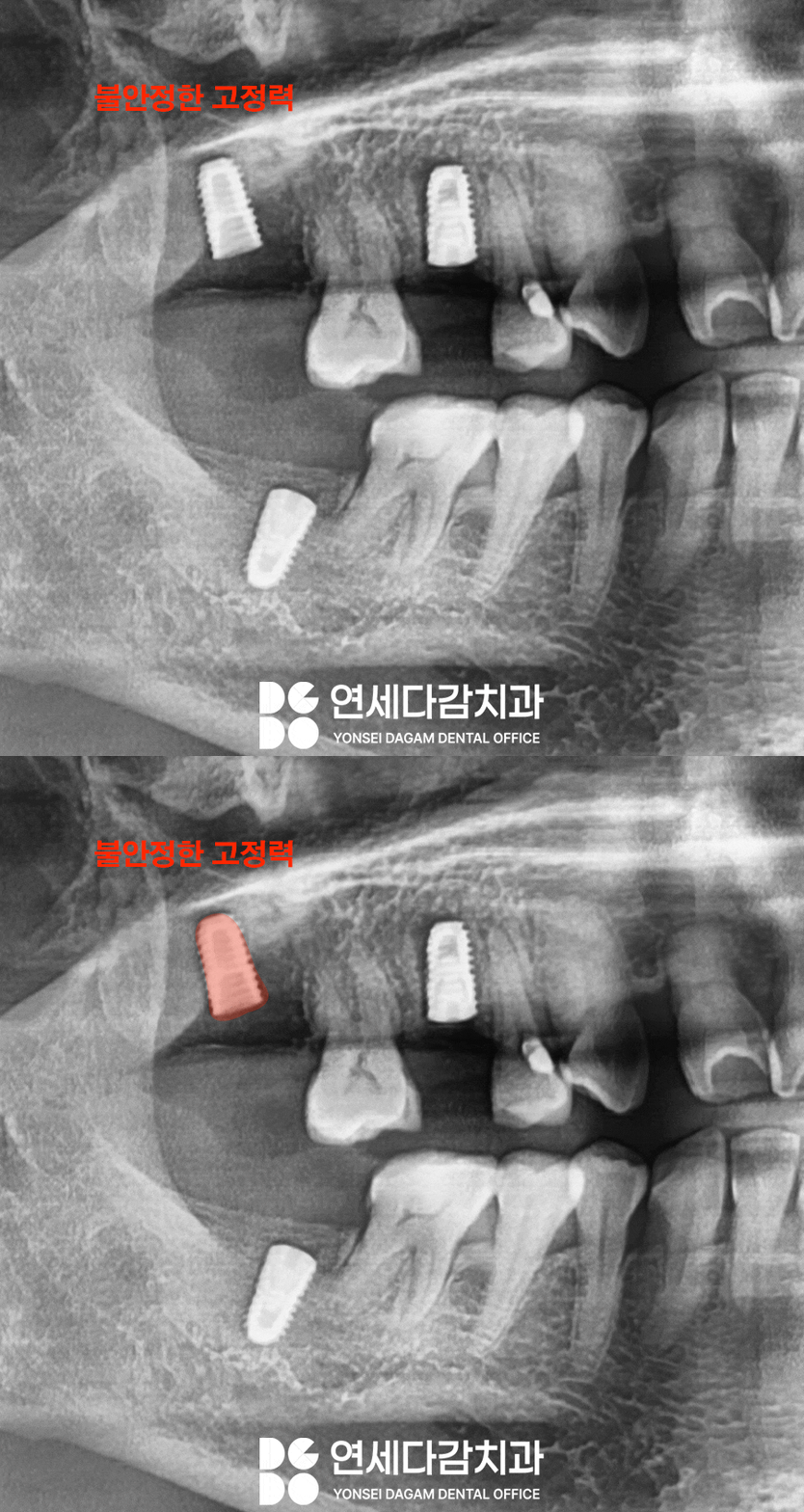
Before opening Yonsei Dagam Dental Clinic in Garak-dong,
when I was working as a visiting doctor,
there was a case where the area implanted by another doctor
had failed twice.
According to the history I heard,
the bone density in that area was low,
so it was difficult to obtain initial stability.
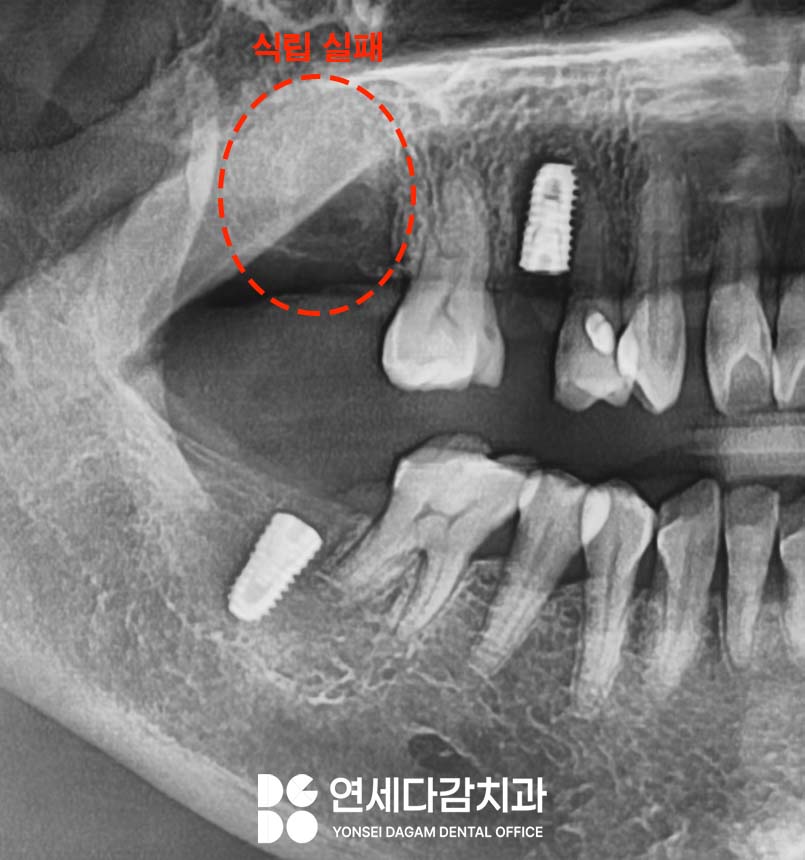
After the first surgery failed,
in order to improve fixation,
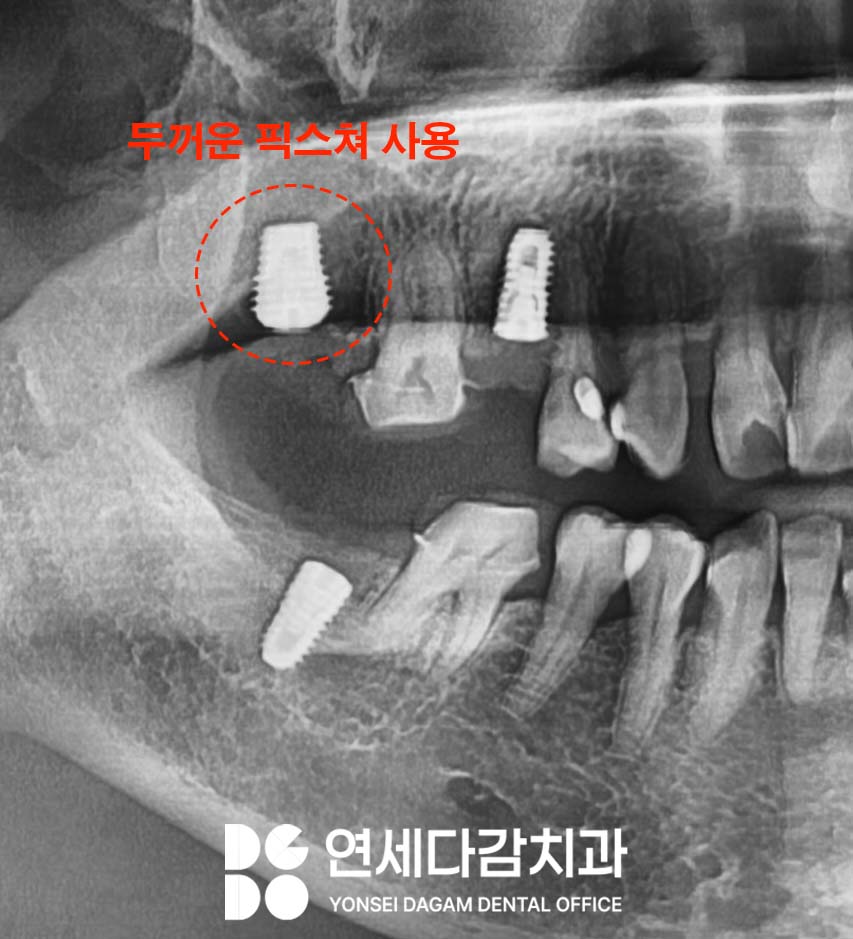
we tried again using a fixture with a thicker diameter,
but still could not achieve fixation.
In this situation, I was asked to provide a collaborative consultation
and attempted a detailed analysis.
Normally, after removal, bone remodeling proceeds
through a natural healing process.
During this process, the density and structure of the bone
gradually stabilize.
However, if the bone has still not become sufficiently firm
even years after extraction,
it suggests that the problem may not be simply local.
In such cases, it is necessary to consider the possibility
of a systemic disease such as osteoporosis.
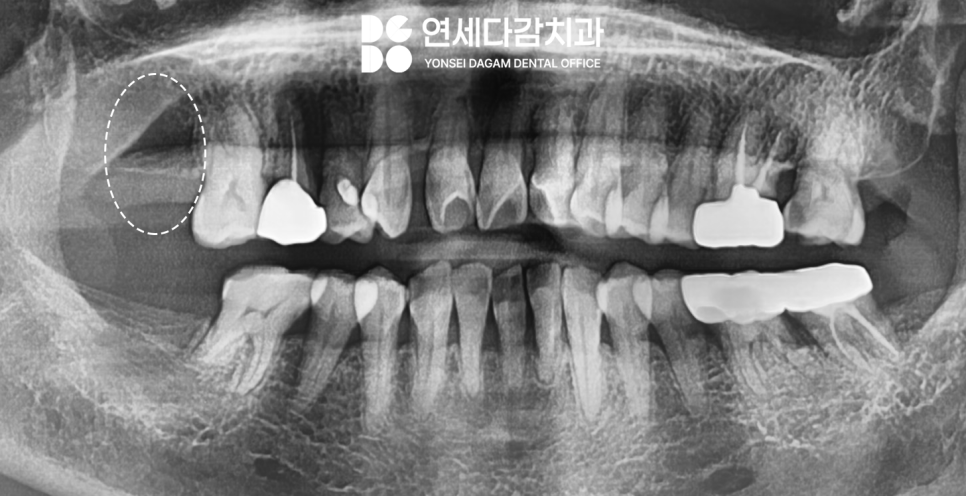
The maxillary molar area marked at the Garak-dong dental clinic is
clinically known as a site with a relatively high implant failure rate.
This is because the bone density in that area is lower than in other regions,
and especially because the molars at the far end receive much greater force
than other areas during chewing.
However, even though this area has lower bone density
and is relatively difficult,
it is not an extremely difficult site
where two consecutive surgical failures would normally occur.
Therefore, we judged that there must be another cause.
First, we requested an accurate examination to see whether there was a systemic disease such as osteoporosis.
As expected, the test results indicated that treatment for osteoporosis was necessary.
We immediately started osteoporosis medication
to improve the overall bone condition.
Treatment plan
In general, to improve implant fixation,
one may use a thicker diameter,
or use a longer implant to place it slightly deeper.
However, as explained earlier in the history at the Garak-dong dental clinic,
there had already been a failure even with a thicker fixture,
so a different approach was needed.
Considering that the overall bone density was low,
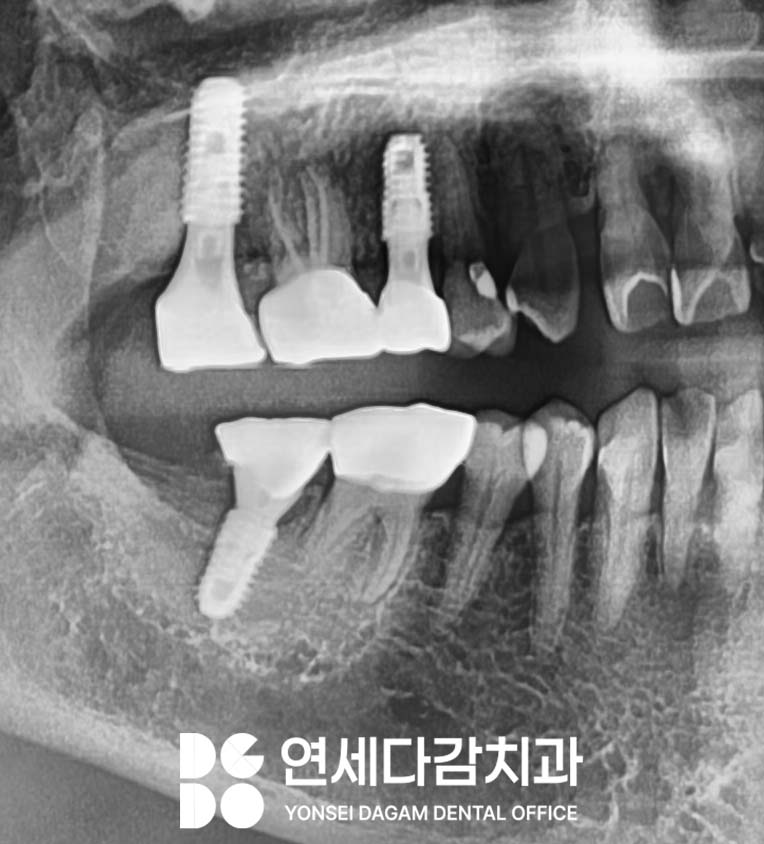
we established a strategy to actively utilize the cortical bone located at the floor of the maxillary sinus.
Cortical bone is the hard and dense bone tissue located on the outer side of the bone,
and it can provide better fixation than cancellous bone.
Results
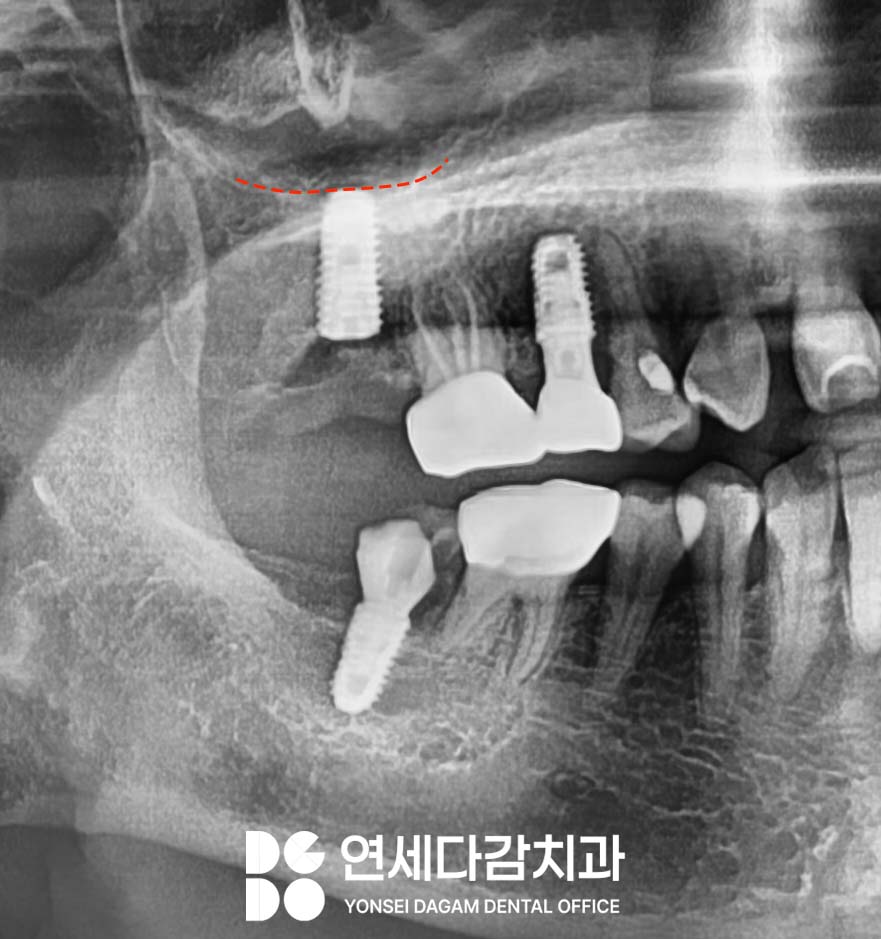
At the same time, we selected a fixture longer than the one usually used,
so that the apical end would contact the cortical bone at the floor of the maxillary sinus.
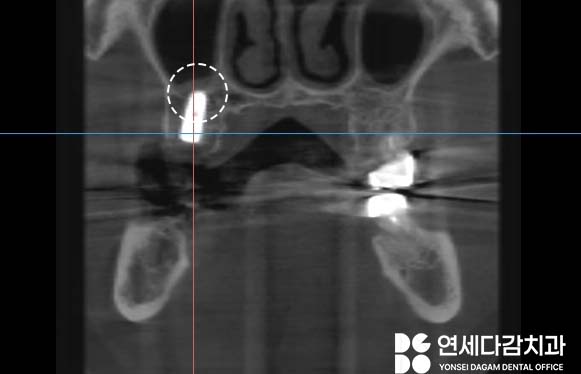
Through this, we were able to obtain fixation from the firm cortical bone at the floor of the maxillary sinus.
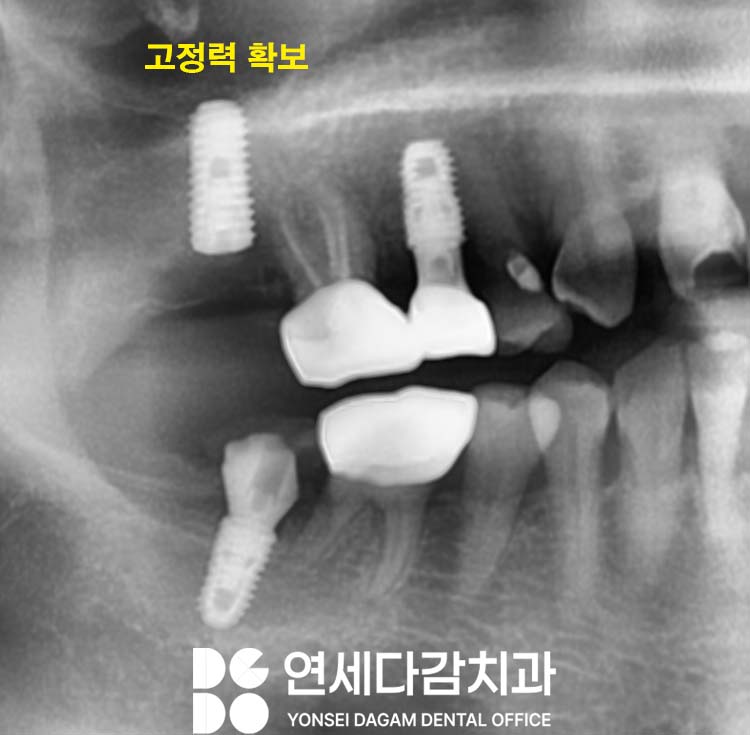
We could confirm that the approach using the cortical bone at the floor of the maxillary sinus had been applied well.
After that, we waited 충분히 for the fixture and the surrounding bone tissue to undergo osseointegration.
Because of osteoporosis,
more careful observation was needed than in ordinary cases,
a so the process took a long time,
but it healed stably
and the final prosthesis could also be completed safely.
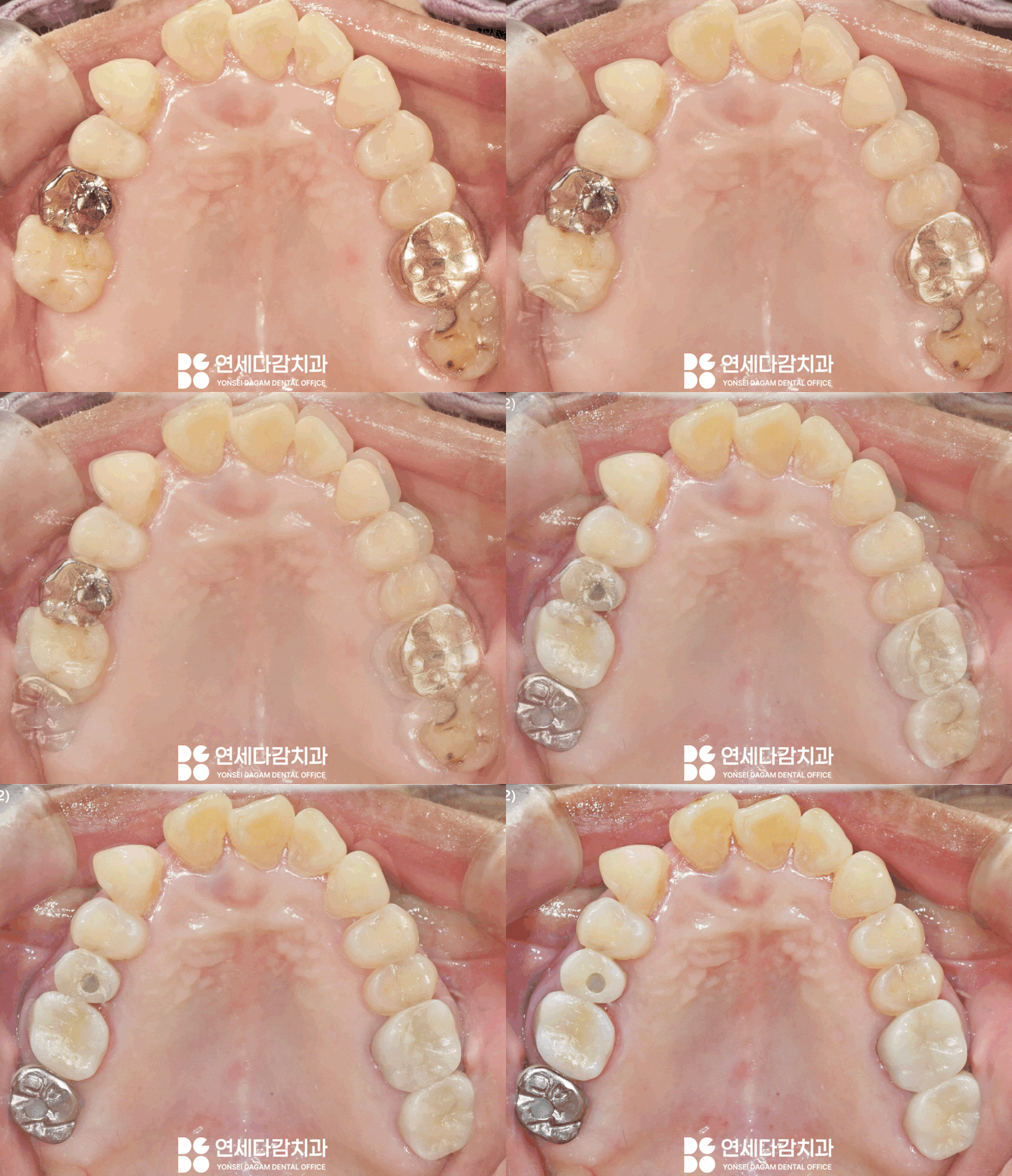
Because there were a total of three placement procedures,
and because we had to allow periods in between for the bone to stabilize,
the overall treatment period inevitably became longer.
Because there was a strong will to recover,
we were ultimately able to achieve a successful result.
Through the case presented at the Garak-dong dental clinic,
we can draw several important lessons.
Discovering previously unnoticed osteoporosis and being able to start appropriate treatment was beneficial not only for oral health
but also from the perspective of overall health.
In addition, when the usual approach does not work,
we could see how important it is to carefully analyze the anatomical characteristics
and establish a customized strategy.
Just as the strategic approach using the cortical bone at the floor of the maxillary sinus introduced at the Garak-dong dental clinic
became the key to achieving good results,
we can see that individualized treatment plans tailored to each case are more important than anything else.
Failure sometimes provides important clues for greater success.
If we do not give up, find the cause, and look for a solution,
even difficult cases can be overcome.
That is the hopeful message I would like to share from the Garak-dong dental clinic.
Thank you.
2022.05.03~2023.09.20