Hello.
This is Yonsei Dagam Dental Clinic in Songpa District.
If the area where your wisdom tooth was removed still feels uncomfortable,
we recommend taking a CT scan to check again in detail.
This is because there may be a remaining
tooth root fragment (root rest).
It is similar to having a thorn
stuck in your skin,
and if it is not completely removed,
persistent discomfort and inflammation
can occur.
After a normal extraction,
pain gradually decreases and
the gums usually recover,
but as mentioned by the dental clinic in Songpa District,
if a root fragment remains,
this natural healing process
will be disrupted.
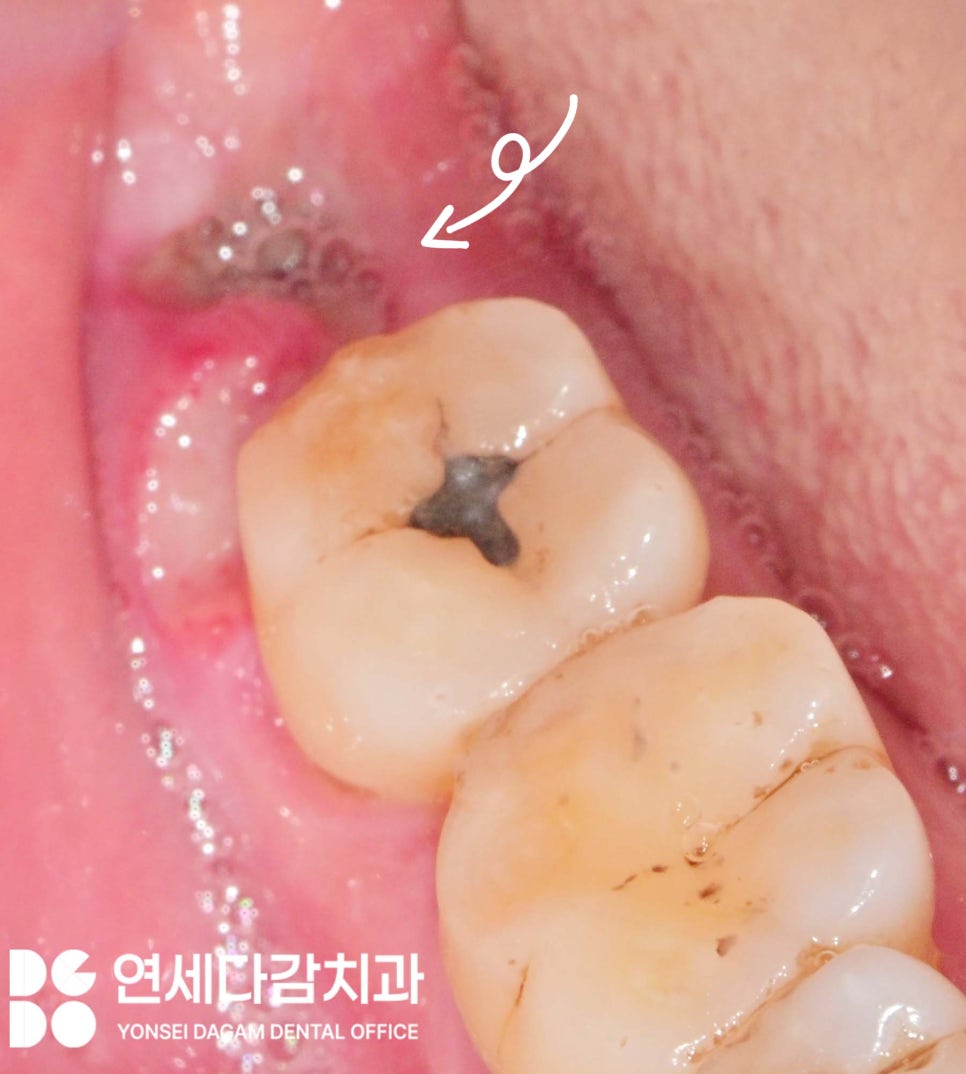
If the area where the wisdom tooth was removed
keeps swelling and shows signs of inflammation,
it should be suspected.
Even though a natural inflammatory response
may appear for 2 to 3 days after extraction,
if it lasts for more than a week
or seems to worsen,
there is a high possibility of another problem.
These symptoms are similar to the reaction
that occurs when a foreign object
gets into a wound,
and they act as a factor
that interferes with natural healing.
When similar symptoms persisted after extraction at another place,
and an X-ray was taken,
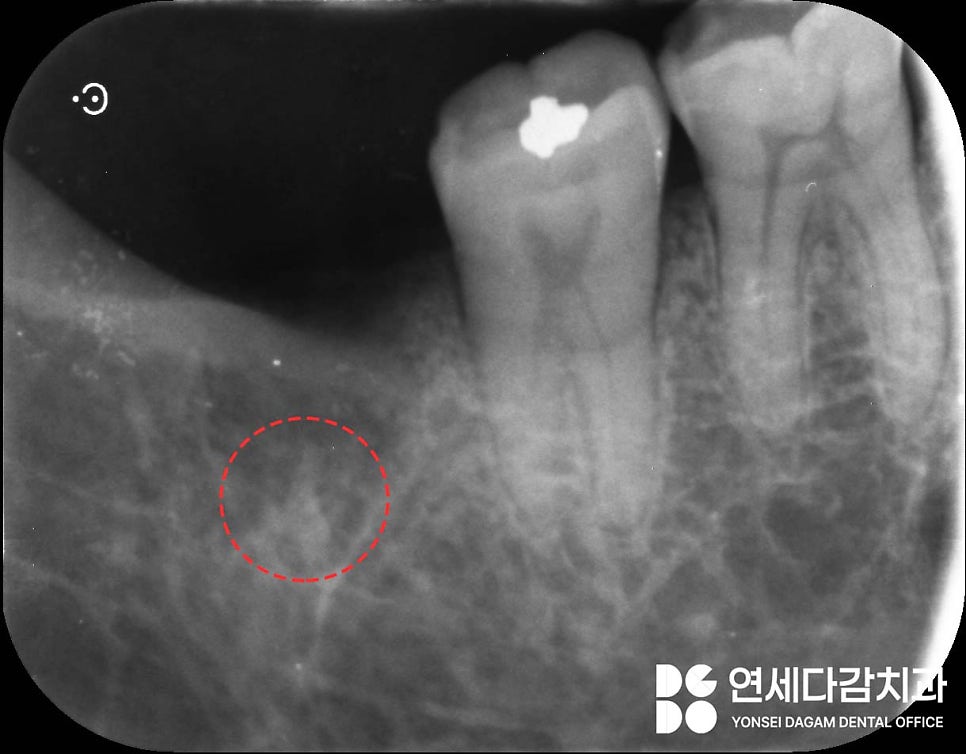
findings often appeared that were
suspected to be a remaining root fragment.
On a 2D X-ray,
a root fragment often appears faintly
or overlaps with surrounding tissues,
so it may not be clear.
To put it in a comparison used by the dental clinic in Songpa District,
it is like trying to see
a thin sheet of paper stuck
between thick books from the outside,
so an accurate diagnosis can be difficult.
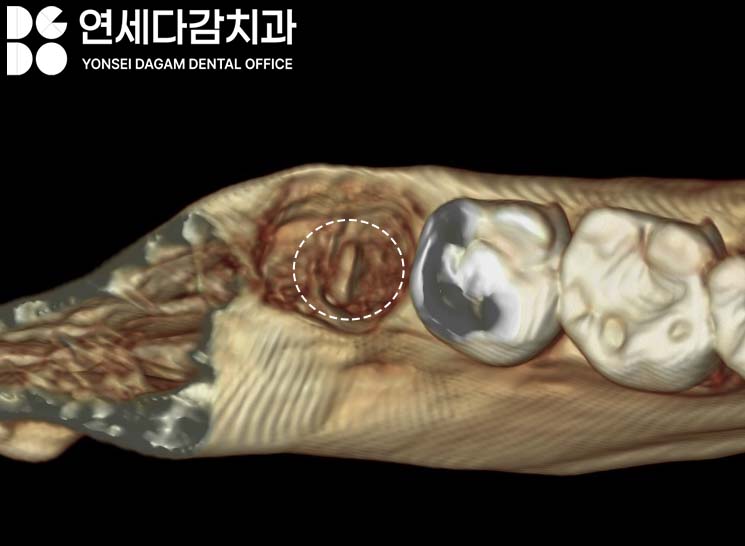
When it is difficult to judge from
a 2D cross-section,
it is necessary to take a CT scan
and examine it three-dimensionally.
Then, as shown by the dental clinic in Songpa District,
it becomes clear that a tooth root fragment
is still remaining.
A 3D CT is like viewing an object
from several angles at once,
allowing even hidden parts
to be identified accurately.
In particular, it allows precise measurement
of the size and position of the root fragment,
as well as its distance from nearby nerves,
which helps establish a method to remove
the root fragment without unnecessary tissue damage.
There are cases where the root area is intentionally left behind during wisdom tooth extraction,
but unless there is a special reason,
it is correct to remove everything.
The main reason for intentionally leaving a root behind is when the root overlaps with the inferior alveolar nerve canal,
and the risk of nerve damage is high if removal is forced.
Therefore, in some cases,
leaving part of it behind may be the safer choice.
If that is not the reason,
why was a tooth fragment left behind?
Let’s look at the reason
at the dental clinic in Songpa District.
Why does a root fragment end up being left behind?
Wisdom teeth have more complex root shapes
than other teeth,
and their impaction positions vary widely,
so unexpected situations can occur
during extraction.
In particular, when the roots are curved like hooks
or divided into several parts,
or when the roots are intertwined with each other,
clean removal may be difficult.
Also, when bone density is high
or the roots are firmly fused to the bone,
or when the tooth is in a location
where visibility is poor,
a root fragment may remain.
Even when visibility is limited due to bleeding
or swelling during the procedure,
there is a possibility of missing the root rest.
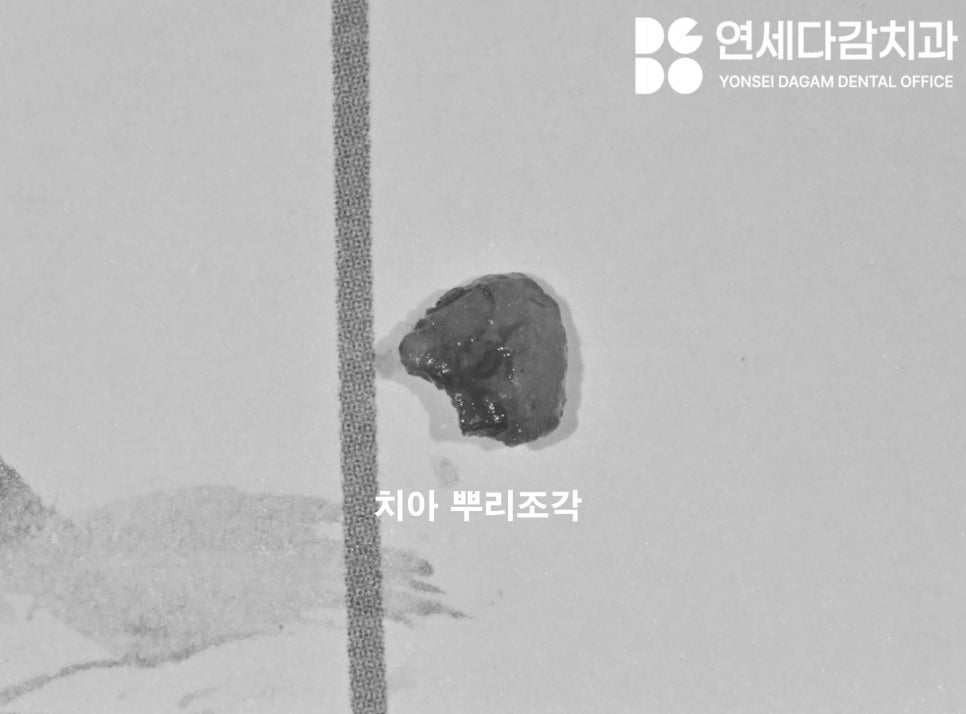
Even after bleeding has stopped, of course,
the fragment should be removed.
A root fragment acts as a foreign body,
causing persistent inflammation
and may become a source of infection.
It can also interfere with the normal regeneration
of the surrounding bone tissue,
delay healing of the extraction socket,
and cause chronic pain and discomfort.
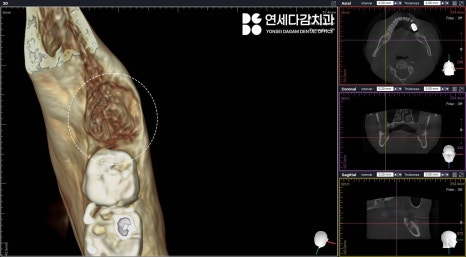
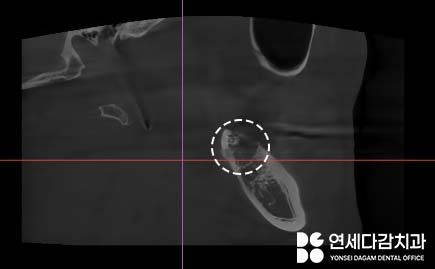
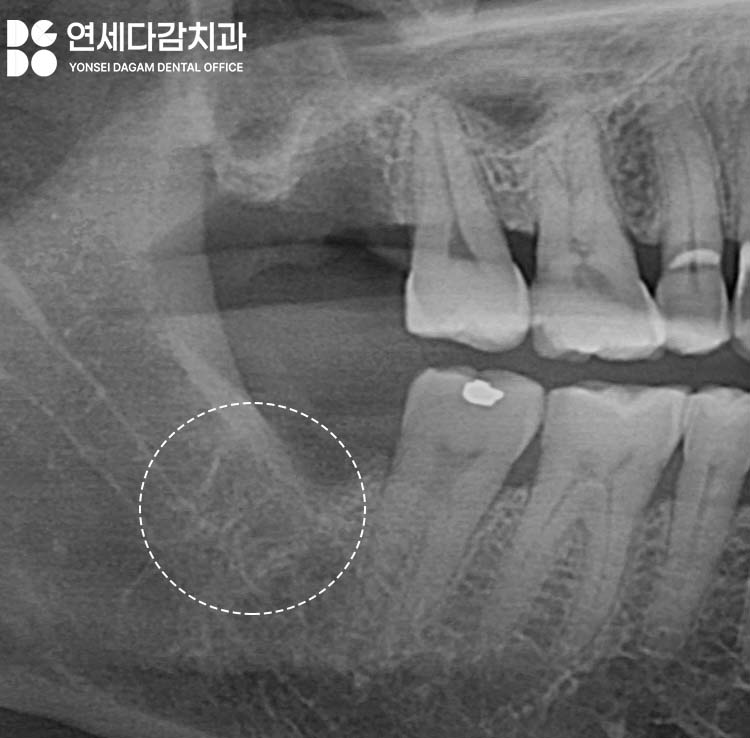
By analyzing the exact location,
we remove the root rest
and carefully check through CT
whether the root came out properly.
A hemostatic agent was placed in the extraction socket,
which is the place where the tooth came out,
to promote faster healing and bleeding control.
A hemostatic agent stops bleeding
and helps form a blood clot.
It also protects the extraction socket,
preventing food debris and bacteria from entering,
and plays a role in creating
a natural healing environment.
Hemostatic agents are made from materials
that are absorbed by the body,
so over time they break down naturally
and help new tissue form.
Afterward, the symptoms were continuously monitored,
the healing process was observed,
and after confirming that the problem had disappeared,
the treatment was concluded.
If, as shown by the dental clinic in Songpa District,
the area does not heal after tooth extraction
and problems keep occurring,
please get an accurate examination again.
We hope that early detection and proper treatment
can prevent it from developing
into a bigger problem.
This was the dental clinic in Songpa District.
Thank you.
25.07.17~25.07.25