When people think of dentures,
they often imagine them as a simple device
that you put in and take out.
Many also picture
the pink plastic dentures used by older adults,
and assume the structure must be simple.
However, dentures are complex prostheses
made by precisely analyzing the patient’s gum shape,
the condition of any remaining teeth, and the bite relationship.
Among those who visit Yonsei Dagam Dental Clinic in Gaeryeodong,
there are quite a few who do not exactly know
what kind of denture they are using.
Today, let’s look at the various types of dentures
and especially overdentures,
and talk about how denture repairs are carried out.
Basic Classification of Dentures
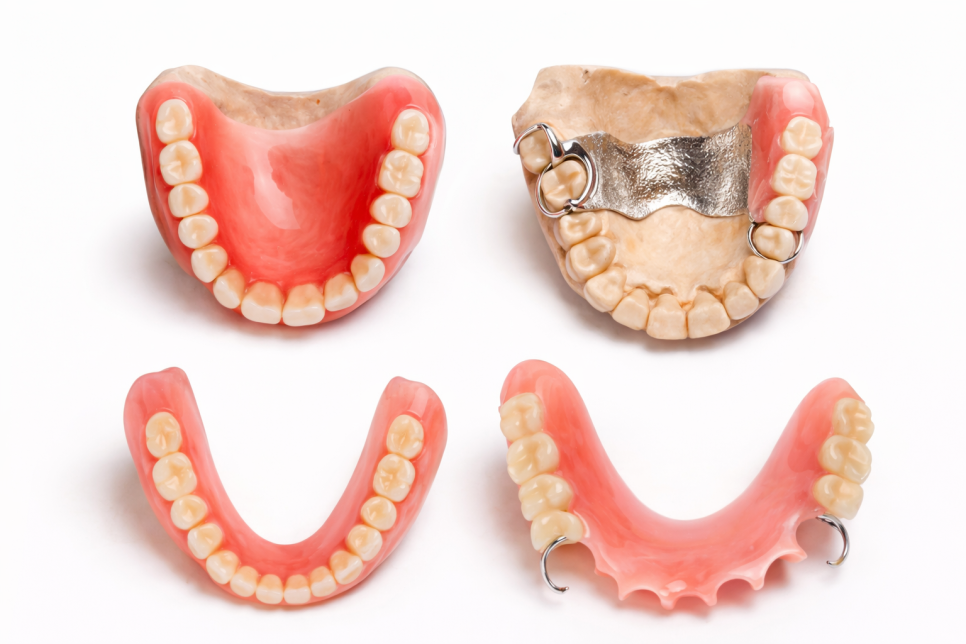
Dentures can largely be divided into complete dentures and partial dentures.
A complete denture is a type of denture that covers the entire arch
when all teeth in one arch have been lost.
It restores the entire upper jaw or lower jaw
with a single denture.
A partial denture is used when only some teeth are missing,
and it gains retention by clasping onto the remaining natural teeth.
In addition, there are various other types,
such as implant-supported dentures
and dentures that use special retention devices.
What Is an Overdenture?
Have you heard the term overdenture before?
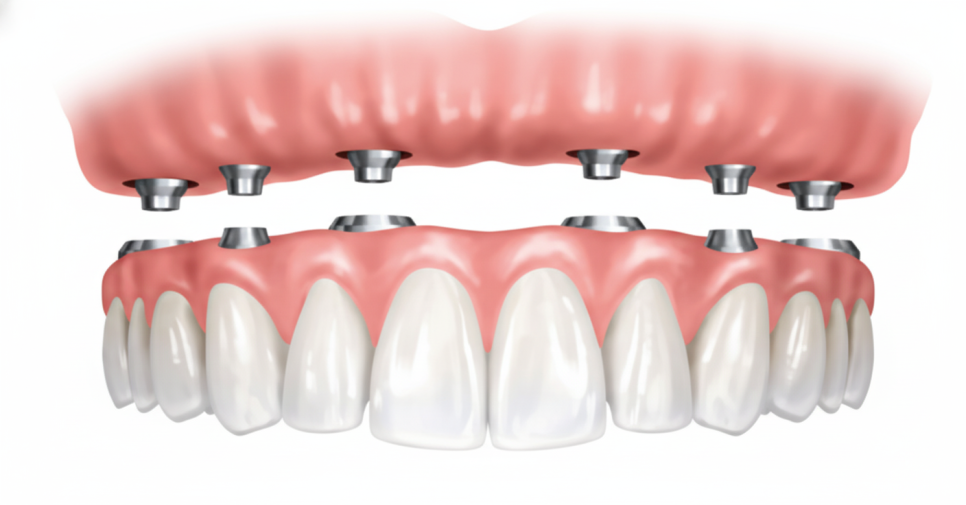
An overdenture is a prosthesis designed to improve support
by placing a minimal number of implants
and then connecting the denture to them.
If a regular denture is simply placed over the gums,
an overdenture has a fixed attachment,
allowing it to sit more stably.
Overdentures are divided into several types
depending on the form of the retention device.
Let’s look at the representative types
that are often seen at Gaeryeodong Dental Clinic.
✅ Locator type.
A locator, a button-like snap attachment,
is connected to the top of the implant,
and the denture snaps into place.
It is often called a “snap-on denture.”
✅ Bar type.
Several implants are connected with a bar-shaped metal structure,
and the denture is attached on top of it.
✅ Ball type.
A round ball-shaped attachment is connected to the top of the implant,
and it engages with the socket inside the denture.
Each method has its own advantages and disadvantages,
and the appropriate type is selected based on the patient’s oral condition and preferences.
Why Do Dentures Need Frequent Adjustments?
Among denture users,
there are many cases where they visit frequently
for prosthesis adjustments.
To explain the reason at Gaeryeodong Dental Clinic:
The gums and alveolar bone that support the denture
change shape little by little over time.
The bone in areas where teeth are missing
is not stimulated and gradually resorbs,
and the gum shape changes along with it.
A denture that fit perfectly when first made
can become loose over time,
or
some areas may start to feel painful.
This happens because of those changes.
That is why, at Gaeryeodong Dental Clinic as well,
we check the fit through regular examinations
and make adjustments when necessary.
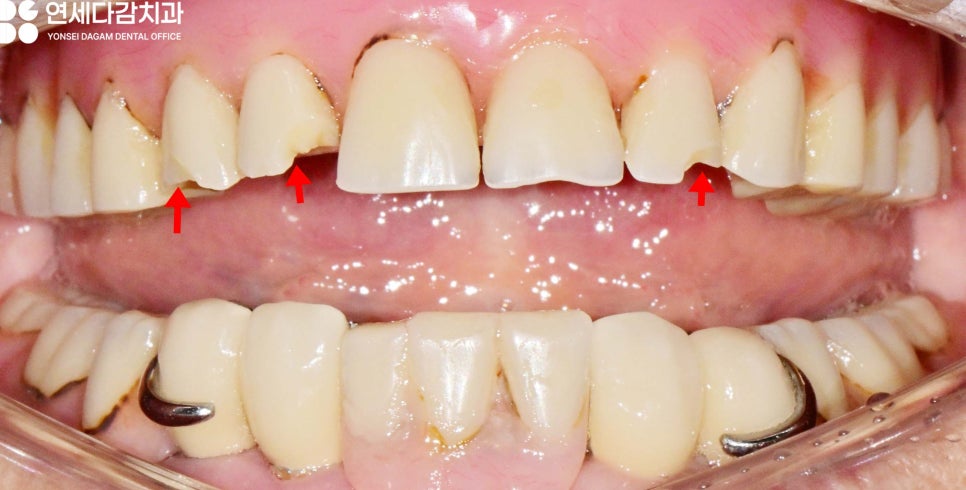
If a problem occurs with a denture
and repair becomes necessary,
it is important to understand the characteristics of the prosthesis accurately.
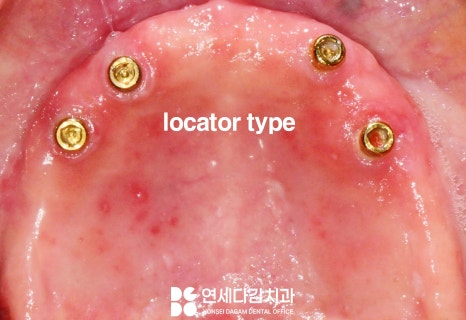
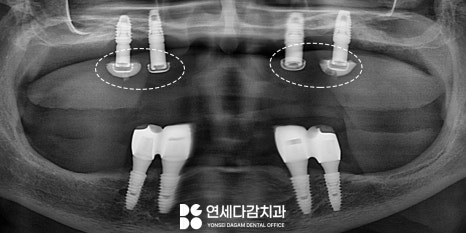
For example, if you are using a locator-type overdenture,
commonly called a snap-on denture,
it has a special structure that connects to the implant.
So during the repair process,
you need to check whether there is any problem with that part.
Therefore, only by knowing exactly what type of denture it is
can we identify the damaged area and cause
and then determine the appropriate repair method.
Repair Process
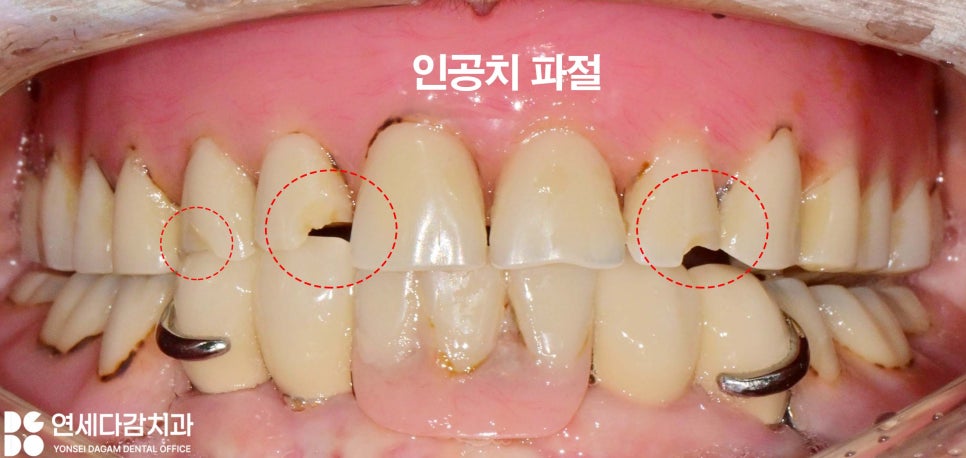
If dentures are used for a long time,
it is possible for the artificial teeth to crack
or break.
They may break while chewing hard foods,
or be damaged in an accident where the denture is dropped.
When the artificial teeth are damaged like this,
it is not always necessary to make a completely new denture.
Depending on the extent of the damage,
it can often be repaired and continued in use.
Broken dentures are sent to a dental laboratory
for a professional repair process.
For this, two impressions are needed.
First, an impression of the opposing teeth is taken.
The shape of the teeth on the opposite side
that bite against the denture being repaired must be recorded.
Second, an impression of the current bite relationship is taken.
The occlusal relationship—how the upper and lower molars come together—
must be recorded accurately
so that chewing remains comfortable after the repair.
Only after this process
can the denture be repaired not just in shape,
but also in a way that is functionally sound.
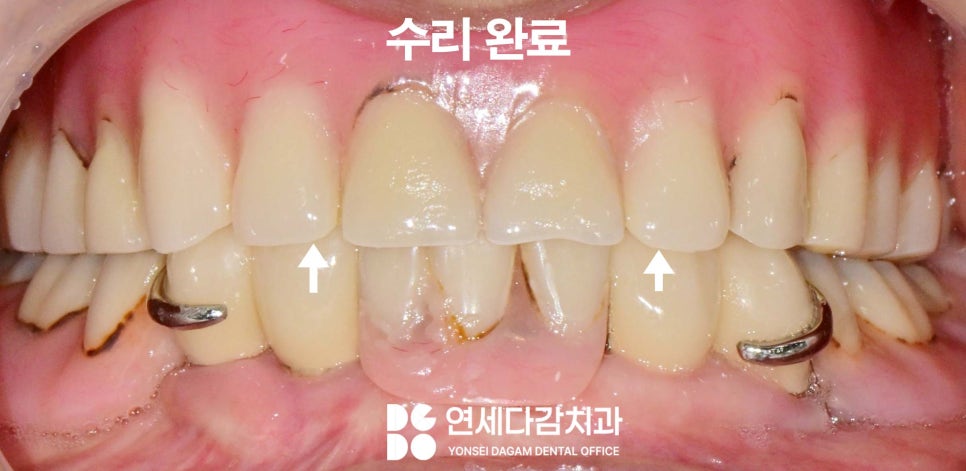
Denture repairs are generally completed
within a few days.
For simple repairs,
two days may be enough.
However, during the repair period,
the denture you have been using must be sent to the lab,
so you will have to go without it.
In such cases, Gaeryeodong Dental Clinic also explains
an option of making a temporary denture in advance
and then proceeding with the repair.
It is advisable to decide whether to make a temporary denture
after comprehensively considering the degree of inconvenience.
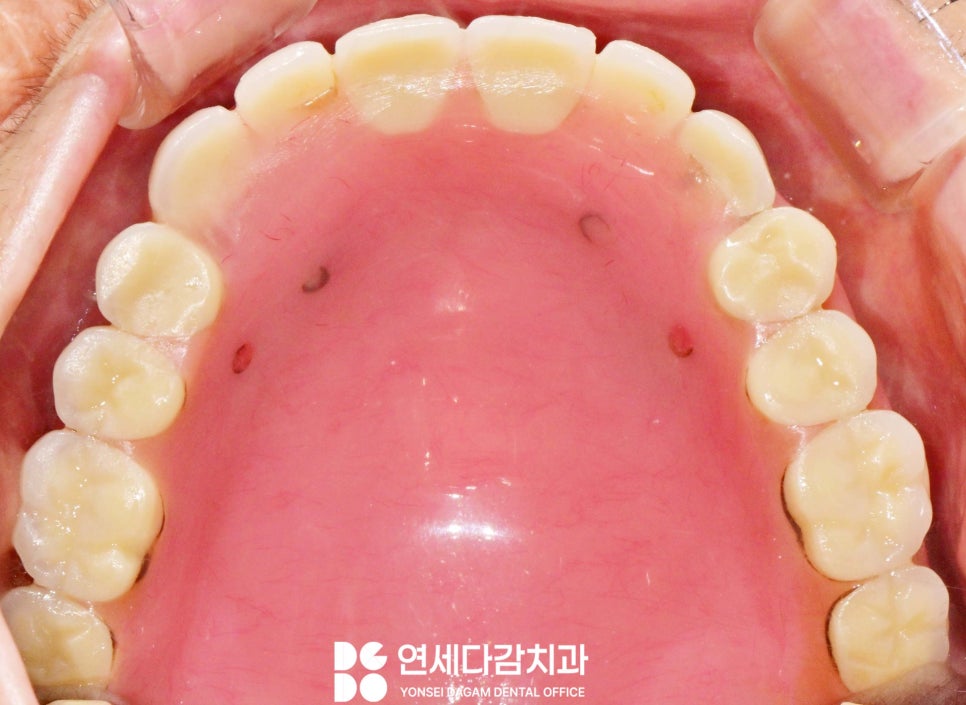
The dentures covered in today’s post
are not something that ends once they are made;
they are prostheses that require ongoing care.
By visiting the dental clinic regularly
to check the condition of the denture and the gums,
and by receiving adjustments or repairs when necessary,
you can use them comfortably for a long time.
If you feel any discomfort during use
or notice any abnormality in the denture,
do not leave it unattended;
I recommend getting an examination.
This has been Yonsei Dagam Dental Clinic in Gaeryeodong!
2025.12.19~2025.12.23