Hello,
I’m Director Seo Ho-yeon of Yonsei Dagam Dental Clinic in Garak-dong.
If you feel unexplained discomfort when opening or closing your mouth widely during daily life,
I hope you will consider getting an examination at least once.
This may not be simple fatigue,
but rather a sign of an abnormality in the temporomandibular joint.
If it is left alone for a long time,
discomfort such as pain may gradually worsen,
or problems such as difficulty opening the mouth may appear.
Today, at the Garak-dong dental clinic,
I will explain the symptoms that appear when a TMJ issue occurs
and in what cases an examination is needed.
- It is not just a habit.
Among the behaviors we repeat out of habit,
there are many that are actually not good for our health,
and oral health is no exception.
Among them, teeth grinding
and clenching are representative oral habits,
and they have a major impact on the oral cavity as a whole.
Teeth grinding, in particular, usually occurs during sleep,
so it is often left unnoticed by the person themselves
for a long period of time.
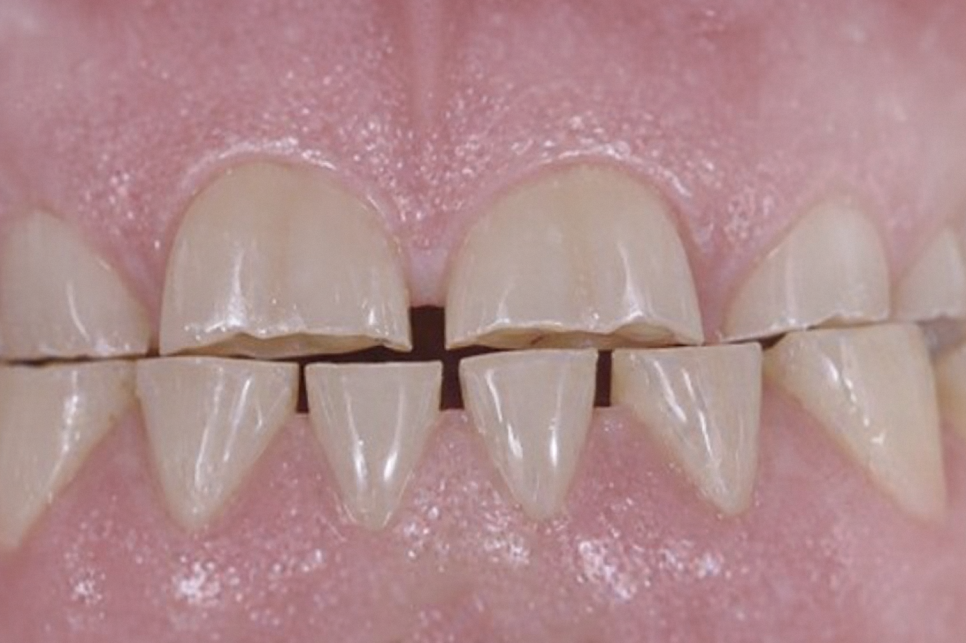
It is often discovered by family members, acquaintances, or during an examination,
but by that time, tooth wear is often already quite advanced.
Starting from these worn areas,
enlarging cracks or fractures is not uncommon,
and what is important is that teeth grinding affects not only tooth wear
but also the TMJ and surrounding muscles.
- Signals from the muscles
In cases of severe clenching or teeth grinding,
the masticatory muscles contract excessively during sleep,
causing the muscles to become tightly knotted.
The muscles used when chewing food are
the masseter, temporalis, medial pterygoid, and lateral pterygoid muscles,
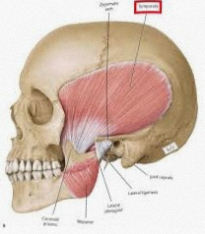
Source - Google
and among these, muscles such as the masseter and temporalis
are areas where daily overload occurs frequently.
Through a palpation examination in which the area is directly pressed,
the degree of muscle tension and whether there is tenderness can be checked.
In particular, if tension in the temporalis muscle persists,
it can also lead to chronic migraines.
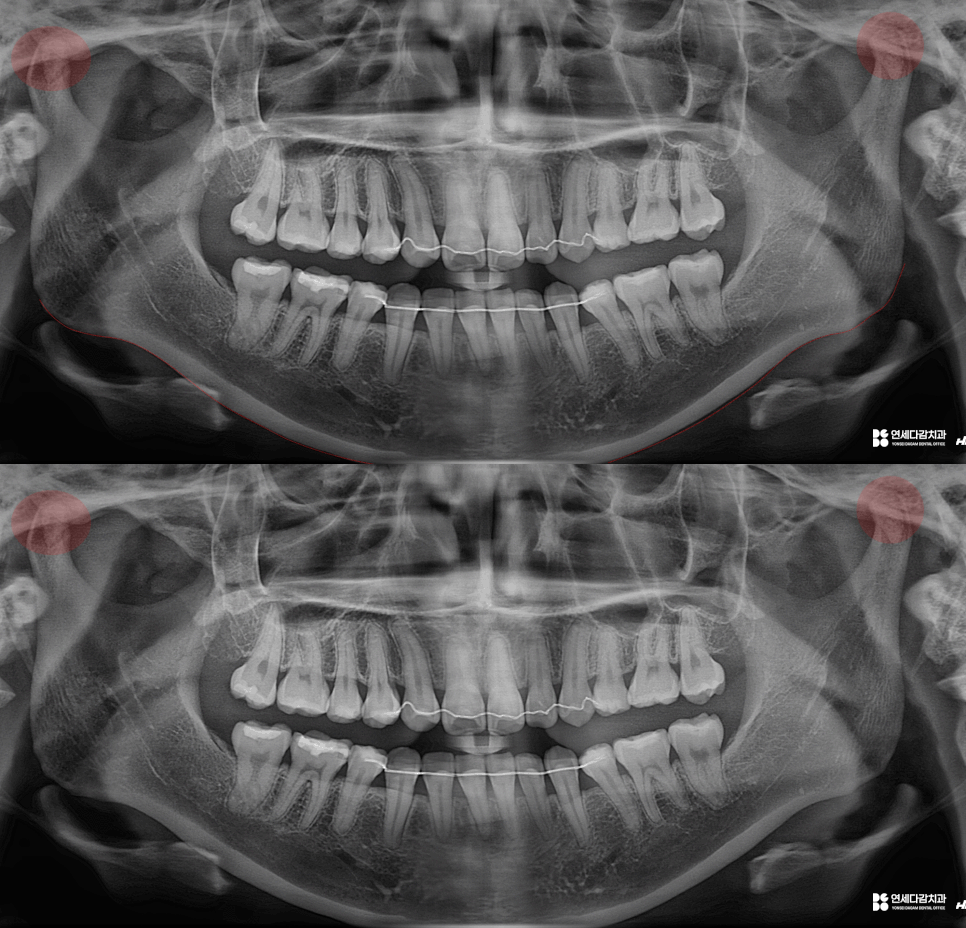
26.01.09
Looking at the condition of the case I will introduce today
at the Garak-dong dental clinic,
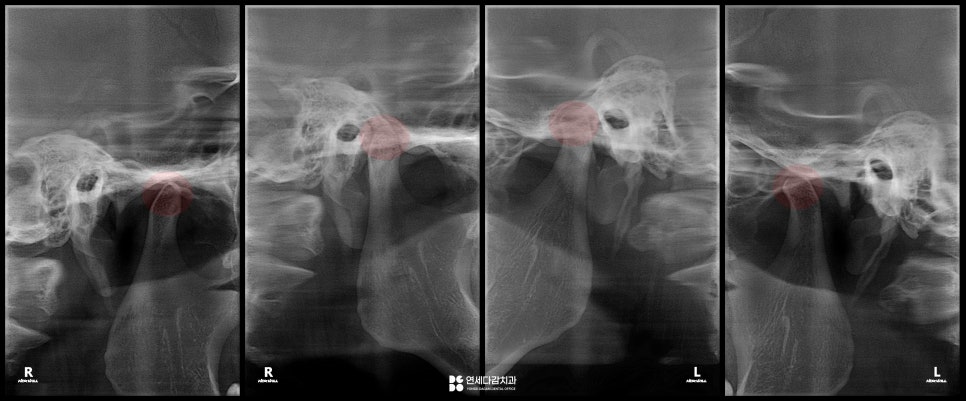
26.01.09
there is a deflection phenomenon in which the jaw shifts to the right.
Some facial skeletal asymmetry was also found,
but it was assessed as not being at a level that causes major problems.
- Why Botox is needed for sleep bruxism
In cases of sleep bruxism,
it is difficult to completely eliminate the symptoms with only TMJ education, medication, or physical therapy.
Because bruxism occurs in an unconscious state,
behavioral control or conscious effort
cannot be applied during sleep.
Medication and physical therapy are also good for relieving pain or inflammation,
but they cannot block the excessive contraction of the muscles itself.
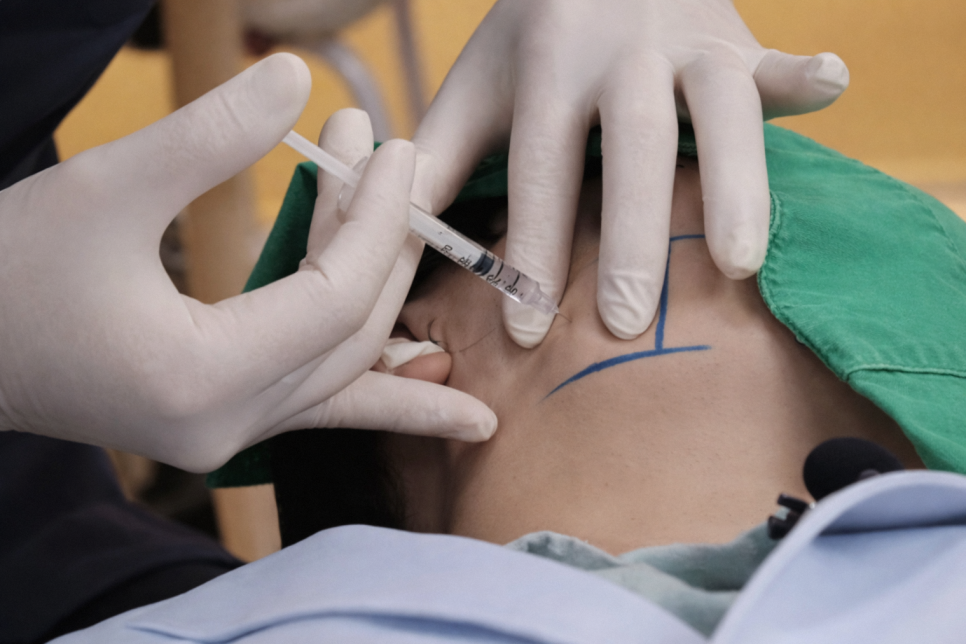
In such cases, the method recommended at the Garak-dong dental clinic
is to receive a Botox injection.
Some people think it is used only in dermatology,
but it is also actively used in dentistry.
Botox partially relaxes the contractile force of the muscles,
reduces the pressure applied unconsciously,
and helps ease the burden on the TMJ.
The treatment effect varies from person to person,
and usually appears around two weeks after the procedure.
- Not only suppressing pain, but also creating a recovery environment
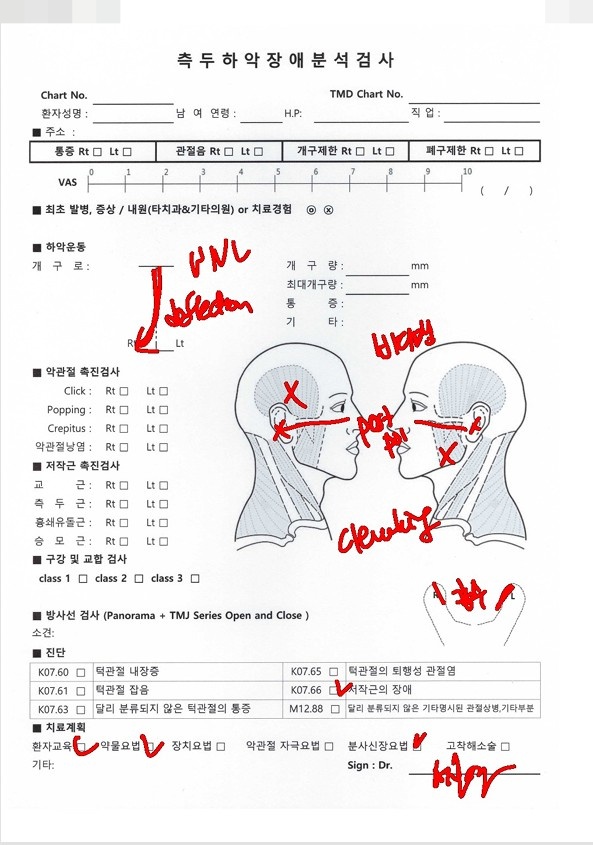
This case, explained at the Garak-dong dental clinic,
where Botox and medication were used together,
is a representative example not merely of suppressing pain,
but of creating an environment in which the TMJ can recover on its own.
Because the TMJ takes a long time to recover once it has been damaged,
it is better to respond sensitively.
If you simply let it pass because it is “bearable,”
there may come a point when daily life becomes uncomfortable.
If you hear a sound when opening your mouth,
or if your jaw feels stiff when you wake up in the morning,
I recommend using it as an opportunity for an examination.
That concludes the content prepared today
at the Garak-dong dental clinic.
Thank you for reading this long post.
26.01.09