Hello.
This is a dental clinic near Geolleung Station.
A cavity, a oral disease we are familiar with,
does not show symptoms as clearly as you might think.
In the early stages, it often progresses without any particular discomfort,
and only after the cavity has become quite deep
does the nerve begin to be stimulated in some cases.
By the time pain starts,
people finally realize that treatment is needed,
but the appearance of noticeable symptoms means
that the lesion has already progressed quite far.
In other words, it may have entered a stage
where root canal treatment or extraction could be necessary.
That is why whether it is found before symptoms appear
or after pain has started
makes a big difference in the scope and method of treatment.
This is why regular checkups are important.
The earlier a lesion is found,
the more likely it is that treatment can be completed with a simple procedure,
and the wider the options for preserving the tooth in the long term.
- Caries occurring in a blind spot inside the mouth
Let’s look at an example related to what was explained earlier
at the Geolleung Station dental clinic.
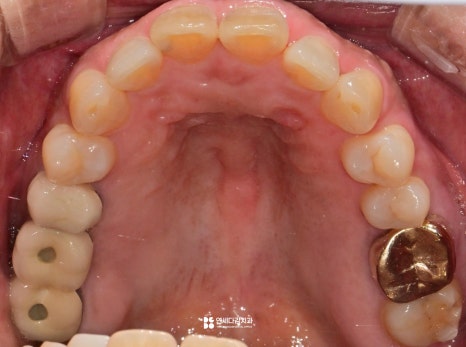
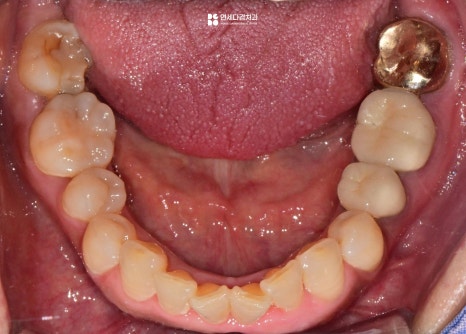
2025.11.12
At first glance like this,
there does not seem to be anything unusual,
but in reality, there are cases where pain is felt.
This is because there are blind spots in the mouth
that are difficult to confirm with the naked eye.
One of those blind spots is the interproximal surface.
The sides of the teeth are areas where food often gets stuck,
but because foreign matter is difficult to remove and hard to check,
caries frequently occur there.
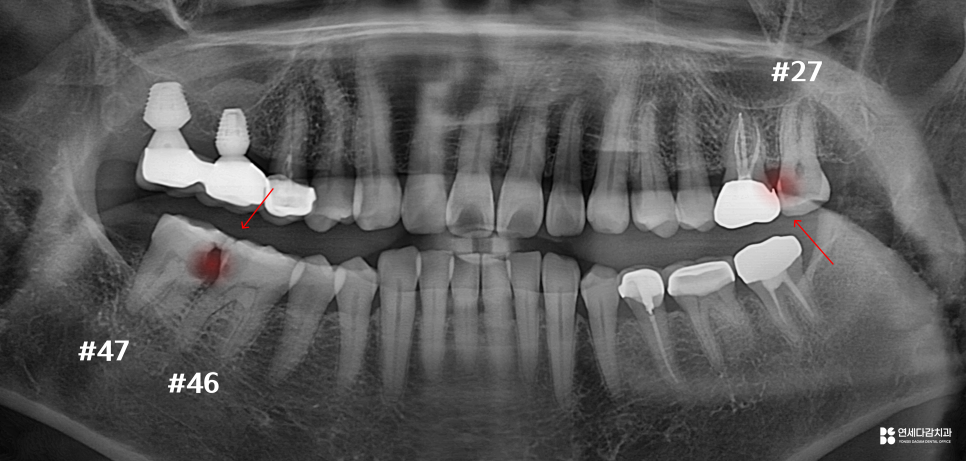
2025.11.12
Looking at how the upper and lower lesions have progressed,
tooth 47 has already spread to the root area.
The root is located within the alveolar bone,
so it is very difficult to access the lesion.
Also, when the root is damaged, its strength decreases,
making it difficult to withstand chewing pressure.
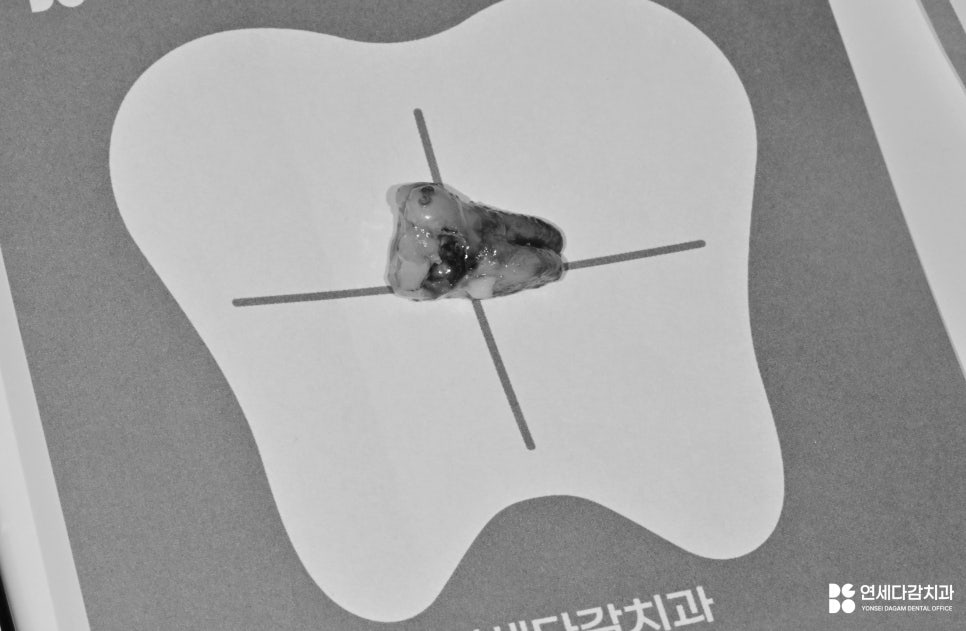
2025.11.12
Once the root is already weakened,
long-term preservation is difficult,
and in many cases it ultimately ends with extraction.
- Implant placement for tooth 47 and caries removal
This is the appearance after placing an implant to restore function.
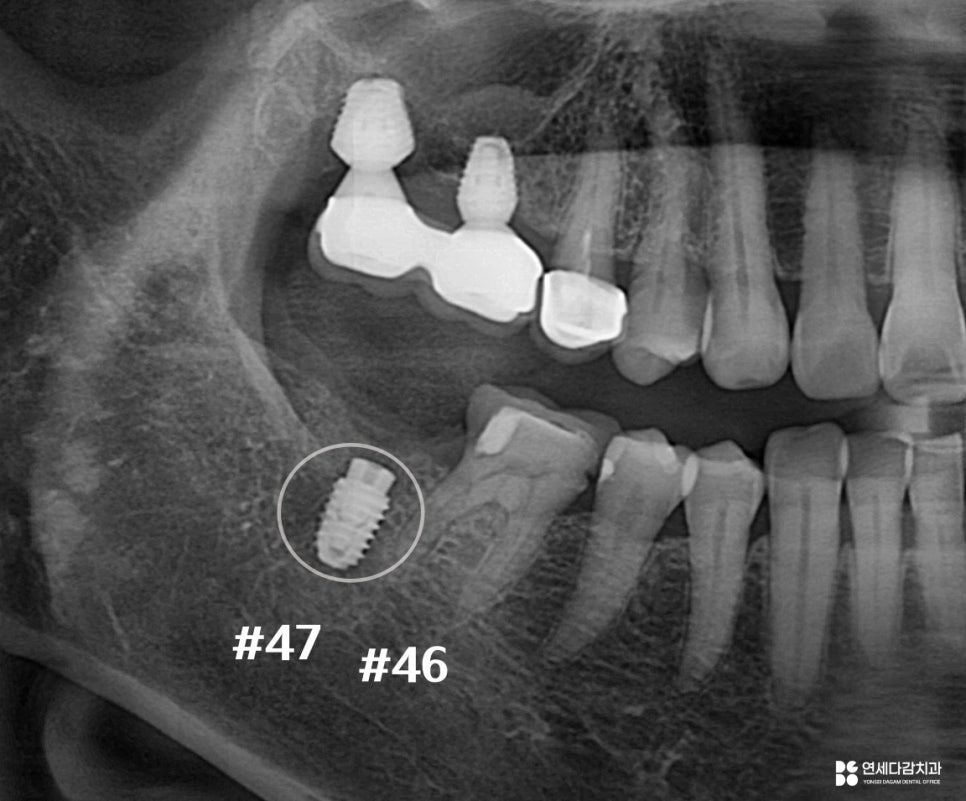
2025.11.12
As shown above, the lesion is clearly visible on the X-ray,
but there are also parts that cannot be known exactly
until the lesion is actually cleaned out.
One typical example explained at the Geolleung Station dental clinic
is whether the nerve has been invaded.
Even if it appears on the radiograph
that it has reached near the pulp,
whether it has actually progressed to the pulp
can only be known by removing it directly.
Tooth 46 is such a case.
In the initial photo, it had spread deeply inside,
but fortunately it had not invaded the pulp.
In such cases, crown treatment is performed,
and the condition is monitored.
- Root canal treatment process
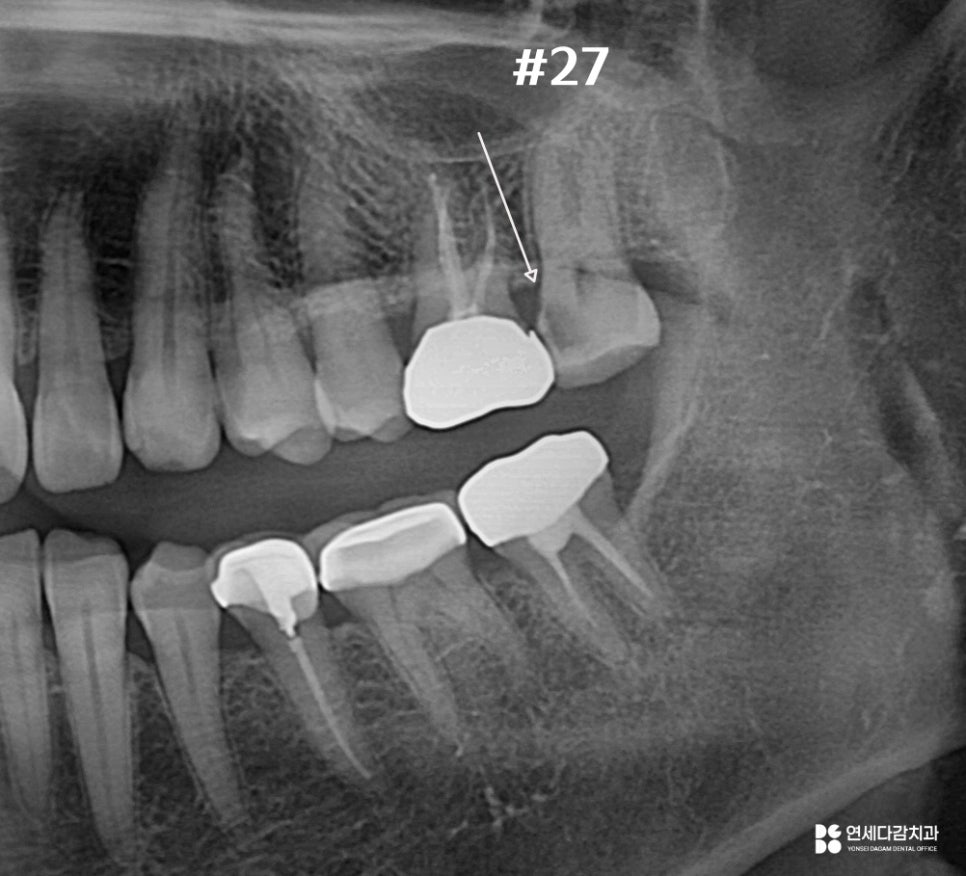
2025.11.12
On the other hand, if it is confirmed during the caries removal process,
as with tooth 27,
that the decay has reached the pulp tissue,
root canal treatment is performed.
This involves removing the damaged pulp tissue,
disinfecting the inside thoroughly,
and then filling and sealing the empty space.
At this time, the inside of the root canal has a narrow and complex structure,
so every step must be performed accurately.
Accordingly, the treatment may not be completed in one visit
and can require several sessions.
Another important point at the Geolleung Station dental clinic is that
a crown must be restored after root canal treatment.
A tooth from which the pulp has been removed
loses its blood and nutrient supply,
which gives the tooth a dry quality.
This means it becomes more vulnerable to impact,
and especially molars, which are frequently subjected to chewing pressure,
can easily break.
Therefore, covering the entire crown with a crown
and protecting it is an essential procedure.
- Prevention is the easiest and simplest method
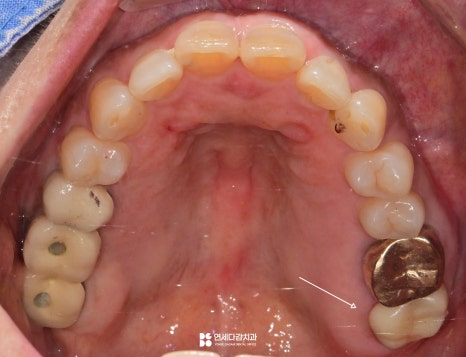
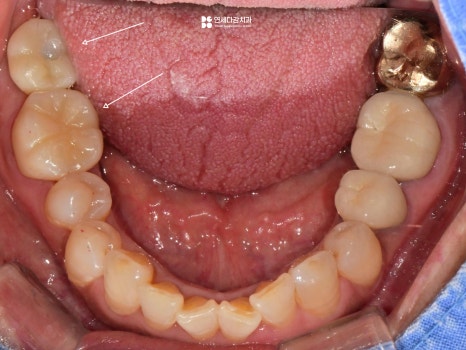
2026.02.13
An implant placed like this is completed after a period of osseointegration
followed by prosthetic restoration.
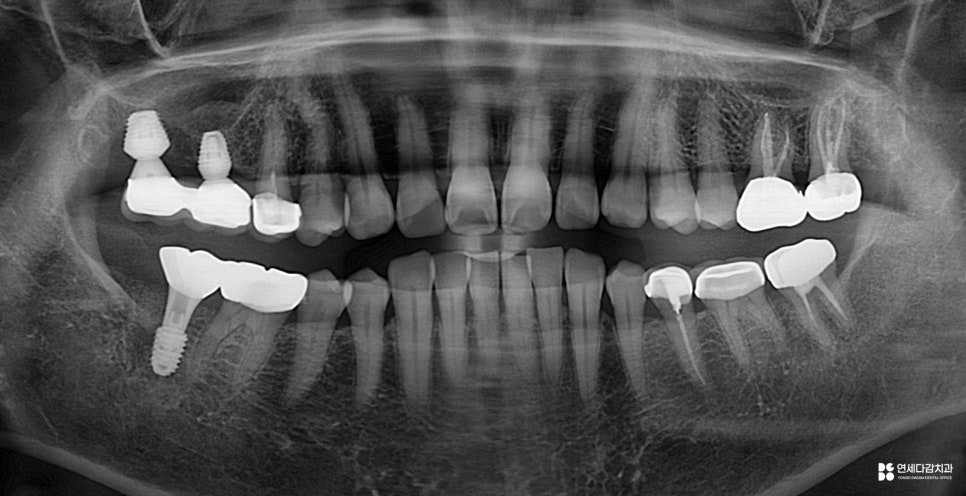
2026.02.13
Since there are no signs of inflammation in each area,
the condition is assessed as favorable.
Even after treatment, it is important to continue checking regularly
for any abnormal findings,
as this is important for keeping the teeth for a long time.
What I wanted to share through the example case explained
at the Geolleung Station dental clinic is this.
Even with the same cavity, some can be preserved,
while others may lead to extraction and then implant placement.
In the end, it can vary greatly depending on when it is found
and how far it has progressed.
A cavity does not heal on its own,
and the longer it is left untreated,
the more complicated the treatment becomes
and the lower the chance of preserving the natural tooth.
So even if there are no symptoms,
regular checkups are the simple and reliable way to prevent it.
This has been the Geolleung Station dental clinic.
Thank you.
2025.11.12 ~ 2026.02.13