Welcome.
Munjung-dong Dentist, Yonsei Dagam Dental Clinic
I am Dr. Ho-yeon Seo.
Because teeth are used every day,
they can gradually wear down over time.
However, if the teeth have become unusually short,
if the sides of the teeth are deeply worn away,
or if the chewing surfaces are broken,
it may be difficult to view this as ordinary wear alone.
In such cases, the possibility of tooth attrition
should be examined.
What Is Tooth Attrition?
Munjung-dong Dentist, Yonsei Dagam Dental Clinic
Tooth attrition, simply put,
refers to a condition in which the teeth
gradually wear away due to repeated friction and force.
When strong forces are repeatedly applied,
such as with teeth grinding or clenching,
the teeth may wear down faster than expected.
As a result, the teeth may become shorter,
the chewing surfaces may become deeply worn,
and the edges of the teeth may chip
or break.
In particular, if the neck of the tooth—
the area close to the gums—becomes thin and worn,
sensitivity may occur,
and the tooth structure itself may become weaker.
Therefore, in these cases,
it is necessary to examine not only the visible shape of the teeth,
but also the overall bite and the direction
in which chewing forces are transmitted.
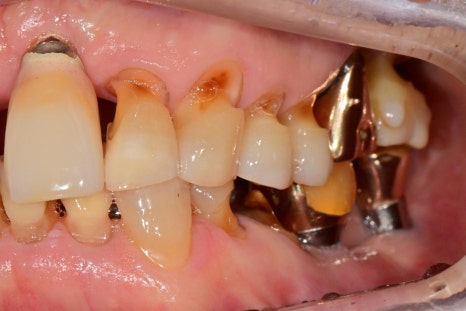
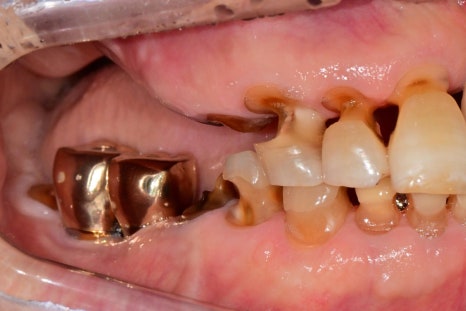
(August 13, 2025)
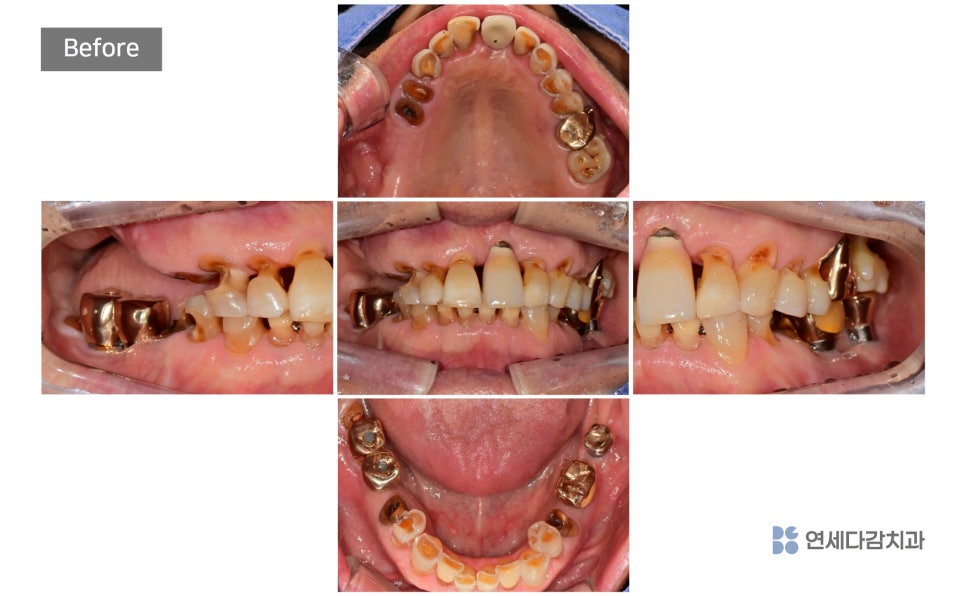
This patient also had extensive overall tooth wear,
with several areas that were worn away
and broken.
The height of the teeth had decreased overall,
and some teeth had deeply worn sides,
with their original shape significantly compromised.
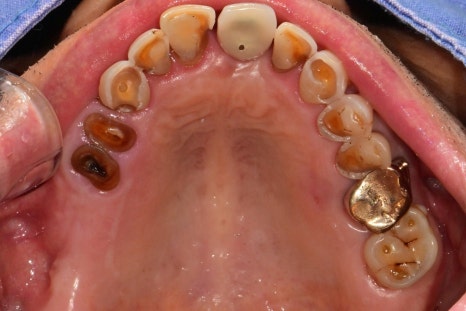
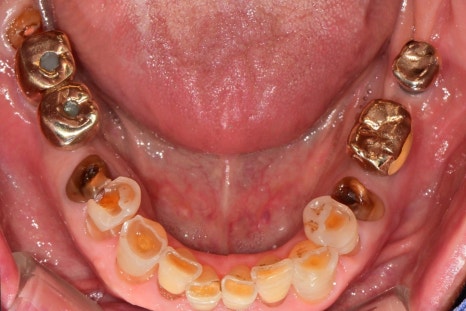
The upper teeth also showed worn and damaged
chewing surfaces on several teeth,
while the lower teeth likewise showed
wear and fractures on their chewing surfaces.
When the upper and lower teeth are
generally worn down in this way,
it is difficult to balance chewing forces
by treating only one or two teeth separately.
It is necessary to determine which teeth can be saved,
which teeth are difficult to maintain,
and what type of bite should be established
for chewing in the future.
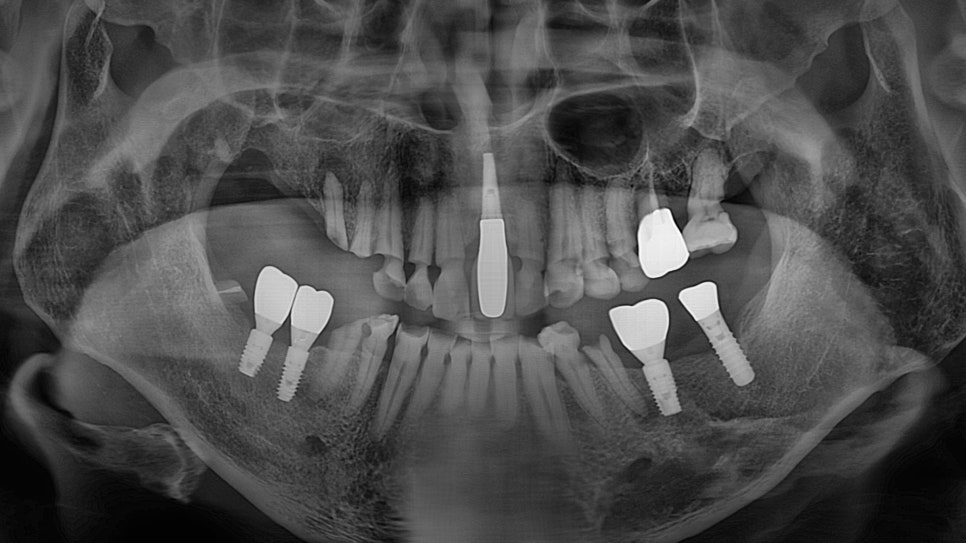
For this patient as well, some teeth were judged difficult to maintain
because the remaining tooth structure had become significantly weakened.
In such cases, rather than forcing the teeth to remain,
considering extraction may help reduce the possibility
of future pain, inflammation, or additional treatment.
In addition, for patients with severe tooth attrition,
the condition of existing restorations and implants
must also be examined together.
Strong chewing forces do not affect only the teeth;
they can also be repeatedly transmitted
to existing crowns and implant restorations.
During this patient’s treatment as well,
we reviewed the existing restorations and implant structures together
and developed a treatment plan for how to reconnect
and restore them in the future.
Rather than treating all the teeth at once,
the plan prioritized areas with a poor prognosis
or significant functional problems.
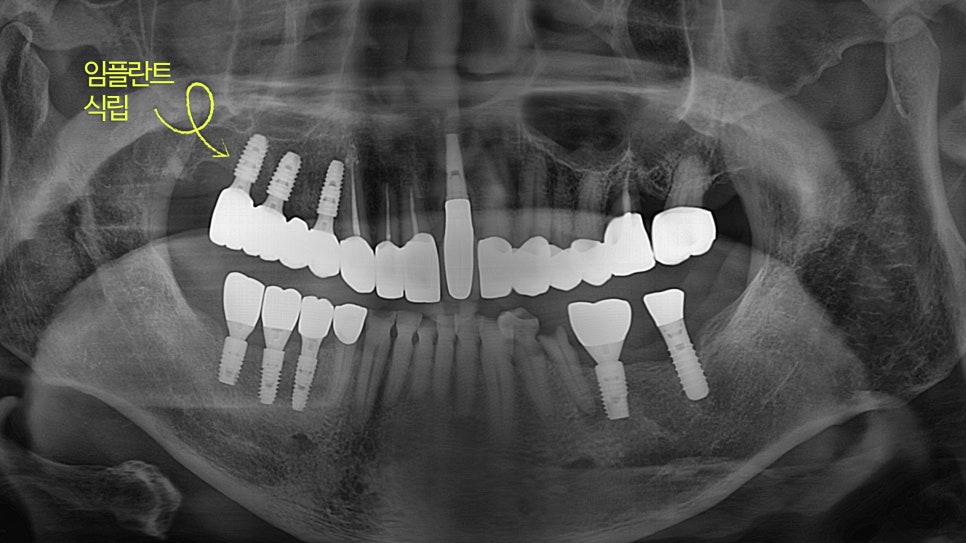
First, the teeth in poor condition in the upper jaw were extracted,
and implant treatment and restorative treatment
were carried out in the upper jaw first.
For the implants, the placement locations were planned
through a digital process, taking into account
the distance from the surrounding teeth,
the condition of the jawbone,
and the future position of the restorations.
You can find more detailed information
about the digital implant process
in a previous post.
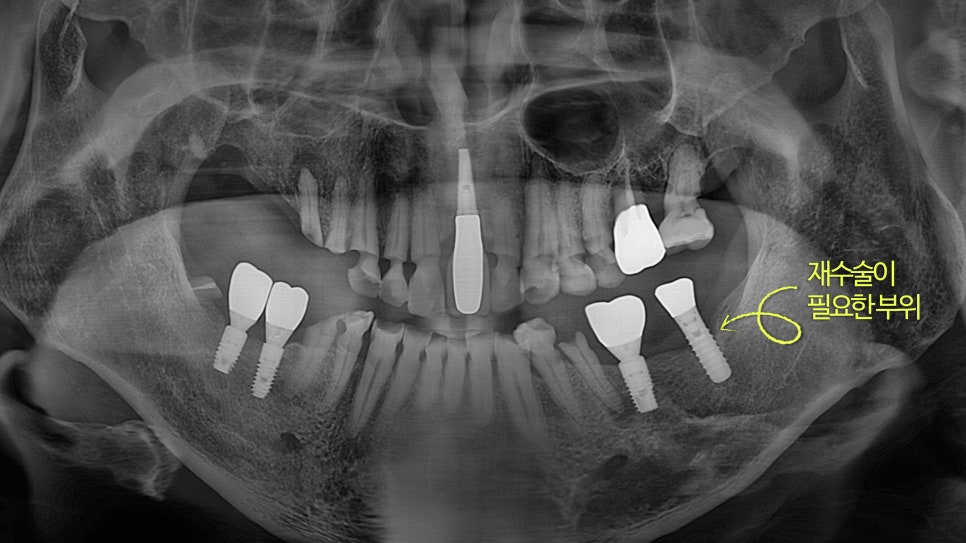
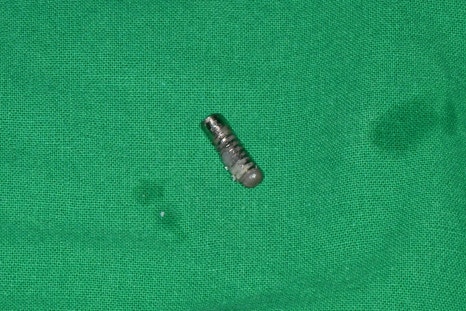
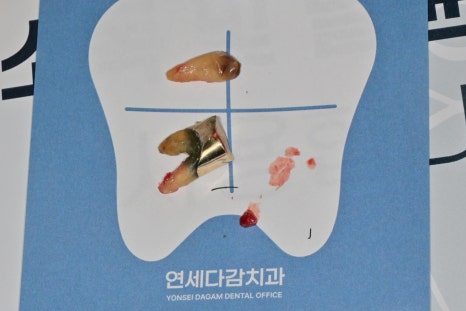
Among the existing implants and restorations,
some areas were also found to be in poor condition,
so re-treatment was planned.
Among the teeth covered by existing crowns,
some had severely weakened tooth structures
and were judged difficult to maintain in the long term;
these teeth were extracted as well.
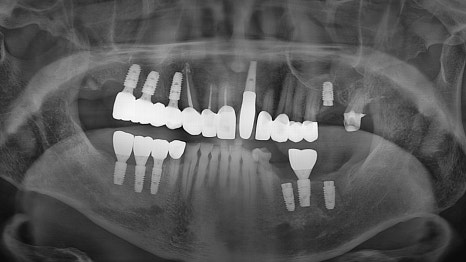
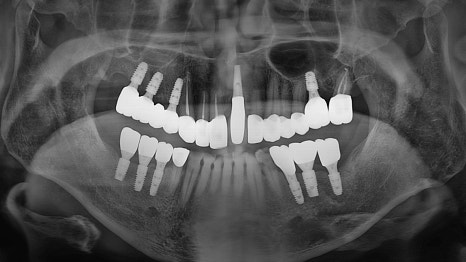
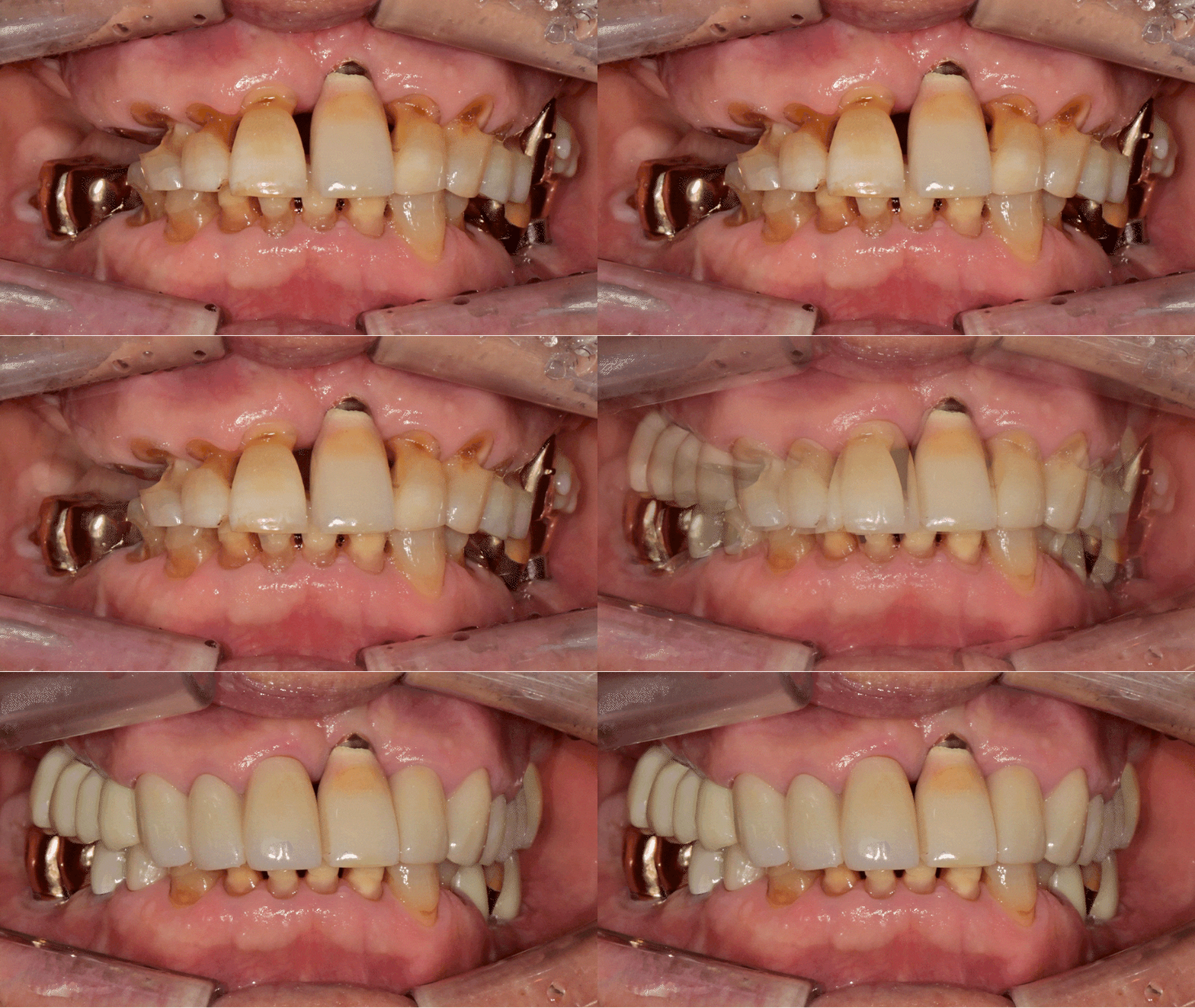
The photos above show the treatment progressing in stages.
After allowing time for the gums and bone to recover,
implant and restorative treatments
were carried out step by step.
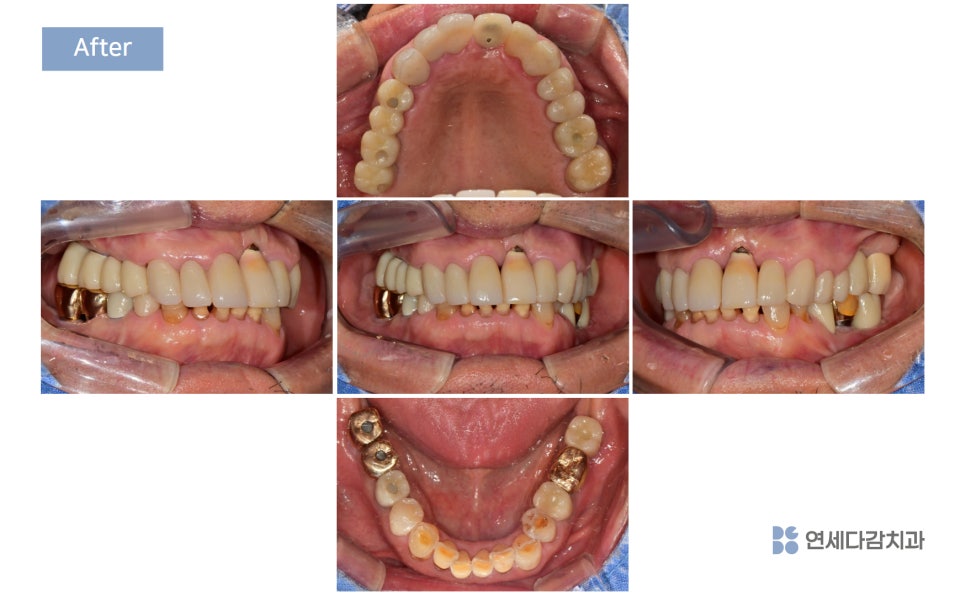
After treatment, we restored the shape of the teeth,
which had been severely worn and compromised,
and also examined the overall bite
so that chewing forces would not be concentrated
on particular teeth alone.
Although this treatment process required time,
when tooth attrition is severe
and multiple teeth have been compromised,
it is important to proceed while checking the condition
at each stage rather than finishing as quickly as possible.
In particular, as with this patient,
when there are habits such as teeth grinding or clenching
or strong chewing habits,
forces may once again become concentrated
on newly made restorations.
Therefore, even after treatment,
the condition of the restorations
and the bite should be checked regularly.
When necessary,
using a device such as a splint
may be considered to protect the teeth and restorations.
For this patient as well, we carefully determined which teeth required extraction,
while developing a treatment plan focused on preserving
the teeth that could be saved.
Even if the teeth are extensively worn and broken,
it does not mean that every tooth must be given up.
The important thing is to first determine
what role the remaining teeth can play in the future
and whether they are in a condition to be used
without excessive strain.
At Munjung-dong Dentist, Yonsei Dagam Dental Clinic,
we first consider ways to help the remaining teeth
last as long as possible.
Rather than stopping at treating only the painful areas,
I believe the most important aspect of dental care
is also considering how the patient will chew
and live after treatment.
If your teeth are significantly worn
or feel as though they are becoming worn away,
please have the condition of your teeth checked first.
Thank you for reading this long post,
and I hope you have a happy day today as well. ^^
Munjung-dong Dentist, Yonsei Dagam Dental Clinic

[Naver Appointment Reservation]
[Yonsei Dagam Dental Clinic Website]
[Yonsei Dagam Dental Clinic KakaoTalk Consultation Channel]
Munjung-dong Dentist, Yonsei Dagam Dental Clinic