Hello, this is Gangnam Leon Dental Clinic😀
Although the number of teeth is generally fixed,
there are cases where more teeth
than the normal number develop.
These are called supernumerary teeth.
They are often discovered during childhood,
but some cases are found incidentally in adults
during CT scans for orthodontic consultations
or other dental treatments.
The problem is that leaving supernumerary teeth untreated
may lead to various problems, such as
malocclusion, difficulty with permanent tooth eruption, or inflammation.
Today, we will provide an easy-to-understand overview,
from the causes of supernumerary teeth
to when extraction is necessary and how the procedure is performed.
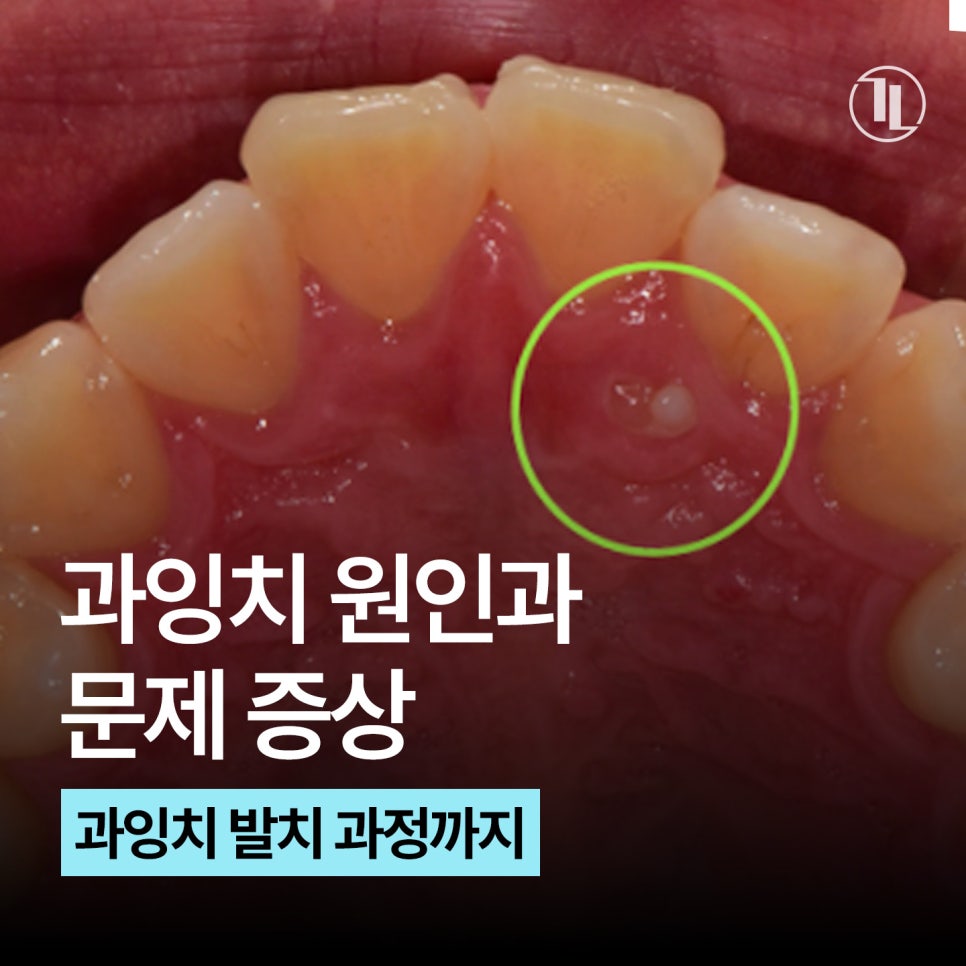
Teeth That Develop in Greater Numbers Than Normal
: Supernumerary Teeth
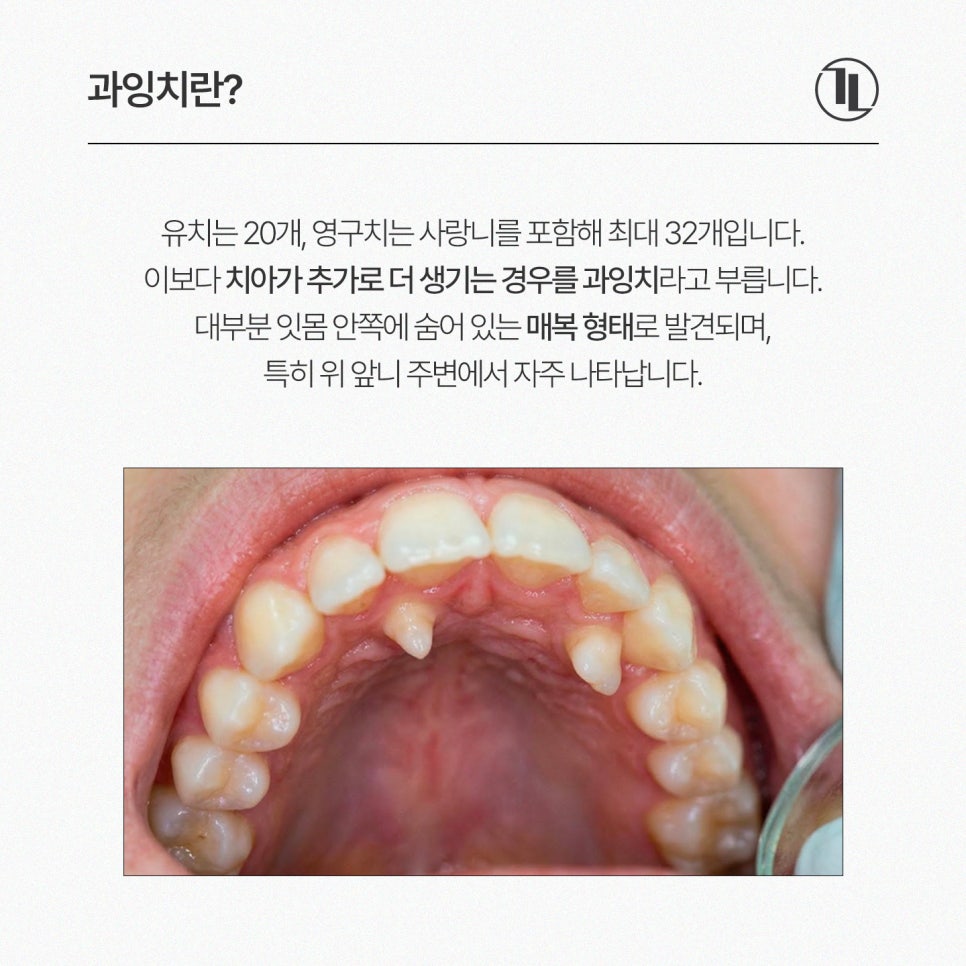
Supernumerary teeth refer to teeth
that develop in addition to the normal number of teeth.
People generally have
20 primary teeth and up to 32 permanent teeth,
including the wisdom teeth.
When additional teeth develop beyond this number,
they are called supernumerary teeth.
They are usually discovered
in an impacted form, hidden beneath the gums,
and are especially common around the upper front teeth.
📌 Characteristics of Supernumerary Teeth
Causes of Supernumerary Teeth
Although the exact cause has not been clearly identified,
they are generally believed to develop
under the influence of the following factors:
✔️ Genetic factors (family history)
✔️ Problems during growth and development
✔️ Abnormalities in tooth development
They are particularly likely to be discovered
when there is a family history.
How Are Supernumerary Teeth Discovered?
Because supernumerary teeth are usually
impacted beneath the gums,
it is difficult to know whether they are present
under normal circumstances.
However, they are often discovered through dental examinations
after symptoms appear, such as
permanent teeth failing to erupt normally
or the teeth becoming misaligned.
👧 Suspected Signs of Supernumerary Teeth in Children
-
One front tooth erupts later than the other
-
The front teeth erupt crooked
-
Gaps develop between the teeth
🔻
Examinations frequently show that a supernumerary tooth
is blocking the path of a permanent tooth as it erupts.
They are often discovered through X-rays
during the early years of elementary school.
👨 Discovery of Supernumerary Teeth in Adults
Supernumerary teeth are often discovered
while taking X-rays for purposes such as these.
🔻
Some people remain unaware of them because they have no symptoms,
but depending on their location,
they may also cause inflammation
or become a source of pain.
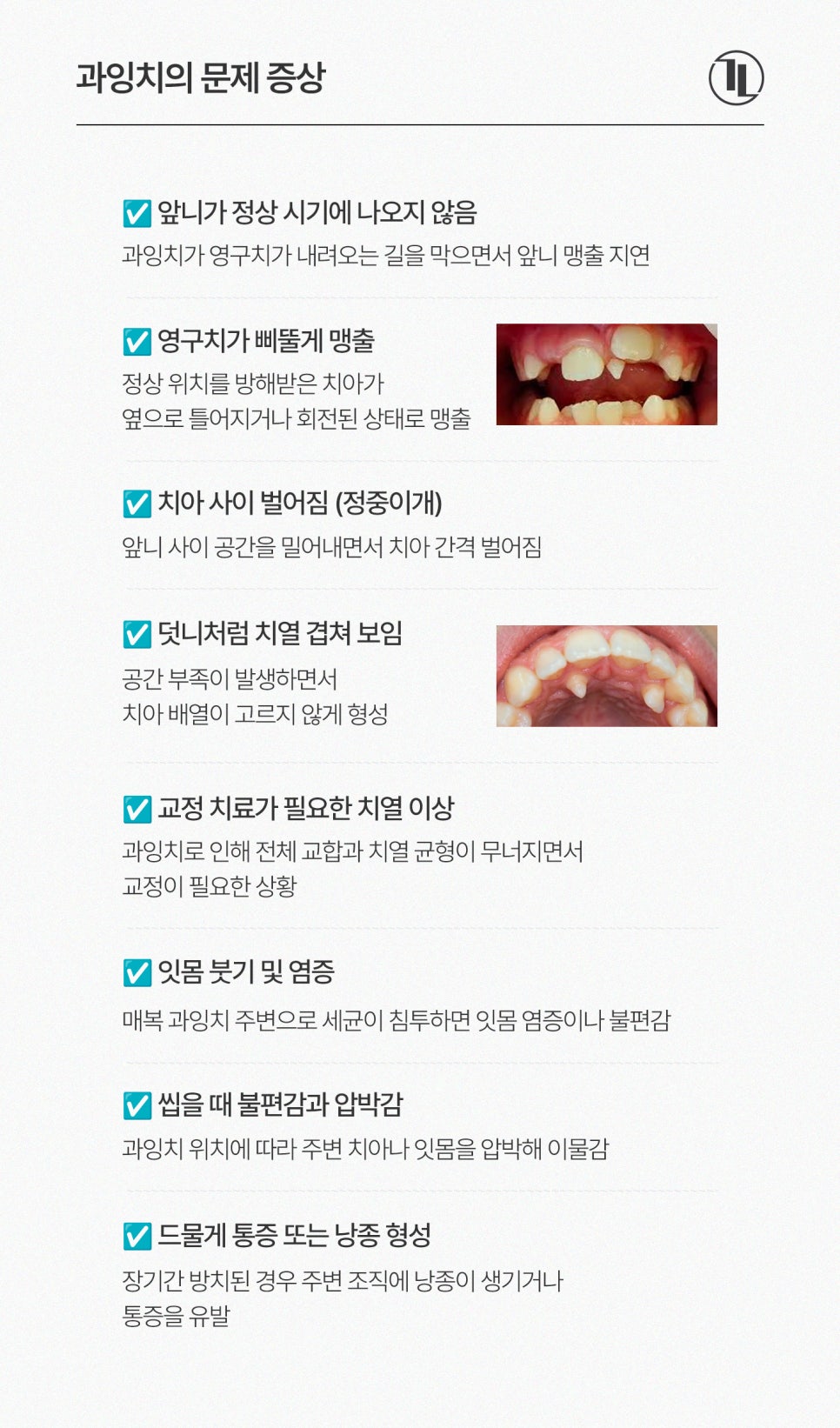
Problems Caused by Supernumerary Teeth
Depending on their direction and impacted state,
supernumerary teeth can affect the surrounding teeth and gums
and cause various symptoms.
In particular, if they remain impacted,
they may lead to alignment problems or inflammation,
so caution is needed.
✅ Front Teeth Do Not Erupt at the Normal Time
A supernumerary tooth can block the path of a permanent tooth,
which may delay the eruption of the front teeth.
✅ Permanent Teeth Erupt Crooked
A tooth whose normal position is obstructed
may erupt tilted to the side or rotated.
✅ Gaps Between the Teeth (Midline Diastema)
The space between the teeth may widen
as the supernumerary tooth pushes the front teeth apart.
✅ Teeth May Overlap, Resembling Crowding
When insufficient space develops,
the teeth may form an uneven arrangement.
✅ Misalignment Requiring Orthodontic Treatment
Supernumerary teeth can disrupt the overall bite and alignment,
leading to a situation in which orthodontic treatment is needed.
✅ Gum Swelling and Inflammation
If bacteria enter the area around an impacted supernumerary tooth,
gum inflammation or discomfort may occur.
✅ Discomfort and Pressure When Chewing
Depending on its location, a supernumerary tooth may press against
nearby teeth or gums, causing a sensation of something being present.
✅ Rarely, Pain or Cyst Formation
If left untreated for a long time,
a cyst may form in the surrounding tissue,
or pain may occur in some cases.
🔻
Not everyone with a supernumerary tooth
will develop all of the symptoms described above.
However, extraction may be considered
when there is a risk of movement of the surrounding teeth
or inflammation.
Do Supernumerary Teeth Always Need to Be Extracted?
The question most frequently asked after receiving a diagnosis
of a supernumerary tooth is whether extraction is absolutely necessary.
To begin with the conclusion, not every supernumerary tooth
must be extracted.
In some cases, monitoring the tooth over time
may be safer than extraction.
The criteria for extracting a supernumerary tooth are
whether it is currently causing problems
and whether there is a possibility of future risks.
🟢 When Extraction Is Not Performed
-
When there is no effect on the surrounding teeth
-
When the surgical risk is greater because it is close to a nerve or tooth root
-
When there are no signs of inflammation at all
-
When it has remained symptom-free for a long time
🔴 When Extraction Is Necessary
-
When it interferes with the eruption of a normal tooth
-
When it causes the teeth to become misaligned
-
When there is a risk of inflammation or cyst formation
-
When pain or pressure is present
In other words, the decision to extract
is made by comprehensively assessing the location and direction
of the supernumerary tooth, as well as the surrounding structures.
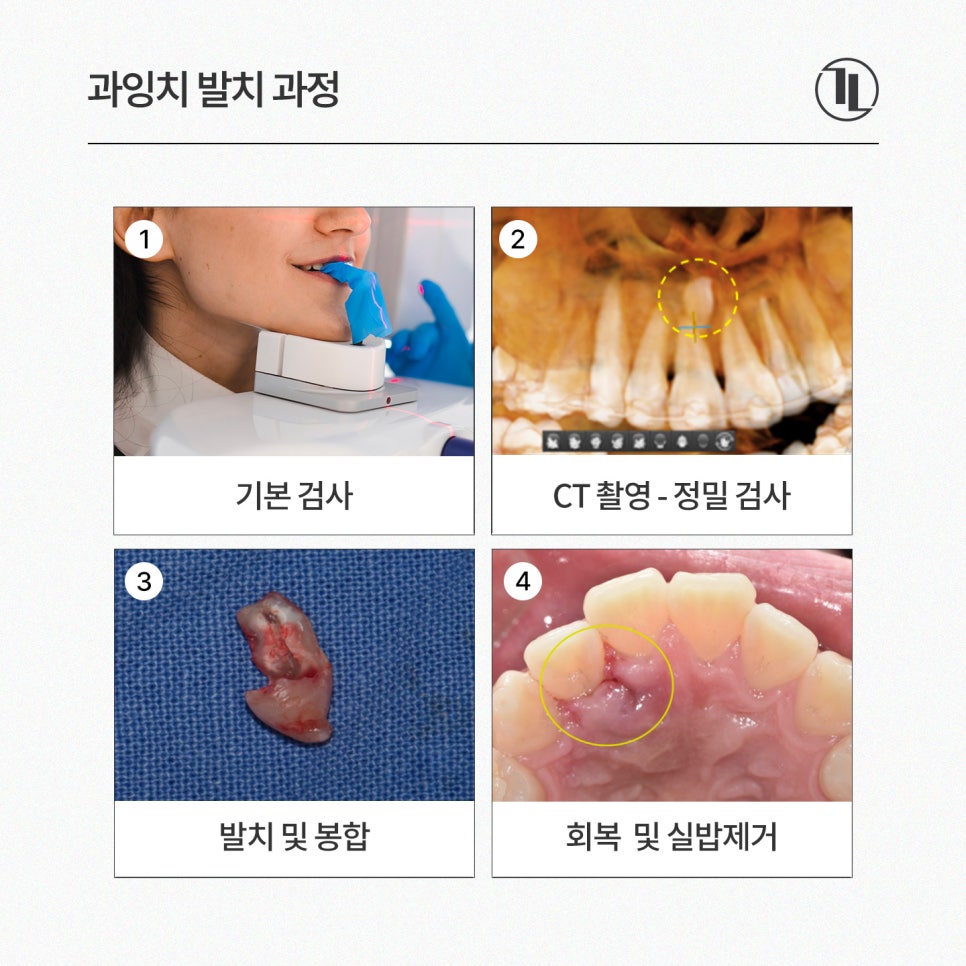
Diagnosis and Extraction Process for Supernumerary Teeth
Because most supernumerary teeth are impacted
and often hidden deep inside the gums,
an accurate diagnosis is more important than a simple extraction.
In particular, the extraction plan is based on CT imaging
because it is necessary to accurately confirm the tooth’s relationship
with the surrounding teeth and nerves.
The treatment method and recovery process may also vary
depending on the location and depth of the supernumerary tooth.
① Initial Examination - Identifying and Locating the Supernumerary Tooth
A panoramic X-ray is used
to determine whether a supernumerary tooth is present.
Along with confirming its presence,
the examination identifies its ▲approximate location, ▲direction,
and ▲relationship with the surrounding teeth.
② CT Scan - Detailed Examination
A three-dimensional CT scan is performed
to examine the depth of the supernumerary tooth
and the surrounding structures.
Detailed information that is difficult to determine
with a two-dimensional panoramic X-ray is assessed,
including ▲the exact location of the tooth, ▲distance from the nerve,
▲depth, and ▲direction and angle.
③ Decision on Extraction and Treatment Planning
Based on the imaging results and symptoms caused by the supernumerary tooth,
the need for extraction is determined
and a treatment plan is established.
④ Extraction and Suturing
After administering local anesthesia,
the tooth is extracted according to the treatment plan,
and the area is sutured.
⑤ Recovery
Following the provided instructions,
you return approximately one week later
to have the sutures removed.
Precautions After Supernumerary Tooth Extraction
To promote a smooth recovery after extraction,
early care is important.
✔️ Avoid using straws
✔️ Avoid hot and irritating foods
✔️ Refrain from strenuous exercise and saunas
✔️ Avoid alcohol and smoking for one week
✔️ Continue taking prescribed medications
✔️ Minimize irritation to the surgical site when brushing your teeth

Supernumerary teeth are often discovered
when children have problems with the eruption of their front teeth
or during CT examinations in adults.
Not every supernumerary tooth must be extracted,
but even if there are no symptoms at present,
changes may occur over time.
Therefore, professional evaluation is very important
to determine the current condition
and what may happen in the future.
If your child’s front teeth are erupting late
or you are preparing for an examination before orthodontic treatment,
checking whether a supernumerary tooth is present
may be helpful.






Previous image
Next image