Being advised to get more dental veneers during a consultation does not automatically mean it is overtreatment. (Samsung-dong dental clinic)
Hello. I am Kim Hangyeol, director of Smileview Dental Clinic near Sinnonhyeon Station.
After graduating from Yonsei University, I have been practicing for 16 years, specializing in aesthetic treatment for front teeth.
> “I was only concerned about my two front teeth, but when I went for a consultation, they suggested doing all eight.”
If you have had a similar experience while looking into dental clinics, I hope today’s article will help you organize your thoughts.
After looking closely at front teeth for 16 years, I have noticed something.
The moment patients feel most anxious in the consultation room is not when the treatment plan becomes larger, but when they are not told why it became larger.
If you are reading this, you may have reopened the search window wondering, “Am I being misled?”
Let me say this first: the fact that the number of teeth has increased alone is not enough to make a judgment.
The deciding factor is whether the plan has a clear rationale behind it.
If you read for just three minutes, you will come away with several questions that you can ask during a consultation to check that rationale yourself.
Here is one guideline to keep in mind.
If, after hearing the explanation, you can explain the reason to someone else in your own words, then you have understood it.
If you cannot, it is not yet time to make a decision.
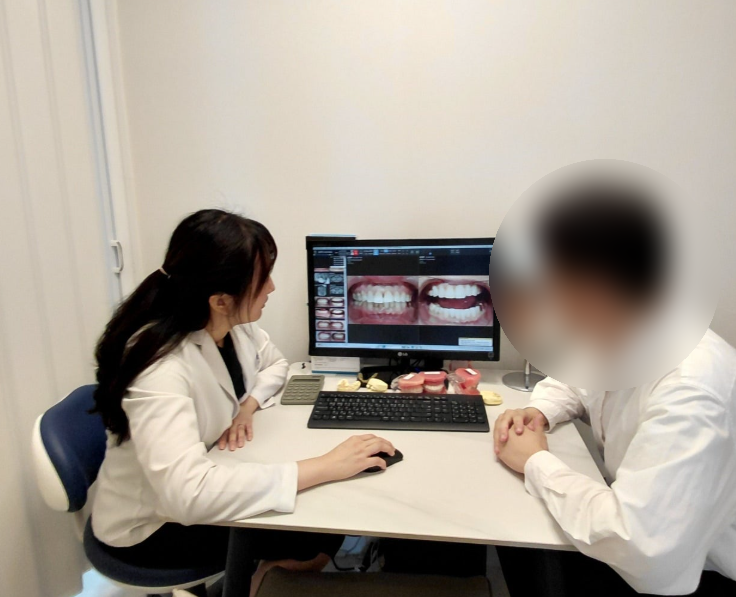
When a treatment plan expands during a dental consultation, what should you check first?
You went in to look at only two teeth, but the plan grows to six or eight.
In this situation, arguing over the number itself is not particularly useful.
There is just one thing you need to ask:
Why was each additional tooth included?
Sometimes, if the neighboring teeth are a different color, treating only two teeth can make the boundary visible. In other cases, the treatment area may need to be expanded for a more stable result because of the way the teeth come together.
When there is a clear rationale, this is not simply an expansion—it is treatment planning.
On the other hand, if the only explanation you receive is, “It looks better if we do them all,” you do not have to make a decision on the spot.
There is another point that is easy to miss.
When you ask why the number increased, does the clinician’s expression become tense, or do they turn on the scanner and show you?
The reaction can often be more telling than the answer.
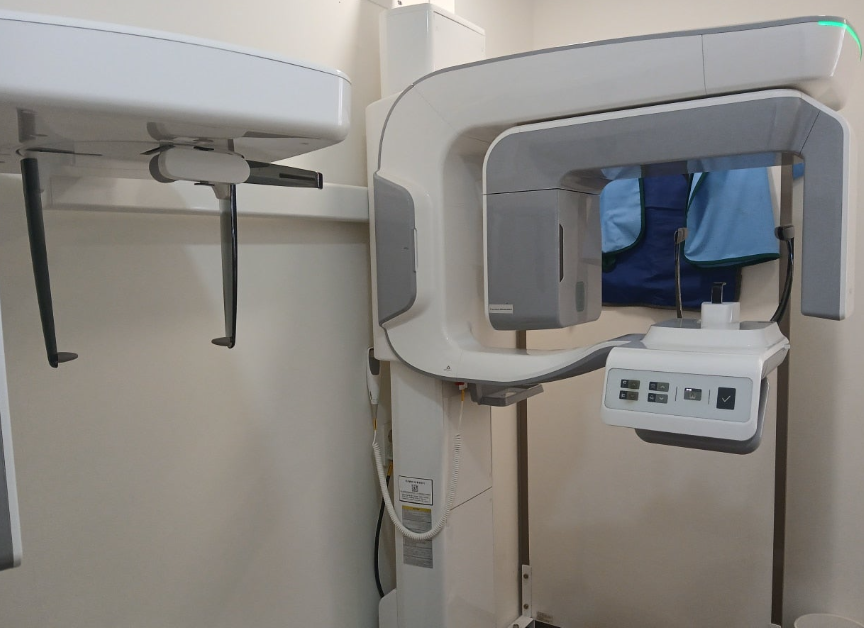
What if you are urged to hurry even though it is not the right time to proceed?
You may have come in because your front teeth concern you, but there may be something else that needs to be addressed first.
For example, tooth decay may still be progressing, or inflammation may remain in the gums.
If you create a new outer surface first in this situation, it is like leaving a leaking pipe unrepaired and simply redoing the wallpaper on the ceiling.
People who grind or clench their teeth also need to consider the order of treatment.
Thin ceramic shells can crack or come off under repeated force.
The same applies to a plan that attempts to cover malocclusion requiring tooth extraction—meaning a condition in which the alignment and bite of the teeth do not match—with the outer surfaces of the front teeth.
If a plan begins with aesthetic treatment without addressing these conditions, ask about those issues before asking about the number of teeth.
Treatment that merely covers up the problem can later result in sensitivity, detachment, or gum problems.
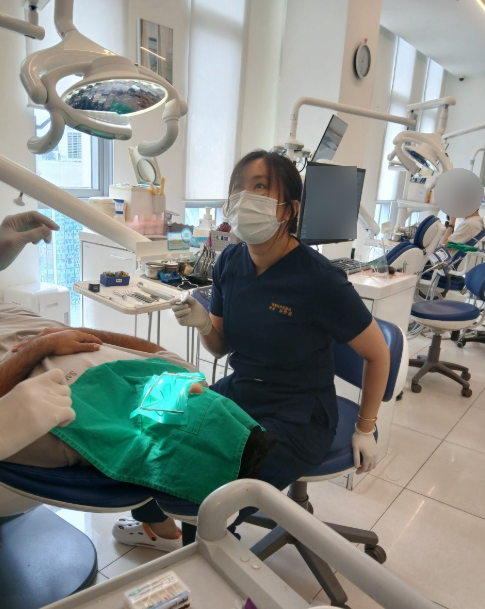
At exactly what point does excessive tooth reduction for veneers begin?
This is what people considering veneers worry about most.
Excessive reduction occurs less because the clinician’s hand is rough and more because they begin reducing the teeth without first deciding what the final result should look like.
Without a clear goal, there is a tendency to create more space than necessary.
That is why reversing the order can help.
First record the current condition with an intraoral scanner, a device that scans the inside of the mouth in 3D, and establish harmony with the face shape, gum line, and neighboring teeth through DSD, a design process that previews and shows the intended final appearance.
It is easier to make a decision when there is a process of wearing provisional restorations for several days and adjusting the shape.
Minimal-preparation or no-preparation veneers involve slightly reshaping the teeth or barely touching them at all.
Honestly, this approach is not suitable for every case.
If the natural teeth already protrude, applying it forcefully can make them look bulky.
Sensitivity, detachment, gum irritation, discoloration, and fracture may occur depending on the individual.
Once a tooth has been reduced, it cannot be reversed.
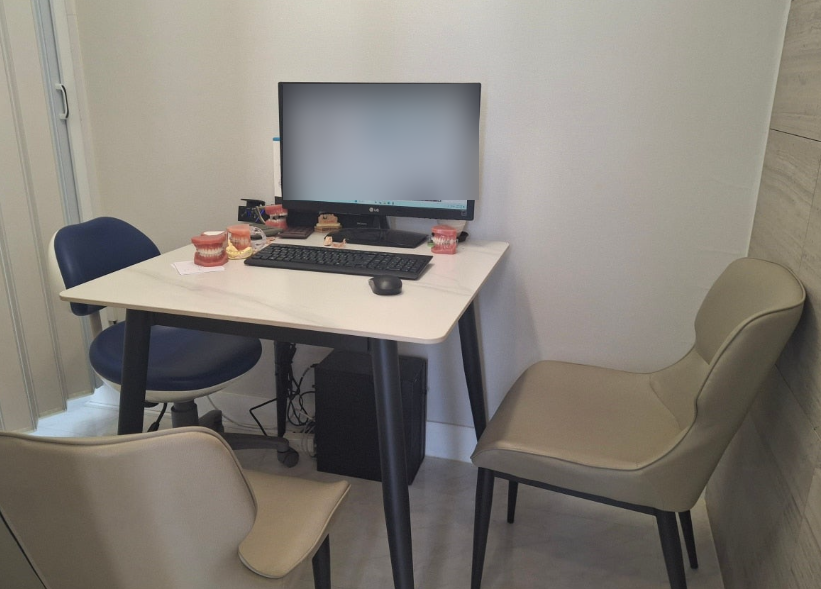
How is a pushy consultation different from an explanatory one?
Last month, a woman in her 30s came to me with a plan for six veneers.
After examining her, I found that the line could be matched by reshaping only two teeth, so I explained that and sent her home.
I tell people when something does not need to be done.
When I think of the teeth as belonging to a member of my own family, that is the first thing I say.
The same points apply when considering veneers.
- Whether the amount of reduction is explained only verbally or shown with scans and a simulation
- Whether they work with you to find ways to reduce the amount of tooth reduction
- Whether there is a process of trying the fit in advance with provisional restorations
Also pay attention to whether the clinic explains why you do not need to proceed right away.
You can make a better judgment by seeing whether they point out cases in which a less invasive option, such as teeth whitening, may be sufficient.
Be sure to check whether they explain the schedule for follow-up care as well.
This is not a treatment that simply ends once the veneers are attached.
Identifying overtreatment is not a matter of suspicion—it is a matter of asking questions.
Ask these three questions—why each tooth is included, how much it will be reshaped, and whether now is the right time—and most things will become clear.
Long-lasting results should come before simply looking attractive.
That is why I tend to spend a long time on consultations, and why I often tell patients that they do not have to decide today.
Just checking whether the consultation includes a preliminary diagnosis and simulation can make your choice much clearer.
I hope this helps those who felt uneasy because their treatment plan became larger, and those who hesitated because they wondered whether two teeth might be enough.
The choice is yours.
Thank you for reading this long article.
< Related articles >
| Smileview Dental Clinic near Sinnonhyeon Station |
|---|
| Monday–Wednesday, Friday (10:00–18:30) Saturday (10:00–15:00) * Closed on Thursdays, Sundays, and public holidays |
| TEL : 0507-1398-7529 |

#SamsungdongDentalClinic #SamsungDentalClinic #DentalVeneers #NumberOfVeneers #OvertreatmentDentalClinic #DentalOvertreatment #DentalOvertreatmentConsultation