Hello.
I’m plastic surgeon Ban Ho-kyung, whose specialty is eye surgery and whose strongest field is revision eye surgery.
I started writing columns to help patients make the right choices, and there is a phrase I repeat again and again in my posts.
"Eye plastic surgery must be done properly from the very beginning."
In fact, I want to shout this through a loudspeaker so many times that it should be engraved in your ears.
As those who have heard about our clinic know, we see many revision surgery patients. More precisely, they come to us to fix eye surgery that was done incorrectly at another clinic. Among them, there are especially many patients seeking revision under-eye fat repositioning, and it is clear that many have been through a lot emotionally.
At this point, some of you may be thinking, "Isn’t it because they went to a clinic that doesn’t reinforce the septum?"
Those who have looked into under-eye fat repositioning surgery probably know that the procedure should include septum reinforcement to maintain the result for a long time, but the shocking part is this:
Some of the patients who relapsed after just one year had undergone surgery that included septum reinforcement.
Then why does under-eye fat recur even after going through the septum reinforcement step?
Let’s get to the main point.
Why under-eye fat recurs even after septum reinforcement
- One question that can help you avoid revision under-eye fat repositioning
- The surgery may have been the wrong choice
The most important thing is whether the surgery was appropriate for my eye condition in the first place.
Under-eye fat repositioning is a procedure that releases protruding fat, repositions it, and fills in hollow areas to create a flatter under-eye area.
At this time, if there is significant skin laxity or weak support from the tissues around the eyes, simply repositioning the fat and reinforcing the septum may not be enough.
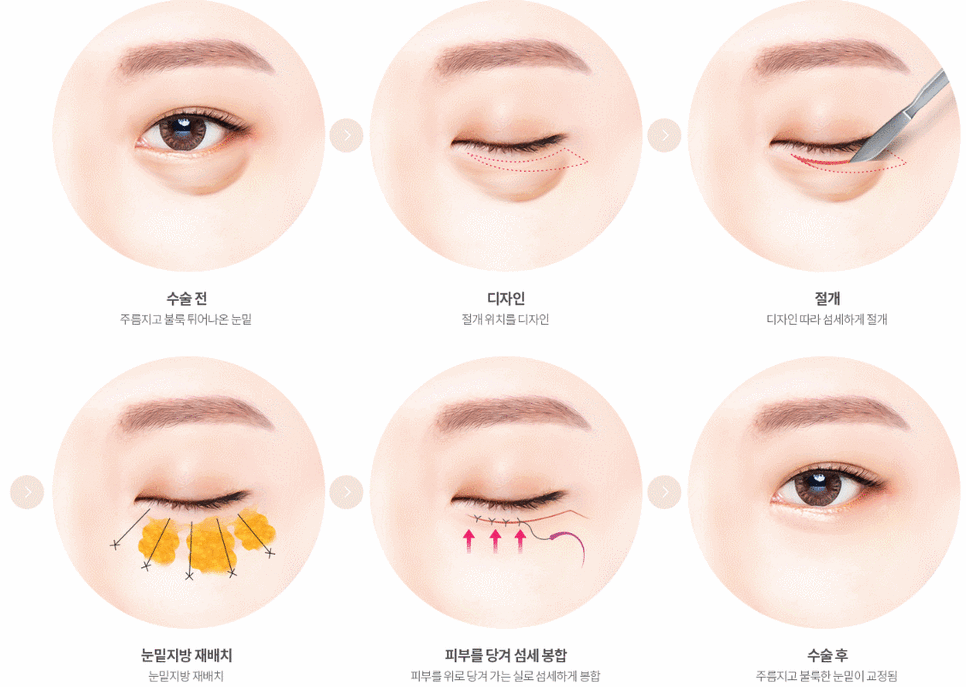 Under-eye lower blepharoplasty process
If skin elasticity has dropped significantly, or if the muscles and tissues supporting the eye area are inherently weak, then simply releasing and relocating the fat will not improve sagging skin. In such cases, lower blepharoplasty, which removes skin, is needed.
How can I tell whether I need lower blepharoplasty?
There is a fairly simple self-check method.
If the lower eyelid does not turn inside out when you pull the under-eye skin downward, then lower blepharoplasty is the appropriate option. If there is sagging, the skin is gathered and does not turn inside out.
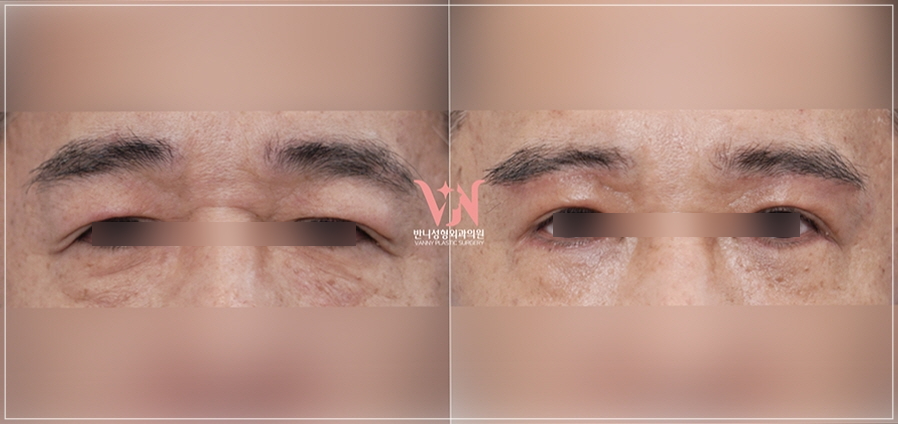 Lower blepharoplasty + brow lift
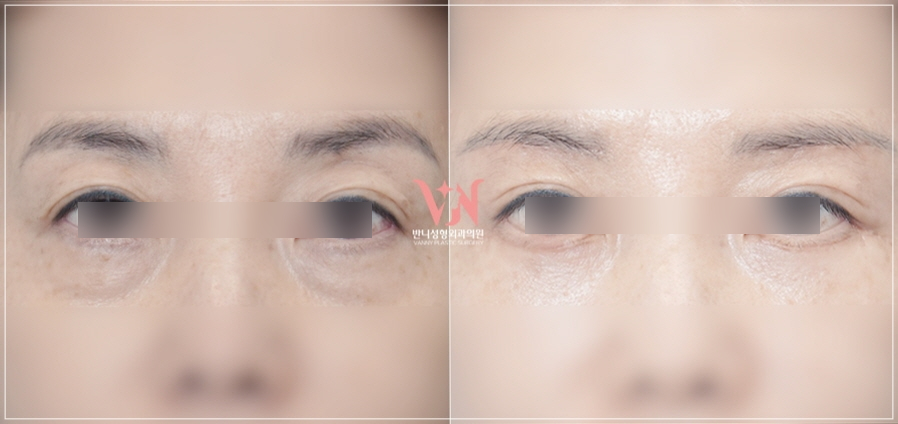 Lower blepharoplasty + brow lift
- Technical errors by the medical team or limitations of the suturing method
What if I’m not at an age where under-eye skin sagging normally appears, and I had septum reinforcement but the condition recurred?
That’s right. Something went wrong during the surgery itself.
- Improper tension and incorrect placement during suturing
The septum plays an important role in supporting the under-eye fat.
If the sutures are weak or not secured with proper tension, they can stretch again over time.
In addition, if the septum is fixed lower than it should be, or if the sutures sit loosely, the tissue may not settle firmly, increasing the chance that the fat will protrude again.
It may look fine immediately after surgery, but soon afterward it returns to its original state.
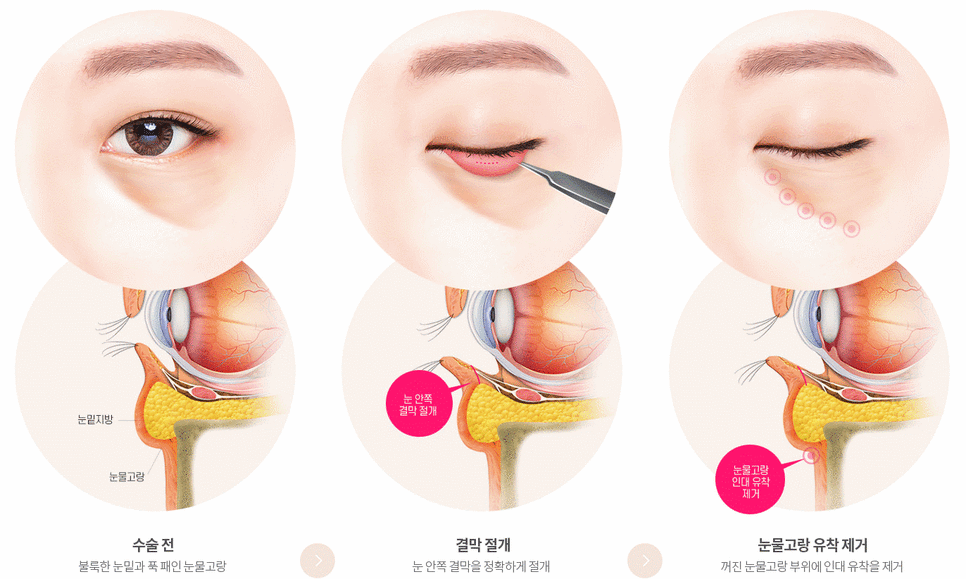
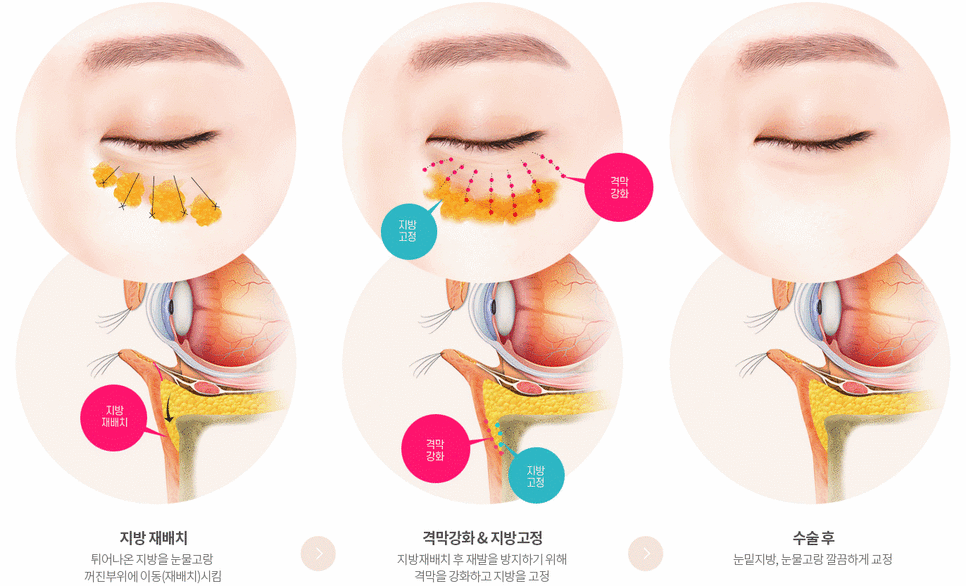
- Failure to adequately secure the septum to the periosteum
When reinforcing the septum, it must be firmly anchored to the periosteum of the under-eye bone. Only then can loosening of the tissue be prevented.
If this step is not done properly, the tissue becomes loose over time and the fat is pushed downward, leading to recurrence.
Securing the septum firmly to the periosteum is a fairly difficult process.
Because the septum itself is a very thin and delicate tissue, it is not easy to stitch it precisely in the right place with the proper tension.
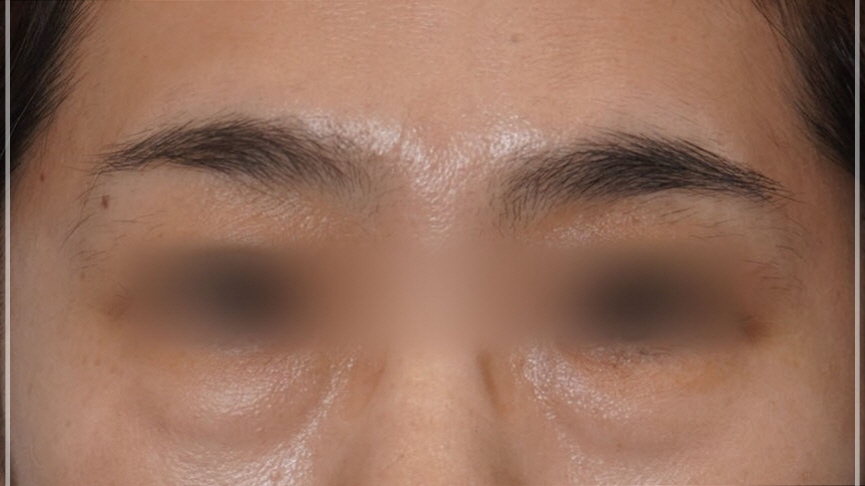 Before under-eye fat repositioning
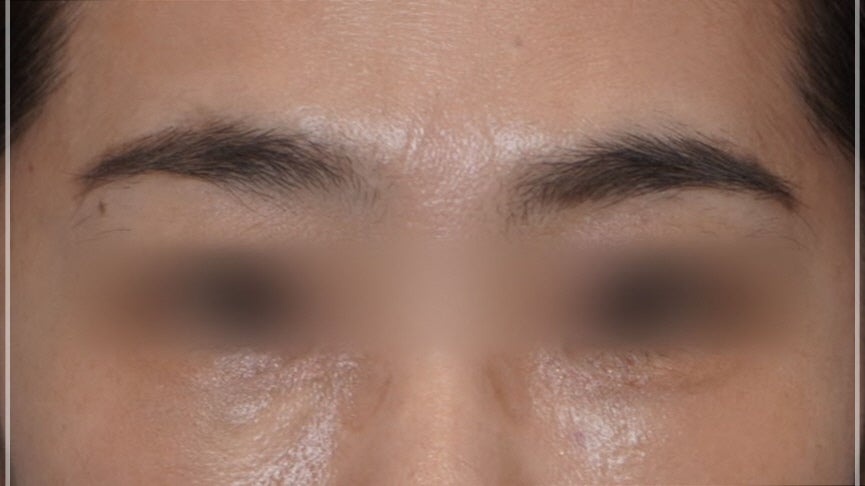 1 month after under-eye fat repositioning
In particular, when fixing it to the periosteum, the surgeon must adjust the force and position so that the tissue can settle naturally. If too much force is used in this process, the tissue is pulled and becomes unnatural; on the other hand, if the force is too weak, it may stretch again over time.
Also, because the under-eye structure varies greatly from person to person, the same method cannot be applied to every patient. A tailored approach is needed each time, so differences in surgical outcomes inevitably depend on the surgeon’s skill.
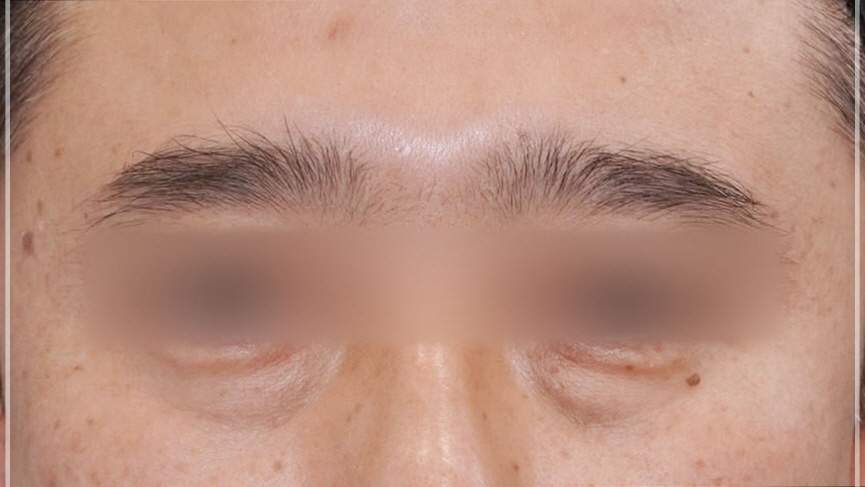 Before under-eye fat repositioning
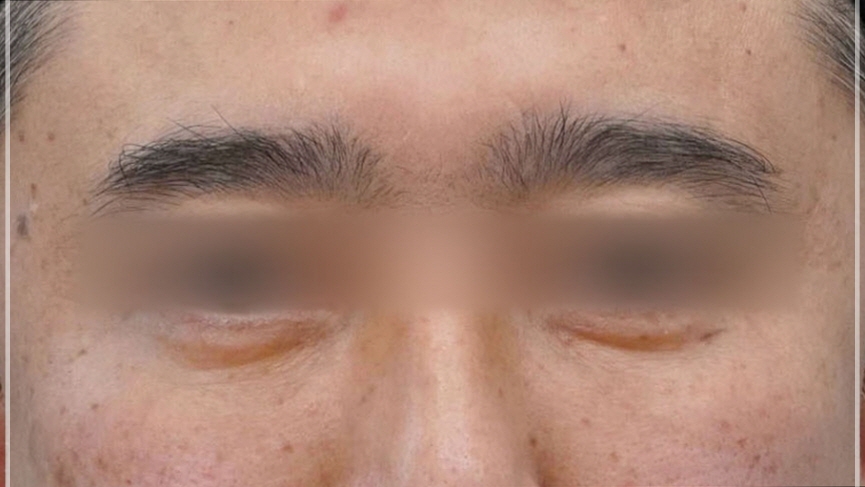 1 month after under-eye fat repositioning
- Uneven fat repositioning
If the fat is not spread evenly when repositioned and instead shifts to one side or clumps in a specific area, one side may hollow out while the other becomes bulgy again over time. If the fat gathers in one place and then gradually moves downward, it may look as if the surgery was done incorrectly.
When moving the fat, it should be spread thinly and distributed naturally. Fat is not simply moved and left there; it must blend well with the surrounding tissue, and the degree of completion can vary depending on the surgical technique.
- Failure to adequately release the under-eye groove ligament
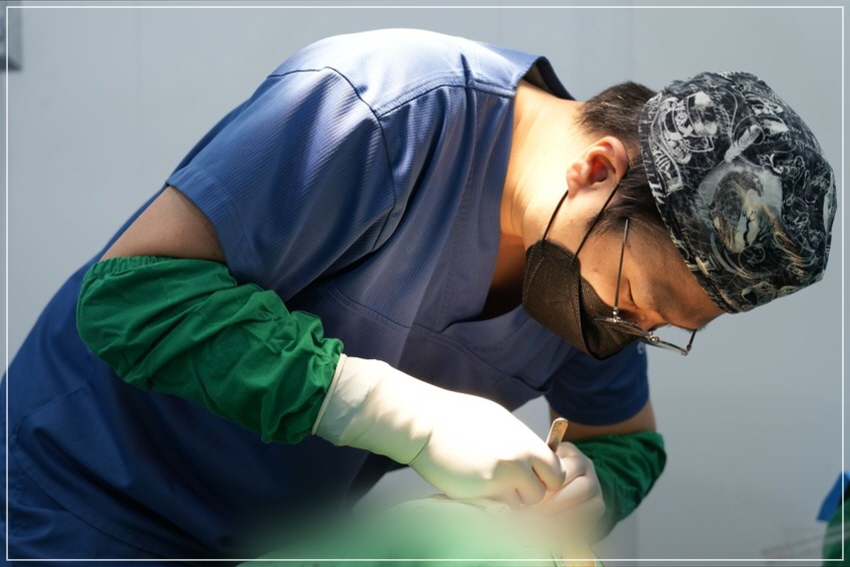
If the under-eye groove ligament is not sufficiently released, the issue may be less recurrence and more that the surgical effect is not as good as expected.
The under-eye groove ligament forms the boundary between the under-eye area and the cheekbone, and it supports the skin by connecting it to deeper tissues. If fat is repositioned while this ligament remains tight, the fat may not spread naturally, and the under-eye area may not appear smoothly connected.
For the fat to distribute evenly, there should be no physical barrier. But if the ligament remains in place? Exactly. The fat cannot spread evenly.
As a result, even if the fat is moved, the area may not be filled sufficiently, so the under-eye area can still look hollow after surgery and the expected result may be difficult to achieve.
However, if too much of the ligament is released, the tissue can become loose and sagging may occur, so it is important to adjust the degree appropriately according to the patient’s anatomical structure.
So do you need to check all of the above during the consultation?
Then should you ask during the consultation whether the sutures are placed at the correct location with proper tension, whether the septum is firmly fixed to the periosteum, whether the fat is evenly repositioned, and whether the under-eye groove ligament is sufficiently released?
That is not necessary.
The reason recurrence can happen even after septum reinforcement is more varied than you might think.
It may be that the surgery was the wrong choice from the start, or that recurrence occurred due to technical limitations or mistakes during surgery.
Just remember that not all septum reinforcement is the same.
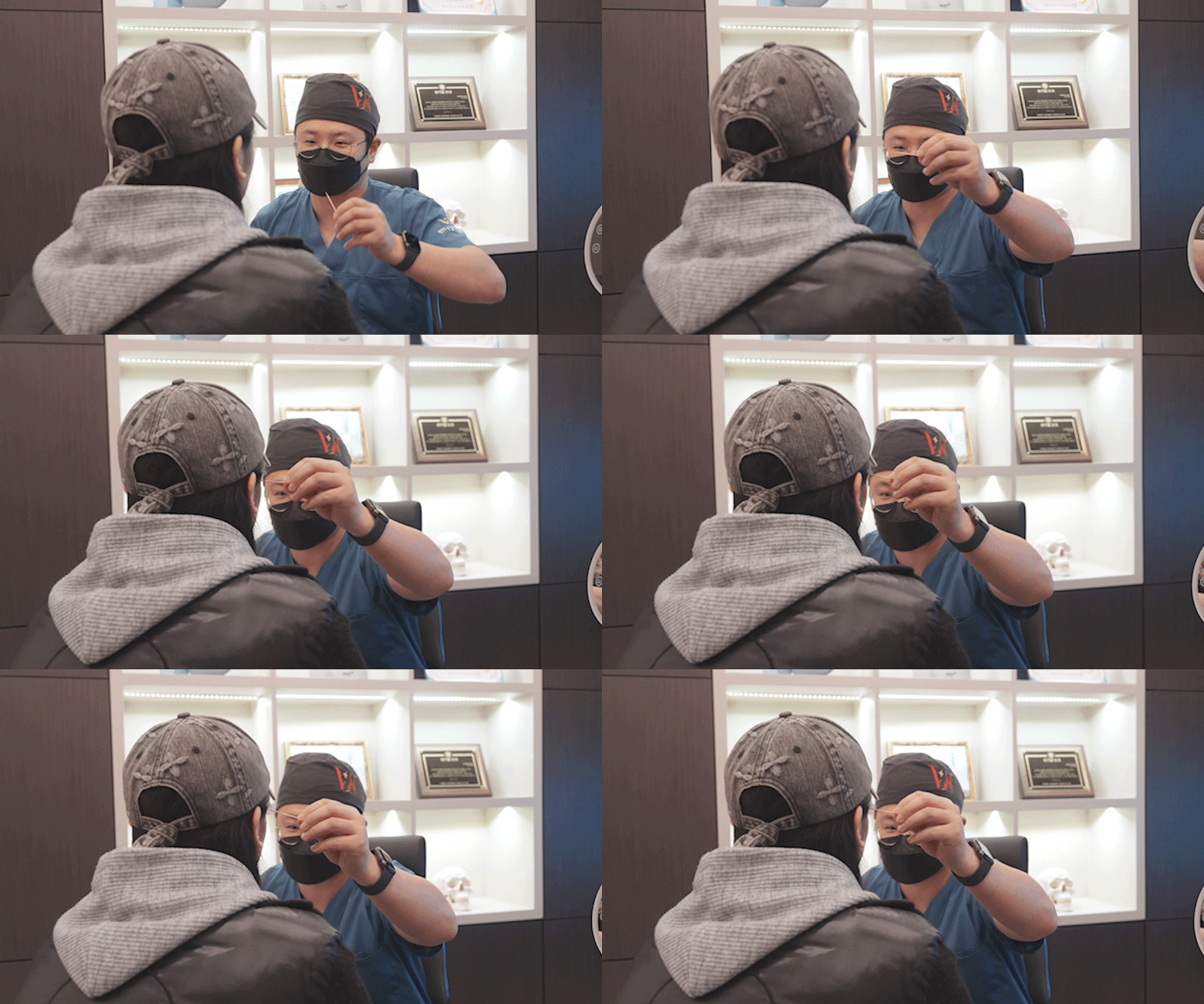
There is only one thing you need to ask during the consultation.
"Is there any chance it could recur in about a year?"
"It’s very rare, but maybe about 1 in 100 people could experience that. However, we provide aftercare for N years after surgery, so there is nothing to worry about."
You should avoid clinics that say things like this.
A medical team that truly knows how to perform proper under-eye fat repositioning surgery will not see recurrence in just one year, even if a mistake happens during surgery. And if a mistake does happen, the surgeon who performed the operation will know it best and will handle the situation cleanly.
A recurrence after one year? No.
And if possible, go to a plastic surgery clinic that handles not only under-eye fat repositioning, but also lower blepharoplasty, upper blepharoplasty, brow lift, and all other eye-related procedures.
Protruding under-eye fat is not caused by fat alone; it can also result from reduced skin elasticity, weakened muscles and ligaments, and overall changes in the eye structure.
A clinic that takes a comprehensive approach to eye plastic surgery can accurately identify the cause and the best way to improve it, considering not just the under-eye fat issue but the overall eye structure as well. It does not always have to be solved with under-eye fat repositioning alone.
Today’s conclusion
Simply saying "we reinforce the septum"
cannot guarantee the outcome of the surgery.
The details of septum reinforcement vary from clinic to clinic.
Not every plastic surgeon has the same technique.
In medical school, you do not directly learn detailed surgical methods such as under-eye fat repositioning surgery. Of course, you do learn plastic surgery techniques during residency, but the finer details of surgical methods are established through each doctor’s own clinical experience and research.
Even if the surgery has the same name, the results can differ depending on the surgeon.
Therefore, even if your surgery date is delayed a little, take your time to learn enough and make a careful decision.
Whatever the procedure, the most important thing is to receive it properly from the start.
That’s why you choose Ban, this is Ban Ho-kyung.
Thank you.
[Why there is no consultation fee at Ban-ni (+Dr. Ban Ho-kyung’s philosophy)]
https://blog.naver.com/rush_724/223776150003