Hello.
This is Ceramic Dental Clinic at Hag-dong Station, a place that does well in orthodontic treatment.
In these days, often called the era of 100-year lifespans,
not only people in their 40s,
but also those who start teeth straightening in their 50s after age 50
are increasing.
In fact, at our Ceramic Dental Clinic,
there are also increasing cases of parents who came in with their child for the child’s orthodontic treatment
and then started orthodontic treatment together with their child,
and beyond their 40s,
people in their 50s to 60s are also receiving orthodontic treatment.
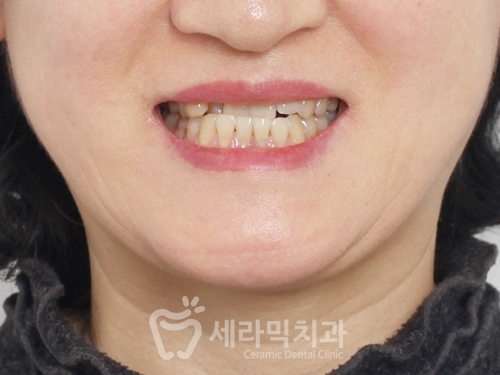
Teeth straightening in your 50s, orthodontics at 40
What are the reasons for the increase in middle-aged orthodontic treatment among people in their 40s, 50s, and 60s?
Longer life expectancy / forward inclination of the teeth
There can be various reasons for the increase in middle-aged orthodontic treatment.
- Longer life expectancy
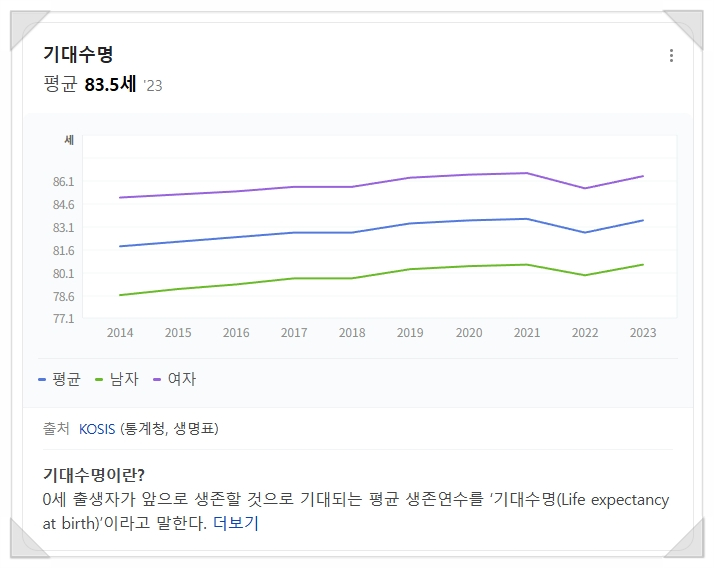
The average lifespan, or life expectancy,
was 62 years in the 1970s,
but now it is considered to be around 84 years.
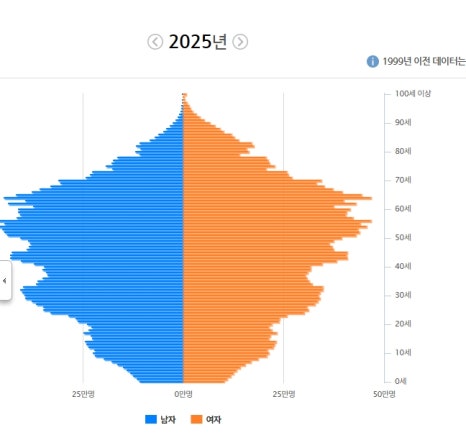
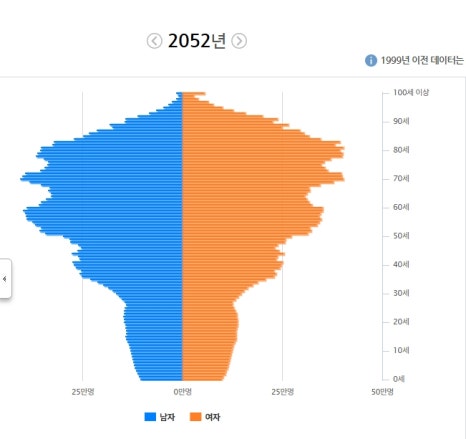
Meanwhile, according to Statistics Korea data,
27 years from now in 2052,
the population aged 80 and older is estimated to exceed 8 million.
(It seems this would apply to people who are 53 or older in 2025.)
Since there are still many years ahead to live,
it is only natural to pay more attention to dental health and appearance in your 40s, 50s, and 60s.
When your teeth are healthy, you can freely eat delicious food and healthy food,
and the straighter your teeth are, the younger and healthier you tend to look.
- Forward inclination of the teeth
Separate from the increase in life expectancy mentioned above,
our bodies undergo a process of change called "aging" as we get older.
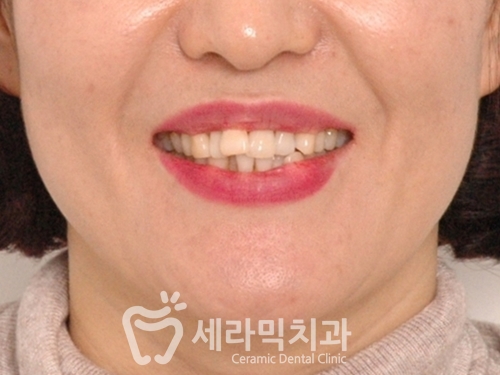
Many people worry that the teeth that were straight when they were young
become more protruded forward,
or seem increasingly crooked as they age.
The occlusal force of the teeth (the force used by the teeth and jaw for chewing)
is structured to apply force toward the front (the lip side).
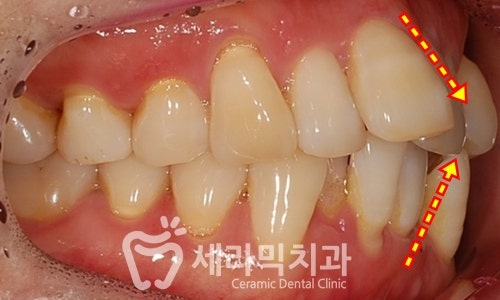
Even people who had a normal bite when they were young,
receive forward pressure from occlusal force over several decades,
When you are young, the gums and bone are sturdy enough to resist the forward force,
but as you get older, the gums and bone weaken,
making it harder to withstand the forward force of occlusion,
and as a result, the front teeth become crooked or protrude forward,
and gaps also form between the front teeth.
Effects of orthodontic treatment after your 40s and 50s
Although there are differences depending on the type of malocclusion,
when you undergo orthodontic treatment in your 50s,
▷ Functionally
-
Brushing is done better, improving the health of the teeth and gums
-
The teeth’s natural chewing ability (mastication) also improves,
and digestion becomes easier.
Also,
even if you later get an implant,
the better the bite alignment,
- the longer the implant and the surrounding teeth can remain healthy.
▷ Aesthetically
- Straighter teeth create a younger
and healthier appearance.
Teeth straightening in your 40s to 50s,
what is different from orthodontic treatment for adolescents in their growth period?
During adolescence and the growth period, cell metabolism is active,
and bone resorption and formation are also active,
so when orthodontic treatment is performed, tooth movement is faster
and the treatment period becomes shorter.
Compared with adolescence and the growth period,
the cellular activity in orthodontic treatment in the 40s and 50s is lower,
so tooth movement speed may be slower,
and discomfort or pain caused by tooth movement
tends to be a little more severe.
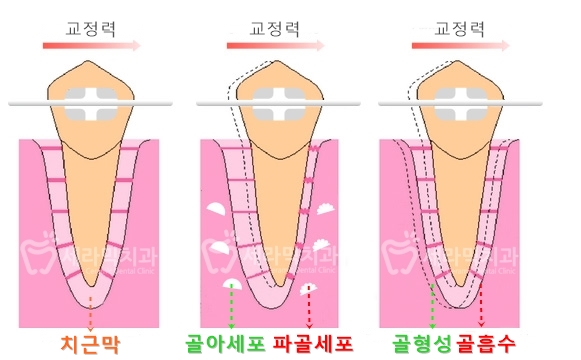
(For more detailed information about bone resorption and bone formation,
please refer to the post below.)
Even for people in their 40s or 50s, if their gums are healthy,
orthodontic treatment is fully possible,
and compared with people in their 20s and 30s, the treatment period and results
do not differ greatly.
Things to note when proceeding with orthodontic treatment in your 50s
⊙ If you have severe gum disease,
⊙ severe osteoporosis or diabetes,
⊙ severe bleeding disorders or temporomandibular joint disorders,
⊙ a disease that can affect the jawbone, or
⊙ if you are taking medication that can affect bone metabolism,
it is better not to start orthodontic treatment right away.
✅ If you are taking osteoporosis medication,
because it has the effect of making bones stronger,
tooth movement may not be easy.
✅ Diabetes is a chronic disease that makes blood sugar control difficult,
and because it can cause gum inflammation
or slow the healing process,
the risk of gum damage or inflammation may increase during orthodontic treatment.
Therefore,
if you are starting orthodontic treatment in your 40s to 50s,
while consulting with an orthodontic specialist,
you must be sure to provide detailed information about your own conditions and any medications you are taking.
Case of before-and-after teeth straightening in your 50s
The main person in today’s before-and-after case of teeth straightening in the 50s is a woman in her late 50s,
who started orthodontic treatment because she wanted to improve her crooked teeth
and the crossbite of her front teeth.
Her daughter also had orthodontic treatment at Ceramic Dental Clinic,
and because she was very satisfied with the results,
she later started treatment as well.
(1) Profile of the before-and-after orthodontic case in the 50s
▶️ Age at start of orthodontic treatment: late 50s
▶️ Reason for starting orthodontic treatment: irregular dentition
▶️ Expected treatment period: 15 to 18 months
▶️ Treatment method: non-extraction, ceramic braces
(2) Problem analysis, diagnosis
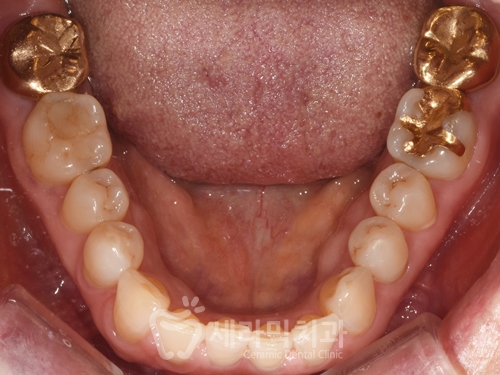
① Irregular dentition
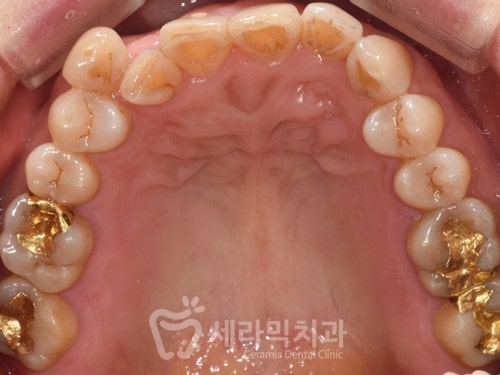
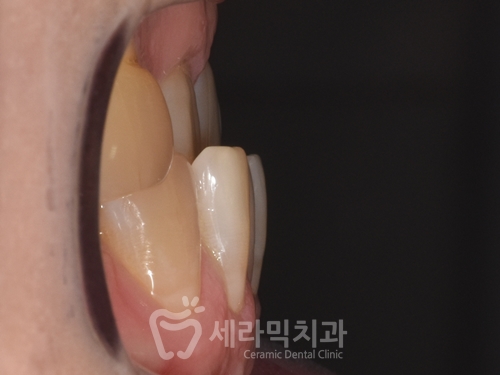
② Crossbite of the front teeth
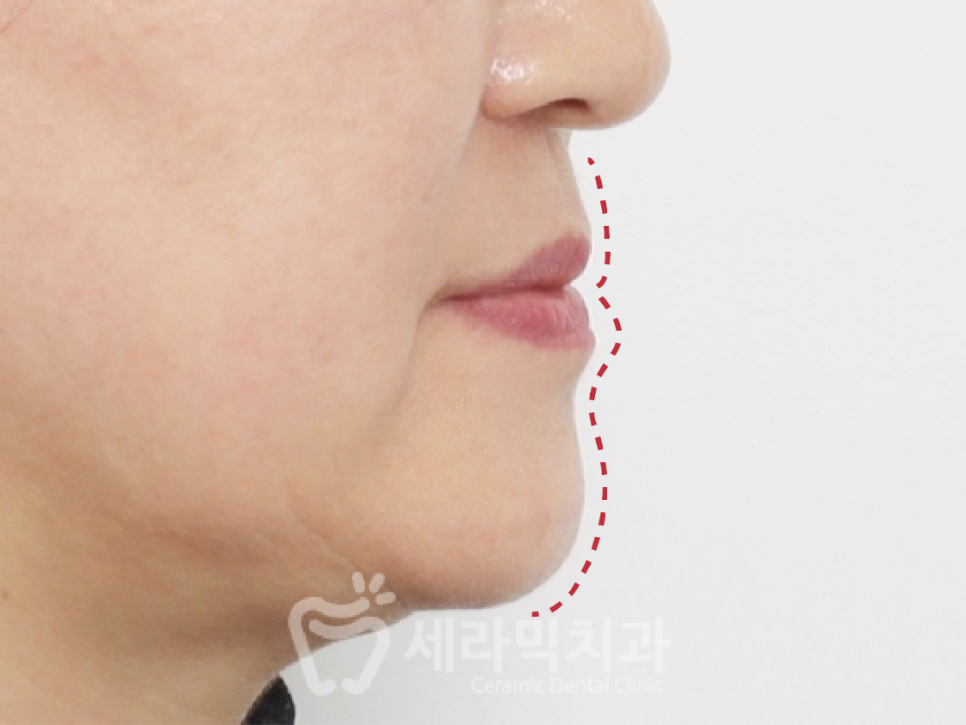
③ Tendency toward mandibular protrusion
(3) Treatment method
With the goal of improving tooth alignment and moving the upper front teeth outward,
we diagnosed the case as a "non-extraction orthodontic treatment."
To prevent the upper and lower crossbite from causing the orthodontic brackets to collide,
a special appliance called a 'Posterior Bite Plate' is attached.
(4) Treatment results of orthodontic treatment in the 50s
(Actual orthodontic treatment period: 16 months)
① Improvement of irregular dentition
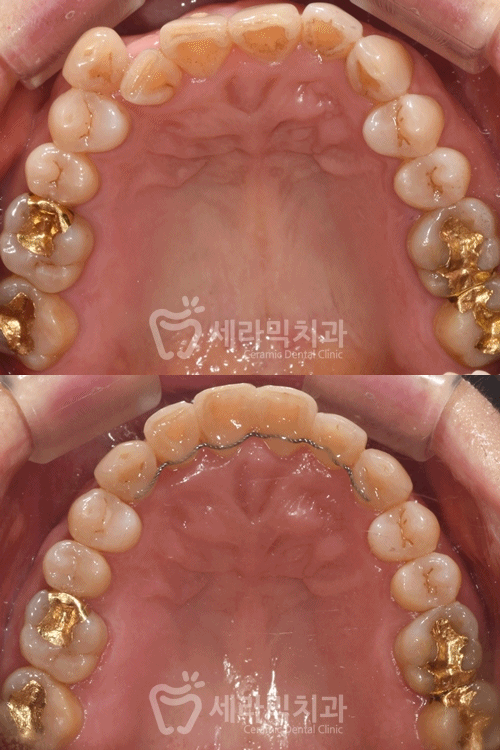
The crooked, uneven teeth were improved into a straight alignment.
② Improvement of the front-tooth crossbite
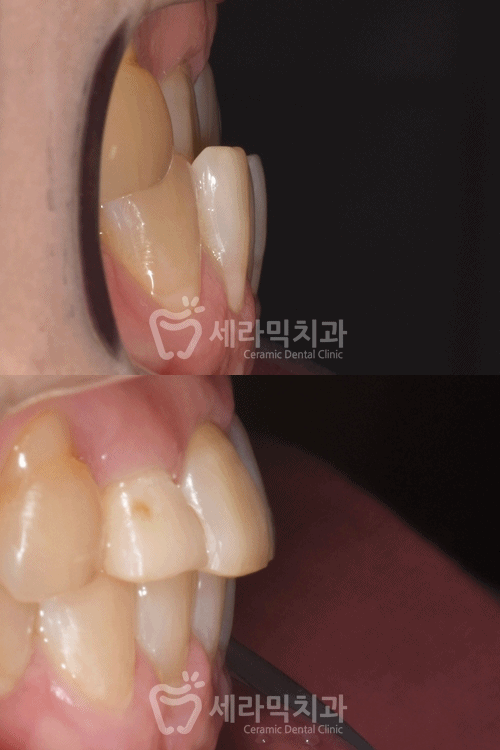
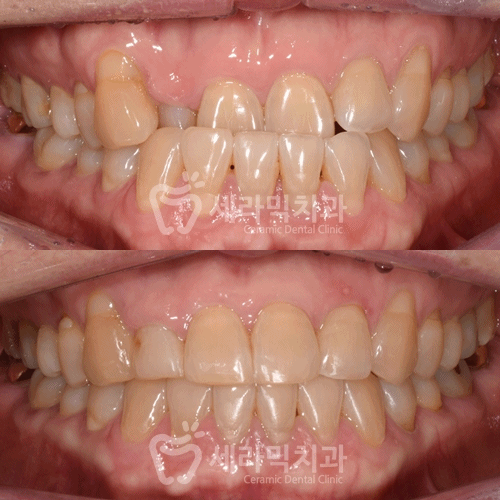
The crossbite, in which the lower front teeth were covering the upper front teeth,
was improved to a normal bite.
③ Effect of improving the tendency toward mandibular protrusion
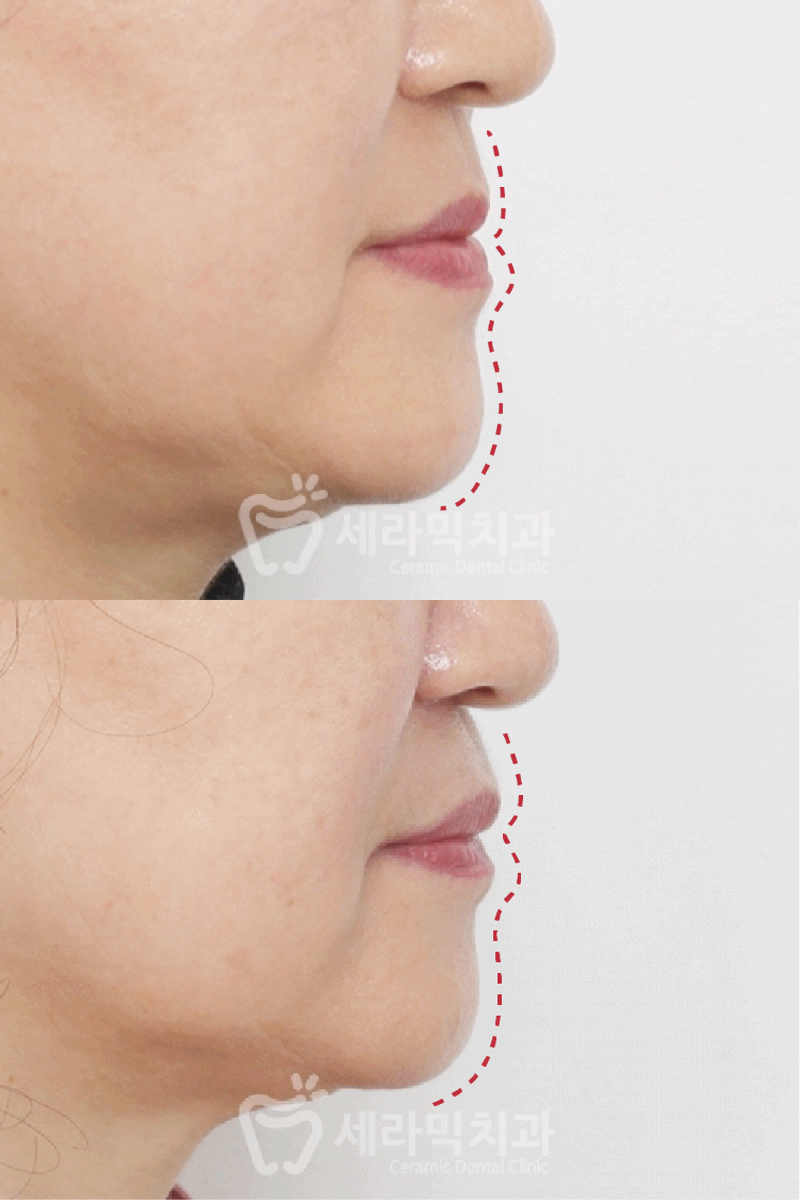
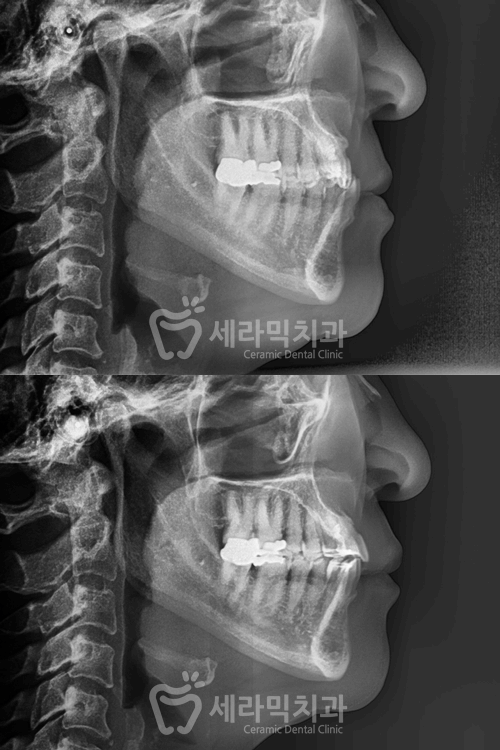
※ The protruding jaw itself was not pushed backward.
As the upper teeth and gums, which had been pushed inward,
moved to a balanced position through orthodontic treatment,
the line from the philtrum to the lips
and the upper lip gained volume,
and the protruding tendency of the lower gums improved.
④ Special effect:
A natural and refined smile
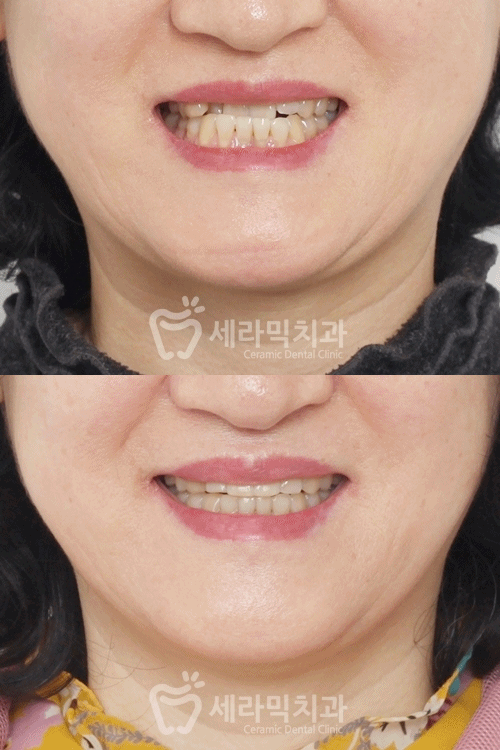
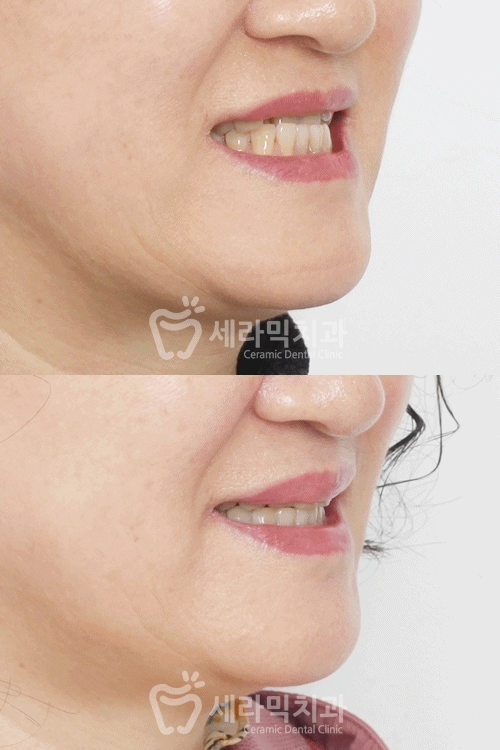
Before treatment, even when trying to part the lips and smile widely,
only the lower front teeth were visible, resulting in an awkward smile,
but through the orthodontic treatment she had a hard time deciding to start in her 50s,
she gained a more natural and refined smile.
Today we looked at before-and-after orthodontic treatment in the 50s,
and a case of crossbite and irregular dentition!
Compared with orthodontic treatment in adolescence and the growth period,
there are more things to consider at the stage of starting treatment,
but we were able to confirm that the positive effects and satisfaction after orthodontic treatment
are very high.
If you are thinking about orthodontic treatment in your 40s, 50s, or 60s?
Don’t hesitate to consult an orthodontic specialist~!
(Click the button below!!)

Ceramic Dental Clinic
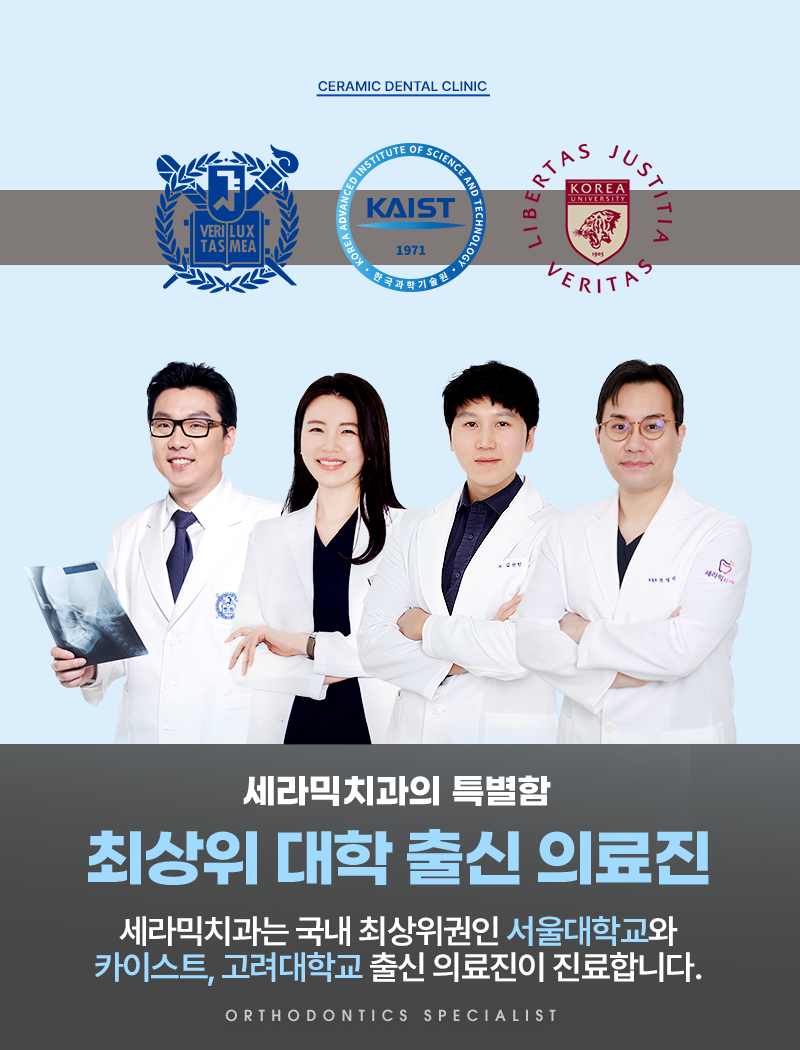
treatment is provided by medical staff from top-tier universities in Korea,
and all orthodontic medical staff are
Ministry of Health and Welfare-certified 'orthodontic specialists.'





Previous image
Next image





Previous image
Next image