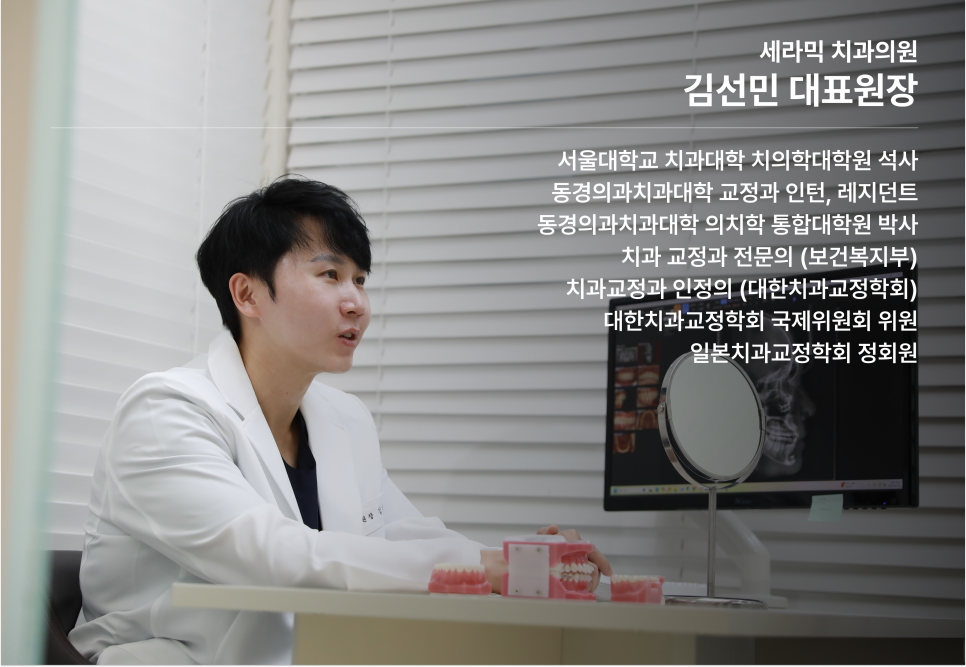
Hello, I’m Dr. Kim Seon-min, director of Ceramic Dental Clinic at Eonju Station. Today, I’d like to talk about teeth whitening, which many people are interested in.
As coffee in a café and a glass of wine after work have become part of everyday life, many people are increasingly concerned about tooth discoloration. You may have wondered at least once, “Can I have white teeth like a celebrity?” Teeth whitening comes in more varieties than you might think, and each type has different effects and precautions.
In this post, I’ll carefully cover everything from how teeth whitening works to the features of each type, side effects, and how to maintain the results. If you are considering whitening, reading to the end will be helpful.
What Is Teeth Whitening
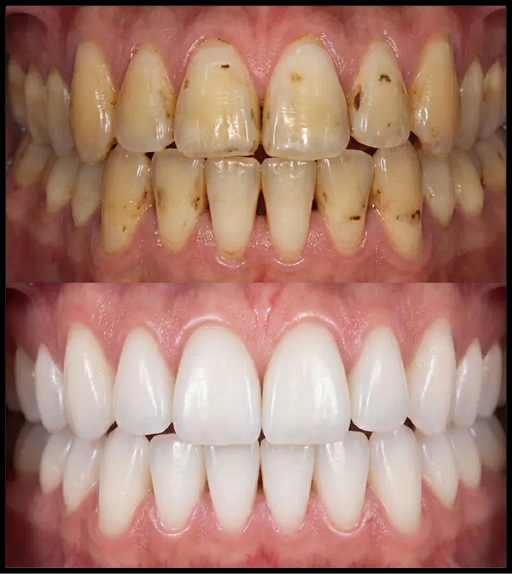
Teeth whitening refers to a procedure that chemically brightens discolored or stained teeth. Rather than simply shaving down or covering the tooth surface, whitening agents break down pigments inside the tooth to naturally change them to a lighter color.
The key ingredient in whitening is hydrogen peroxide. This ingredient penetrates the outer layer of the tooth (enamel) and the inner layer (dentin), where it oxidizes and breaks down pigments. In simple terms, you can think of it as chemically removing the yellow pigments that have built up inside the teeth.
So in what cases is whitening needed? Typical causes of discoloration include the following:
-
Food and drinks: dark-colored foods such as coffee, wine, curry, and chocolate
-
Smoking: staining caused by nicotine and tar from cigarettes
-
Aging: the natural yellowing of teeth that occurs over time
-
Medication: discoloration caused by tetracycline antibiotics and similar drugs
Here is an important concept: the difference between extrinsic discoloration and intrinsic discoloration. Extrinsic discoloration refers to color staining on the tooth surface caused by coffee, smoking, and so on, while intrinsic discoloration refers to discoloration inside the tooth itself caused by medication or aging. Extrinsic discoloration responds relatively well to whitening, but intrinsic discoloration is more difficult to treat and requires professional consultation.
- Professional Whitening (Office Whitening)
Professional whitening, commonly called office whitening, is a whitening procedure performed directly by a dental professional at the clinic. Its biggest feature is the use of high-concentration hydrogen peroxide. Because it uses a much stronger concentration than products used at home, faster and more noticeable results can be expected.
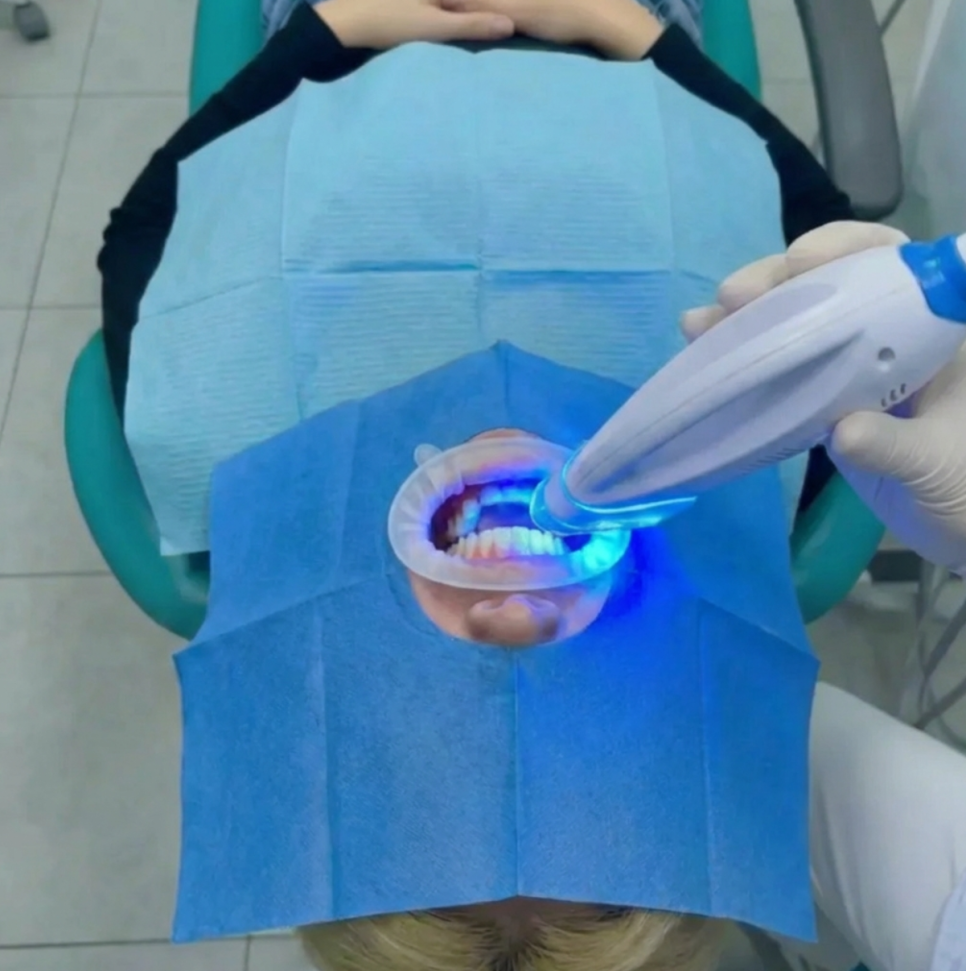
Professional whitening: a high-concentration agent is applied at the clinic, and LED may be used.
The biggest advantage is that results appear immediately.
To briefly explain the procedure, a gum barrier is applied first to protect the gums. This step is very important because high-concentration whitening agents can irritate the gums if they come into contact with them. After that, whitening gel is applied to the tooth surface, and a light source such as LED, laser, or halogen is used to enhance the whitening effect.
| Item | Details |
|---|
| Agent used | High-concentration hydrogen peroxide |
| Procedure time | About 30 minutes to 1 hour per session |
| Number of sessions | Usually repeated 1 to 3 times |
| Effect | Brightens by about 2 to 4 shades immediately after the procedure |
| Suitable for | People who want fast results |
The greatest advantage of office whitening is the immediate effect. Since you can see a noticeable change right after the procedure, it is especially recommended for those who want to brighten their teeth quickly before an important event or interview.
- Home Whitening (At-Home Whitening)
At-home whitening, or home whitening, is a method in which a custom tray is made at the dental clinic and then used directly at home. After visiting the clinic to have a clear tray made to fit your tooth shape exactly, you place whitening gel in the tray and wear it.
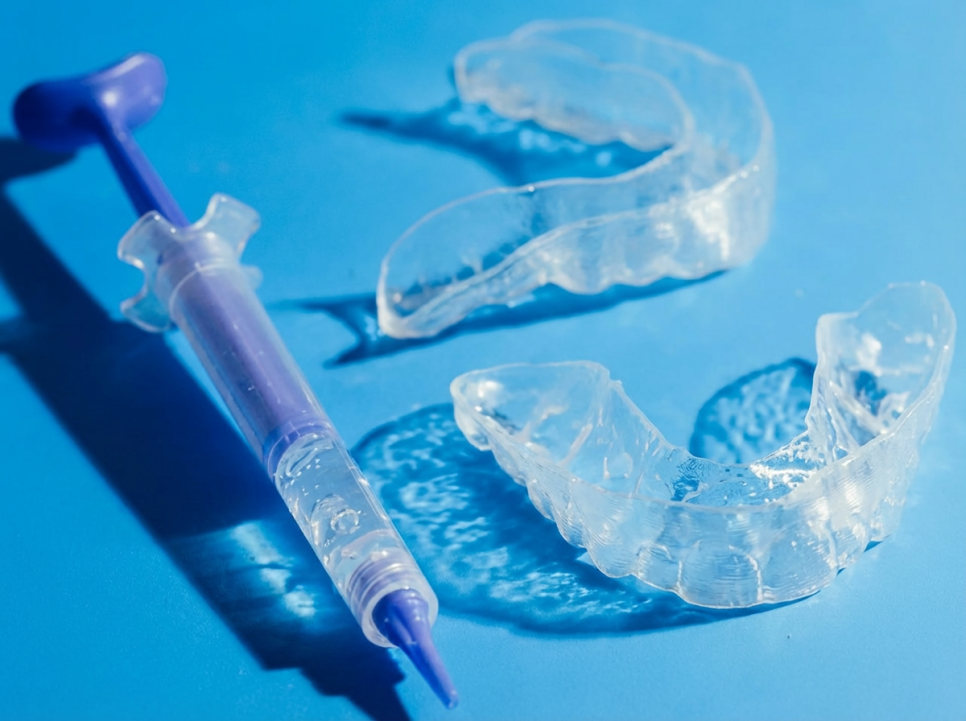
Home whitening: just apply whitening gel to this tray and wear it on your teeth.
Unlike office whitening, it uses a medium-concentration hydrogen peroxide. Because the concentration is lower, irritation is reduced, but it takes longer for results to appear. Usually, it should be used consistently for 2 to 8 hours a day, including during sleep, for about 2 to 4 weeks.
| Item | Details |
|---|
| Agent used | Medium-concentration hydrogen peroxide |
| Usage time | 2 to 8 hours daily |
| Usage period | About 2 to 4 weeks |
| Effect | Gradual and natural whitening |
| Suitable for | People who want a natural-looking change |
The advantage of home whitening is that it produces gradual, natural-looking results. In addition, combining office whitening and home whitening into “dual whitening” can maximize the effect. The idea is to brighten the teeth strongly once at the clinic and then maintain and supplement the result with home whitening.
However, it is important to follow the instructions and concentration exactly as directed by the dentist. If you think, “The longer I wear it, the whiter it will get,” and use it excessively, the sensitivity may become worse, so caution is needed.
- DIY Whitening (OTC Products)
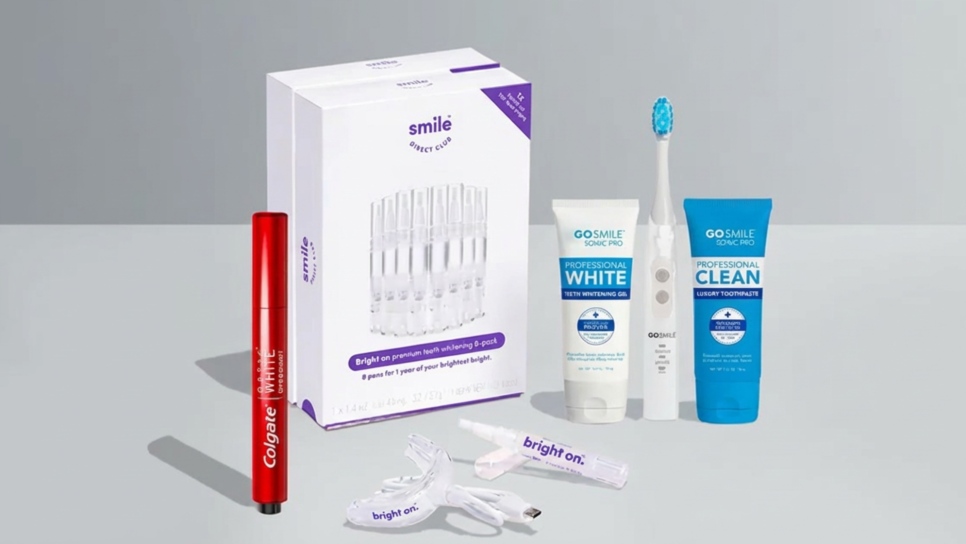
DIY whitening products that are easily available on the market
These days, there are many over-the-counter whitening products that can be easily purchased at pharmacies or online. Here is a summary of the main types of DIY whitening products.
| Product type | Features | How to use |
|---|
| Whitening toothpaste | Contains abrasives and low-concentration whitening ingredients | Use just like regular toothbrushing |
| Whitening strips | Film coated with hydrogen peroxide | Attach to teeth and leave on for a set time |
| Whitening pen / whitening gel | Easy application products | Apply directly to the tooth surface |
DIY whitening products are convenient and accessible, but because their agent concentration is lower than that of professional whitening or home whitening, the effect is limited. Whitening toothpaste may help remove some surface stains, but it is difficult for it to improve discoloration inside the tooth.
One thing to be especially careful about is that improper use can cause gum irritation or uneven whitening results.
If whitening strips cover the gums or do not adhere evenly to the teeth, the result may become patchy, with only certain areas becoming brighter. Even if you use DIY whitening products, it is recommended to get a dental consultation beforehand.
Side Effects and Precautions of Teeth Whitening
Whitening is a relatively safe procedure, but there are side effects and precautions you should be aware of.
The most common side effect is temporary sensitivity (tooth hypersensitivity). Whitening agents can stimulate the nerves as they penetrate the teeth, but in most cases this disappears naturally within a few days after the procedure. If the sensitivity is severe, it can be relieved by using desensitizing products prescribed by the dentist.
Gum irritation also requires caution. If the whitening agent comes into direct contact with the gums, redness or pain may occur. In office whitening, this is prevented by applying a gum barrier, but with DIY whitening there is no such protective measure, so extra caution is needed.
One important point! Restorations such as crowns, laminate veneers, and resin fillings do not whiten.
Only natural teeth become lighter, while restorations keep their original color, which can create a color difference between the restorations and the natural teeth after whitening. If you have restorations, it is best to consult your dentist before whitening.
Also, for 48 hours after whitening, you should avoid staining foods and drinks such as coffee, curry, wine, and cola, as well as smoking. This is because immediately after whitening, the tooth surface is temporarily dehydrated, allowing pigments to penetrate more easily. If you manage this period well, you can maintain the whitening effect for longer.
How to Maintain Whitening Results for a Long Time
If you spent a lot of money on whitening, you will probably want to keep the results for as long as possible. Please try to follow these care tips consistently.
-
Reduce intake of stain-causing foods and drinks - Cut down on dark-colored foods and drinks such as coffee, black tea, wine, and curry. When consuming them, it is a good habit to use a straw or brush your teeth right afterward.
-
Quit smoking - Smoking is one of the biggest causes of tooth staining. If you want to maintain whitening results for a long time, quitting smoking is the most effective measure.
-
Brush properly and use dental floss - It is important to consistently maintain basic oral hygiene.
-
Consider touch-up whitening - Doing a simple touch-up whitening every 6 months to 1 year can help maintain the results for longer. If you have a home whitening tray, using it briefly at regular intervals is also an option.
-
Get regular dental checkups and scaling - Regular scaling at the dentist helps remove surface stains and keep the teeth clean.
Frequently Asked Questions (FAQ)
Here are some questions that patients often ask about whitening.
Q. Is teeth whitening painful?
You may experience temporary sensitivity during or after the procedure. However, in most cases it disappears naturally within a few days, and if it is severe, it can be relieved with desensitizing treatment. Even if you are afraid of pain, there is no need to worry too much.
Q. How long does the whitening effect last?
It varies from person to person, but on average it lasts about 6 months to 2 years. It can vary greatly depending on lifestyle habits such as diet, smoking, and oral care. If you follow the maintenance methods mentioned above well, the results can last longer.
Q. Do resin fillings or crowns also whiten?
Unfortunately, restorations (resin, crowns, laminate veneers, etc.) do not whiten. Since only natural teeth become brighter, a color difference may occur, and if necessary, you may consider remaking the restorations after whitening to match the color.
Q. What is the difference between teeth whitening and scaling?
| Category | Scaling | Teeth whitening |
|---|
| Purpose | Remove tartar and plaque | Brighten the tooth color itself |
| Method | Physical removal (ultrasonic, etc.) | Chemical breakdown of pigments |
| Result | Restores the original tooth color | Changes to a brighter color than the original |
Scaling is a procedure that physically removes tartar and plaque attached to the tooth surface, while whitening is a procedure that chemically brightens the tooth color itself. Since the two have different purposes, better results can be achieved by whitening after cleaning the surface with scaling.
So far, we have looked at the types and effects of teeth whitening. In summary, the appropriate whitening method differs depending on the cause and degree of discoloration. If you want fast results, office whitening is a good choice; if you want a more natural change, home whitening is a good choice; and dual whitening, which combines both, is also a good option.
The most important thing is to get a dental consultation first for safe and effective whitening.
If whitening is performed while you have cavities or gum disease, it can cause problems, and the treatment plan also changes depending on whether restorations are present.
Whitening under a professional diagnosis is safer and more satisfying than indiscriminate DIY whitening. If you have any questions about teeth whitening, I recommend visiting a nearby dental clinic for a consultation. I hope all of you regain a bright and healthy smile. Thank you!