After losing a tooth, can’t I just leave it without getting an implant?
Hello, I’m the director of Ceramic Dental Clinic, a dental clinic in Yeoksam-dong. Today, I’d like to talk about one question I hear very often in the clinic.

“Would it really be okay if I were missing just one tooth…” Many people think this way after having a tooth extracted or losing one. Especially in areas that are not easily visible from the outside, such as molars, it is common to put off treatment and think, “I’ll take care of it later.”
I completely understand the reasons for delaying treatment, such as financial burden, fear of surgery, and a busy daily routine. But I do want you to know that the empty space left by even one tooth can trigger a chain of problems throughout the mouth. In this post, I’ll explain what happens if a missing tooth is left untreated, whether there are alternatives to implants, and whether an implant is really always necessary.
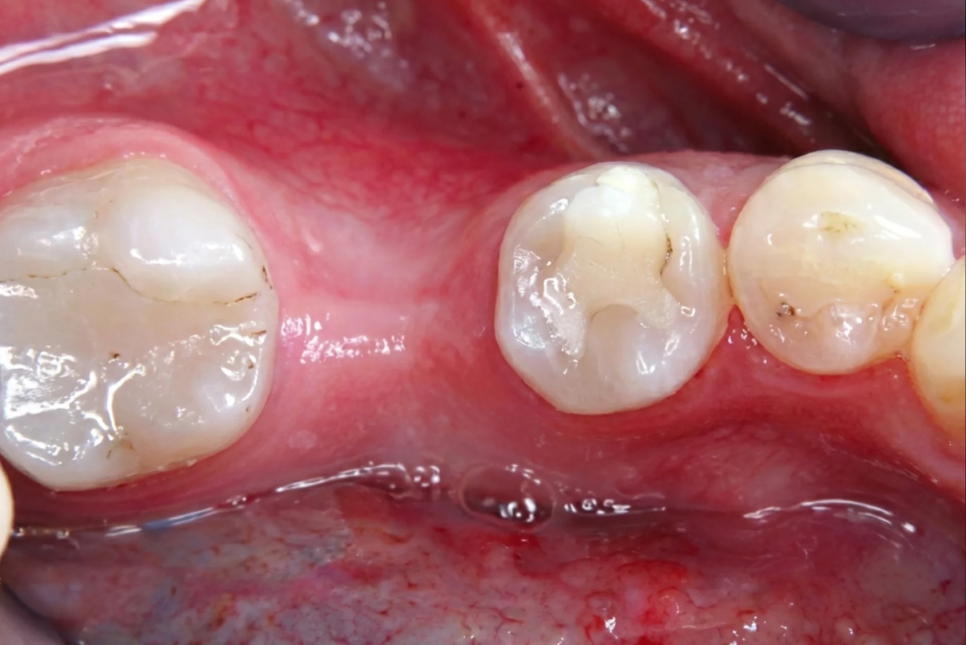
Problems that occur when a missing tooth is left untreated
Losing one tooth does not just create one empty space. Over time, the balance of the entire mouth begins to break down. Let’s look at the changes step by step.
- Adjacent teeth tilt (movement of neighboring teeth)
When a gap appears, the teeth on both sides slowly begin to tilt toward that space. It’s like when you remove one book from a bookshelf and the others start to lean over. When teeth shift like this, gaps between teeth can widen, making food more likely to get stuck and leading to cavities or gum disease.
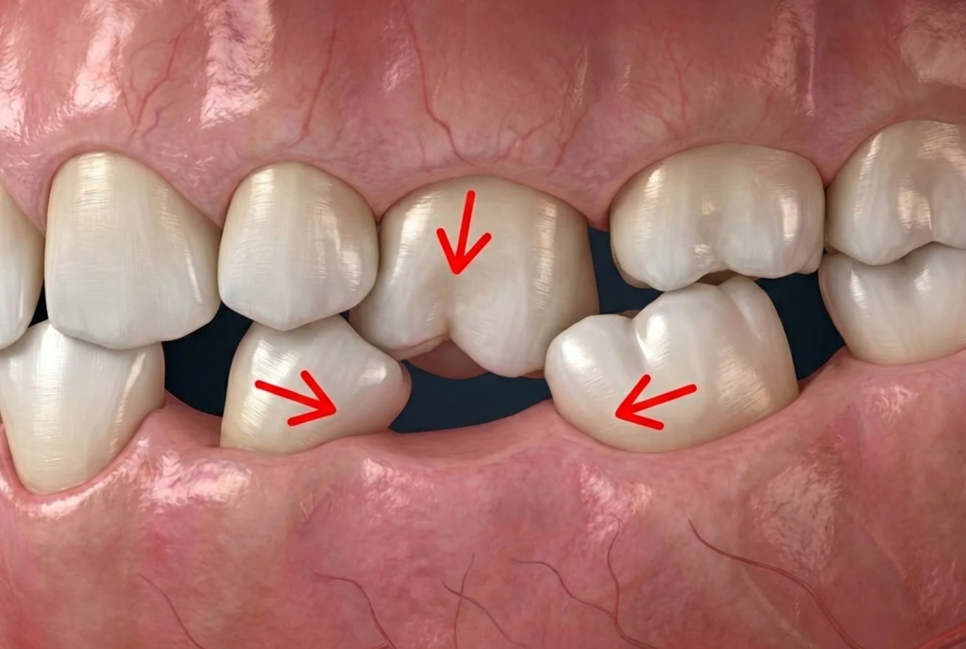
- The opposing tooth rises (overeruption of the opposing tooth)
The tooth on the opposite jaw that used to meet the missing tooth may gradually erupt downward or upward into the empty space, as if it is lengthening. For example, if you lose a lower molar, the upper molar will slowly come down. In this case, even if you later try to place an implant, there may not be enough space, and orthodontic treatment may be needed first.
- The jawbone melts away (alveolar bone resorption)
When a tooth is present, chewing stimulation is transmitted to the jawbone, helping keep the bone healthy. But when a tooth is missing, that stimulation disappears and the jawbone gradually shrinks. Some studies have even reported that about 25% of bone may be lost within the first year after extraction.
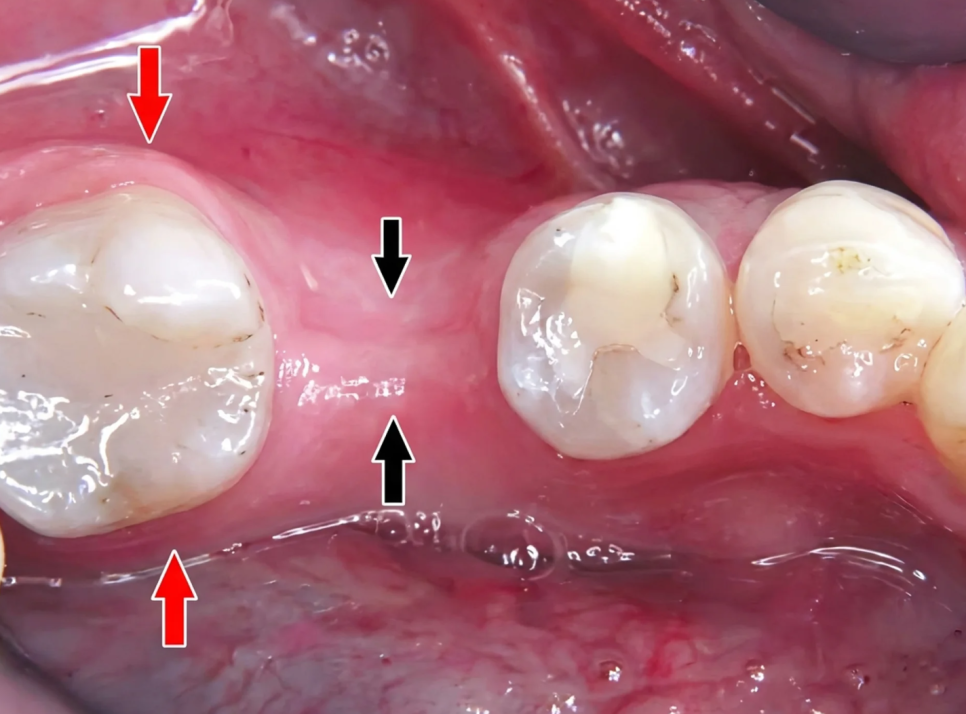
A narrowed area caused by bone loss. It looks like it would be hard for a tooth or implant to fit there, right?
- Other chain-reaction problems
When the alignment of the teeth becomes disordered, the bite changes, and in some cases this can even cause temporomandibular joint pain or headaches. If you cannot chew properly, digestive problems or nutritional imbalance may occur, and if front teeth are missing, pronunciation may become unclear.
Ultimately, the longer you wait, the more complex the treatment becomes and the higher the cost gets. In other words, “I’ll do it later” turns into “a big treatment that needs to be done right now.”
| Period left untreated | Expected changes | Additional procedures that may be needed |
|---|
| Within 3 months | Adjacent teeth begin to move | Usually none |
| 3 months to 1 year | Bone resorption progresses, opposing tooth overerupts | Possibility of minor bone grafting |
| More than 1 to 3 years | Misalignment of the teeth, bite problems | Bone grafting + possibility of orthodontic treatment |
Comparison between implants and bridges
The two main ways to fill a missing tooth space are implants and bridges. Let’s compare their pros and cons.
Implant
An implant is a method in which an artificial tooth root (a screw-shaped metal post) is placed into the jawbone, and then a tooth-shaped prosthesis is attached on top of it. It can restore function and appearance most similar to a natural tooth.
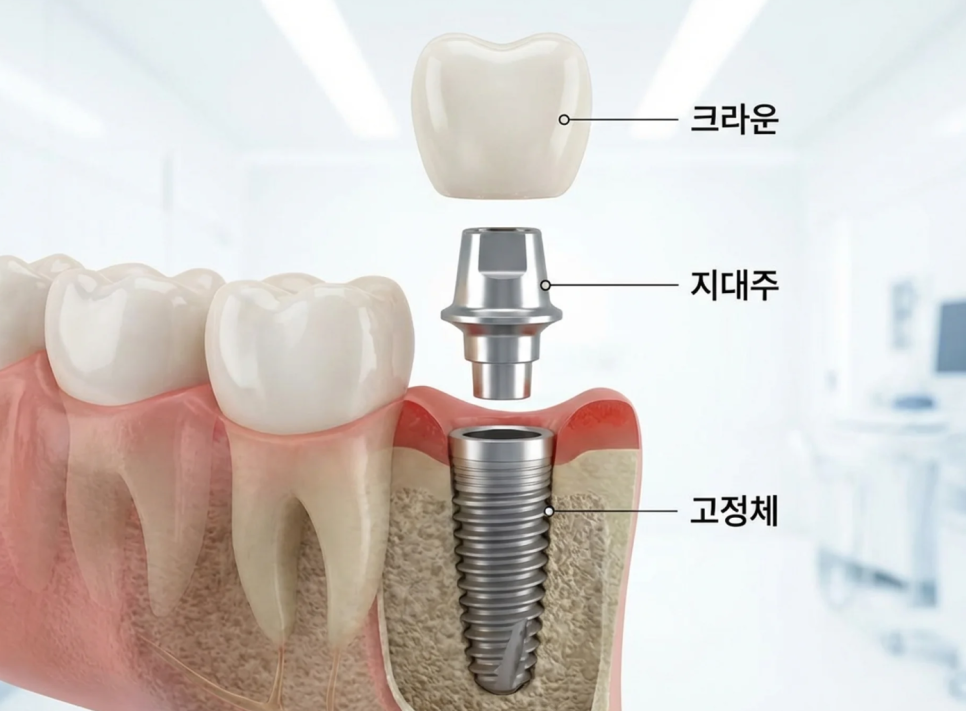
The structure of an implant
Bridge (fixed prosthesis)
A bridge is a method in which the healthy teeth on both sides of the gap are filed down to serve as pillars, and a connected prosthesis is placed over them like a bridge. Its advantage is that treatment can be completed relatively quickly without surgery.
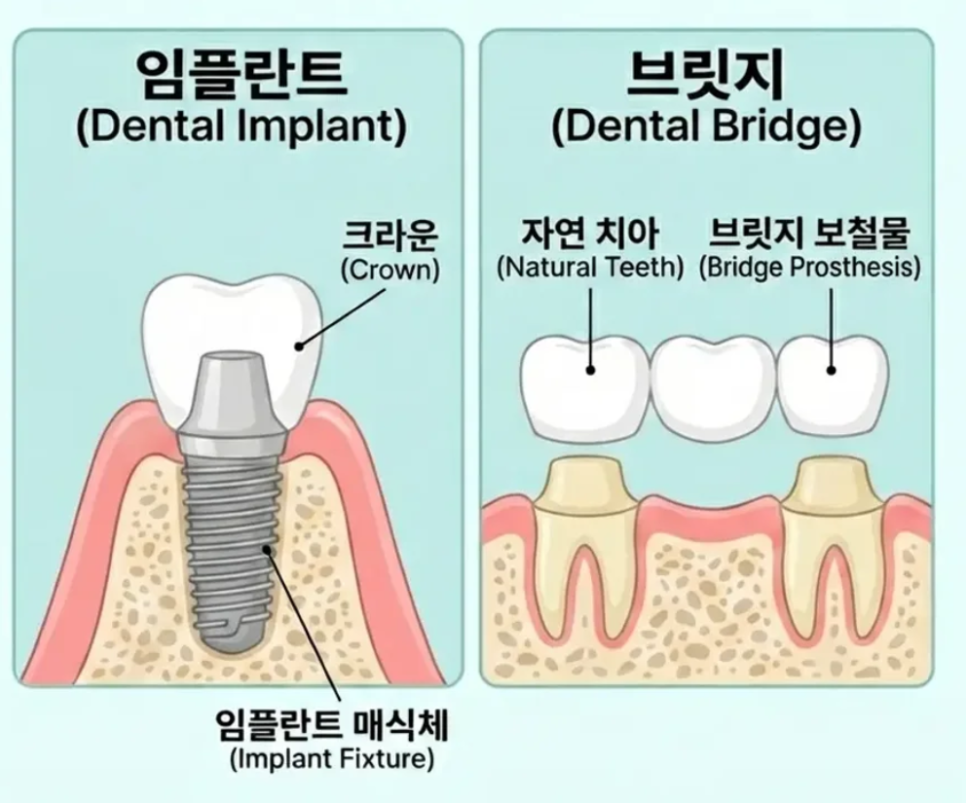
Shall we compare the two methods at a glance?
| Comparison item | Implant | Bridge |
|---|
| Whether surgery is needed | Yes (artificial root placed in the jawbone) | No |
| Treatment period | 2–6 months | 2–3 weeks |
| Damage to adjacent teeth | None | Healthy teeth on both sides must be filed down |
| Preservation of jawbone | ✅ Has a preserving effect | ❌ Cannot prevent resorption |
| Success rate | 95% or higher | High (varies depending on the condition of the pillar teeth) |
| Chewing feel | Similar to a natural tooth | Good |
| Ease of maintenance | Regular brushing + regular checkups | The area under the bridge is difficult to clean |
In summary, if you are thinking about long-term oral health, an implant is the most ideal choice. However, depending on the situation, a bridge can also be a very good alternative.
Cases where you should not delay an implant, in particular
On the other hand, in the following cases, it is better to proceed with an implant as soon as possible. The longer you wait, the more complex and costly the treatment becomes.
-
If you have lost a front tooth: It affects not only appearance but also pronunciation right away. It can cause major inconvenience in social life.
-
If losing a molar has significantly reduced your chewing function: Chewing only on one side increases the risk of temporomandibular disorders (TMD).
-
If the adjacent teeth have already started to move: If this progresses further, orthodontic treatment may be needed before the implant.
-
If jawbone resorption is already in progress: The more the bone shrinks, the larger the area that needs bone grafting, and treatment time and cost increase accordingly.
-
If you are chewing only on one side: Asymmetric stress is placed on the jaw joint, which can cause headaches, jaw pain, and more.
 The longer you leave it untreated, the more the bone gradually melts away, making treatment more difficult
The key point is this: if you plan to get an implant, it is always better to do it as early as possible. The longer you wait, the more the bone shrinks, the more the teeth move, and the more complicated the treatment becomes.
Practical advice from a dentist
Let me honestly share what I have felt over more than 10 years of practice.
Ideally, after an extraction, you should make a prosthetic plan within 3 to 6 months if possible. This is the golden time when enough jawbone still remains and the adjacent teeth have not moved significantly.
Here are some useful points to keep in mind:
| Question | Answer |
|---|
| Insurance coverage | For those aged 65 or older, implants are covered by health insurance for up to 2 lifetime cases |
| When there is a systemic disease | If diabetes, high blood pressure, etc. are well controlled, implants are possible in most cases |
| When there is not enough bone | It can be supplemented with bone grafting, maxillary sinus lift, and other procedures |
Tooth loss does not simply end with “just one missing tooth.” It is the starting point of a chain reaction that affects the health of the entire mouth. Adjacent teeth tilt, opposing teeth overerupt, the jawbone melts away, the bite changes… and as time passes, the problems
become bigger and bigger.
An implant is the most ideal choice, but if circumstances do not allow it, a bridge or denture can also be a great alternative. What matters is not the method itself, but filling the empty space. The worst choice is doing nothing.
If you currently have a missing tooth, please visit a nearby dental clinic and consult about the best treatment plan for your situation. The sooner you do, the simpler the treatment will be, and the more you can save on costs. If you have any questions, please feel free to contact us anytime. Thank you 😊