Have you heard the term tooth erosion?
Hello, I’m Kim Sun-min, the chief dentist at Ceramic Dental Clinic. Today, I’d like to introduce a somewhat special case. Did you know that reflux esophagitis, a digestive disease, can seriously damage teeth? Many people think of reflux esophagitis only as causing heartburn or chest pain, but in fact, it can also have a major impact on teeth.
In this article, I’ll explain in detail how stomach acid erodes teeth and how we preserved the teeth while also addressing aesthetics, through the case of a woman in her late 30s who had suffered from reflux esophagitis for a long time.
Tooth erosion: reflux esophagitis dissolves teeth
Reflux esophagitis (GERD) is a chronic digestive disease in which stomach acid flows back up the esophagus. But when that stomach acid rises beyond the esophagus and into the mouth, it can directly damage the teeth. In dentistry, this is called dental erosion.
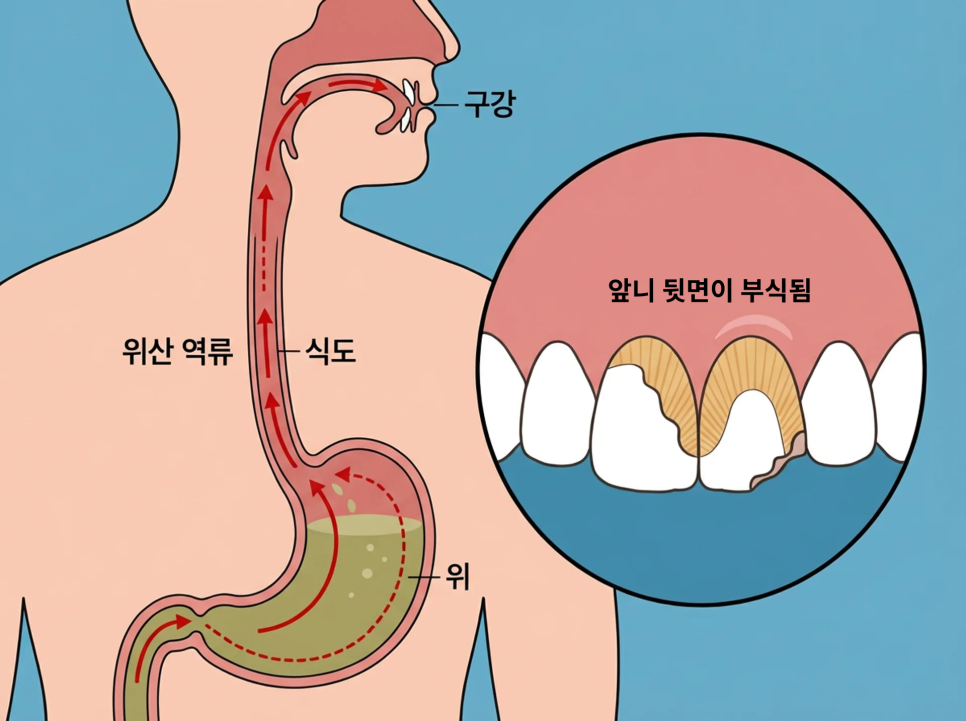
The process by which stomach acid refluxes up the esophagus and erodes the teeth
There is one interesting point here: when stomach acid refluxes or when vomiting occurs, the tongue naturally wraps around and protects the lower teeth. As a result, the lower teeth are relatively less damaged, but the back surfaces of the upper front teeth (the lingual surfaces) are directly exposed to acid, causing selective erosion.
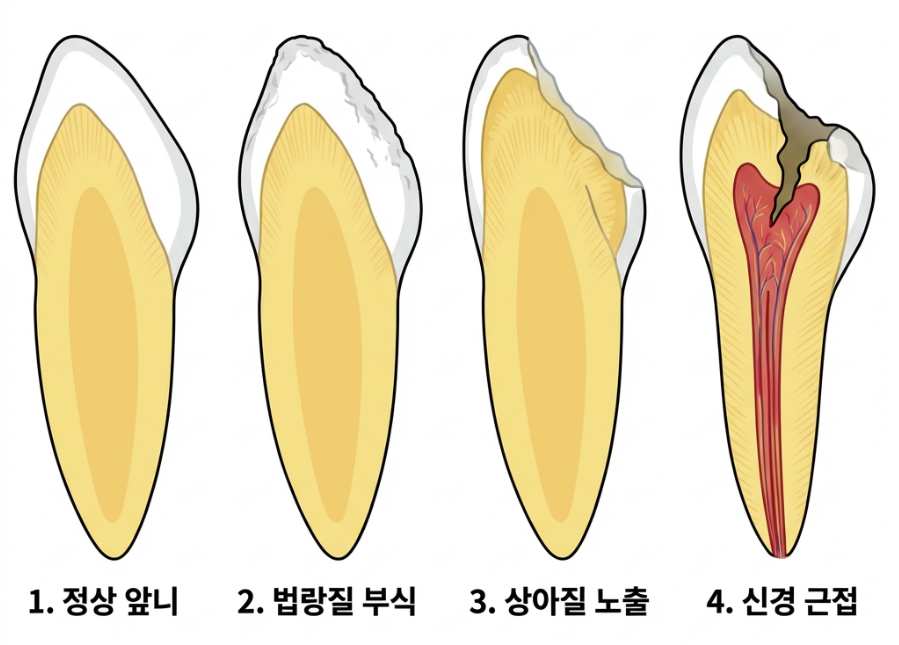
What happens if this kind of acid erosion is left untreated for a long time? At first, there may be no major effect, but if it is simply left alone, it can eventually invade the nerve, and root canal treatment may become necessary.
That is why early detection and treatment are so important. If it is found early, the teeth can be preserved with relatively simple treatment, but if treatment is delayed, the scope of treatment can become much larger.
Patient introduction
This patient was a 38-year-old woman who came to the clinic because she wanted to improve the color of her upper front teeth and make the chipped tips look even. She did not want orthodontic treatment and hoped for an aesthetic improvement through laminate veneers. In other words, her main reason was that she wanted to look better.
However, an important fact was confirmed during the examination: she had been suffering from reflux esophagitis for a long time. This became a key factor that significantly changed the treatment plan.
Before treatment - frontal view
Let’s look at the condition of the upper front teeth from the front when she first visited.
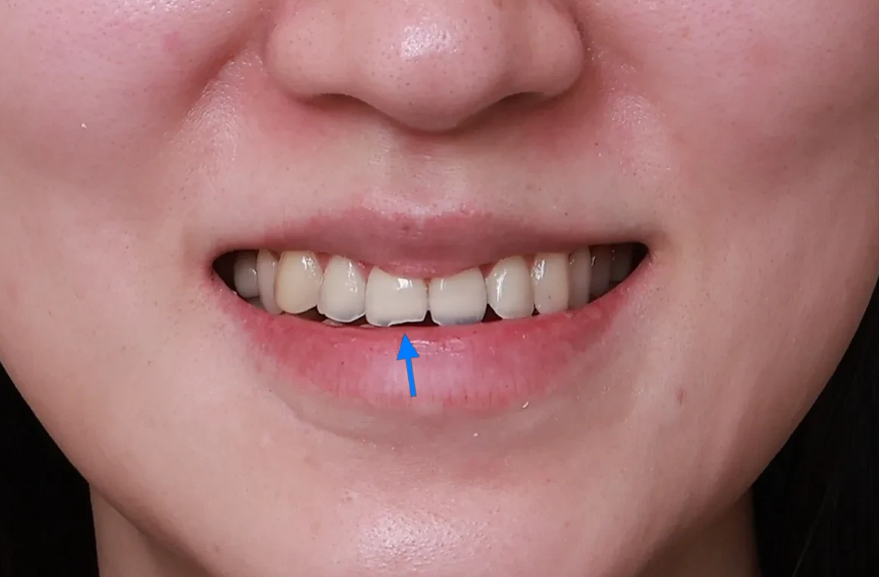
Initial consultation photo - the tips of the upper front teeth are abnormally thin and chipped
The first thing that stands out is that the incisal edges of the upper front teeth have become abnormally thin and are chipped in several places. A normal front tooth should retain a certain thickness, but due to acid erosion, the teeth had melted away from the inside and become as thin as paper.
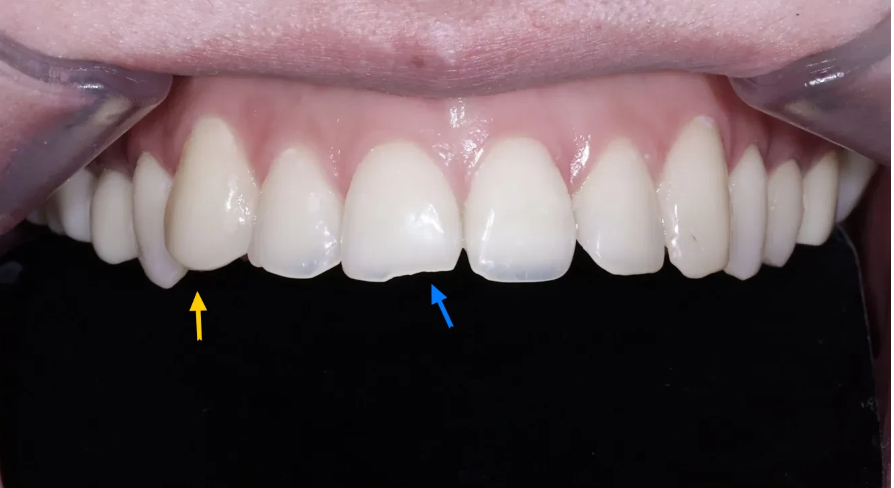
Initial consultation photo - the incisal edges of the front teeth are uneven, and the upper right canine is protruding
The incisal edges were not uniform, creating a noticeable aesthetic imbalance. In particular, the upper right canine protruded more than the other teeth, disrupting the overall harmony of the dentition.
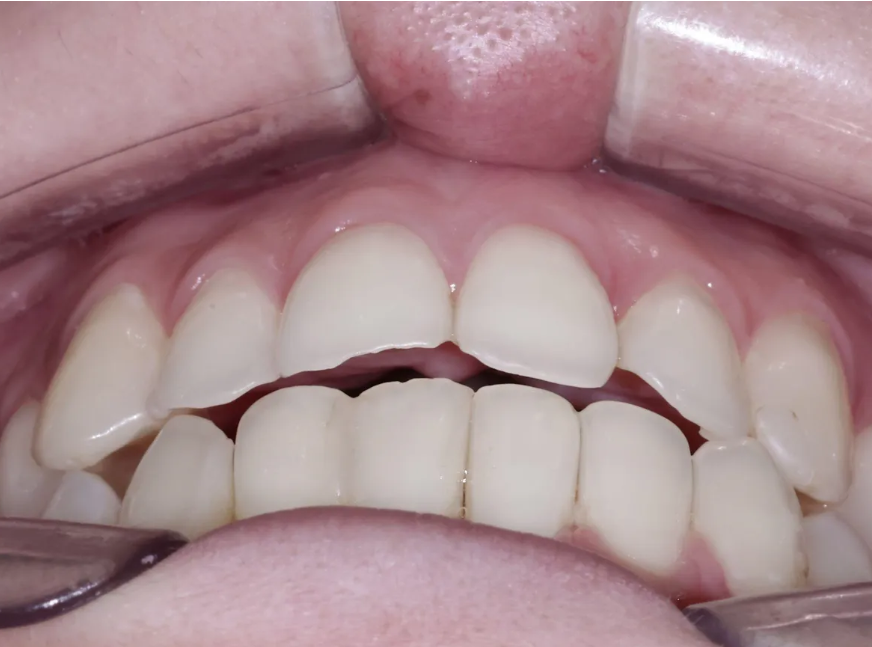
Initial consultation photo - confirmation that the front teeth had become extremely thin due to erosion
As you can see in the photo above, it is clear how thin the front teeth had become due to erosion. The overall tooth color was also discolored, and it was entirely understandable that the patient was dissatisfied aesthetically.
Initial examination findings - occlusion and lingual surface observation
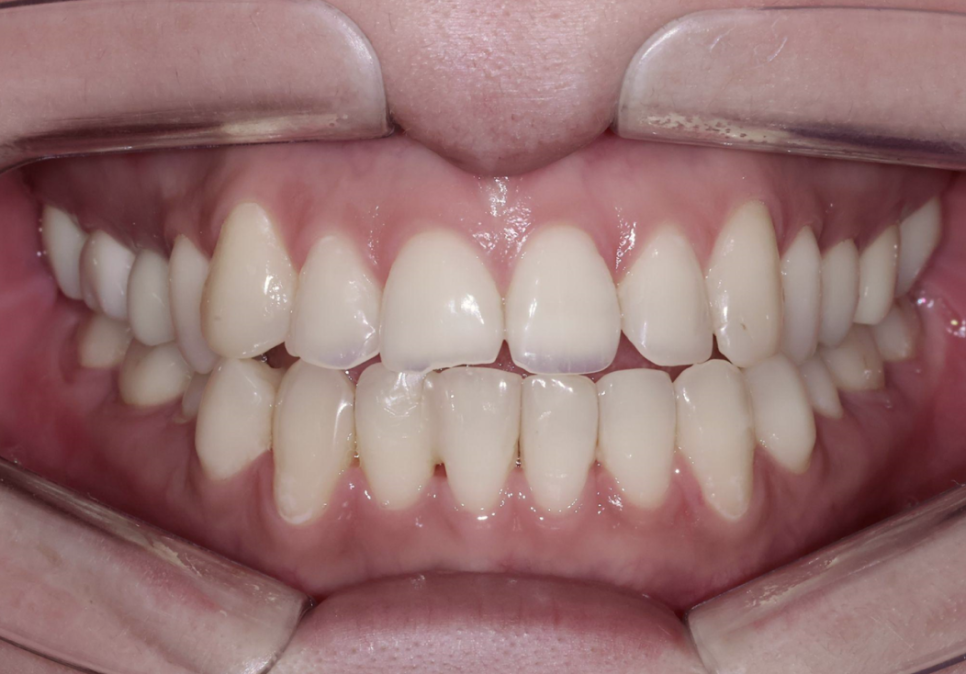
Initial occlusal photo - the upper front teeth do not sufficiently cover the lower front teeth
After checking the bite, a mild open bite pattern was observed. In simple terms, the upper front teeth were not sufficiently covering the lower front teeth. To create a natural smile aesthetically, it is better for the upper front teeth to overlap the lower front teeth by at least about 1 mm. For this, improvement of the tooth angle (axial inclination) was needed.
But what was truly surprising was when we examined the back surfaces of the teeth.
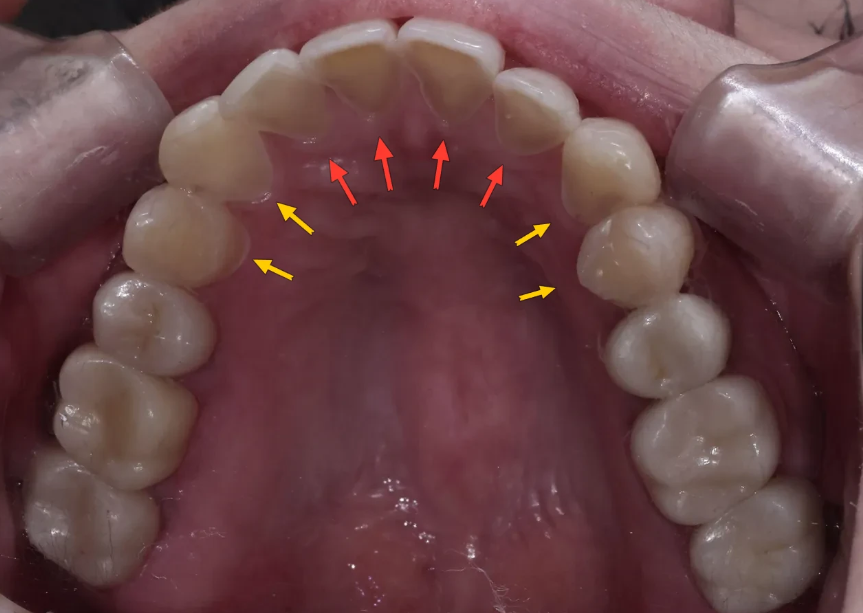
Extensive acid erosion was observed on the back surfaces (lingual surfaces) of the upper front teeth. Nearly half of the back side of the teeth had melted away. This was the result of stomach acid attacking the back surfaces of the teeth for a long time due to reflux esophagitis. A large portion of the dentin was exposed, so if this continued any further, it could become a dangerous situation in which the nerve would be damaged.
Treatment plan
The patient initially came in wanting laminate veneers.
Laminate veneers are prostheses that cover only the front surface of the teeth with a thin layer, so they are a good option for improving aesthetics.
However, in this patient’s case, the problem was not the front surface of the teeth but the severe acid erosion on the back surfaces (lingual surfaces).
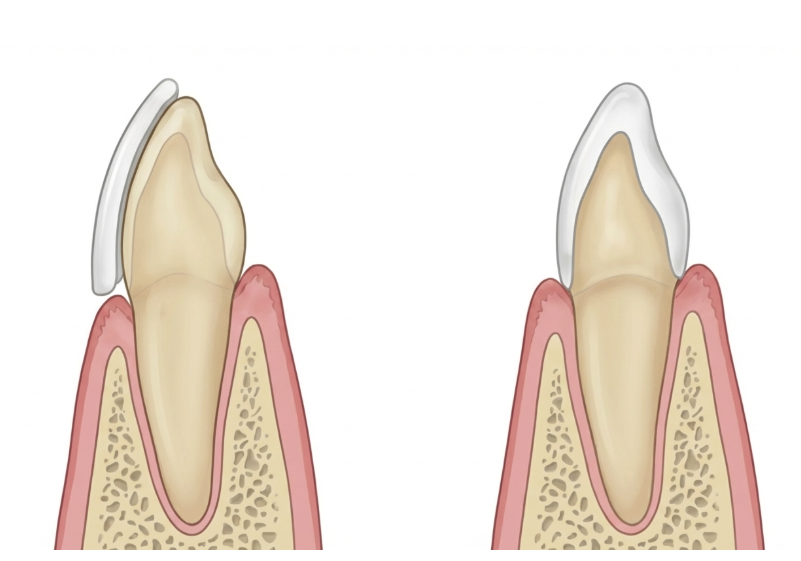
The difference between laminate veneers (left) and all-ceramic crowns (right): the coverage area around the tooth is different
| | Laminate veneer | All-ceramic crown |
|---|
| Coverage area | Only the front surface of the tooth | Entire tooth (front + back) |
| Prevention of acid erosion | ❌ Back surface remains exposed | ✅ Protects the back surface as well |
| Aesthetic improvement | ✅ Excellent | ✅ Excellent |
| Suitable for this patient? | ❌ Not suitable | ✅ Suitable |
With laminate veneers, only the front surface can be made beautiful, but they cannot prevent the acid erosion that continues on the back surface. Therefore, I recommended changing the treatment plan to all-ceramic crowns (fully porcelain crowns), which completely cover the lingual surfaces as well.
The final treatment plan was as follows:
-
Restore the 8 upper front teeth (a total of 8 teeth including the left and right canines, lateral incisors, and central incisors) with all-ceramic crowns
-
Without root canal treatment
-
Resolve the open bite - design the upper front teeth to overlap the lower front teeth by about 1 mm
-
Improve the protruding shape of the upper right canine and make the incisal edges uniform
In other words, the plan was to preserve the vitality of the teeth without root canal treatment, fully cover the teeth with crowns to prevent further acid erosion, and at the same time achieve an aesthetic improvement.
Procedure result - after prosthesis placement
Let me show you the result after placing all-ceramic crowns on the 8 front teeth.
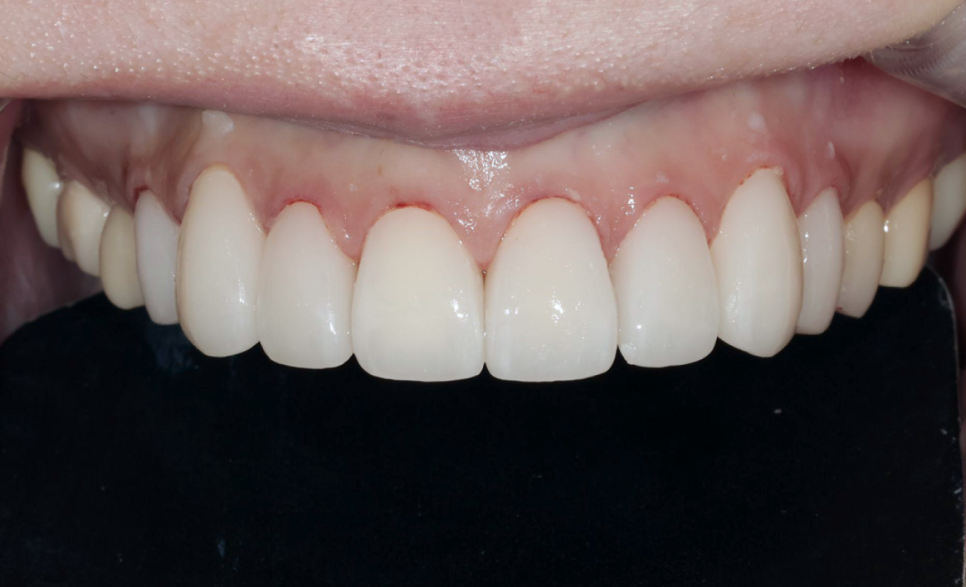
Immediately after placing the 8 anterior all-ceramic crowns
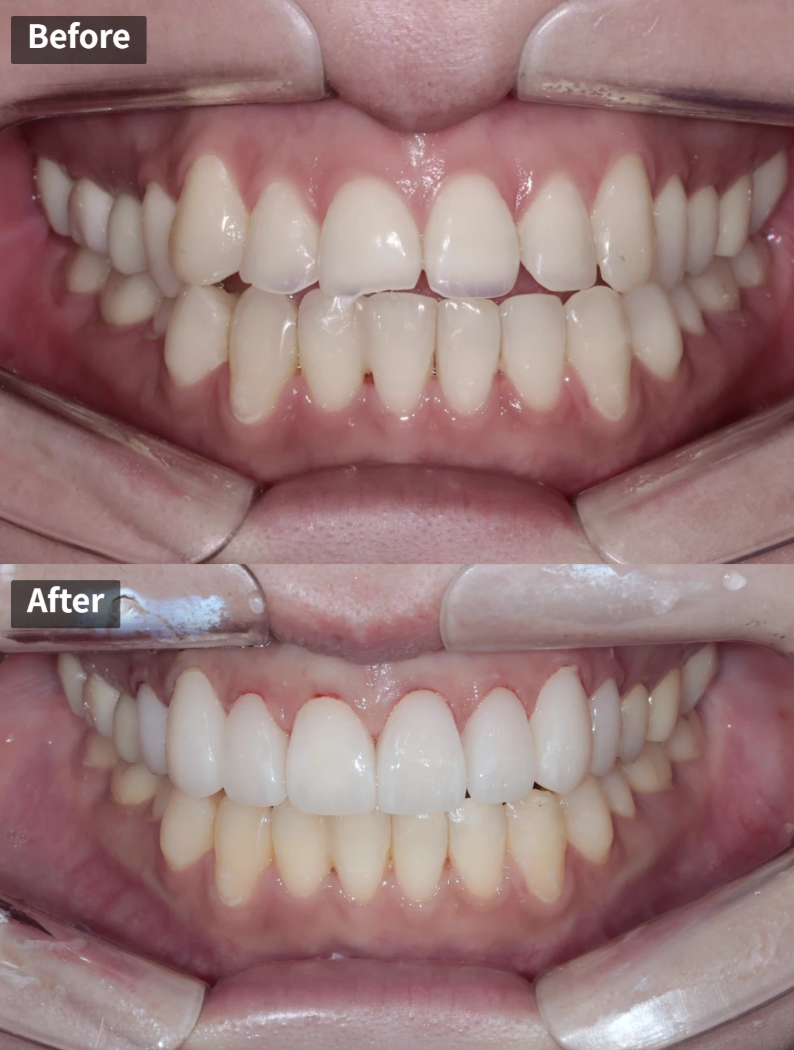
If you look at the photo immediately after placement, you can see that the boundary between the gums and the prosthesis blends naturally, and the surrounding gum condition is also stable. The incisal edges have been made uniform and neatly aligned, and the previously protruding upper right canine now forms a natural alignment with the rest of the teeth.
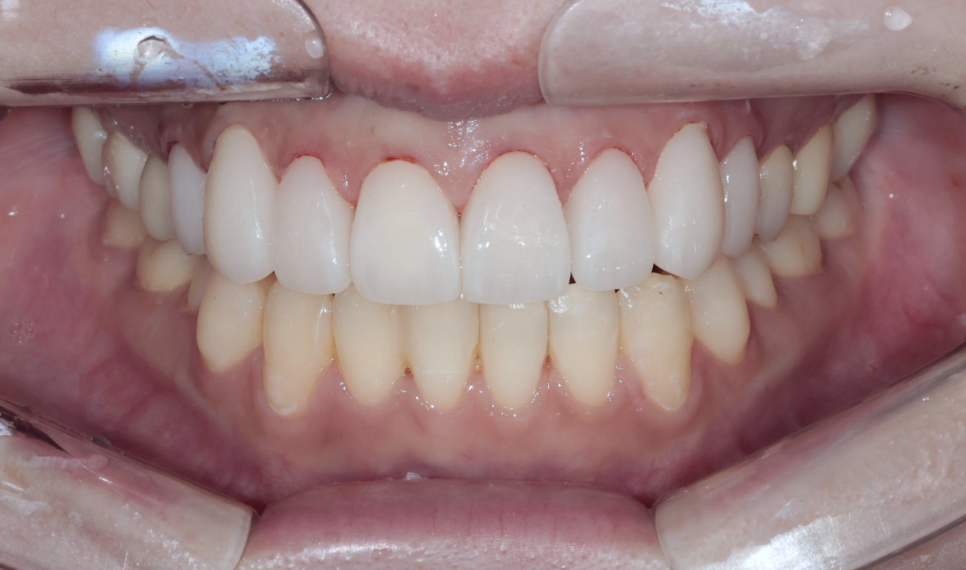
A normal bite formed with the upper front teeth overlapping the lower front teeth by about 1 mm
If we check the bite, before treatment the upper front teeth did not sufficiently cover the lower front teeth, but now we can see that a normal bite has been formed with a natural overlap of about 1 mm, and the bite stability is being maintained well.
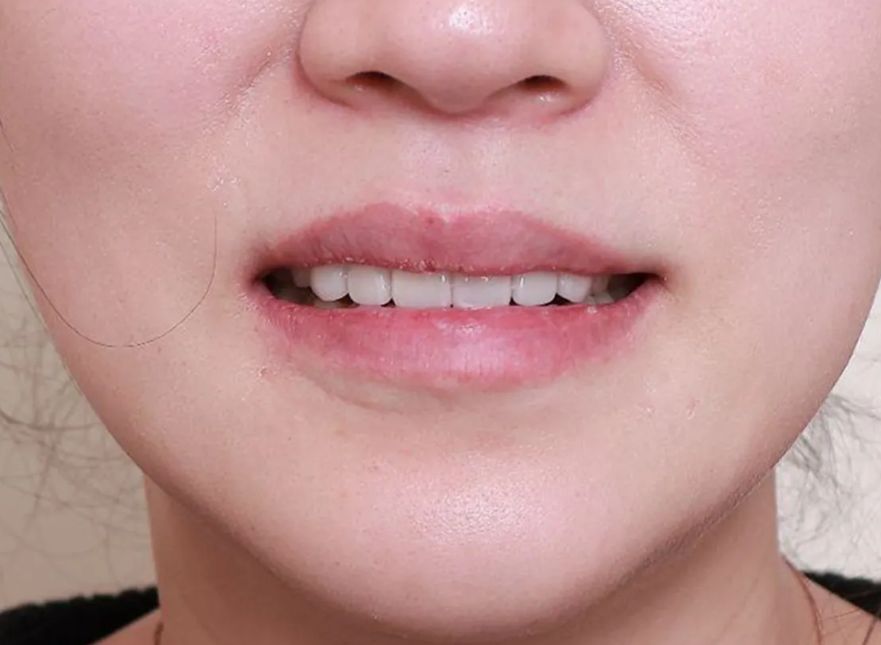
Most importantly, the patient’s smile line has clearly improved. When smiling, the teeth now form a neat and natural curve, making the overall impression much cleaner and brighter.
Before & After summary
Let’s compare before and after at a glance.
| Item | Before | After |
|---|
| Incisal edge condition | Fractured, thinned | Uniform and neat |
| Back surface of teeth (lingual surface) | Extensive acid erosion (about half lost) | Fully protected by crowns |
| Tooth color | Discolored | Natural bright color |
| Bite condition | Open bite pattern | Normal bite (about 1 mm overlap) |
| Upper right canine | Protruding shape | Harmonious alignment |
| Nerve condition | At risk (dentin exposed) | Vital tooth preserved successfully |
The most meaningful point in this case is that we achieved both aesthetic improvement and tooth preservation at the same time. The patient wanted attractive front teeth, and in addition, I was able to solve the issue of protecting the teeth from stomach acid. Preserving the teeth as vital teeth without root canal treatment was also a very positive result for their long-term health.
A case that protected the teeth and improved the smile
At first, the patient simply came in wanting to improve the appearance of her front teeth, but a detailed examination revealed severe tooth erosion on the inner surfaces (lingual surfaces) of 8 front teeth due to reflux esophagitis.
Because a significant portion of the inner tooth structure (dentin) had already melted away, if it had been left alone even a little longer, the nerve could have been damaged, and much more complex and difficult treatment such as root canal treatment might have been needed. Fortunately, because she visited before it was too late, we were able to help preserve her teeth so she could use them healthily for a longer time, while also resolving the aesthetic concerns she had originally wanted addressed. It was a meaningful case.
For people who have reflux esophagitis or who frequently experience vomiting for other reasons, strong stomach acid can put teeth at very high risk of damage without you even realizing it. If you have similar symptoms, I recommend visiting a dental clinic as soon as possible to have your teeth checked before it is too late.
If you ever have questions about your teeth, please feel free to contact us. This has been Kim Sun-min, chief director of Ceramic Dental Clinic.