Hello, I’m Kim Sun-min, the chief director of Ceramics Dental Clinic, a laminate dental clinic near Hakdong Station.
Today, I’d like to introduce a laminate case in which both tooth shape and color were improved at the same time. This is the story of a female patient in her 30s who had been unable to smile confidently because her teeth were yellowish and uneven in shape. I’ll show you in detail, along with before-and-after comparisons, how the entire upper and lower front teeth were aesthetically improved with laminates.
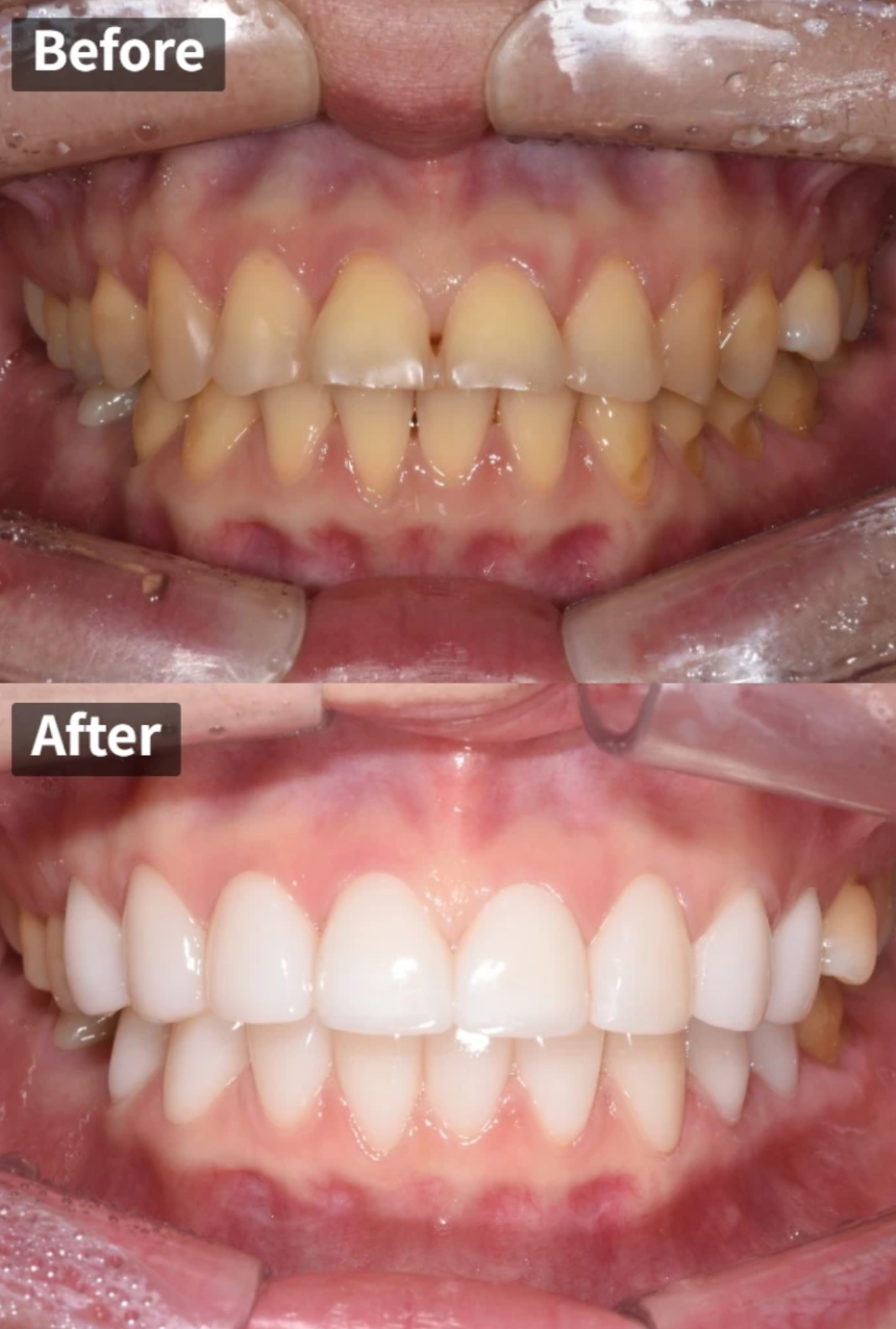
Can tooth concerns be solved with laminates?
I want to change both the shape and the color.
That is what this patient said when she first visited the clinic. She said she had long felt uncomfortable smiling because her teeth were generally yellowish, there were visible signs of resin restorations in several places, and the tooth shapes were uneven.
In cases like this, laminate treatment can be the most effective solution. Thin ceramic pieces are bonded to the front surfaces of the teeth, allowing color, shape, and proportion to be improved all at once. However, this patient’s case was not a simple one; it involved several complex issues, so careful analysis and a precise treatment plan were necessary.
Initial examination – panoramic and facial analysis
Before starting treatment, we first took a panoramic X-ray and facial photographs to analyze the overall oral condition and facial proportions.
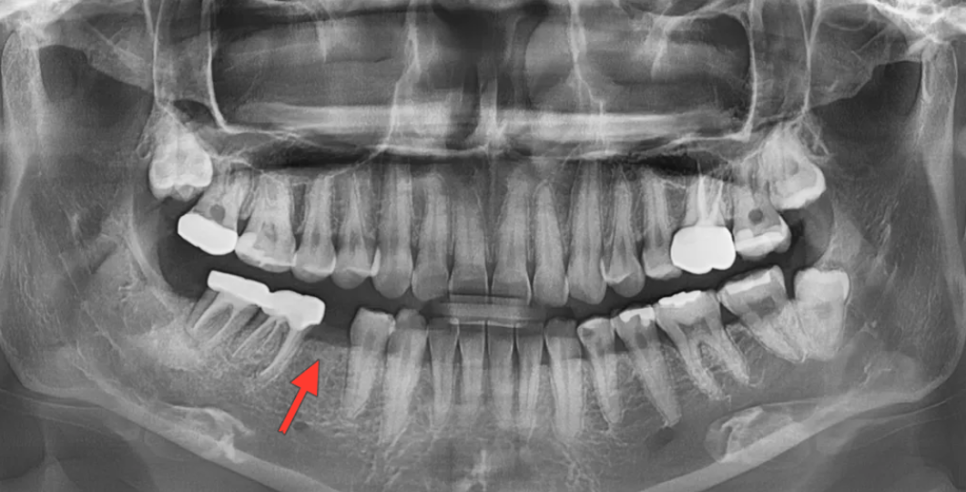
The lower right second premolar was missing
The patient was missing the lower right second premolar, and the lower left second premolar had an inlay restoration. In addition, the upper left first molar and the lower right first and second molars had crowns placed after root canal treatment, and impacted wisdom teeth were identified on both the upper and lower jaws.
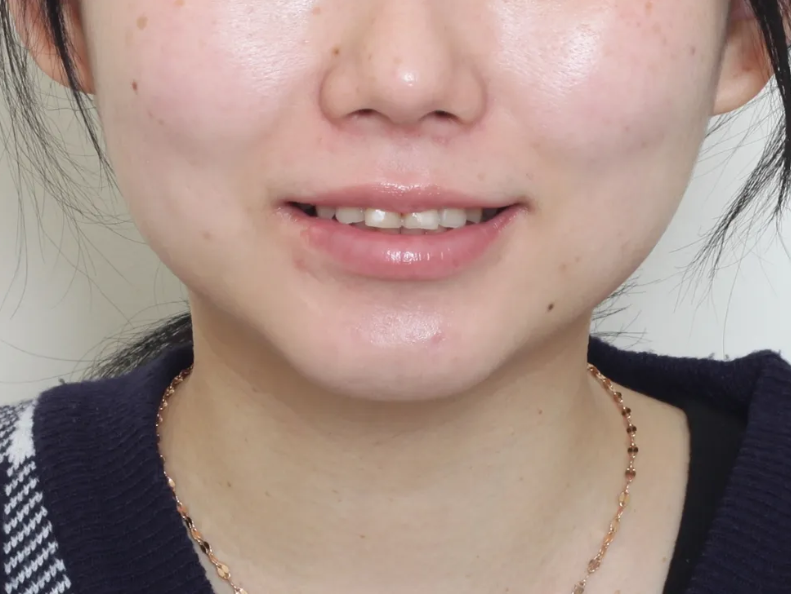
Facial analysis showed an egg-shaped face with a youthful lower face. When smiling, the upper teeth were visible at an average level, and the lower teeth were visible up to the left canine. Because the mouth was relatively small, this had to be specially considered in the smile design.
Taking all of this analysis into account, the treatment range was determined to be from the upper right first premolar to the upper left first premolar on the upper teeth, and from the lower left canine to the lower right first premolar on the lower teeth.
Initial intraoral analysis – various issues identified
Now let’s take a closer look inside the mouth. There were quite a few issues identified through the intraoral photos.
Problems in the upper front teeth
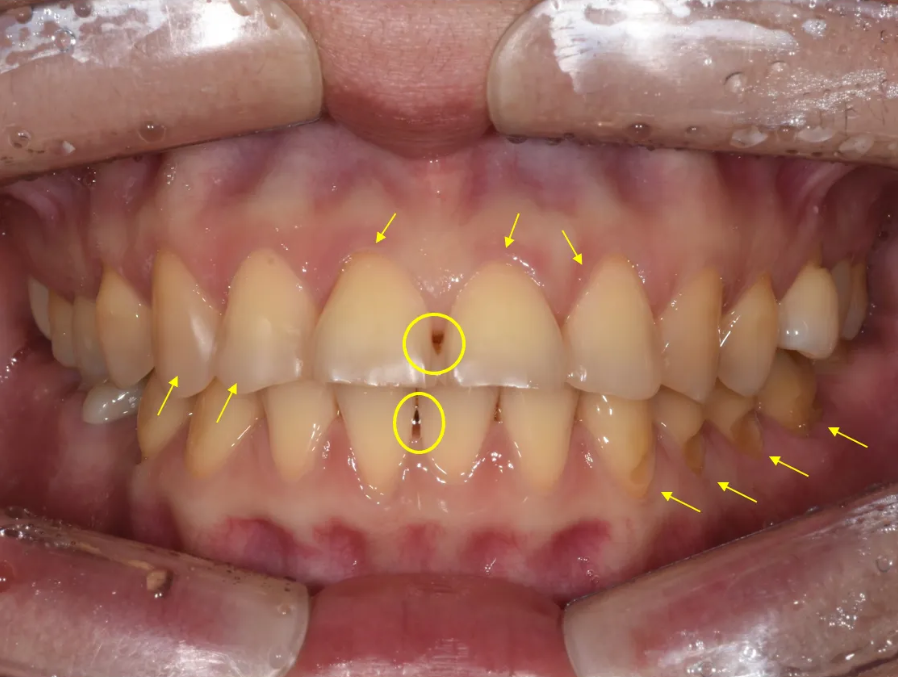
Signs of resin restoration, color issues, black triangles between teeth, asymmetrical gums
The most noticeable issue was that the front surfaces had been restored with resin. They did not look neat, and the overall tooth color was severely yellowish. In addition, gaps were visible between the front teeth of both the upper and lower jaws (“black triangles”), and the root-side areas were significantly recessed. The gum positions were also asymmetrical from left to right.
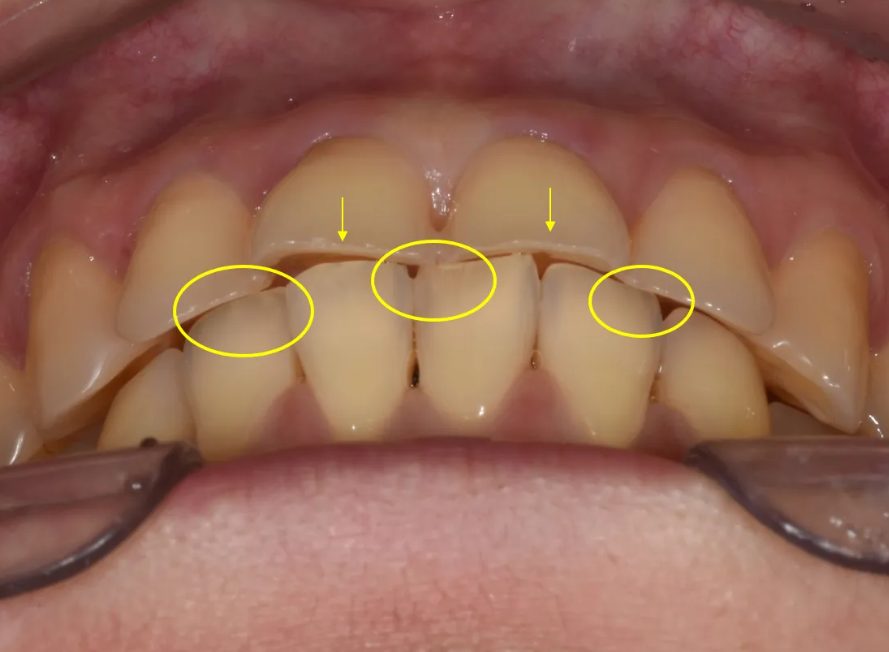
From below, the upper and lower front teeth were biting together quite tightly.
The two central incisors were also protruded forward, and especially the outer sides were positioned further outward, showing a so-called “butterfly teeth” shape.
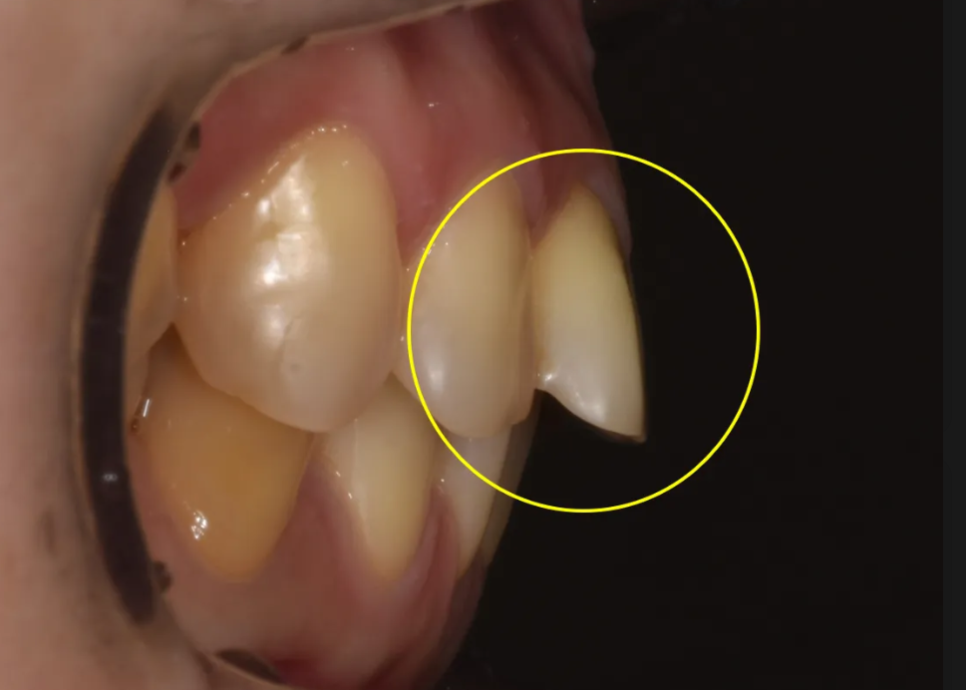
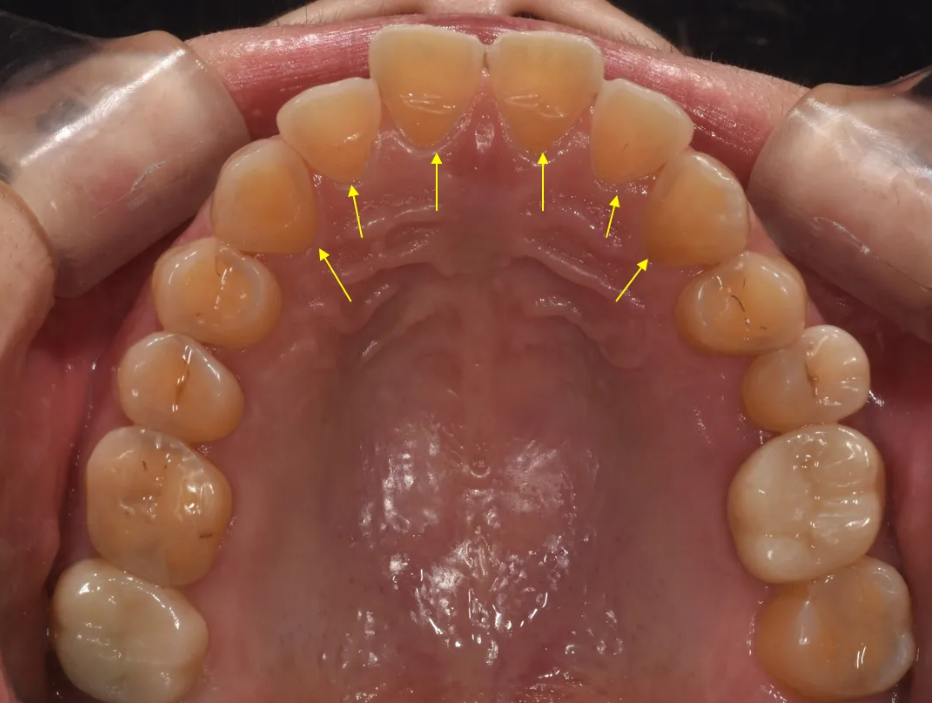
(1) Wear on the inner surface of the upper teeth (2) Reconfirmation of the butterfly teeth shape.
Looking at the inner (tongue-side) surfaces of the upper teeth, the teeth were quite worn down and a significant amount of tooth structure had been lost. This was presumed to be due to chemical erosion or wear, and it was the most important factor to consider in the treatment plan.
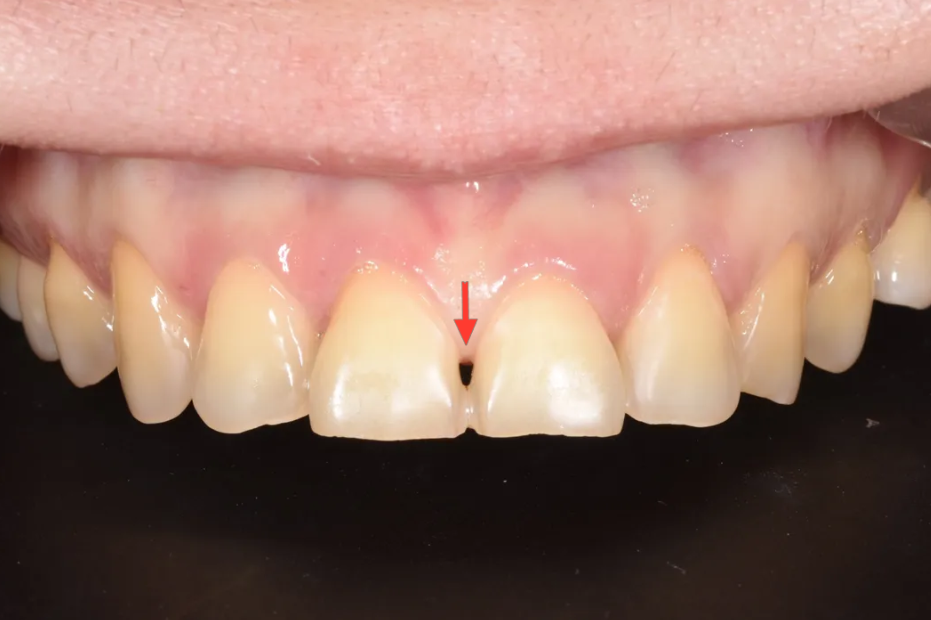
Upper teeth close-up – signs of front-surface resin restoration, yellowish color, uneven gum line
The gum line around the two central incisors and the left lateral incisor was also uneven and unaesthetic, and a gap known as a black triangle was visible between the central incisors.
Problems in the lower front teeth
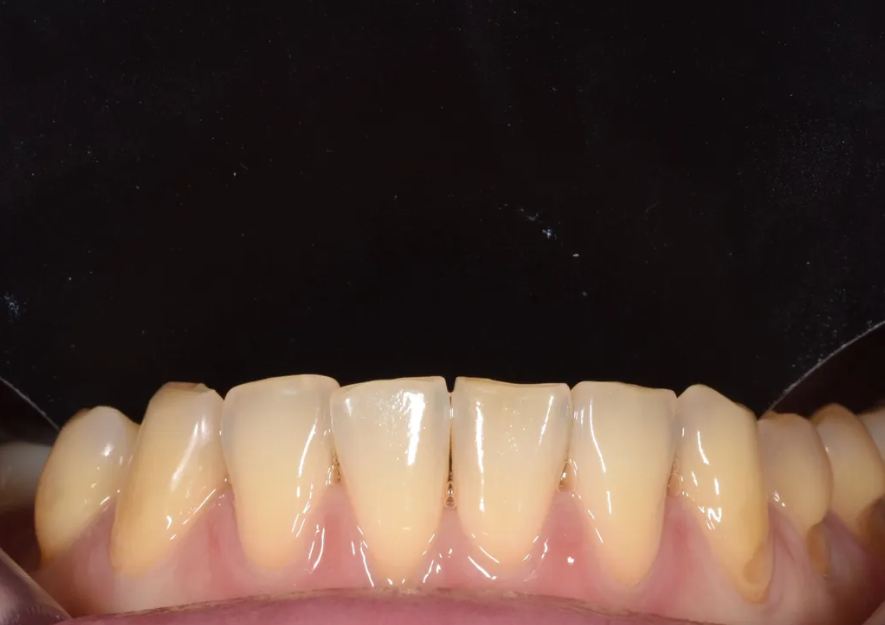
Crowding on the right front teeth, spacing between the central incisors
There were also several problems on the lower teeth. The two front teeth on the right were slightly crooked, and there was a gap between the lower central incisors. From the left canine to the second premolar, the gum margin area showed wear (cervical wear).
In addition, the upper and lower midlines did not match, and the bite between the upper and lower front teeth was quite tight, which also had to be considered during treatment.
In summary, the patient’s issues can be organized as follows:
| Area | Problem |
|---|
| Entire upper teeth | Yellowish color, unaesthetic appearance due to extensive resin restorations |
| Upper central incisors | Protrusion, incisal wear, butterfly teeth shape, black triangles between teeth |
| Inner surface of upper teeth | Significant loss of tooth structure due to erosion/wear |
| Upper gums | Uneven gum line around the central incisors and left lateral incisor |
| Lower front teeth | Crooked alignment, spacing in the middle |
| Lower left side | Wear at the gum margin from the canine to the premolars |
| Overall | Upper and lower midline mismatch |
Treatment plan
After identifying the various issues, we established the most suitable treatment strategy for this patient. The key principle was: “Do not remove tooth structure that does not need to be removed.”
Why was avoiding tooth reduction especially important in this case? As mentioned earlier, the inner surfaces of the upper teeth had already worn down significantly, with loss of tooth structure. If too much were removed from the front surfaces as well, the remaining tooth thickness would become too thin, increasing the risk of needing root canal treatment. Therefore, preserving tooth vitality (the nerve) had to be the top priority.
The treatment plan for this case was summarized as follows:
-
Resolving protrusion of the upper central incisors – the two protruded front teeth were minimally reduced to create a natural alignment
-
Combined gum contouring – improving the uneven gum line around the central incisors and left lateral incisor
-
Closing spaces – naturally filling the black triangles between the upper front teeth and the spacing between the lower front teeth with laminate shapes
-
Restoring wear at the gum margin – simultaneously treating the worn areas from the lower left canine to the premolars with ceramic resin filling
-
Considering existing restorations – precisely designing the restoration so it would not overlap with the boundary of the existing inlay on the lower left second premolar
-
Stepwise approach – initially excluding the two lower left premolars, which are not easily visible when smiling, and proceeding later if the patient wished
The final treatment range was 9 upper teeth (from the upper right first premolar to the upper left first premolar), and on the lower teeth, the first 6 were treated initially, with 2 more added later for a total of 8.
Patient-preferred style consultation – customized smile design
Laminates are not off-the-shelf products; they are custom-made for each patient. That is why pre-treatment consultation is very important.
During the consultation, this patient shared reference photos of the style she wanted.
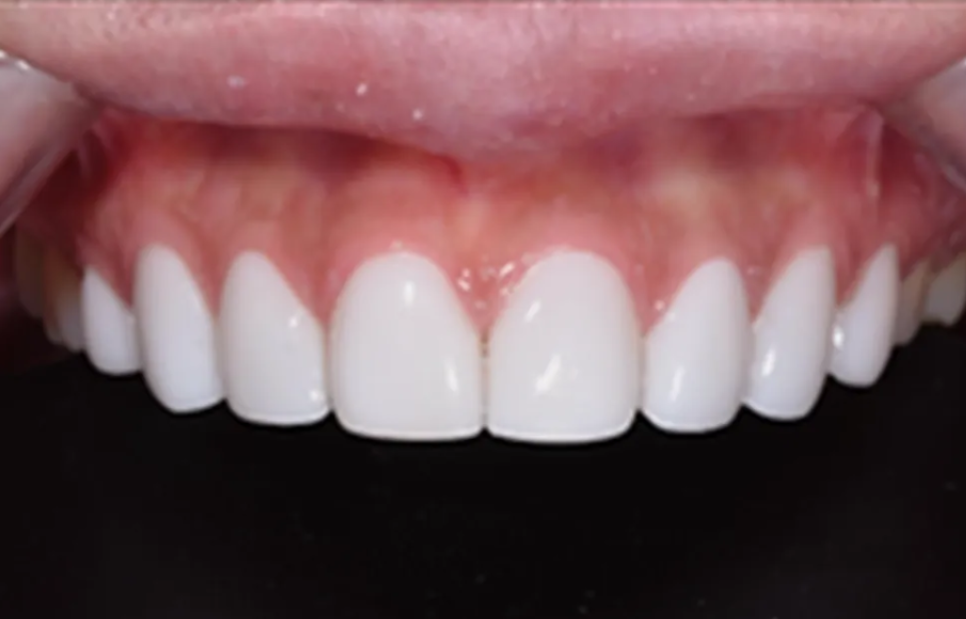
Based on the photos, what the patient wanted was a bright, pure-white tone with neat and balanced tooth shapes. Using this reference, we designed the smile by comprehensively considering her facial shape, mouth size, and the range of tooth visibility when smiling.
The important thing is not to copy the reference photo exactly, but to create a harmonious and natural design that suits the patient’s unique facial proportions and features. The goal was to achieve ideal shape, proportion, and color while maintaining a natural look rather than an artificial one.
Treatment results – Before & After
Now, let me show you the treatment results you’ve been waiting for.
Upper teeth results
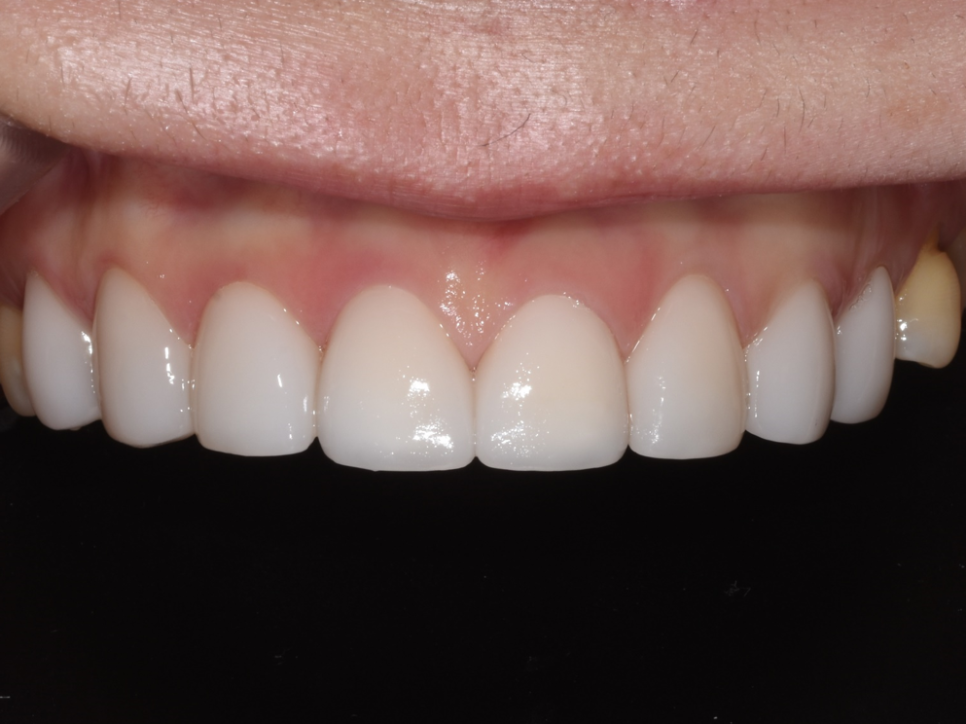
Bright, even color, natural shape, and very close to the style the patient wanted
The upper teeth showed a truly dramatic change. The yellowish color was improved to a bright and even tone, and the signs of resin restoration completely disappeared. The protruded central incisors were naturally aligned, and the black triangles between the teeth were neatly closed.
Especially because gum contouring was performed at the same time, the gum line was also evened out, creating a much more harmonious overall appearance. The result came very close to the style of the reference photo the patient initially showed us.
Lower teeth results
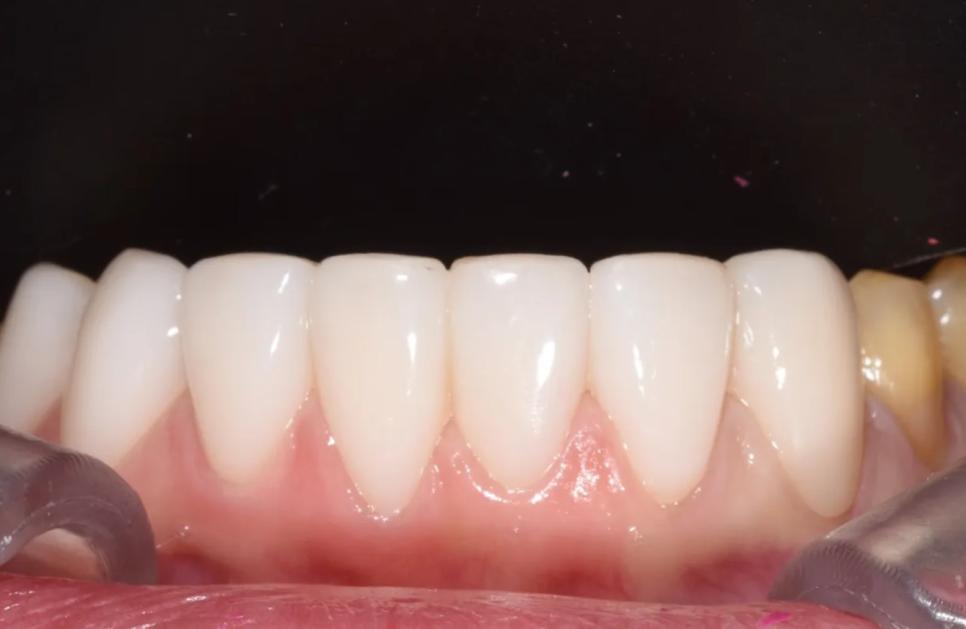
Lower teeth after treatment
The lower teeth also changed significantly. The crooked front teeth were aligned neatly, and the space between the central incisors was naturally closed. The worn areas at the gum margin were also neatly restored with ceramic resin filling.
Compared with before treatment, you can see that the color, shape, and gum line were all dramatically improved.
As this case shows, successful laminate treatment is not just about shaving down teeth and attaching restorations. The key is to comprehensively analyze the patient’s oral condition, previous treatment history, tooth structure, bite relationship, and gum condition, and then establish a customized strategy.
A change that lets you smile with confidence
The patient was extremely satisfied with the final result. She was someone who did not smile often, but after the final laminate bonding, she was able to smile confidently and broadly. As a dentist who performs esthetic restorations, this is also one of the most rewarding moments.
Esthetic restorative treatment is not simply about making teeth look pretty. It is treatment that improves a patient’s confidence and quality of life. If you hesitate to smile, cover your mouth with your hand, or keep your lips closed because you are worried about your teeth, I recommend consulting a specialist to find out which method is most suitable for you.
Finally, here is a brief guide to care after laminate treatment:
-
Be careful with hard foods – avoid biting directly with the front teeth into ice, candy, hard nuts, and similar foods
-
Regular checkups – it is recommended to check the condition of the laminates through a routine examination every 6 months
-
Proper oral care – maintain gum health with thorough brushing and flossing
If you are concerned about the shape or color of your teeth, the most important thing is to create a customized treatment plan based on your own condition. If you have any questions, please feel free to contact us for a consultation. Thank you.