I hesitate every time I smile because of my gap teeth
This is something people with a gap between their front teeth often say. In dentistry, the space between the upper front teeth (central incisors) is called a “midline diastema,” and because it can become a major aesthetic concern, it often causes stress.
However, many people think this “gap between the front teeth” can only be corrected with orthodontics. In fact, veneers can also solve it sufficiently. Today, I’ll introduce an actual case in which a severe 2.7 mm gap between the front teeth was improved with veneers alone, without orthodontic treatment.
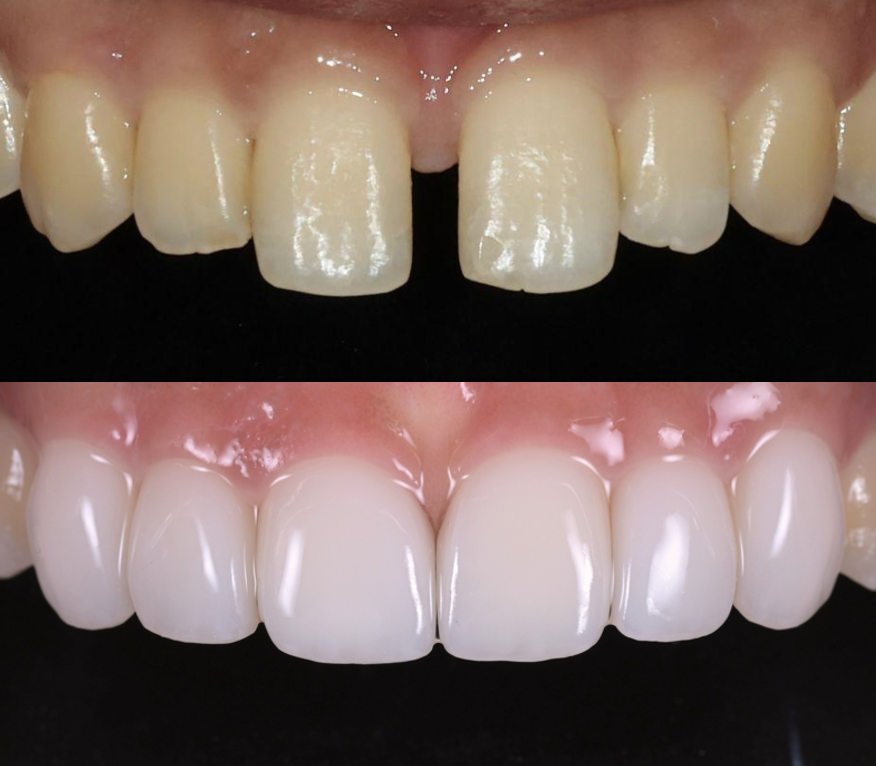
The key point of this post is clear. I’ll show in detail how a severe gap between the front teeth was resolved with veneers alone, without orthodontics, and what the results were.
Introduction to the patient and initial examination
The patient in this case was a 26-year-old woman who did not want orthodontic treatment. The gap between her front teeth had been a long-standing complex, but she felt strongly burdened by the idea of wearing orthodontic appliances for a long time.
As a result of the diagnosis, the distance between the two upper front teeth (central incisors) was measured at about 2.7 mm. In Koreans, a gap of more than 2 mm between the front teeth is quite rare, and 2.7 mm is considered a fairly severe case.
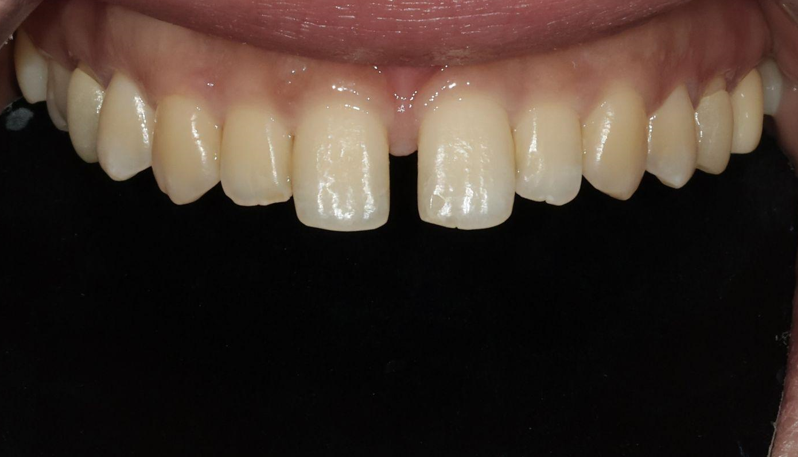
About 2.7 mm. This is a case where the gap is unusually large by Korean standards.
As you can see in the photo, the two front teeth themselves were also quite long. In addition to the gap, the teeth looked long, which greatly reduced the overall aesthetics. A closer look also showed that the centers of the upper and lower teeth did not align.
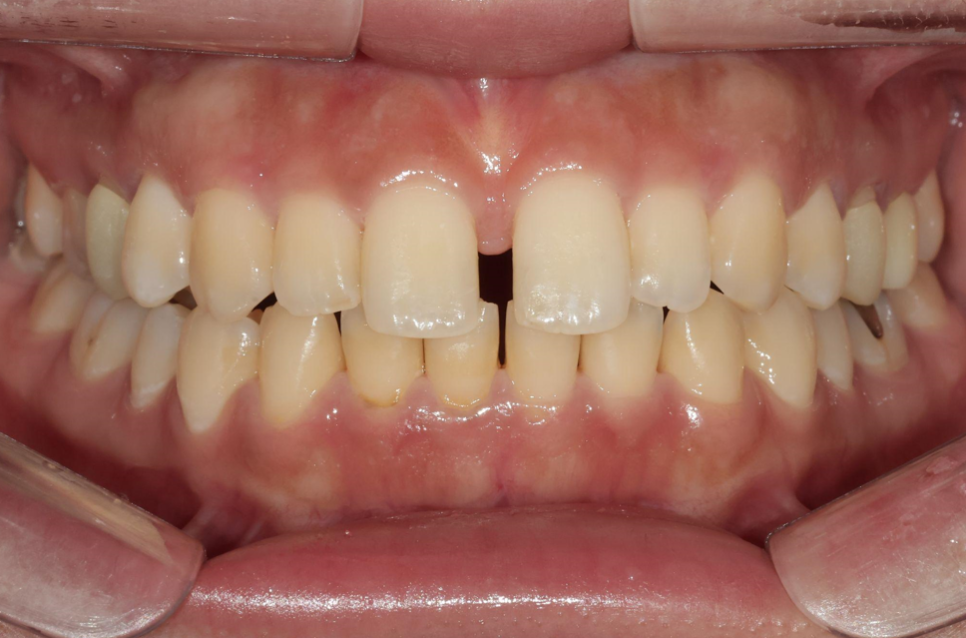
A mild midline diastema is also seen in the lower teeth, and the center lines of the upper and lower teeth do not match.
Fortunately, aside from the gap in the front teeth, there were no special abnormalities in the arrangement of the other teeth or in the bite (how the upper and lower teeth fit together). However, because the gap in the front teeth was immediately visible when smiling, the patient’s aesthetic concern was quite significant.
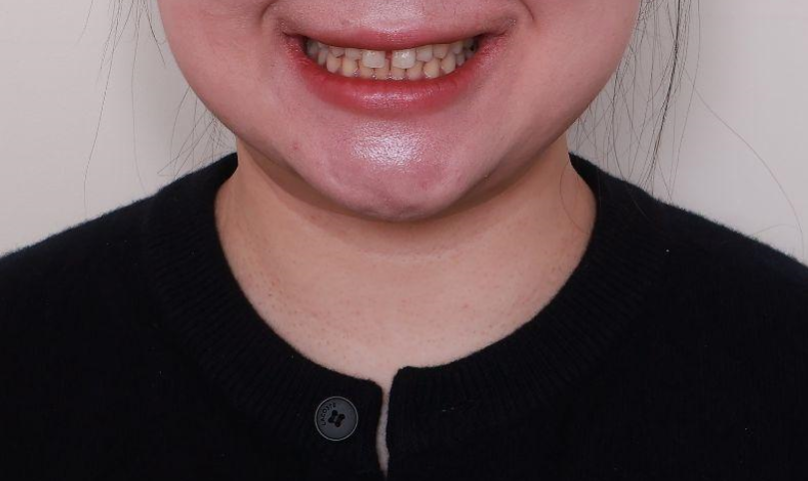
What is a midline diastema? – Treatment options
A midline diastema refers to a space between the upper front teeth (central incisors). Cases range from a small gap of about 0.5 to 1 mm to severe cases like this one, reaching 2.7 mm.
So what treatment options are available for correcting gap teeth? Let’s compare them.
| Treatment option | Advantages | Disadvantages | Treatment period |
|---|
| Orthodontic treatment | Directly moves the teeth for a fundamental solution | Takes a long time (1–2 years or more) | Long term |
| Resin bonding | Relatively simple and less costly | Limited aesthetics | 1–2 visits |
| Veneers | Improves shape, color, and spacing at the same time; excellent durability | Less fundamental than orthodontics | 2–3 visits |
| Crowns | Can significantly change overall shape | Requires a lot of tooth reduction, so it may be too aggressive | 2–3 visits |
In this patient’s case, because she did not want orthodontics and also needed adjustment to the tooth length, veneers were the most optimal choice. They were also the only method that could close the gap while improving the shape and length of the teeth, minimizing tooth damage.
Treatment plan – Approach with veneers
The plan was to close the midline diastema and adjust the tooth length at the same time using veneers alone, without orthodontics. The key points especially important in this case are summarized below.
① Space distribution
Naturally distributing the large 2.7 mm gap was the biggest challenge in this case. If the space is closed by concentrating it on only one tooth, it looks unnatural, so the space must be distributed naturally across multiple teeth.
② Tooth length adjustment
The two upper front teeth were noticeably longer than the other teeth. The incisal edges (the tips of the teeth) had to be properly adjusted to create harmonious proportions with the surrounding teeth.
③ Upper and lower midline correction
The mismatch between the center lines of the upper and lower teeth was also planned to be visually corrected through the veneer design.
④ Color improvement
The treatment was carried out with consideration for overall color harmony, including the lower front teeth.
Veneers are a method in which a thin porcelain (ceramic) shell is bonded to the tooth surface with almost no tooth reduction. It is a treatment that preserves the teeth while securing both aesthetics and durability.
Treatment results – Before & After
Now, let’s look at the results you are most curious about.
Upper teeth result
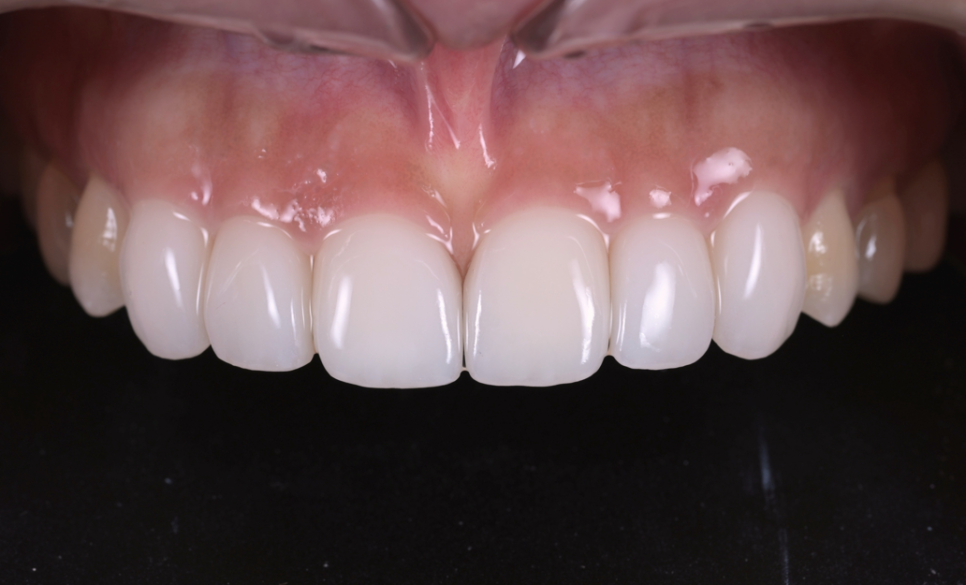
After treatment, upper teeth – the 2.7 mm midline diastema was completely closed, and the tooth length was also appropriately adjusted
The 2.7 mm gap between the upper front teeth was completely closed. At the same time, the length of the two long front teeth was appropriately reduced, creating a natural shape and proportion as if they had always been the patient’s own teeth.
Lower teeth result
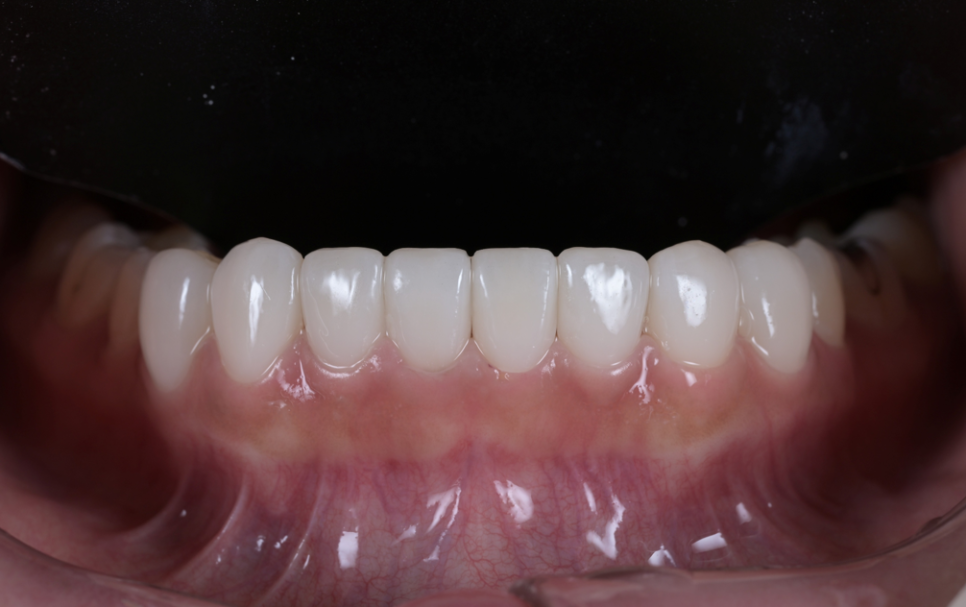
After treatment, lower teeth – minor spaces closed and color improved
The small spaces in the lower front teeth were also closed, and the color was naturally improved. You can see that the upper and lower teeth now blend together harmoniously overall.
Final front-view result
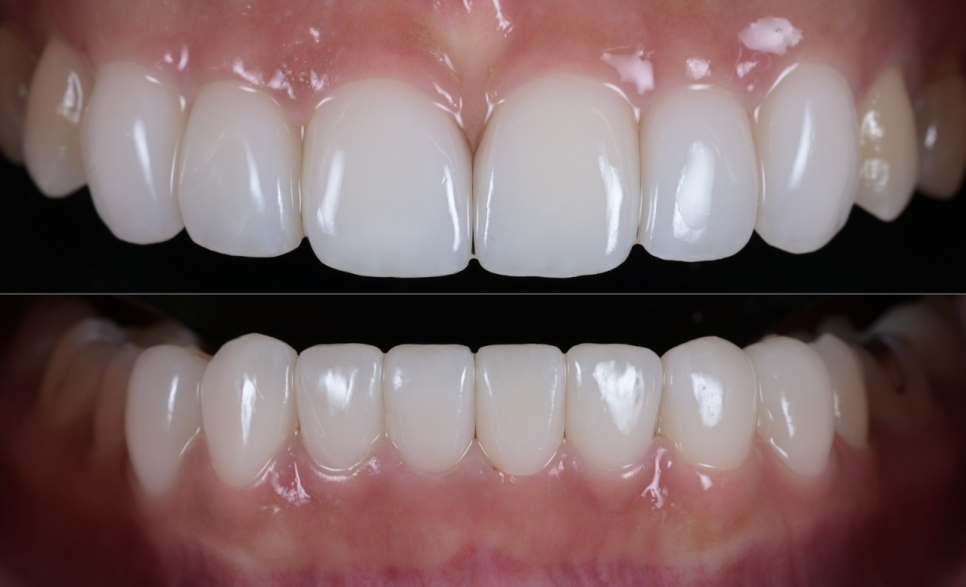
After treatment – space distribution was done well, and the proportions between the teeth are naturally balanced
Overall, the space distribution was done very well, and the proportions between the teeth now blend together naturally. The smile line was also greatly improved, making this a good case that shows even a severe front-tooth gap like this can be resolved naturally without orthodontics.
Key points of this case
Let’s summarize the notable points of this case.
| Point | Details |
|---|
| Size of the midline diastema | Even a very severe 2.7 mm gap can be resolved without orthodontics |
| Key technique | Space distribution is the key to a natural result |
| Simultaneous improvements | Gap closure + tooth length adjustment + color improvement all at once |
| Midline correction | The mismatch in the upper and lower center lines was also visually corrected |
| Suitable patients | A good alternative for those who find orthodontics burdensome or want faster treatment |
However, one thing I do want to emphasize is that a natural result is only possible when accurate diagnosis and skilled laboratory work and treatment are in place. In particular, when closing a large gap like 2.7 mm, precise planning for how to distribute the space is essential.
Precautions and care after veneer treatment
To keep veneers looking beautiful for a long time, it is important to follow a few care guidelines.
-
For 24 to 48 hours after treatment, avoid strongly staining foods and drinks such as curry, coffee, and wine
-
If you have a habit of grinding your teeth or clenching your jaw, wearing a night guard (a protective appliance worn during sleep) is recommended
-
Please avoid biting into ice or hard candy with your front teeth
-
Have your veneers checked regularly at a dental clinic every 6 months to 1 year
-
Brush with a soft toothbrush and use a toothpaste with low abrasiveness
If you follow these care instructions well, veneers can last for 10 to 15 years or more.
It can change without orthodontics
For those who are worried about severe front-tooth gaps but feel burdened by the long duration of orthodontic treatment, I hope the case introduced today offers a little hope. Veneers are a treatment that can achieve dramatic aesthetic improvement in a short treatment period.
Of course, veneers may not be the best option for everyone. I recommend deciding on the most suitable treatment for your condition only after consulting a specialist.
If you have any questions about gap teeth or midline diastema, please feel free to contact us anytime. Thank you.
Chief Director Kim Seon-min, Ceramics Dental Clinic, Hakdong Station