For missing teeth, do you always have to get implants?
Hello, I’m Kim Sun-min, the chief director of Ceramick Dental Clinic. Today, I’d like to introduce an orthodontic treatment case of a 20-year-old male patient who was congenitally missing three lower teeth. This is a case in which the gaps left by missing teeth were closed, and even protrusive mouth was improved, using orthodontic treatment only, without implants. I think it will be a good reference for people who were born with missing teeth.
A 20-Year-Old Male Patient’s Concerns
This patient visited the clinic with protrusive mouth and irregular tooth alignment as his main concerns. He was a 20-year-old male patient, and examination showed that three lower teeth had not formed congenitally. Specifically, the two lower lateral incisors and the left lower second premolar were missing, for a total of three teeth.
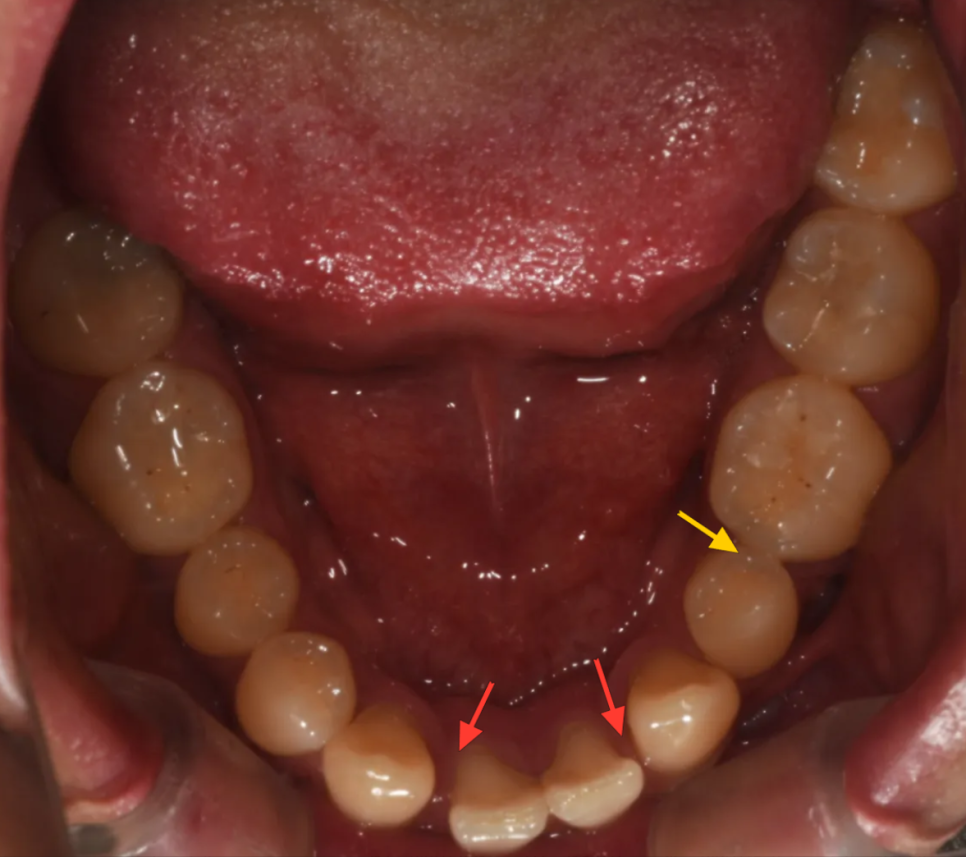
The two lower front teeth (red) and one left lower premolar (yellow) were missing
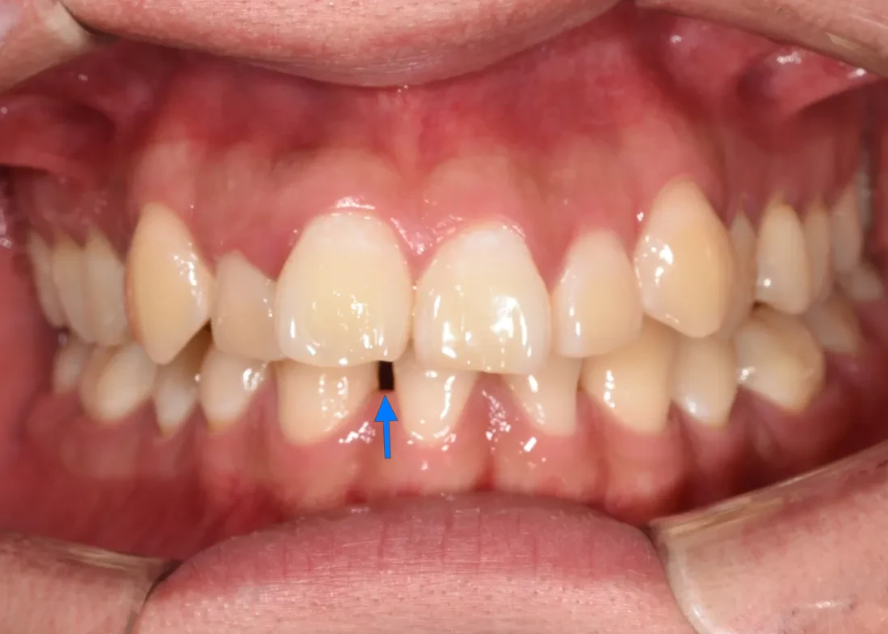
The spaces where teeth were missing were visible from the front as well
Because the teeth were missing, empty spaces were visible here and there, and the front teeth were angled far forward, giving an overall untidy impression. Although he had a handsome face, the impact of the tooth problem on his appearance was quite significant.
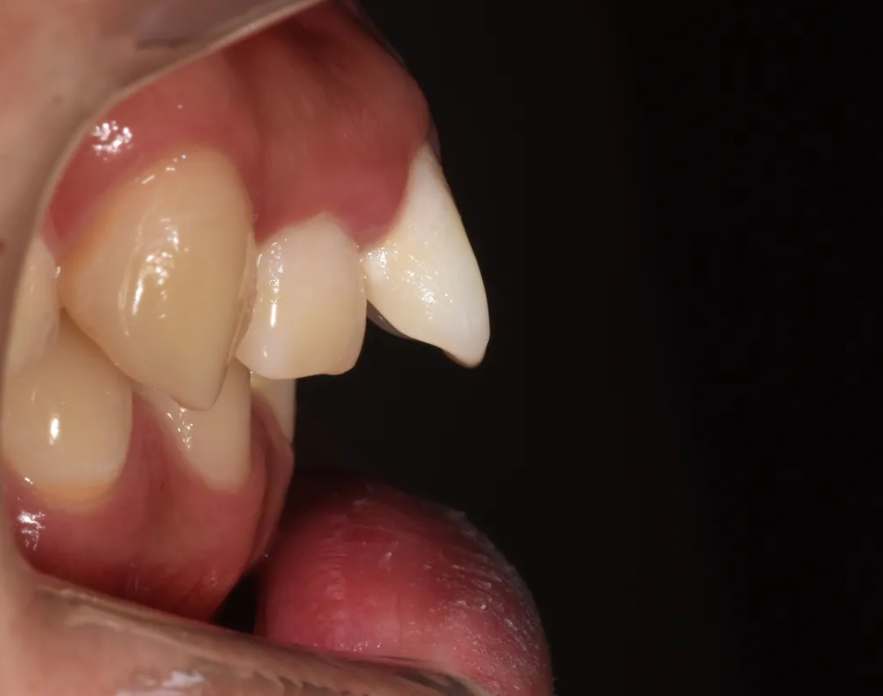
The upper front teeth were protruding significantly, creating an untidy impression
If teeth are missing, the first treatment that comes to mind is usually implants, but the patient had a considerable fear of implant surgery. So he strongly expressed that he wanted to solve the problem with orthodontic treatment alone, if possible.
Detailed Diagnosis Before Orthodontic Treatment: What Were the Problems?
Since the treatment method was decided to be orthodontics, we first carried out a detailed diagnosis for careful treatment. We analyzed the skeletal condition and tooth arrangement using panoramic radiographs and cephalometric radiographs (lateral skull X-rays). The identified problems are summarized below.
| Issue | Details |
|---|
| Protrusive mouth | Front teeth were significantly forward, accompanied by lip protrusion |
| Poor tooth alignment | The dental arch was uneven and crooked |
| Deep bite | The upper front teeth excessively covered the lower front teeth |
| Congenital missing teeth | Both lower lateral incisors and the left lower second premolar were missing, for a total of 3 teeth |
| Midline discrepancy | The upper dental midline was significantly shifted to the right |
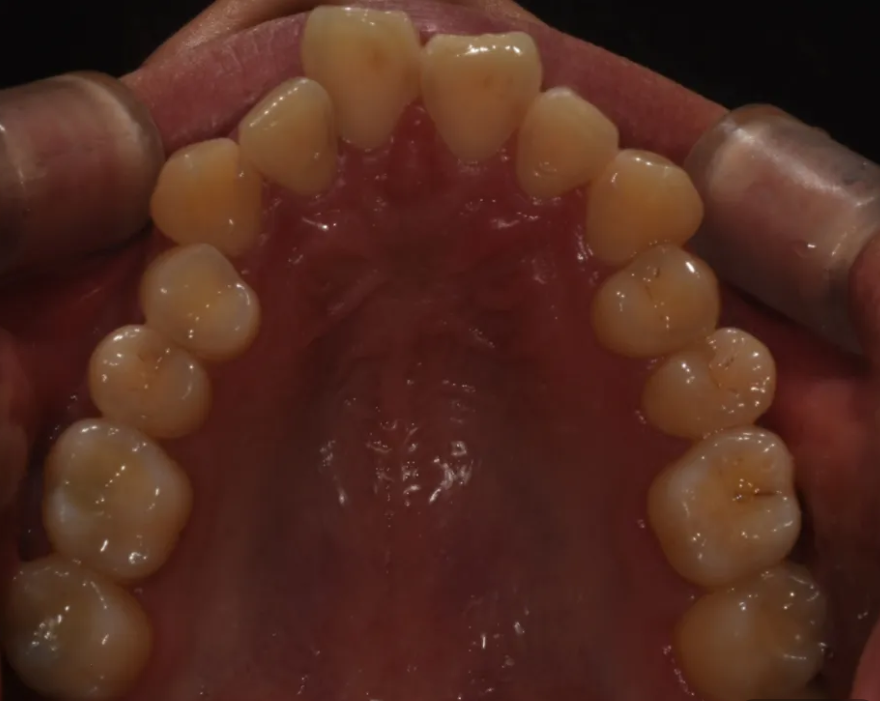
Upper teeth before treatment: noticeable crowding and irregularity can be seen
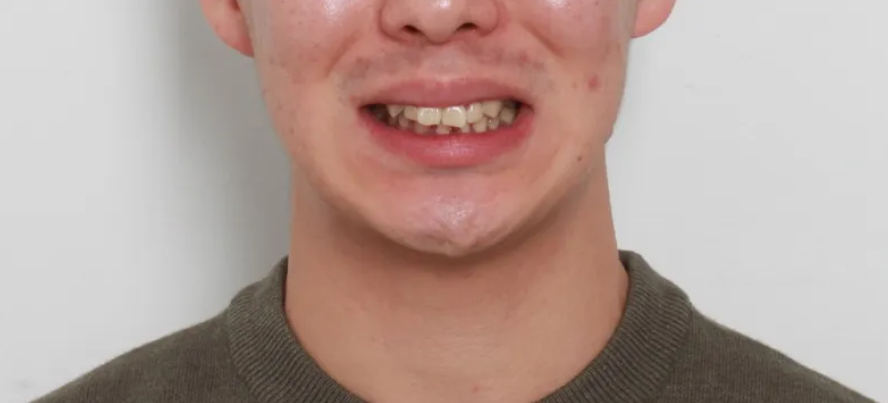
Although the patient was handsome, the unrefined appearance caused by the alignment of the teeth was unfortunate
If you look closely, the center line is also slightly shifted to the right
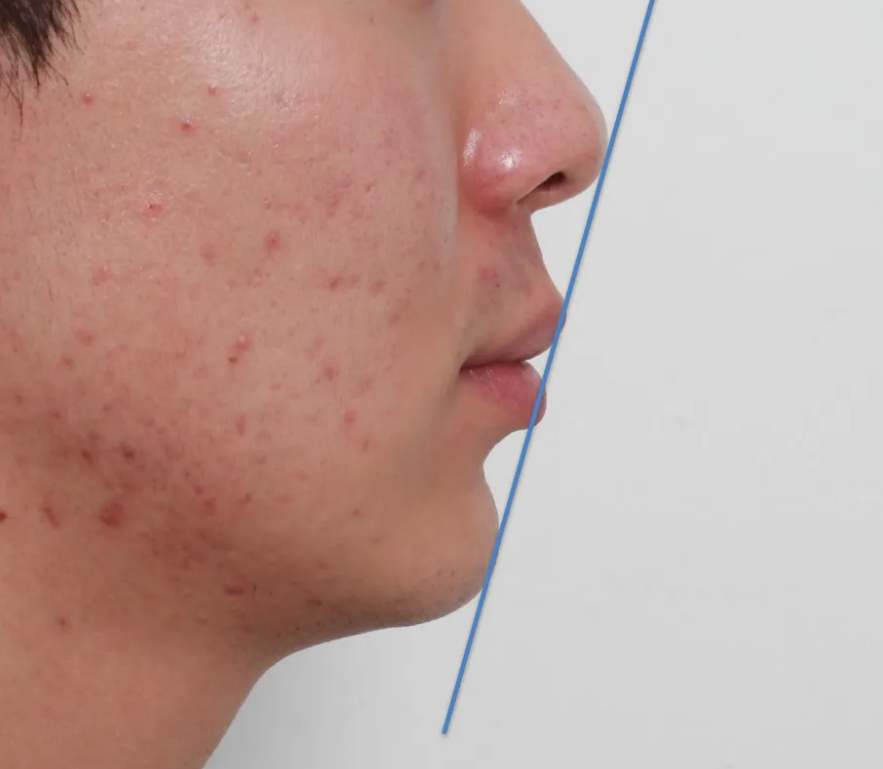
It was not severe, but a mild protrusive mouth was also observed.
This was a case in which multiple problems were intertwined, not just one, so when making the treatment plan, we had to carefully review how to address each issue at the same time.
What Is Congenital Missing Teeth? And Treatment Options
For those hearing the term congenital missing teeth for the first time, let me explain briefly. Congenital missing teeth refers to cases where certain teeth are not formed at all from birth. It can occur due to genetic factors or developmental abnormalities, and it is more common than many people think.
In particular, the pattern in which the lower lateral incisors or second premolars are missing, as in this patient, is a relatively common type among congenital missing teeth.
Typically, missing teeth are often treated with implants, but
-
the patient was afraid of implants, and
-
because protrusive mouth and tooth alignment also needed to be improved through orthodontic treatment,
we ultimately chose space closure through orthodontics. Closing the space with orthodontics has the major advantage of restoring function using only natural teeth, without the need for additional procedures such as implants or prosthetics later on.
Orthodontic Treatment Plan
Based on the detailed diagnosis, we established the following orthodontic treatment plan.
- Extraction plan
We decided to extract the two upper first premolars. Using the space created by extraction allows the front teeth to be moved backward, improving the protrusive mouth.
- Align the lower midline
The goal was to close the gaps created by the existing missing teeth and align the upper and lower midlines. However, since there were two missing teeth on the left and only one missing tooth on the right, there was asymmetry, so it would be difficult to expect perfect symmetry.
- Improve deep bite
To solve the problem of the upper front teeth covering the lower front teeth too much, we decided to use an ABP (plastic bite plate). This bite plate helps prevent excessive interlocking of the upper and lower teeth and naturally reduces the deep bite.
- Improve the midline
If necessary, we planned to use a mini screw (TAD) to precisely align the midline.
- Use of wisdom teeth
A notable point was that the upper and lower left wisdom teeth were occluding and fitting together. Because there was a shortage of teeth, we decided not to extract the wisdom teeth and instead align them orthodontically for use.
Braces Placement and Treatment Process
According to the plan, braces on the upper and lower teeth (brackets + wires) were placed, and full treatment began. A plastic bite plate (ABP) was also used to improve the deep bite.
As treatment progressed, the teeth were aligned neatly using the extraction spaces, and the front teeth were gradually moved backward. At the same time, the empty spaces in the missing-tooth area were slowly closed in the lower arch.
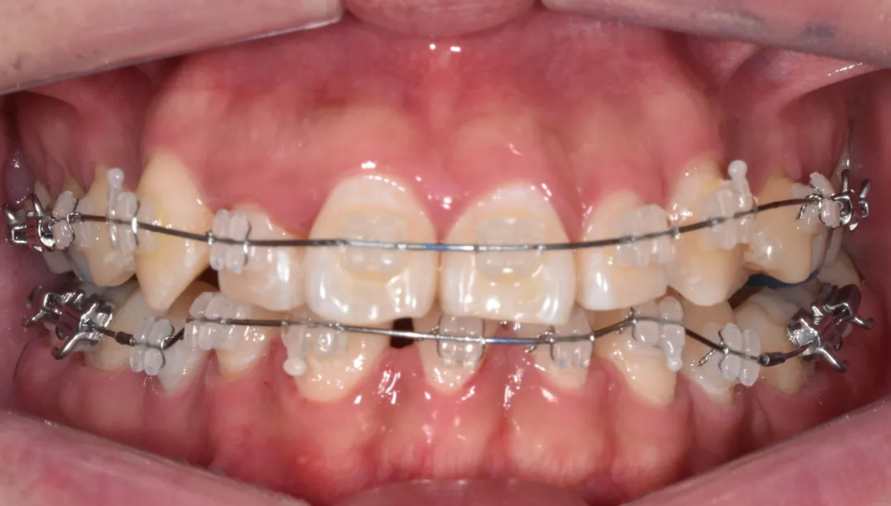
Treatment in progress after braces placement
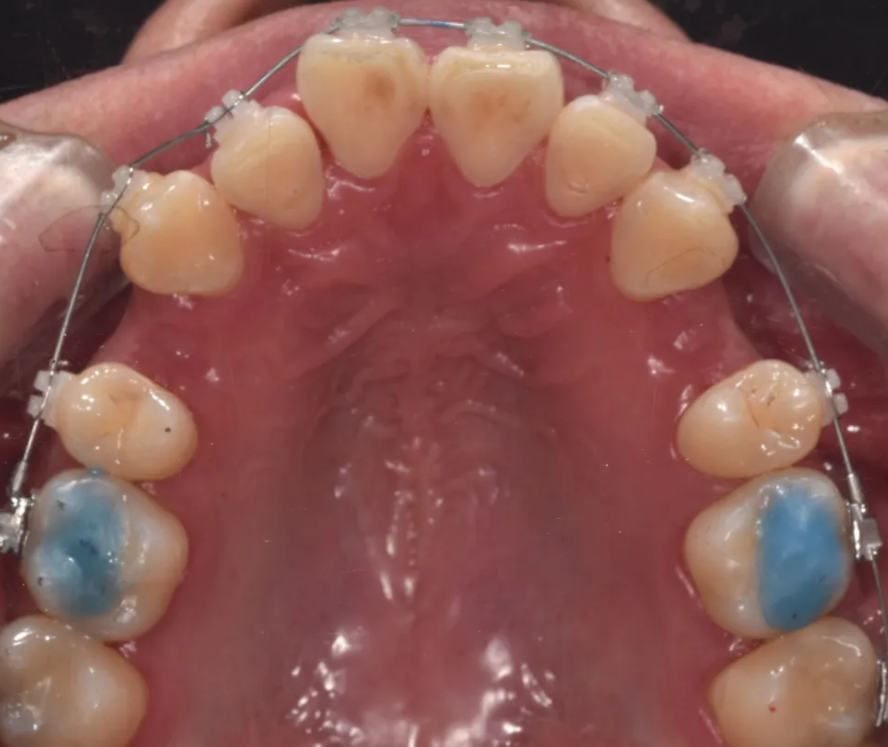
The upper premolars were extracted to improve the protrusive mouth. The bite plate for improving the deep bite is also visible.
Orthodontic Treatment Completed: Before & After Comparison
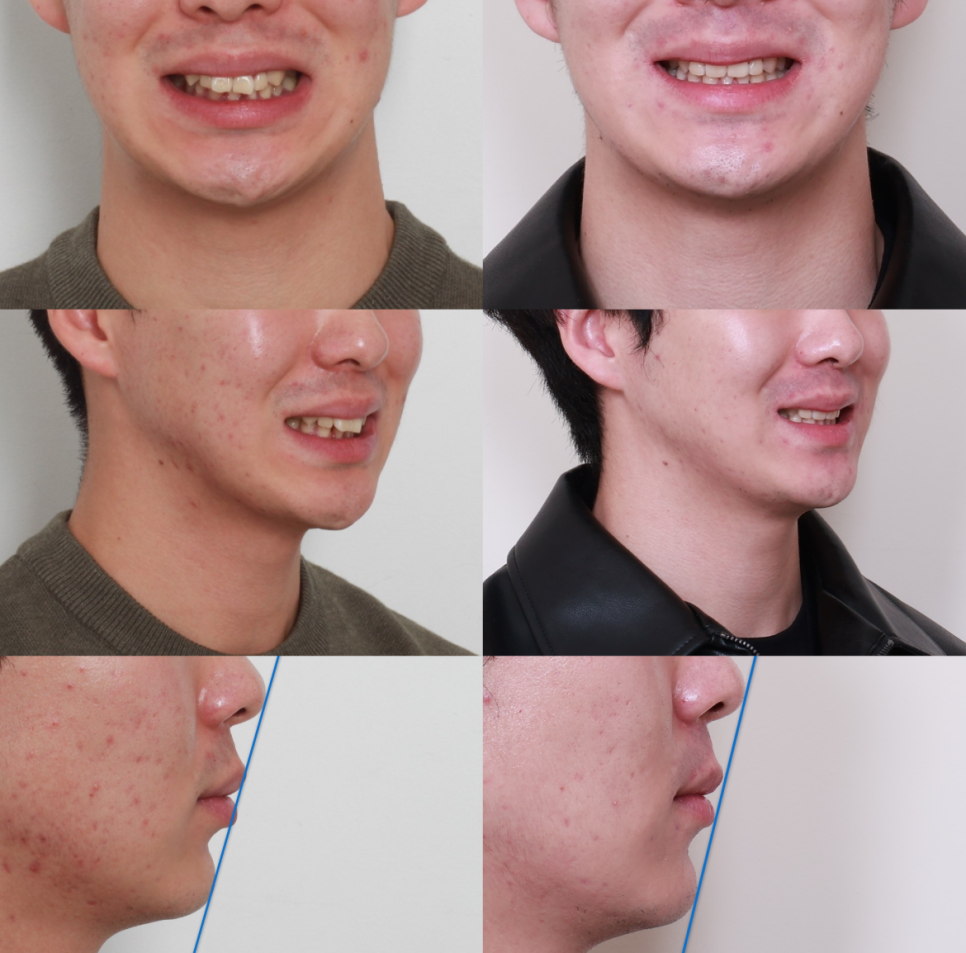
Here are the results after treatment was completed. All the planned goals were achieved. First, the upper teeth were neatly aligned, and as the front teeth moved into the premolar extraction spaces, the protrusive mouth improved.
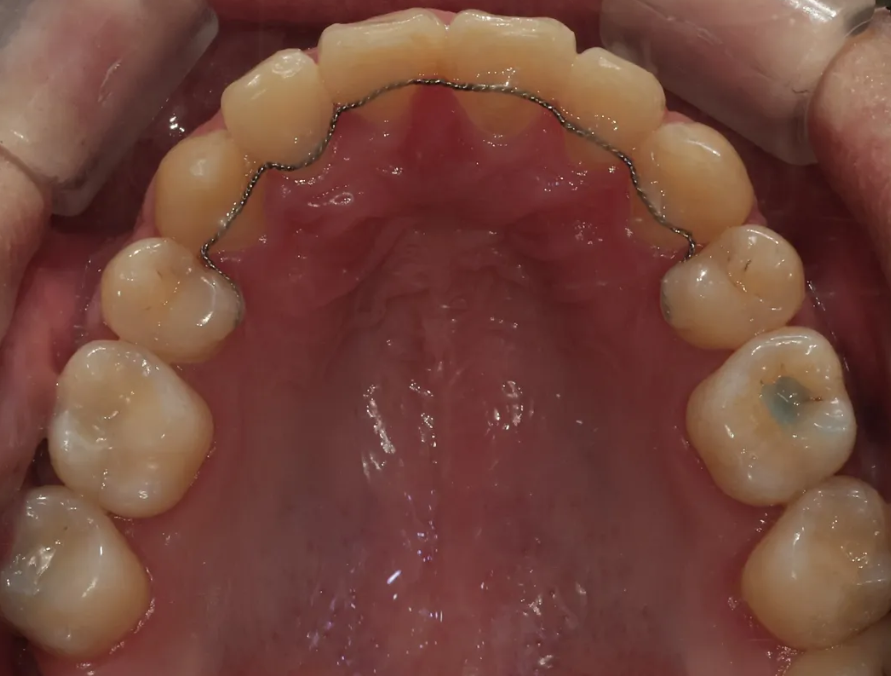
After orthodontic treatment, the space was closed. Improvement in the protrusive mouth can be expected.
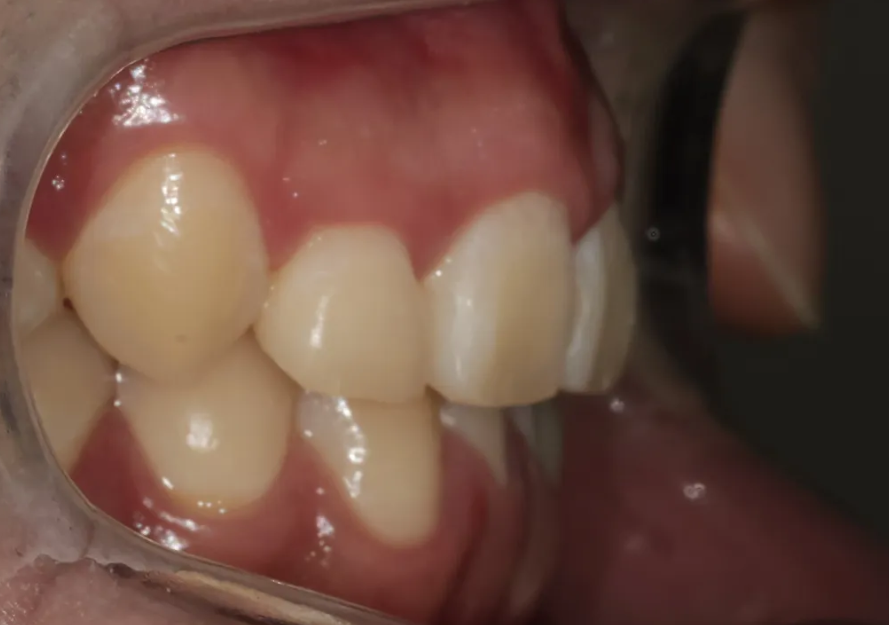
The upper teeth, which had protruded significantly, were also brought in nicely
From the side view, you can clearly see the improvement in the protrusive mouth.
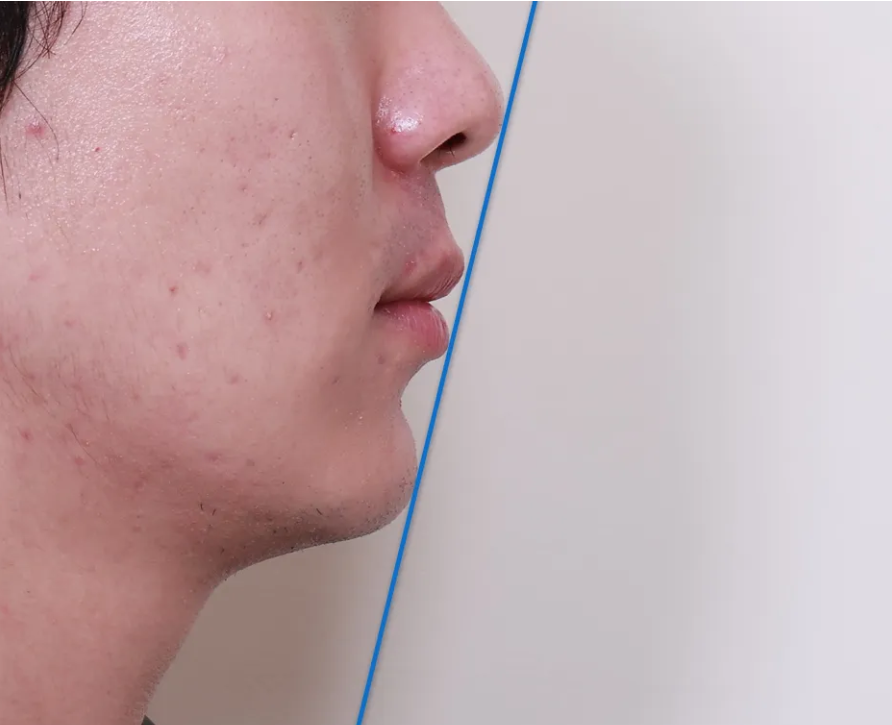
As the teeth were aligned nicely, the front view, which had previously looked unrefined, also improved a lot.
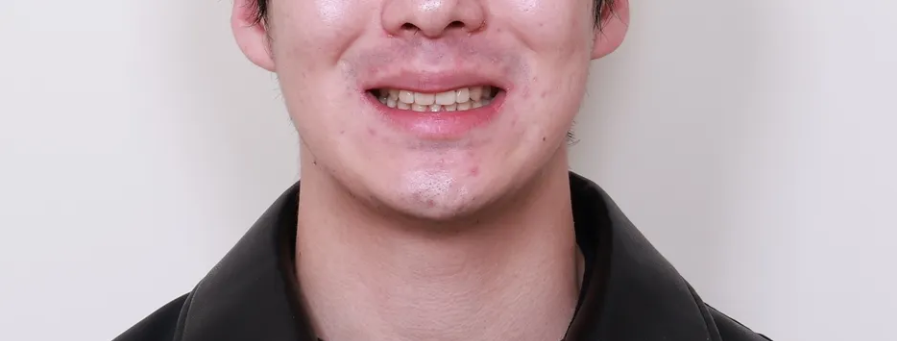
There was an effect of improving the overall facial appearance
Most importantly, the greatest achievement was that all the spaces were filled using only natural teeth, without the implants the patient had been worried about. As the protrusive mouth improved, the overall facial impression also became much neater and cleaner. The treatment results are summarized below.
| Item | Before Treatment | After Treatment |
|---|
| Protrusive mouth | Front teeth protruding forward, with lip protrusion | Lip protrusion reduced by moving the front teeth backward |
| Tooth alignment | Crooked and uneven | Neat and uniform dental arch achieved |
| Deep bite | Upper front teeth excessively covering the lower teeth | Appropriate vertical overlap achieved |
| Midline | Upper midline shifted to the right | Upper and lower midlines aligned |
| Missing-tooth space | Visible empty spaces | Space completely closed, no implant needed |
| Wisdom teeth | Unaligned | Aligned orthodontically and used functionally |
Key Points of This Case
Lastly, let me summarize the key points I hope you will remember from this case.
-
Having congenital missing teeth does not necessarily mean implants are the only answer. Depending on the situation, orthodontic treatment can close the empty spaces and restore function using only natural teeth.
-
Extraction orthodontics is an effective way to improve both protrusive mouth and tooth alignment at the same time. If the upper premolars are extracted and the front teeth are moved back into that space, the mouth can be brought in.
-
Wisdom teeth can also be used instead of being discarded, if their condition is good. If the upper and lower wisdom teeth fit together well, as in this patient, they can be aligned orthodontically instead of being extracted and used as functional teeth.
-
Orthodontic treatment is more than simply straightening teeth. Please remember that it is a treatment that can change the overall facial impression and help restore confidence.
If you have congenitally missing teeth, protrusive mouth, or multiple concerns such as tooth alignment, we recommend finding the most suitable treatment method for yourself through a detailed diagnosis. If you have any questions, please feel free to come in for a consultation anytime. Thank you!