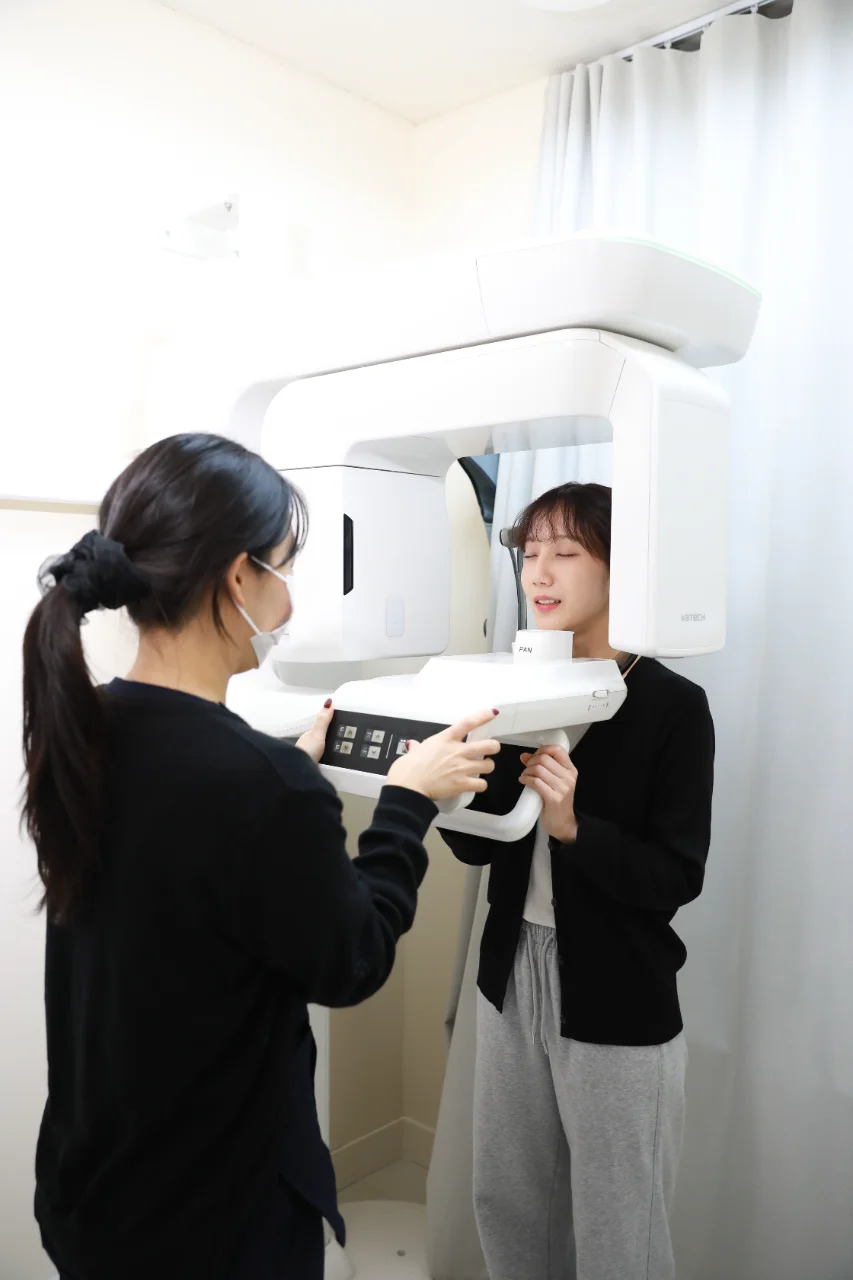
People in their 40s are still relatively young, so it is only natural to feel startled when their teeth start to become loose. You may worry unnecessarily at the thought, “Could I need an implant?”
You may even be gently pushing that tooth with the tip of your tongue right now—just as you did several times yesterday and again this morning.
Today, I would like to explain tooth mobility and periodontitis for those who are in this situation.
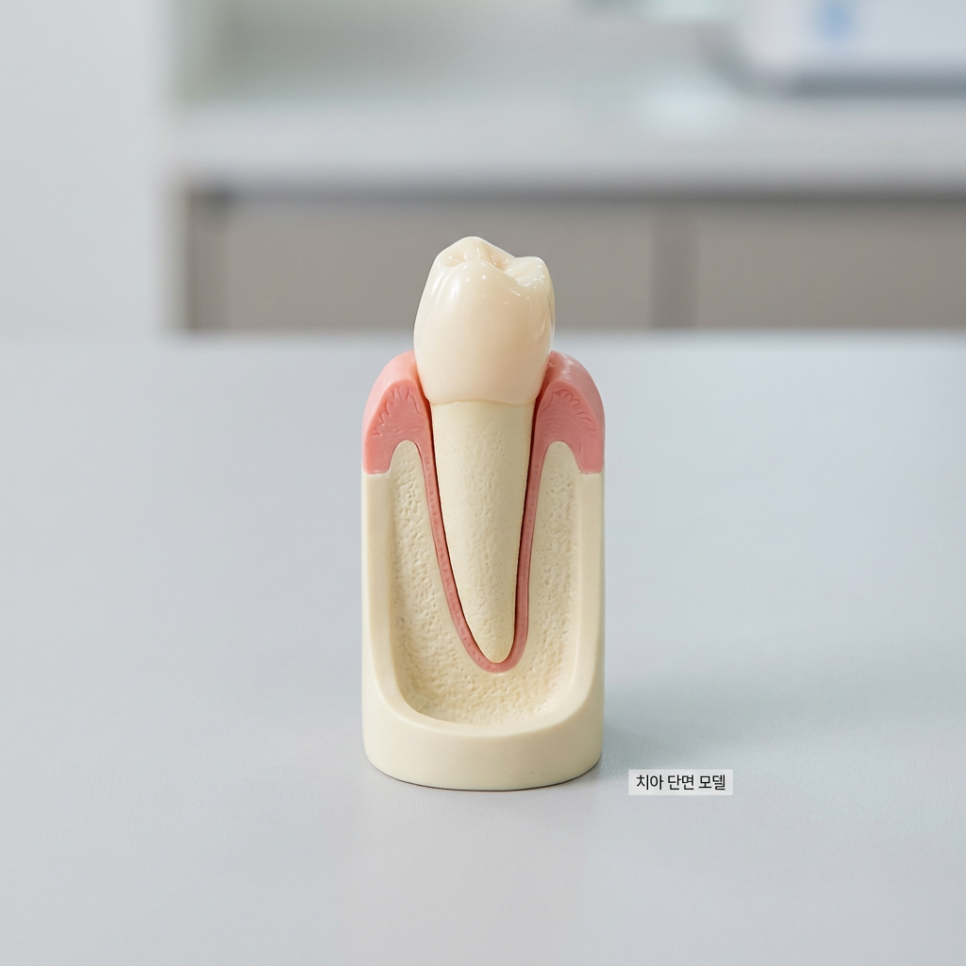
Loose does not mean it is all over — tooth mobility also has “stages”
Dentists do not simply classify a loose tooth as either “moving” or “not moving.” They first examine the degree of mobility.
Grade 0 (normal): Less than 0.2 mm
Grade 1 (mild): Within 1 mm from side to side
Grade 2 (moderate): More than 1 mm from side to side
Grade 3 (severe): Movement in the up-and-down direction as well
Of course, it is difficult for patients to measure this themselves, but these figures can serve as a general guideline. In fact, some people visit the dentist because they suddenly become concerned about movement that is completely within the normal range.
However, if mobility beyond the mild stage is suspected, it is advisable to visit the dentist as soon as possible.
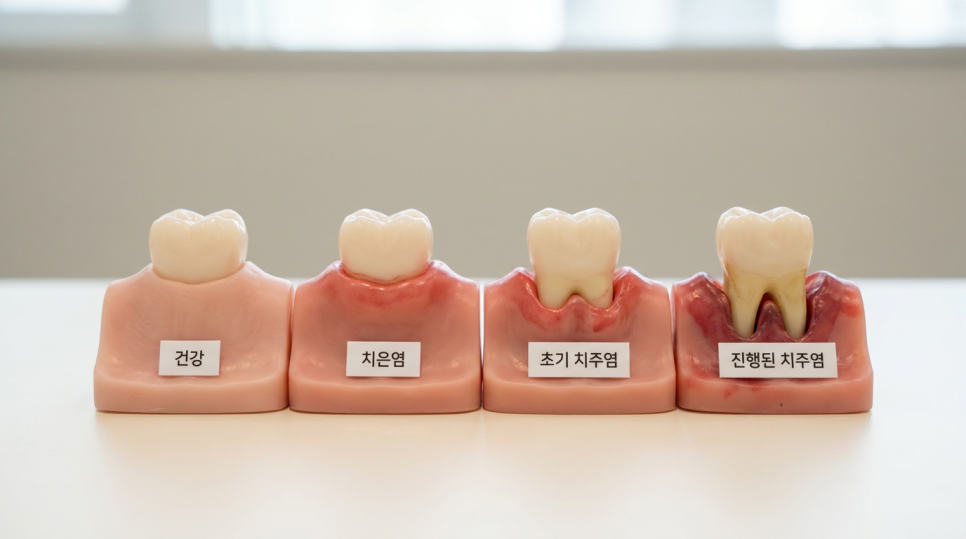
Why does it become noticeable specifically in your 40s, and why does it seem to happen all at once?
Many people blame themselves at this point, saying, “This happened because I did not take proper care of my teeth.”
However, the nature of gum disease means that there are reasons why it can develop this way.
Chronic periodontitis is generally not very painful in its early stages, and discomfort tends to appear only after it has progressed considerably.
This disease generally becomes apparent after the late 30s. What gradually accumulated during your 20s and 30s finally surfaces in your 40s in the form of tooth mobility.
Because it does not hurt, it is easy not to notice and simply move on. But realizing it now actually means that you can take the right direction from this point onward.
What changes while you put it off
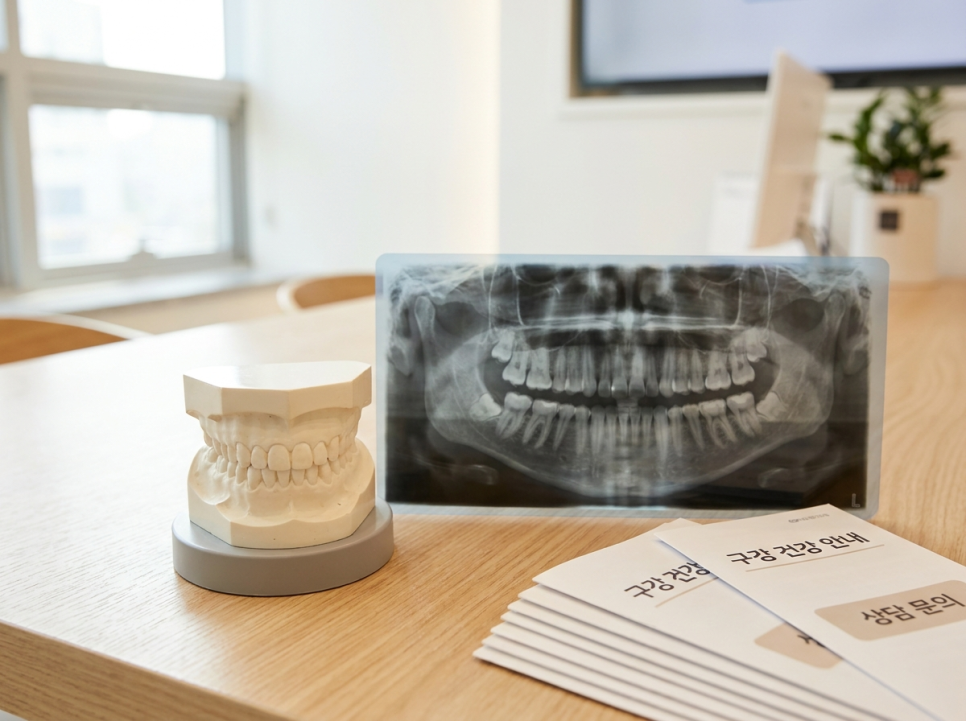
There is one point that needs to be stated honestly: once the bone supporting the teeth has been lost, it does not naturally grow back on its own.
That is why “it is best to receive treatment before the bone is lost” is considered an established rule. The longer you wait, the more the bone may gradually decrease during that time.
However, if the condition is still in its early or middle stages, intervening now can sufficiently slow its progression and help preserve the tooth. This means that a treatment plan can be made based on the bone that remains now.
Check as soon as possible
If you want to preserve even one more tooth, you have probably already realized that you need to have it checked promptly. This examination is simpler than you may think. Periodontal health is assessed in two ways.
| Examination method | What it evaluates |
|---|
| Periodontal probing | How deep the space between the gums and the tooth (the periodontal pocket) is |
| Radiograph (X-ray) | How much of the bone supporting the tooth remains |
On an X-ray, areas where bone has been lost appear as dark spaces. Therefore, a single image and a simple examination can provide an approximate idea of the stage on that day.
One additional point: periodontal status is an area in which assessments may vary somewhat depending on the person evaluating it. For this reason, a collaborative setting where several dentists examine the condition together may provide greater reassurance.

Not something to check just once, but something to monitor together over time
It is difficult to use the term “cure” when discussing periodontal disease.
In other words, the concept of a complete cure is difficult to apply to periodontal disease, and professional examinations and maintenance should continue at intervals of six months to one year. This does not mean that the dental clinic is simply telling you to come in frequently; it means that this is the inherent nature of the disease.
However, if you start today, you will surely feel that you made the right decision five or ten years from now. If you want to keep that currently loose tooth for as long as possible, why not visit the dentist today and have a single X-ray taken?