“I have eight months left until enlistment. Can I start orthodontic treatment now?”
If you have searched this question, you have probably already run the calculations through your mind several times.
If you start now, it seems like your treatment may be interrupted midway by military service. But if you postpone it until after discharge, it may feel as though you are simply letting two years pass by. Many people have trouble deciding because either choice feels like a disadvantage, so today I will sort through this issue.
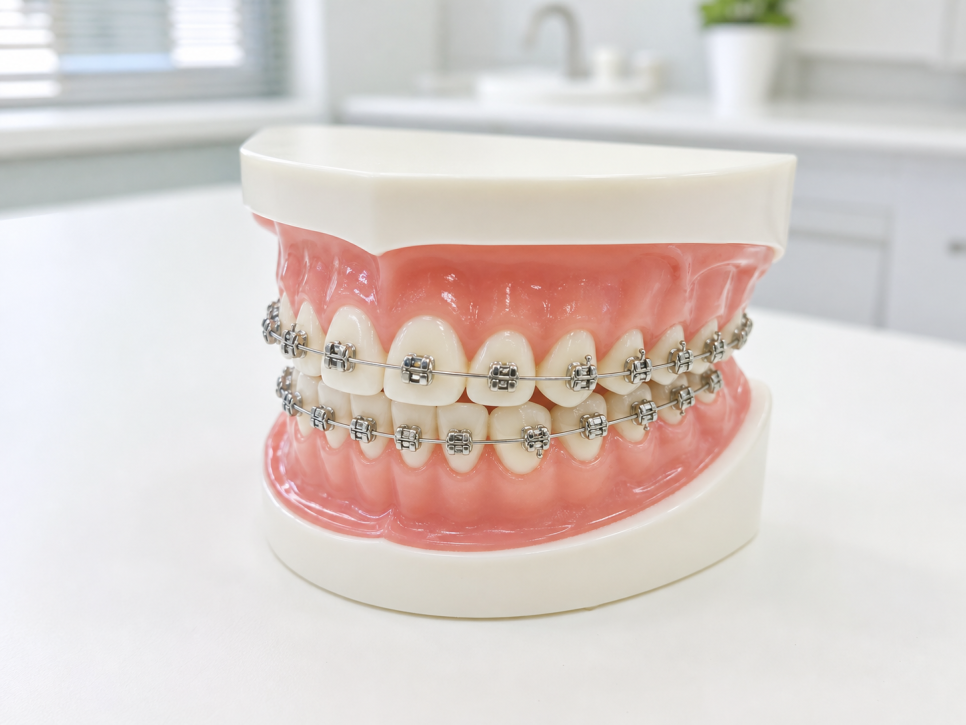
First, you can put aside the concern that “orthodontic treatment might complicate my enlistment.” Under the physical classification system for military service, malocclusion qualifies for grades 4 or 5 only in severe cases. Ordinary malocclusion or having orthodontic appliances fitted has virtually no effect on being classified for active duty.
The reality behind the saying, “Orthodontic treatment will be ruined if you join the military”

Once you enter basic training,
will your orthodontic treatment simply be neglected?
With so many things to worry about regarding military service, it is natural to have this concern as well.
However, the situation looks different when you actually examine the relevant system. According to the Ministry of National Defense directive (the “Directive on Petition Leave for Service Members’ Medical Treatment and Related Matters”), a system is in place under which a commanding officer may authorize an active-duty soldier stationed in a unit to leave the base or stay out overnight when the soldier requests outpatient treatment at a civilian hospital. In other words, being in military service does not inherently prevent you from leaving to receive orthodontic adjustments.
However, this is ultimately an authorization-based system. Depending on the unit’s circumstances and conditions, the interval between appointments may become longer than planned. It is also generally understood that if scheduled orthodontic appointments are not kept, the treatment period may become longer or the treatment may become more complicated. In other words, you should be prepared for some degree of inefficiency compared with receiving treatment while living as a civilian.
Still, if you enlist at a stage when frequent visits are less necessary, perhaps you will be affected a little less, right?
Ultimately, the key question is which stage of treatment you will be in when you enlist.
Three factors that determine whether to start before enlistment or after discharge

The total duration of orthodontic treatment is generally known to be 18 to 30 months. There can be significant differences depending on the condition of the individual’s teeth.
During the early stage of treatment, when tooth movement is particularly active, appointments are generally scheduled every 4 to 6 weeks. In other words, orthodontic treatment does not require the same level of attention throughout the entire treatment period. Instead, there are periods when frequent visits are needed and other periods that allow somewhat more flexibility.
Once you understand this structure, the criteria for making a decision can be summarized as follows.
| Criteria | Question to ask yourself | Why it matters |
|---|
| Time remaining | How many months are left until enlistment? | It determines how much of the early stage, when appointments are needed every 4 to 6 weeks, can be completed before enlistment. |
| Case complexity | Is this a case that requires extensive early management, such as extraction-based orthodontic treatment? | The required frequency of early appointments varies depending on the complexity of the case. |
There is one point I need to state honestly here.
There are definitely cases in which it is better to start after discharge.
This may be the case when the time remaining until enlistment is so short that the period of most active tooth movement directly overlaps with military service, or when the case is complex and requires closely spaced appointments during the early stages. For these individuals, it is difficult to recommend rushing to begin treatment.
Also, to help you assess these factors as accurately as possible, it may be helpful to confirm that the orthodontist you choose is a specialist in orthodontics who has completed additional training (one year of internship plus three years of residency) and passed the relevant qualification examination.
Why it is difficult to decide on your own
If you look at the table above again:
① You already know the time remaining because your enlistment date has been set.
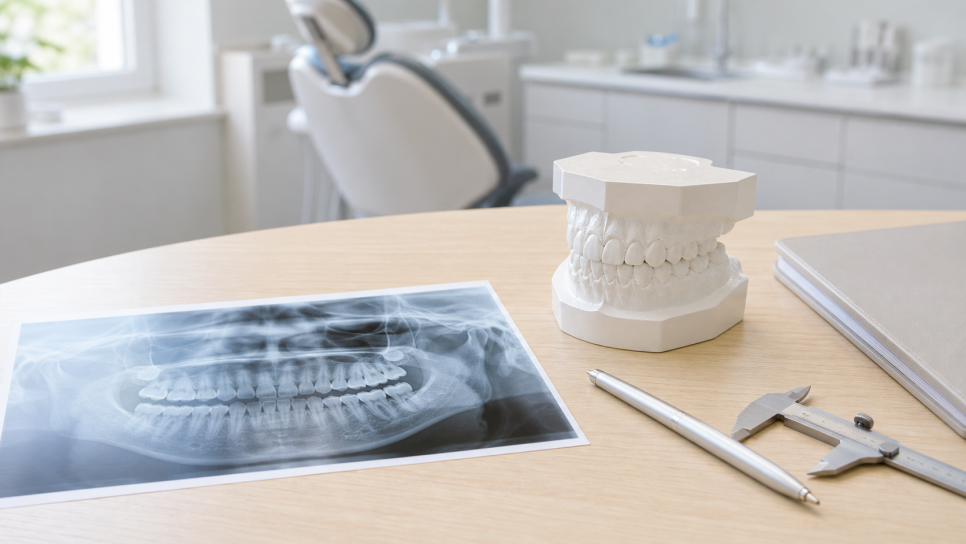
The issue is ② the complexity of your case. Whether your teeth require extractions and whether the expected treatment period will be 18 or 30 months are variables that cannot be determined without an expert diagnosis. These figures can only be estimated by examining the amount of tooth movement and whether extractions are needed based on materials such as radiographs and dental models.
Find out before it is too late

Whether you should start before enlistment or after discharge—we cannot decide that for you in this short article. It differs from case to case.
However, if I could offer one piece of advice, it would be that the sooner you find out, even by a little, the less likely you are to regret your decision. Your options are broader when you make the decision with even one more day remaining before enlistment.
Your enlistment date has already been set. Once you find out the variable of your expected treatment period, you can decide whether to start now or after discharge.
You can also receive a diagnosis first and begin treatment after discharge. Orthodontic treatment is something you will be undergoing for several years in any case, so we believe that our commitment to maintaining a long-term relationship with you does not change whether you begin before enlistment or after discharge.
We hope that no one ends up regretting having put it off for a day or two. This was 세라믹치과.