Hello.
I’m Park Yeol, an orthodontic specialist who has been providing orthodontic treatment for over 20 years near Gangnam Station.
Today, I’d like to talk about a question many people worry about: “My lower jaw looks prominent. Can braces make it recede?”
To start with the conclusion,
not every case of a prominent-looking lower jaw can be corrected with orthodontic treatment.
Even if they look similar, the approach differs depending on the actual cause.
Among the people who come in for consultations,
many worry while looking in the mirror, asking, “My lower jaw looks too prominent. Can braces pull it back?”
But cases that look like lower-jaw protrusion are broadly divided into two types.
Even if they look similar on the outside, the orthodontic treatment method is different.
- Cases that are difficult to correct with orthodontics alone
These people usually have the following characteristics.
The upper front teeth are slightly flared forward, and the lower front teeth are aligned but tilted slightly inward.
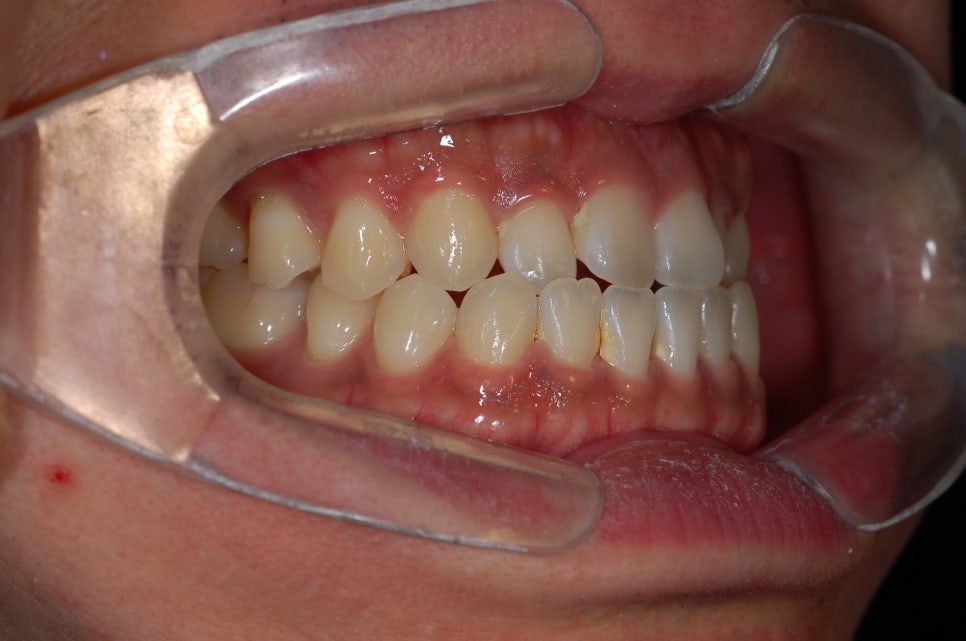
The entire lower jaw is generally long and protruded, and some people also have a pointed chin.
In simple terms, the teeth are relatively well aligned, but the lower jaw bone itself is long and positioned forward.
These are the cases where people ask whether orthodontic treatment can reduce the length of the lower jaw.
Unfortunately, in these cases, it is almost impossible to make the lower jaw recede with orthodontics alone.
That is because orthodontics is a treatment that improves tooth alignment and the relationship between the upper and lower teeth; it cannot reduce or push back the length of the jaw bone.
The problem in these cases is that the patient wants to shorten the length of the lower jaw. However, the relationship between the upper and lower front teeth does not necessarily need improvement, and correcting the tooth relationship cannot shorten the lower jaw to the length the patient hopes for.
Therefore, to reduce the length of the lower jaw, orthognathic surgery is needed to surgically shorten it. Orthognathic surgery is a surgical method used to lengthen or shorten the maxilla (upper jaw) or mandible (lower jaw).
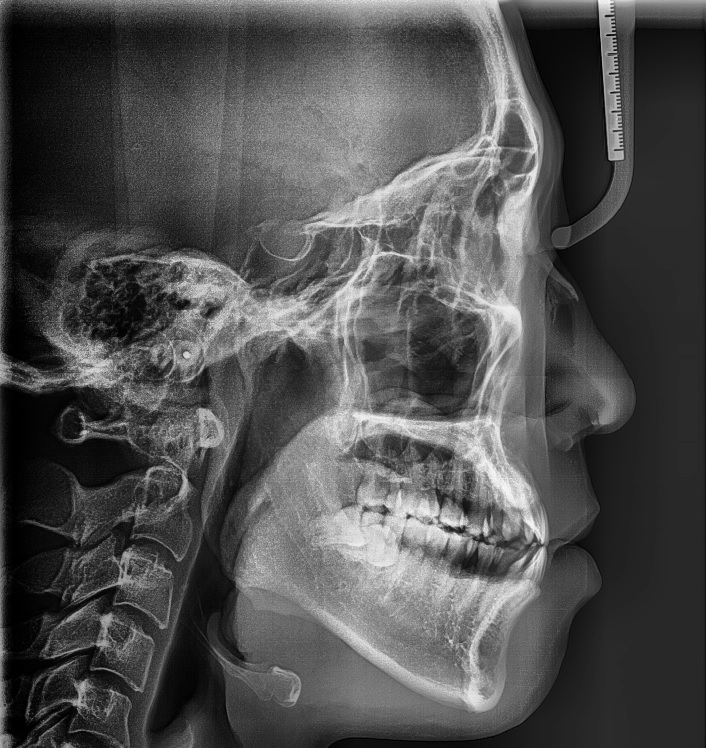
Although surgery is a major procedure, for people whose lower jaw is excessively long, there is no other way to improve it.
- Cases that can be sufficiently improved with orthodontics
There are also similar-looking cases that are different.
These are people whose lower jaw looks prominent, but whose jaw length is not very long.
In these cases, the lower front teeth protrude more forward than the upper front teeth. This is called an underbite. Even with this underbite appearance, the lower front teeth are positioned more forward than normal.
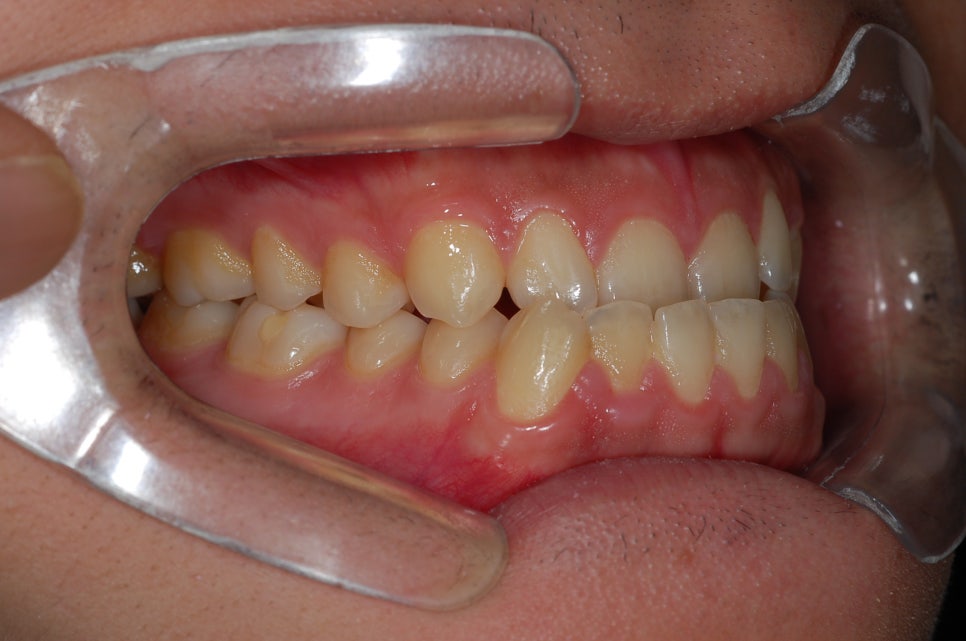
When you look at their side profile, the lower jaw is not that long, but the area around the lower lip appears protruded because of the lower front teeth.
If the first case mentioned earlier is one where the lower jaw is quite long and feels somewhat pointed, then these cases have a slightly long lower jaw, but the chin itself actually gives a slightly recessed-chin impression, so the area around the lower lip appears jutting out.
In this case, the lower jaw may be somewhat long, but more than that, it is a kind of optical illusion in which the area around the lower lip appears protruded because of the underbite caused by the lower front teeth flaring forward.
The issue with lower jaw length is secondary here. This is a different case from the first one above, and if the lower front teeth are moved backward and their angle is reduced a bit, the underbite improves, the relationship between the upper and lower front teeth gets better, and the protruding area around the lower lip becomes more organized and natural.
To move the lower front teeth backward, in some cases the premolars are extracted on both sides and the front teeth are retracted into that space. In other cases, they are moved backward without extraction using mini-screws or similar devices, but extraction is often more effective.
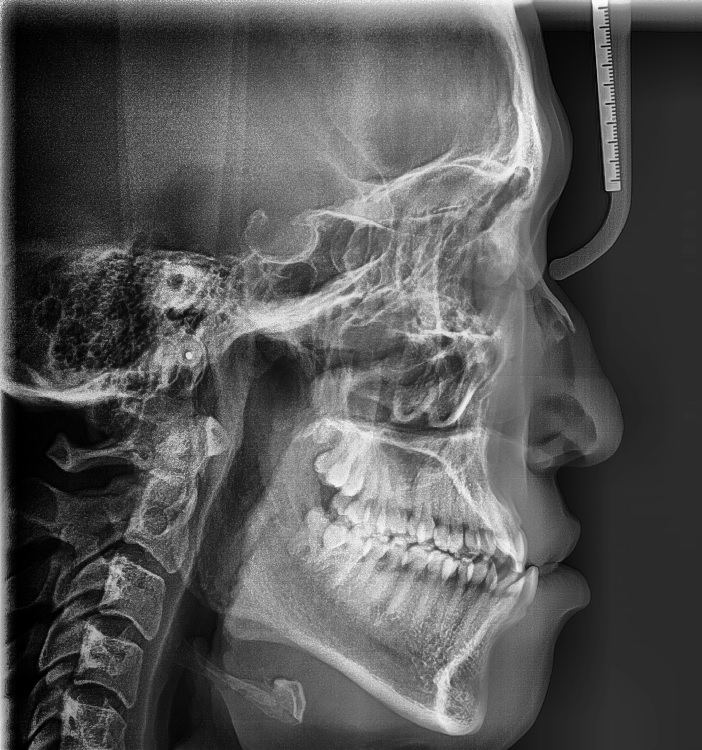
This naturally brings the lips inward, tidies the mouth line, and softens the overall impression.
Because the jaw is not long and the chin is not pointed, orthodontics alone can achieve sufficiently good results.
💡 In the end, what matters most is an accurate diagnosis
In both cases, people may say from the outside that “the lower jaw is prominent,” but in reality, the position of the jaw bone, the angle of the teeth, and even the lip line are all different, so it is difficult for the patient to judge on their own whether orthodontics will work.
And starting orthodontic treatment based on a mistaken judgment, or simply giving up, is not the right approach either.
After receiving a consultation or diagnosis from an experienced orthodontic specialist, if orthodontics alone is possible, you should actively consider it. If orthodontics is not possible and surgery is needed, do not begin orthodontic treatment hastily on its own; instead, take time and carefully consider whether you will proceed with surgery.
Go to Dr. Prime Dental’s Naver reservation
↓↓↓↓↓↓↓↓↓↓↓↓↓↓↓↓↓