Implants and alcohol are not easy companions

It usually takes several months for the fixture to firmly bond with the jawbone.
If you drink alcohol during this period,
it can interfere with the recovery process
and delay healing.
This is because alcohol changes blood flow
and lowers immune function,
creating an environment where inflammation can occur more easily!
If the gums swell, in severe cases
it may be necessary to place the implant again.
Drinking after an implant is an action tied to
the success of treatment,
so it requires caution.
Alcohol can slow wound healing.

Alcohol dilates blood vessels
and slows the rate of cell regeneration.
It may seem like blood circulates more quickly,
but in reality, an inflammatory response occurs,
making the gums more likely to swell.
The implant site has a wound in the early stage,
and if you drink alcohol, that wound does not heal easily.
Feeling as if the pain lessens after drinking
is only temporary; it does not mean recovery is faster.
In the end, alcohol slows recovery
and increases the risk of infection.
Of course, absolutely not on the day itself.
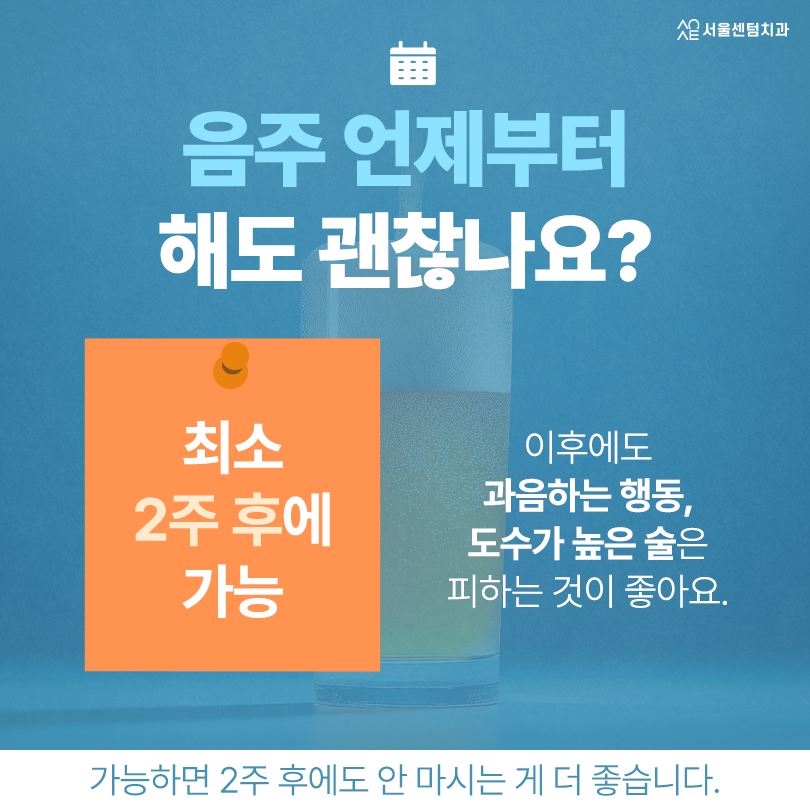
When can you drink after an implant?
Although recovery speed differs from person to person,
at least 2 weeks of no alcohol is needed after surgery.
This is the early stabilization stage,
when osseointegration begins.
After about 1 to 2 months, things improve somewhat,
but full recovery takes longer.
Strong alcoholic drinks such as wine and whiskey
can be more irritating and may delay recovery further,
but that does not mean soju or beer
are okay.
This means that any alcoholic drink can have an effect.
If possible, please refrain from drinking after an implant
until the day your medical team allows it.
Side dishes can be just as risky as alcohol
Some foods that commonly appear with drinks
can also place a burden on the implant area.
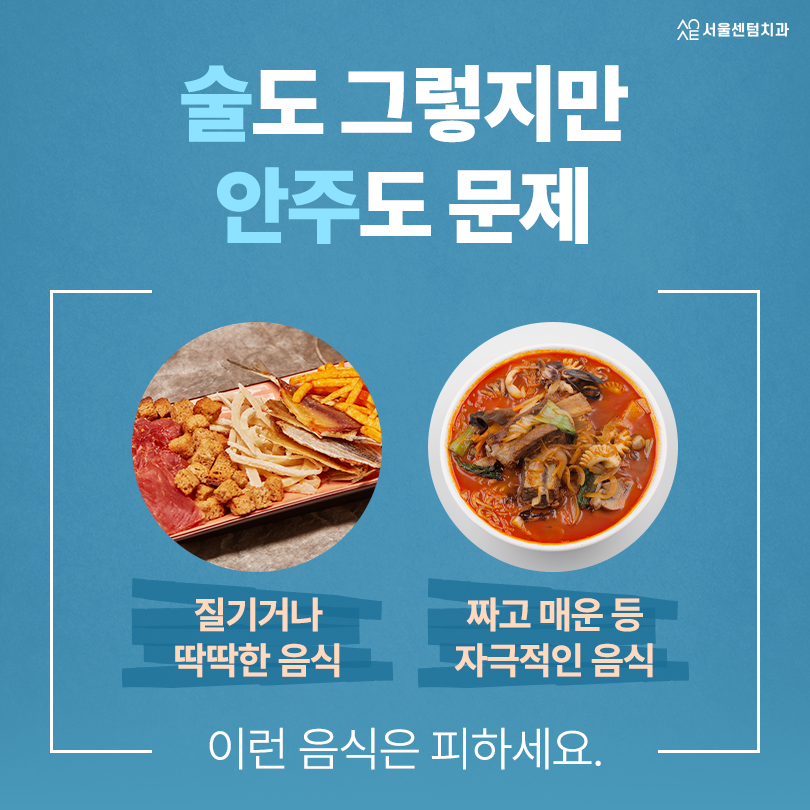
If you eat tough or hard foods such as jerky,
peanuts, or dried squid,
pressure is placed on the treatment area,
which may damage the prosthesis.
Spicy foods or foods with strong salty seasoning
can also irritate the gum mucosa,
worsening swelling and inflammation.
I want to say that eating soft-textured foods
is much better than eating these kinds of foods.
When choosing side dishes,
just check whether they put a lot of strain on your jaw and teeth.
Alcohol should not be combined with medication
After treatment, we usually prescribe medications
such as antibiotics and pain relievers
for several days.
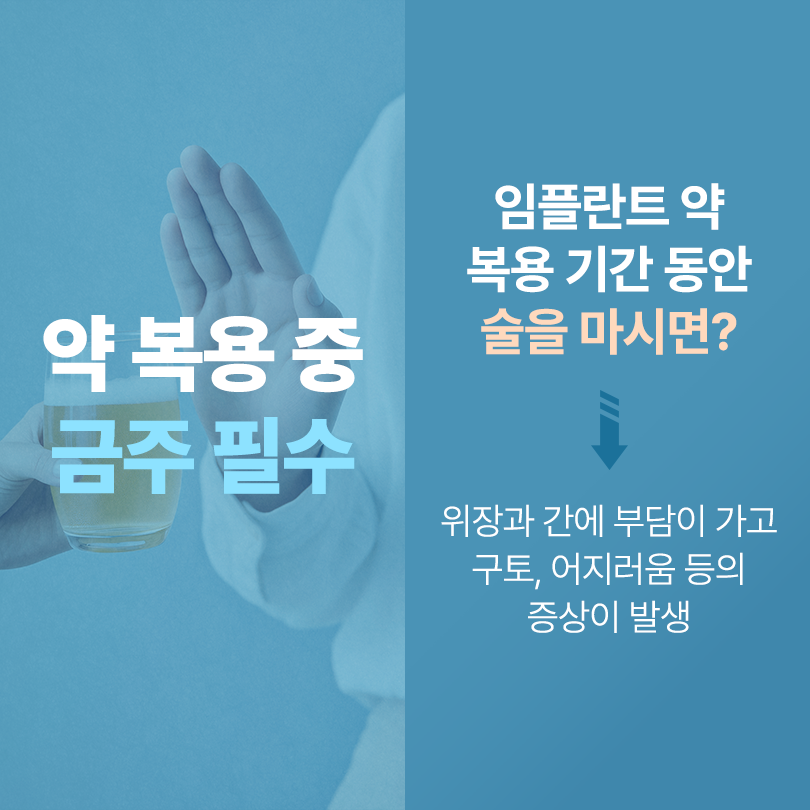
If you drink alcohol at this time, the medication may not work properly.
Some antibiotics, when mixed with alcohol,
can cause reactions such as headaches, vomiting, and dizziness.
Because it can irritate the stomach and liver
and cause side effects,
even after finishing all the medication,
it is better to wait a few more days.
In simple terms, it is better to avoid alcohol while the medication is circulating through your body and being cleared out.
Damage caused by repeated drinking
Do you know that the careless thought,
"One or two drinks should be fine,"
is the most dangerous?
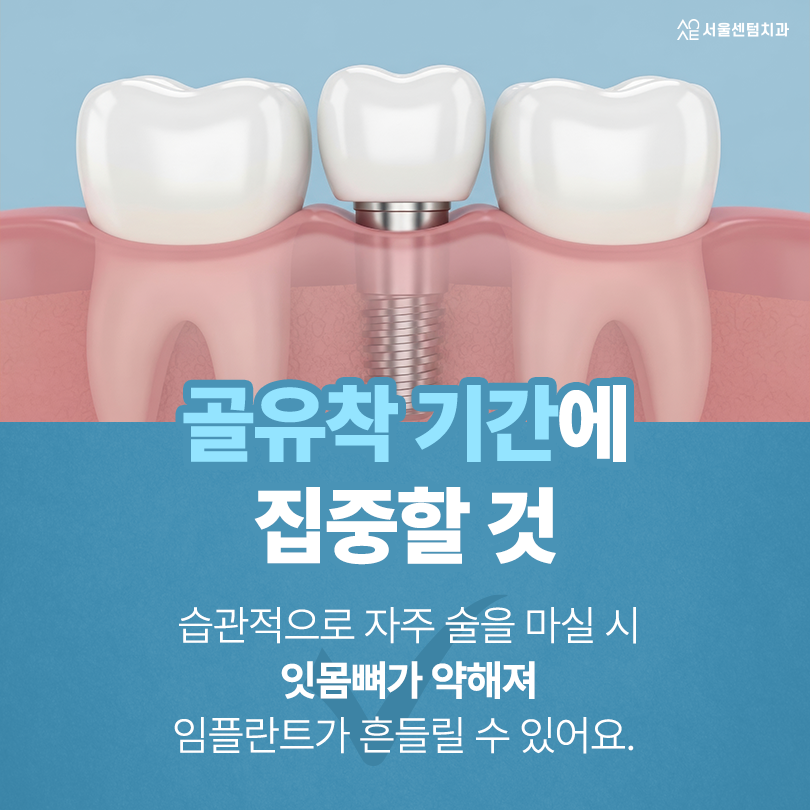
Habitual drinking keeps gum inflammation going
and weakens the jawbone,
causing the foundation that supports the implant to become unstable.
If this state continues for a long time,
the implant can loosen
and even fall out.
Dry mouth can accelerate bacterial growth,
which can also increase the risk of gum disease.
Self-restraint is still necessary even after recovery
Even if the gums have stabilized after several months,
it is difficult to say for certain that drinking is fine.
It can cause gum bleeding, dry mouth, and increased plaque,
making the surrounding environment worse again.
If you want the implant you placed to last a long time,
making a habit of avoiding alcohol
is also a good choice for overall health management.
If you have no choice but to drink at a gathering,
please keep it to a moderate amount.

You can think of the final condition as something completed through care.
One of the basic care principles is
keeping away from alcohol.
Simply following the no-drinking period well
may extend the life of the implant by several years.
For the sake of your future dental health,
if you are careful about drinking after an implant,
happiness will come in the nearer future.
What are the price, materials, and necessity of bone grafting for implants?
How many years does an implant last?