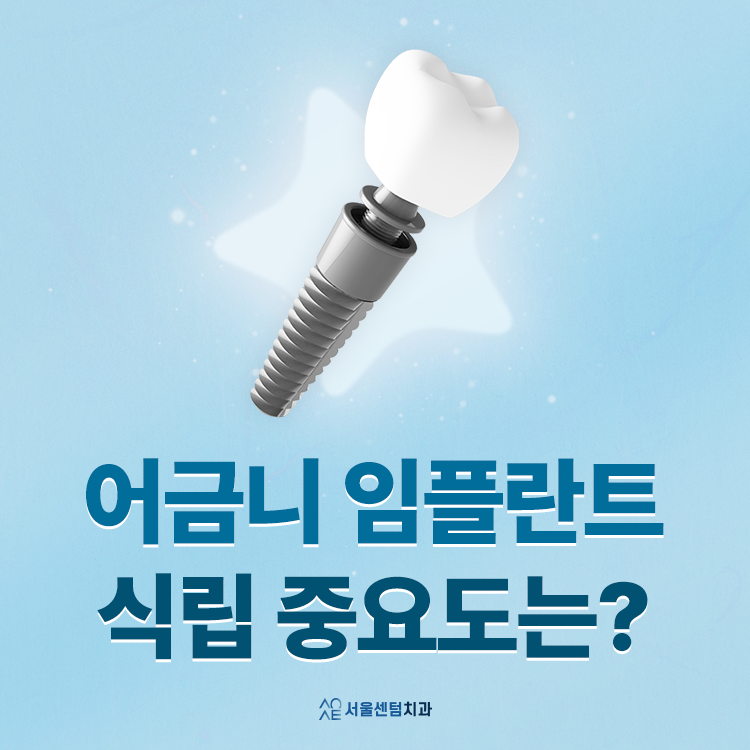
A tooth that must withstand a greater burden than the front teeth
Molars are the teeth that handle the largest surface area
and the strongest force in the mouth.
They play a role in breaking down food into smaller pieces,
distributing chewing pressure,
and acting as a central axis that balances the bite.
If the front teeth cut food,
molars can be seen as responsible for grinding.
When you lose a tooth with such a large role,
chewing efficiency drops sharply,
and excessive load can be transferred to the temporomandibular joint.
For this reason, molar implants
must prioritize structural stability and high durability.
What effect does molar loss have on the entire mouth?
If the missing tooth is left untreated for a long time,
it does not remain a simple inconvenience.
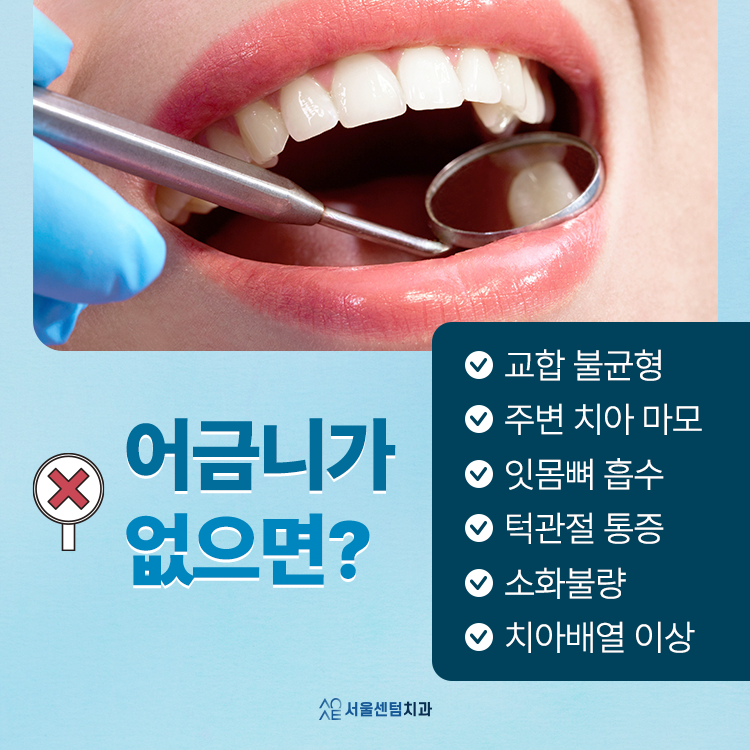
As the force shifts to one side, the bite becomes misaligned,
and wear on the remaining teeth on the opposite side or both sides
can gradually occur and then accelerate.
In addition, because food is not properly ground,
it can also affect digestion.
Since the jawbone also does not receive stimulation,
resorption occurs gradually,
so the longer the delay,
the greater the possibility that treatment will become more difficult.
Considering these circumstances, planning a molar implant
at an appropriate time after tooth loss
can help maintain a stable oral structure.
There is a reason it needs to be sturdy.
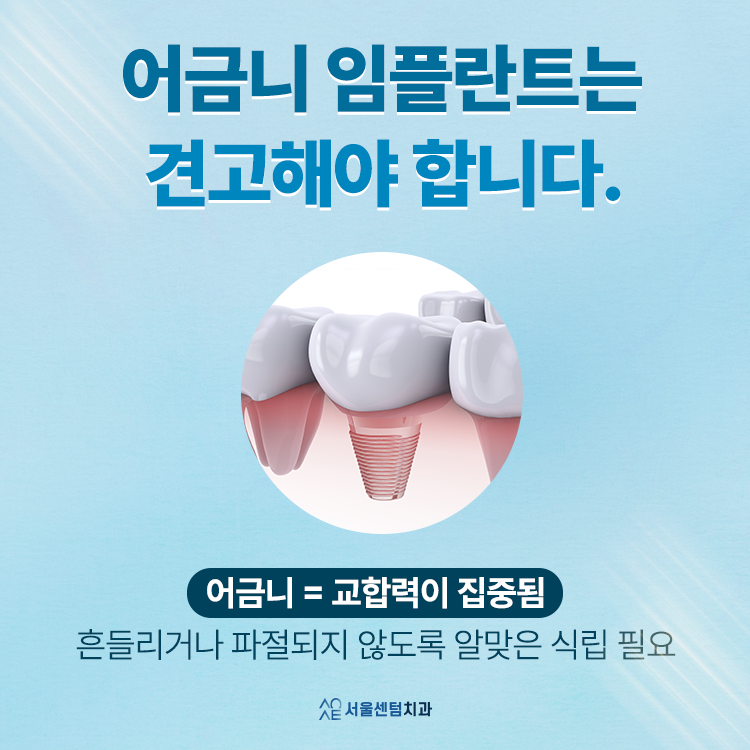
Because pressure several times greater than that on the front teeth
is repeatedly applied,
the surface area is the largest.
In the case of the implant being placed,
its diameter, length, characteristics, and even placement angle
must all be precisely designed
for it to sufficiently replace the role of the natural tooth.
If structural stability is not secured,
it can lead to loosening or fracture,
so a careful approach is needed from the initial planning stage.
Bone condition must also be checked.
Because of their location, molars show
a large degree of individual variation in the shape and density of the jawbone.
For this reason, the procedure is carried out after accurately identifying
the bone thickness and height,
and the position relative to the nerves,
through imaging such as CT and panoramic X-rays.
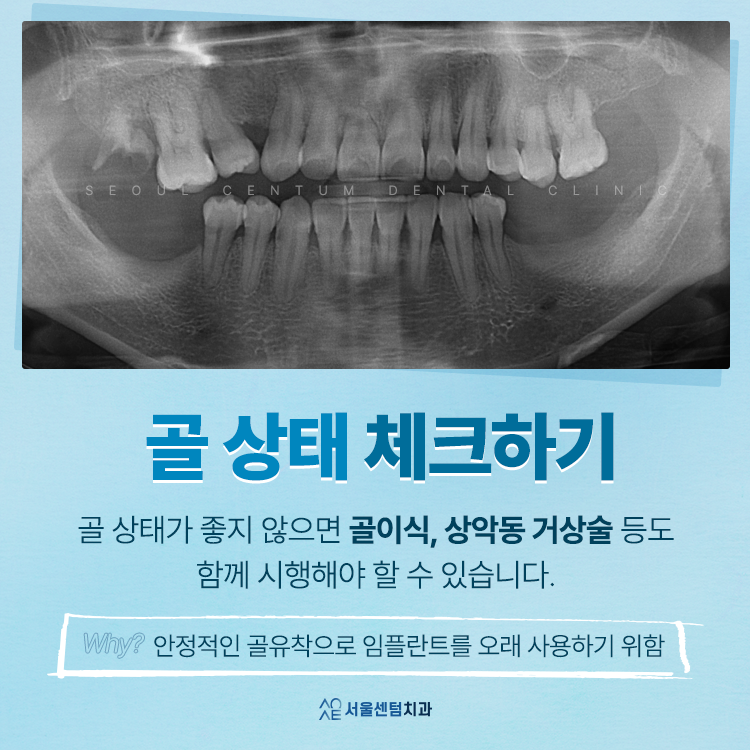
In some cases, auxiliary procedures such as bone grafting or sinus lift may be needed,
so we also recommend them during the consultation process.
We do not recommend them unconditionally,
and only provide guidance when necessary.
For example, when the jawbone is not sufficient or is weak,
or when the current bone makes it difficult to support the structure.
If these steps are not taken in advance,
stability problems can arise,
which is why we recommend them,
and we hope for your understanding.
Did you know that prosthetic selection also needs to be careful?
The prosthetic placed on top of a molar implant is also important.
Because it must withstand strong chewing force,
it is best to choose a material with excellent wear resistance and strength.
If you want something aesthetically suitable,
zirconia is a good option.
It has high strength and a color similar to natural teeth,
so it is often used.
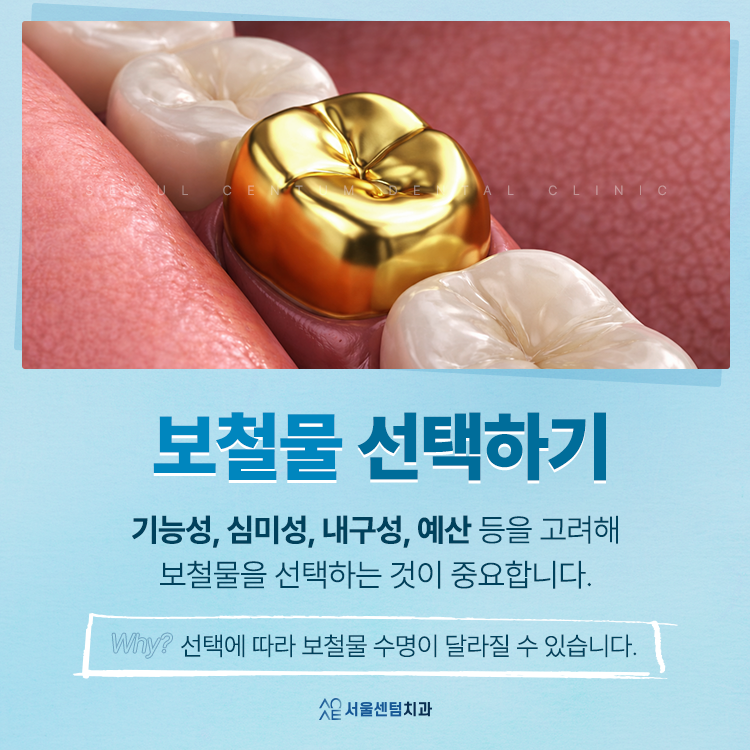
Other types include gold and PFM,
and each has its own advantages and disadvantages,
so you can compare them and choose.
However, if the height or shape of the prosthetic is even slightly off,
it can make the bite uncomfortable
or place a burden on the temporomandibular joint,
so custom fabrication after a precise check is necessary.
Manage it carefully starting from the day you receive the molar implant
If food gets stuck easily and care is neglected,
the likelihood of peri-implantitis may increase.
To prevent this, various auxiliary tools should be used,
and at first, the diet should consist mainly of soft foods such as porridge or tofu.
Once the condition improves to some extent,
it is fine to return to a regular diet.
Foods with a tough texture, like dried squid,
sticky foods like gum, and irritating foods are not good even in everyday life,
so please avoid them.
It is also important not to miss your checkup schedule
and to check the bite condition and whether the structure is wearing down.
Even several years after placement,
follow-up examinations are still necessary.
You need to know whether the abutment has loosened
or whether there are any cracks in the prosthetic
so that you can respond in time.
If you tend to accumulate tartar often,
getting scaling as well will be very helpful.
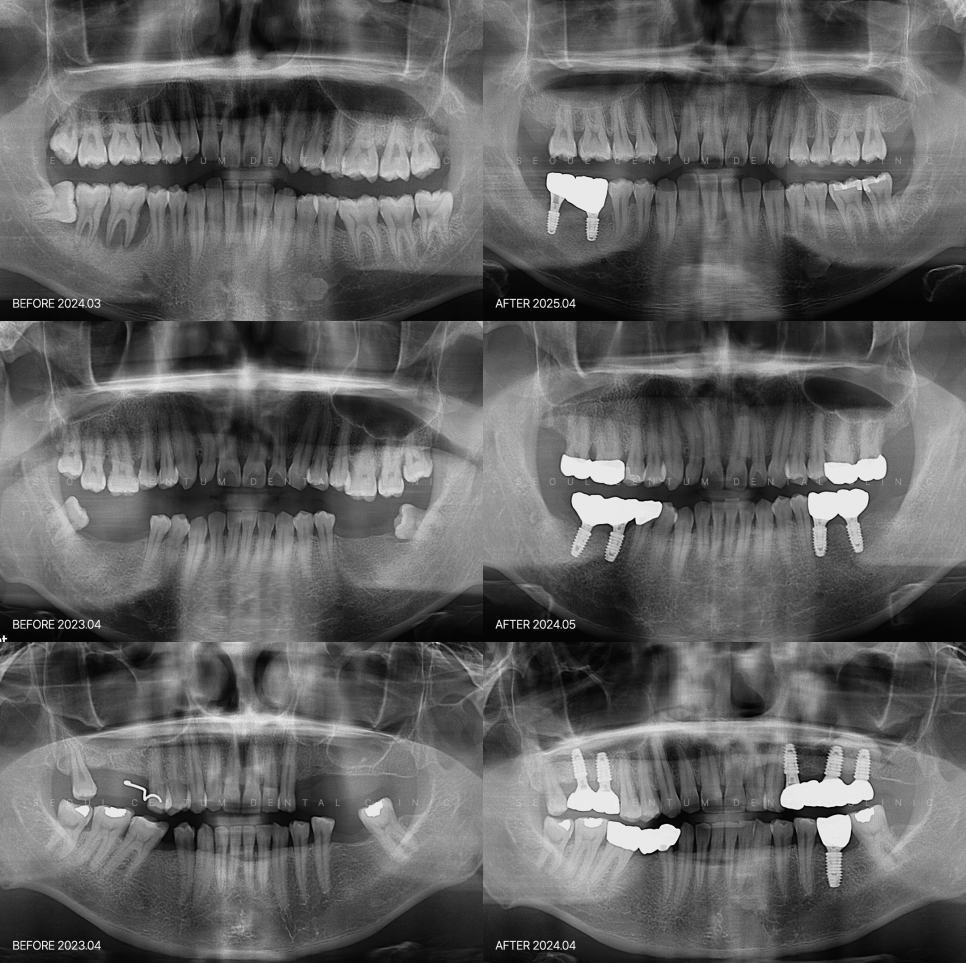
As I mentioned today,
for long-term use without fracture,
I hope you receive a detailed diagnosis of your bone condition and bite structure before treatment,
and after treatment,
pay close attention to hygiene.
You may think of it simply as replacing one tooth,
but since it is a treatment for restoring the overall balance of the mouth,
an appropriate plan must be set in advance.

Because it is a tooth that plays a key role,
it must be possible to complete a sturdy and precise implant,
so I hope you will choose your dental clinic carefully.
Can’t judge by the price of bruxism Botox alone?
Get your employee oral exam before 2025 passes